Spinach Stuffed Chicken Breast Recipe
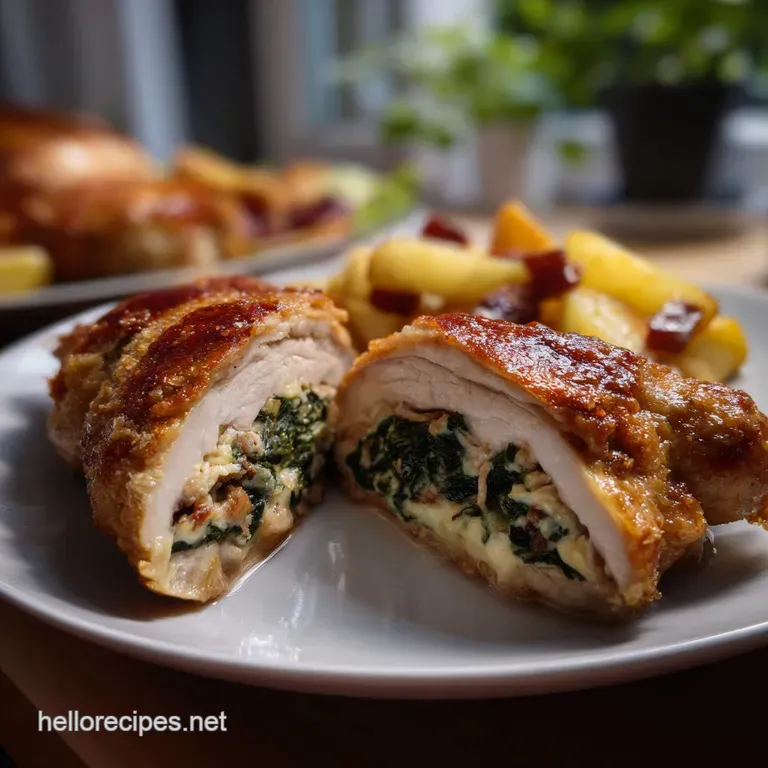
- Time: Active 20 minutes, Passive 25 minutes, Total 45 minutes
- Flavor/Texture: Silky ricotta filling encased in a crisp, spice rubbed exterior
- Perfect for: High protein meal prep or a focused weeknight dinner
- Achieving Flavor with Spinach Stuffed Chicken Breast
- The Science of Why it Works
- Component Analysis
- Essential Ingredients and Smart Substitutes
- Necessary Tools for Culinary Precision
- Precise Culinary Steps for Success
- Solving Common Chicken Texture Issues
- Innovative Variations for Modern Cooks
- Sustainable Storage and Repurposing Methods
- Curating a Balanced Meal Profile
- Clarifying Common Kitchen Myths
- Recipe FAQs
- 📝 Recipe Card
Achieving Flavor with Spinach Stuffed Chicken Breast
Have you ever wondered why some chicken dishes feel like a chore to eat while others seem to melt away? The sharp, sulfuric scent of fresh garlic hitting a hot pan usually signals that something great is happening, but the real magic is in the engineering of the dish.
Most home cooks struggle with lean chicken breasts becoming dry and fibrous before the center even reaches a safe temperature.
This Spinach Stuffed Chicken Breast solves that problem by using the filling as an internal thermal regulator. By placing a moisture rich barrier of spinach and ricotta inside the meat, we create a buffer that keeps the protein from overcooking while adding deep, savory notes.
It is a simple piece of culinary technology that anyone can use to improve their daily meals.
We are going to focus on using specific techniques, like the precision pocket cut, to ensure your filling stays where it belongs. Forget those dry, uninspired meals of the past. Right then, let's look at why this specific combination of ingredients works so well from a scientific perspective.
The Science of Why it Works
- Thermal Insulation: The dense ricotta cheese acts as a heat sink, slowing the internal temperature rise and preventing the surrounding chicken fibers from tightening too quickly.
- Enzymatic Tenderization: Garlic contains sulfur compounds that, when combined with the mild acidity of ricotta, help slightly soften the surface proteins inside the pocket.
- Maillard Reaction: The smoked paprika and garlic powder on the exterior create a complex flavor crust through heat driven chemical reactions between amino acids and reducing sugars.
- Cellular Breakdown: Wilting the spinach before stuffing (or using the moisture of the cheese to do so) releases trapped water, which then steams the chicken from the inside out.
Component Analysis
| Ingredient | Science Role | Pro Secret |
|---|---|---|
| Whole Milk Ricotta | Emulsifier and moisture barrier | Drain excess whey for 10 mins to prevent "watery" leaks |
| Smoked Paprika | Phenolic flavor compound | Bloom the spice in the oil before rubbing for deeper color |
| Parmesan Cheese | Ionic salt binder | Use freshly grated for better melting and structural integrity |
| Fresh Baby Spinach | Structural fiber | Chop finely to ensure even distribution in every bite |
Essential Ingredients and Smart Substitutes
To get the best results, start with high-quality poultry and fresh greens. I recommend using a Lodge Cast Iron Skillet for the best heat retention during the searing phase.
- 4 large boneless skinless chicken breasts (8oz each)
- Substitute: Boneless turkey breasts
- Why this? Provides the structural volume needed for a deep, secure stuffing pocket.
- 2 cups fresh baby spinach
- Substitute: Kale (finely ribboned)
- Why this? Adds essential vitamins and a vibrant color contrast to the creamy cheese.
- 0.5 cup whole milk ricotta cheese
- Substitute: Cream cheese
- Why this? Offers a light, airy texture that doesn't become too heavy when heated.
- 0.25 cup grated Parmesan cheese
- Substitute: Pecorino Romano
- Why this? Provides the necessary salt and umami to balance the mild ricotta.
- 2 cloves garlic, minced
- Substitute: 0.5 tsp garlic salt (reduce kosher salt)
- Why this? Releases aromatic oils that permeate the chicken from the inside out.
- 4 strips cooked, crumbled bacon
- Substitute: Smoked pancetta
- Why this? Adds a crunch and a smoky fat element that lean chicken lacks.
- 2 tbsp extra virgin olive oil
- Substitute: Avocado oil
- 1 tsp smoked paprika
- Substitute: Sweet paprika
- 1 tsp garlic powder
- Substitute: Onion powder
- 0.5 tsp kosher salt (I use Diamond Crystal Kosher Salt)
- 0.5 tsp cracked black pepper
Necessary Tools for Culinary Precision
Using the right technology makes a difference. You will need a sharp Wüsthof Chef's Knife to create the pockets without tearing the meat. A reliable meat thermometer is also non negotiable for monitoring the thermodynamics of the cook.
Chef's Tip: To make the chicken easier to slice, place the breasts in the freezer for 15 minutes before prep. This firms up the muscle fibers, allowing for a much cleaner pocket cut.
Precise Culinary Steps for Success

1. The Precision Pocket
Lay the chicken breast flat on your cutting board. Using your non dominant hand to hold the meat steady, carefully insert the tip of your knife into the thickest part. Cut a pocket about 2 to 3 inches wide, being careful not to slice all the way through the other side.
This creates a secure "thermal envelope" for your filling.
2. Building the Filling
In a small mixing bowl, combine the 0.5 cup whole milk ricotta, 0.25 cup Parmesan, and the 2 cups of finely chopped spinach. Stir in the 2 cloves of minced garlic and the 4 strips of crumbled bacon. The mixture should be thick and hold its shape.
3. The Secure Stuffing
Spoon approximately 2-3 tablespoons of the spinach mixture into each chicken pocket. Don't overfill them, or the cheese will expand and leak out during the cooking process. If the opening is wide, you can secure it with a toothpick inserted at a diagonal angle.
4. The Spice Application
Mix the 1 tsp smoked paprika, 1 tsp garlic powder, 0.5 tsp salt, and 0.5 tsp pepper in a small dish. Rub the 2 tbsp olive oil over the exterior of the chicken, then sprinkle the spice blend evenly over both sides. The scent of the smoked paprika should be prominent here.
5. The Initial Sear
Heat your skillet over medium high heat. Place the chicken breasts in the pan. You should hear a sharp sizzle immediately. Cook for about 4-5 minutes per side until the exterior is deep golden brown and the spices have formed a crust.
6. The Oven Finish
Transfer the skillet to a preheated oven at 375°F. This allows for more even heat distribution than the stovetop alone. This transition is essential for ensuring the center of the Stuffed Chicken Breast reaches 165°F without burning the outside.
7. The Resting Phase
Remove the chicken from the oven. Let it rest on a warm plate for at least 5 minutes. This is where carryover cooking happens. The internal juices will redistribute, ensuring a velvety texture when you finally slice into it.
Solving Common Chicken Texture Issues
One mistake I once made was rushing the process and using wet spinach. The steam had nowhere to go, and the filling turned into a soup. It wasn't great. Trust me, the texture of the filling is just as important as the meat itself.
| Problem | Cause | Fix | Pro Tip |
|---|---|---|---|
| Rubbery Meat | Overcooked past 165°F | Use a thermometer; pull at 160°F | Let it rest 5 mins to finish |
| Watery Filling | Wet spinach or low-fat cheese | Squeeze spinach dry; use whole milk ricotta | Add 1 tsp cornstarch to filling |
| Spices Burning | Heat too high on stovetop | Reduce to medium; finish in oven | Use oil with high smoke point |
Chicken is Dry
This usually happens because the muscle fibers have contracted too tightly, squeezing out the moisture. This occurs when the temperature exceeds 170°F. By pulling the chicken at 160°F and letting carryover cooking bring it to 165°F, you maintain a silky, moist interior.
Filling is Watery
If your filling is leaking clear liquid, your spinach was likely too damp. Always sauté fresh spinach briefly and squeeze it in a kitchen towel before mixing it with the cheese. This prevents the "steaming" effect from diluting the creamy ricotta.
Cheese Leaked Out
If you find a puddle of cheese in your pan, the pocket was likely too large or the heat was too aggressive. Try using the toothpick method next time to "stitch" the opening shut. Also, make sure your Parmesan is finely grated, as it acts as a binder for the softer ricotta.
Innovative Variations for Modern Cooks
If you are short on time, the air fryer is a brilliant piece of technology for this dish. For a different texture profile, you can try the method used in my How to Make recipe, which focuses on maximizing skin crispness.
The Air Fryer Shortcut
Place the stuffed breasts in the air fryer basket at 375°F for 18-20 minutes. The circulating air creates a much crunchier exterior than a standard oven. It's a faster alternative that doesn't sacrifice the integrity of the Spinach Stuffed Chicken.
The Mediterranean Twist
Swap the ricotta for feta cheese and add chopped sun dried tomatoes to the filling. This creates a saltier, more pungent flavor profile that pairs excellently with a splash of balsamic glaze. It's a simple swap that changes the entire gastronomy of the plate.
The dairy-free Swap
Use a cashew based "ricotta" and nutritional yeast instead of Parmesan. The fat content of the cashews provides a similar thermal buffer, though the flavor will be slightly nuttier. It's a sustainable way to enjoy the dish if you're avoiding dairy.
Sustainable Storage and Repurposing Methods
Storage: Keep leftovers in an airtight container in the fridge for up to 3 days. When reheating, do so gently in a 300°F oven with a splash of water to prevent the meat from drying out.
Freezing: You can freeze the stuffed, uncooked breasts for up to 2 months. Wrap them individually in plastic wrap and then foil to prevent freezer burn. Thaw in the fridge overnight before cooking as directed.
Zero Waste: Don't throw away those spinach stems! Finely chop them and sauté them with the garlic to add extra fiber and crunch to the filling. If you have leftover filling, it makes an excellent spread for toasted baguette or a quick pasta sauce base when thinned with a little pasta water.
Curating a Balanced Meal Profile
The richness of the ricotta and bacon needs something to cut through the fat. A bright, acidic side dish is the perfect companion. If you want a more decadent meal, the sauce technique from my OnePan Creamy Tuscan recipe can be drizzled over the top.
The Starchy Companion
A simple roasted potato or a light quinoa salad works wonders. The starch absorbs any cheese that might escape during slicing, ensuring none of that flavor goes to waste.
Healthy Side Dish Options
Steam some broccoli or toss a light arugula salad with lemon vinaigrette. The bitterness of the arugula provides a sophisticated contrast to the creamy Spinach Stuffed Chicken Breast. For a crunchier side, you might even consider the breading technique from this Copycat Raising Canes recipe for your vegetables.
Clarifying Common Kitchen Myths
Myth: Searing "seals in" the juices. Truth: Searing meat does not create a moisture proof barrier. Moisture loss actually increases at high temperatures. We sear solely for the Maillard reaction, which develops the complex, savory aromas we love.
The moisture in this Stuffed Chicken Breast is actually preserved by the cheese filling and proper resting.
Myth: You must wash chicken before stuffing. Truth: Washing poultry only spreads bacteria around your sink and counters. The heat of the oven is what makes the food safe to eat. Focus on keeping your workspace clean and using a high-quality thermometer instead.
Myth: Spinach loses all nutrients when cooked. Truth: While some heat sensitive vitamins like Vitamin C decrease, cooking spinach actually makes other nutrients, like iron and calcium, more bioavailable to your body. It is a win win for both flavor and gastronomy.
Comparison: Cooking Methods
| Method | Speed | Texture Outcome | Energy Efficiency |
|---|---|---|---|
| Oven (Classic) | 25-30 mins | Evenly cooked, juicy | Low |
| Air Fryer (Fast) | 18-20 mins | Very crispy, slightly drier | High |
| Sous Vide | 1 hour 30 mins | Perfectly edge to edge | Medium |
Decision ShortcutIf you want a crispy crust, use the cast iron sear and oven finish. If you want a lean meal, omit the bacon and use part skim ricotta. If you want a party appetizer, use smaller chicken cutlets and roll them instead of stuffing.
This Spinach Stuffed Chicken Breast Recipe is more than just a meal; it's an exercise in balancing thermodynamics and flavor. By understanding how the ingredients interact, you can produce a result that is consistently high-quality.
Honestly, don't even bother with the low-fat cheese the fat is what carries the flavor of the garlic and smoked paprika. Let's crack on and get cooking!

Recipe FAQs
how to make spinach stuffed chicken breast?
Yes, this is the primary method. First, cut a deep pocket into the thickest part of the chicken breast, being careful not to cut through the edges. Mix drained spinach, ricotta, Parmesan, and seasonings to create a thick filling, then carefully stuff the mixture inside the pocket.
how to cook spinach stuffed chicken breast?
Sear, then bake. Sear the seasoned, stuffed breasts in an oven safe skillet over medium high heat for 4-5 minutes per side until golden brown. Then, transfer the skillet to a preheated 375°F oven to finish cooking until the internal temperature reaches 165°F.
how to cook spinach stuffed chicken breast in air fryer?
Yes, it is faster and yields a crispy exterior. Place the seasoned and stuffed chicken breasts in the air fryer basket without overlapping. Cook at 375°F for approximately 18 to 20 minutes, checking the internal temperature before serving.
how to make creamy spinach stuffed chicken breast?
Use whole milk ricotta and increase the cheese binder. Whole milk ricotta provides the base creaminess, but you can enhance the texture by adding a teaspoon of cornstarch to the filling mixture to help stabilize the moisture from the spinach during cooking.
how to make spinach and cheese stuffed chicken breast?
The standard method incorporates both components. The base filling should always use a soft cheese like ricotta, bound by Parmesan, and mixed thoroughly with chopped spinach. If you master this internal thermal regulation technique, you can easily apply the same principle to creating flavorful poultry variations like our Quick Lemon Chicken Romano with Buttery Parmesan Sauce.
Why is my stuffed chicken leaking filling?
No, the pocket was likely overfilled or cut too wide. To prevent leakage, ensure the filling is thick by draining the spinach well, and secure wider openings with toothpicks inserted diagonally.
If you are interested in other methods of heat application, review how we manage texture when mastering the sear technique for crispy coatings.
What is the ideal internal temperature for safety and texture?
Yes, 165°F is the USDA safety standard. To achieve maximum juiciness, remove the chicken from the heat source when the thermometer reads 160°F; the carryover cooking during the 5-minute rest will bring it safely to 165°F without drying out the lean meat.
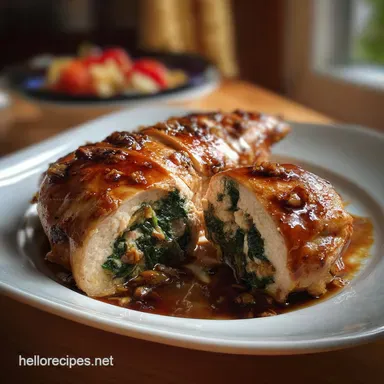
Spinach Stuffed Chicken Breast
Ingredients:
Instructions:
Nutrition Facts:
| Calories | 562 kcal |
|---|---|
| Protein | 78.4 g |
| Fat | 24.2 g |
| Carbs | 3.8 g |
| Fiber | 0.7 g |
| Sugar | 1.1 g |
| Sodium | 695 mg |
