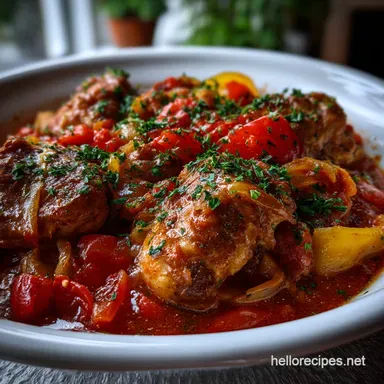
Chicken Cacciatore with Bone-In Thighs

- Time: 15 min active + 75 min cooking
- Flavor & Texture: Savory and rich with a thick, tomato-based sauce
- Perfect for: Weeknight family dinners or meal prep
Savory Chicken Cacciatore Hunter's Stew
Picture your kitchen filled with the aroma of garlic, oregano, and searing chicken. Mahogany-toned thighs simmer in a rich crimson sauce alongside tender peppers and earthy mushrooms. This is the ultimate comfort food for a chilly evening.
Contrast is key here. The crisp, seared skin gives way to succulent, slow-cooked meat. Bright, acidic tomatoes cut through the richness of the chicken fat, while a sprinkle of fresh parsley adds a final, vivid touch.
The result is a thick, velvety sauce that coats every bite. This rustic, one-pot dinner requires no specialized equipment, just a sturdy heavy pot and a bit of patience.
Quick Recipe Specs
This recipe requires a slow simmer to allow the chicken to soften and the flavors of the sauce to intensify. Although the prep work is easy, don't shortcut the simmering time or you'll lose that ideal texture.
| Cut | Cooking Time | Result | Best For |
|---|---|---|---|
| Bone-in Thighs | 75 mins | Tender, juicy meat | Classic flavor |
| Boneless Thighs | 50 mins | Faster cook | Quick weeknights |
| Breast Meat | 30 mins | Leaner, drier | low-fat options |
The Essential Ingredient List
For the meat, I always go with skin on thighs. The skin adds a layer of flavor to the sauce that you just don't get with lean cuts.
The Main Components
- 3 lbs bone-in, skin on chicken thighs
- 1 tsp salt
- ½ tsp black pepper
- 2 tbsp olive oil
- 1 large yellow onion, diced
- 2 medium carrots, sliced into rounds
- 2 stalks celery, diced
- 8 oz cremini mushrooms, sliced
- 2 medium bell peppers (red and yellow), sliced
- 4 cloves garlic, minced
- ½ cup chicken stock Why this? Used for deglazing to lift brown bits
- 28 oz crushed tomatoes
- 1 cup chicken stock
- 1 tsp dried oregano
- ½ tsp dried basil
- 1 pinch red pepper flakes
- 2 tbsp fresh parsley, chopped
Ingredient Swaps
| Original Ingredient | Substitute | Why It Works |
|---|---|---|
| Cremini Mushrooms | White Button Mushrooms | Similar earthy taste. Note: Slightly milder flavor |
| Bell Peppers | Frozen Pepper Mix | Saves chopping time. Note: May release more water |
| Chicken Stock | Vegetable Broth | Plant-based alternative. Note: Lighter depth of flavor |
What Each Ingredient Does
| Ingredient | What It Does | Best Swap |
|---|---|---|
| Bone-in Thighs | Provides structure and richness | Boneless thighs |
| Crushed Tomatoes | Forms the acidic, thick base | Tomato purée |
| Carrots & Celery | Adds sweetness and aromatic depth | Parsnip |
| Dried Oregano | Gives the classic Italian profile | Dried Marjoram |
Kitchen Tools You'll Need
You really only need one main pot for this. A Dutch oven is the best choice because it holds heat evenly and can go from the stove to the oven if you prefer to bake it.
- Large Dutch oven or heavy bottomed pot
- Tongs for flipping chicken
- Sharp chef's knife
- Cutting board
- Meat thermometer
Step-by-step Cooking Guide

Searing for Deep Flavor
Dry the chicken thighs with paper towels to prevent steaming and ensure a good sear. Season them well with salt and pepper. Warm some olive oil in your Dutch oven over medium-high heat.
Place the chicken skin-side down and sear for 6–8 minutes without moving them until the skin is mahogany colored and crisp. Flip them and sear for another 4 minutes, then transfer the chicken to a plate, leaving the fat in the pot.
Developing the Aromatics
Turn the heat down to medium. Add the onion, celery, and carrots. Cook for 5–7 minutes until the onions turn translucent and the carrots soften. Stir in the bell peppers and mushrooms, cooking for an additional 5 minutes until the mushrooms release their moisture and brown.
Add the garlic and red pepper flakes, stirring for 60 seconds until fragrant.
Building the Braise
Deglaze the pan by pouring in ½ cup of chicken stock. Use a spoon to scrape up the brown bits from the bottom. Allow the liquid to reduce by half. Stir in the 1 cup of chicken stock, crushed tomatoes, basil, and oregano.
Mastering the Simmer
Put the seared chicken and any collected juices back into the pot, nestling the meat into the sauce. Lower the heat to a low simmer, cover with a lid, and cook for 45–50 minutes until the meat hits a core temperature of 165°F (74°C) and the sauce has thickened.
Stir in fresh parsley just before serving.
Fixing Common Cooking Issues
If the sauce seems too runny, it's likely because the vegetables released extra moisture or it didn't simmer long enough. I generally leave the lid off during the final 10 minutes to help it thicken.
Watch your garlic carefully. Adding it too early can cause it to burn, making the entire pot taste bitter. Only add the garlic once the other vegetables have softened.
If the chicken skin isn't browning, your pan isn't hot enough. Make sure the oil is hot and glistening before adding the meat.
| Problem | Root Cause | Solution |
|---|---|---|
| Watery sauce | Lid remained on | Simmer uncovered for 10 mins |
| Bitter taste | Garlic burned | Add garlic at the end of the sauté |
| Pale chicken skin | Pan heat too low | Heat oil until it glistens |
| Tough meat | Insufficient simmering | Cook until internal temp hits 165°F |
Exciting Flavor Twists
For a different twist, stir in a tablespoon of capers and some sliced green olives. These additions provide a salty, briny contrast to the richness of the sauce.
To ramp up the heat in your Chicken Cacciatore, replace the red pepper flakes with a spoonful of Calabrian chili paste. This introduces a fermented, fruity spiciness that complements the tomatoes perfectly.
Slow Cooker Method
Brown the chicken and soften the vegetables on the stovetop before transferring everything to your slow cooker. Set it to low for 6–8 hours. While the meat becomes more tender, the flavors develop a deeper harmony.
Instant Pot Method
Use the sauté setting to sear the meat and cook the vegetables. Pour in the liquids and add the chicken, then pressure cook on high for 15 minutes, followed by a natural release.
Storage and Leftover Tips
This recipe tastes even more delicious after a day. The sauce thickens and the ingredients meld together beautifully. Keep any remaining portions in an airtight container in the refrigerator for up to 4 days.
You can also freeze this meal. Transfer the sauce and chicken to a freezer-appropriate dish for up to 3 months. To serve, let it defrost in the fridge overnight.
For reheating, a skillet on medium-low heat works best. Stir in a bit of broth or water to thin the sauce, put a lid on the pan, and warm over medium-low heat until the chicken reaches 165°F (74°C) in the thickest part. This keeps the chicken moist.
When reheating cooked leftovers, check with a food thermometer that the centre reaches 165°F (74°C); the appliance temperature and time alone do not confirm this.
To be more sustainable, collect chicken bones from previous dishes to create a homemade stock for this meal.
How to Serve It
The most classic way to serve this is over a bed of wide pasta like pappardelle or linguine. The noodles soak up the sauce and make the meal feel more substantial.
If you want something a bit more indulgent, a side of Cheesy Scalloped Potatoes recipe provides a creamy contrast to the acidic tomato sauce.
For a lighter option, serve it with a side of crusty sourdough bread to mop up the sauce, or over a pile of creamy polenta.
Why This Method Works
Bone-in Thighs: Using dark meat with the bone ensures the chicken stays moist during the long simmer. The collagen breaks down into gelatin, which makes the sauce feel rich and smooth.
The Sear: Browning the skin first creates deep, savory notes that a simple boil can't match. This base of caramelized flavor carries through the entire braise.
Layered Aromatics: Sautéing the vegetables in stages, from the hard carrots to the delicate garlic, ensures every ingredient is cooked perfectly without burning.
Recipe FAQs
What kind of sauce is used in chicken cacciatore?
It is a hearty tomato-based sauce. The base consists of crushed tomatoes and chicken stock, simmered with aromatic vegetables like carrots, celery, and onions.
Does 'cacciatore' have a specific meaning?
It means 'hunter-style' in Italian. This refers to the traditional way hunters would cook game with ingredients found in the wild, such as mushrooms and herbs.
Is chicken cacciatore gluten free?
Yes, this recipe is naturally gluten free. It relies on fresh vegetables, chicken, and tomato sauce without any flour or grain-based thickeners.
Would this version be considered traditional?
Yes, it follows traditional Italian principles. It uses a classic combination of onion, carrot, and celery with a slow-braising technique to tenderize the meat.
How should I store the leftovers?
Store leftovers in a sealed container in the fridge for up to 4 days. This cooked meat dish must be refrigerated to stay safe.
Chicken Cacciatore with Bone-In Thighs