Thai Chicken Salad Peanut Dressing
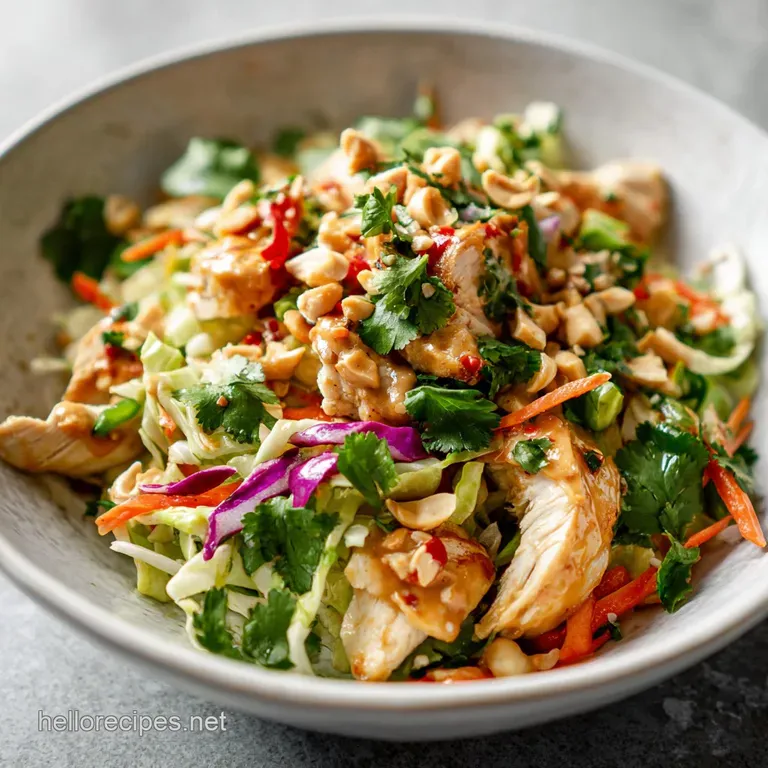
- Time: Active 15 minutes, Passive 5 minutes, Total 20 minutes
- Flavor/Texture Hook: Shatter crisp vegetables against a silky, nutty glaze
- Perfect for: High protein meal prep or a refreshing mid summer dinner
- Mastering Thai Chicken Salad Peanut Dressing
- The Molecular Logic of Emulsions
- Technical Specs for This Recipe
- Sourcing Sustainable Component Elements
- Essential Tools for Gastronomy Success
- Executing the Perfect Salad Crunch
- Navigating Texture and Flavor Fixes
- Innovative Adaptations for Modern Diets
- Sustainable Storage and Waste Reduction
- Plating for Maximum Visual Impact
- Recipe FAQs
- 📝 Recipe Card
Mastering Thai Chicken Salad Peanut Dressing
The sharp thwack of my knife hitting the wooden board is the first sign that this isn't just another soggy bowl of greens. I still remember the first time I tried to make a homemade Thai chicken salad; it was a watery disaster because I didn't respect the structural integrity of the vegetables.
I’d used standard Romaine, which wilted the second the salt in the dressing touched it, leaving me with a limp, uninspiring mess that looked more like seaweed than a vibrant meal.
We have moved beyond those rookie mistakes. Today, it’s all about the contrast between the rigid, structural crunch of Napa cabbage and the luxurious, velvety coat of a properly emulsified sauce.
When you pour that thick, golden liquid over the purple and green ribbons, it doesn't just run off; it grips the surface, creating a synergy of flavors that hits every part of your palate sweet, salty, tangy, and a whisper of heat.
This isn't about following a tradition it’s about using modern kitchen logic to build a better bite. We’re looking for that specific sensory experience where the vegetables "shatter" when you bite them, released into a pool of savory peanut goodness.
It’s the kind of dish that makes you actually want to eat your vegetables, and it's remarkably sustainable when you source local, hardy brassicas that stay fresh in your fridge for a week.
The Molecular Logic of Emulsions
The Physics of the Viscosity
Molecular Bonding: Peanut butter acts as a natural emulsifier because its proteins and fats create a stable matrix that traps the liquid lime juice and vinegar. By adding warm water, you lower the surface tension of the fats, allowing the dressing to transform from a thick paste into a pourable, silky glaze.
Chef Tip: Freeze your fresh ginger for 10 minutes before grating; it prevents the ginger from turning into a stringy pulp and allows for a fine, snow like texture that dissolves instantly into the liquid.
Benefits of the Quick Poach Method
When preparing the protein, I’ve found that over high heat searing can sometimes create a tough exterior that resists the dressing. A gentle poach or using a sous vide approach ensures the 500g of chicken breast remains succulent and porous. This allows the meat to act like a sponge for the soy and lime, rather than just being a dry topping. Much like the technique in my OnePan Creamy Tuscan recipe, moisture retention is the primary goal here.
Achieving Emulsion Without Modern Tech
You don't need a high speed blender to get that professional finish. A simple glass jar is your best friend. The kinetic energy of a 30 second "jar shake" is enough to force the oil and water based ingredients into a temporary state of harmony.
| Method | Time | Texture | Best For |
|---|---|---|---|
| Stovetop Poach | 12 minutes | Tender & Moist | Shredding for salad |
| Oven Roast | 20 minutes | Firm & Golden | Slicing for meal prep |
| Air Fryer | 10 minutes | Crispy Edges | Immediate serving |
Technical Specs for This Recipe
The beauty of this Thai peanut chicken salad recipe lies in its scalability and the way it handles time. If you’re cooking for a crowd, the hardy nature of the cabbage means you can dress it 20 minutes before serving without losing that essential crunch.
- Scaling Down (1-2 people): Halve all ingredients. For the garlic, use a small clove or half to avoid it overpowering the smaller volume of peanut butter.
- Scaling Up (8+ people): When doubling, only increase the ginger and garlic by 1.5x. Aromatics tend to amplify exponentially in larger batches.
- Metric Precision: Using 400g of Napa and 200g of Red cabbage ensures a 2:1 ratio that provides color without the bitterness of the red leaves dominating the bowl.
Chef Tip: Massage the shredded red cabbage with a tiny pinch of salt for 60 seconds before mixing with the other greens. This breaks down the tough cellulose and makes it much more pleasant to chew.
Sourcing Sustainable Component Elements
Selecting the right elements is a study in texture. We aren't just looking for "fresh" we’re looking for structural density. If you enjoy the layering of flavors here, you might also appreciate the balance in a Pesto Chicken Sandwich recipe, where the bread provides the structure for the herbaceous sauce.
| Ingredient | Science Role | Pro Secret |
|---|---|---|
| Peanut Butter | Primary Emulsifier | Use "natural" brands; the lack of stabilizers allows for a cleaner mouthfeel. |
| Lime Juice | Protein Denaturant | Fresh is non negotiable; bottled juice lacks the bright citric acid punch. |
| Rice Wine Vinegar | pH Balancer | Cuts through the heavy fat of the peanut butter to refresh the palate. |
| Honey/Maple | Viscosity Agent | Creates a "gloss" on the vegetables that makes the dish visually stunning. |
- 400g Napa cabbage
- The "water dense" crunch.
- 200g Red cabbage
- For color and earthy depth.
- 120g Carrots
- Matchstick cut for consistent texture.
- 1 Red bell pepper
- Adds a sweet, watery snap.
- 3 Green onions
- For a sharp, sulfurous bite.
- 15g Cilantro & 10g Mint
- These aren't garnishes; they are foundational flavor components.
Essential Tools for Gastronomy Success
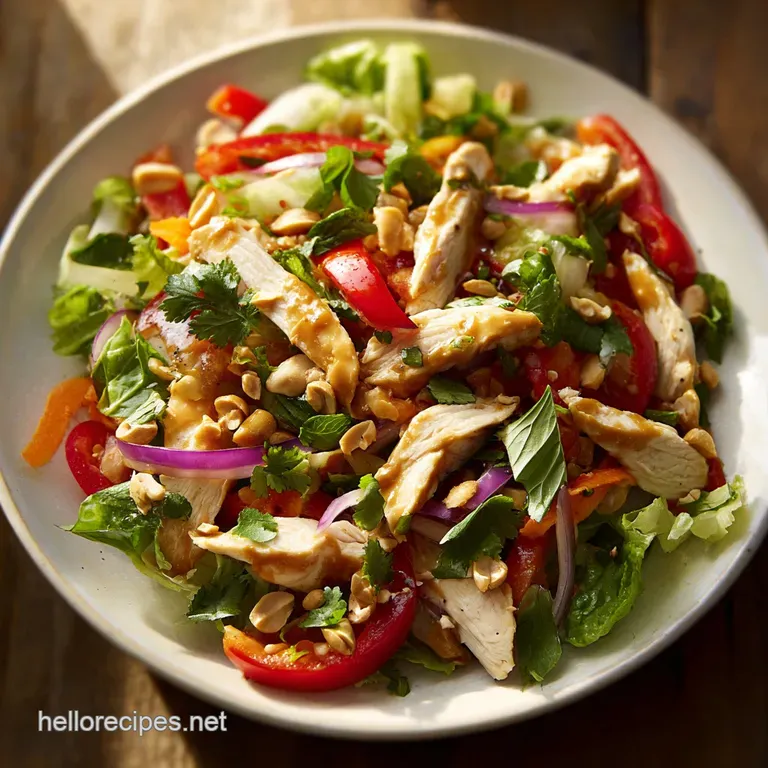
To achieve the "matchstick" precision of a restaurant quality Thai chicken salad with peanut sauce, your equipment choice matters. You don't need a kitchen full of gadgets, but two or three specific items will make the process infinitely easier.
- A Mandoline Slicer: This is the only way to get that 1mm thin shred on the cabbage that allows the dressing to permeate every crevice.
- Microplane Grater: Essential for the 5g of ginger and 1 clove of garlic. We want a paste, not chunks.
- Large Stainless Steel Bowl: You need more room than you think. Aeration during the tossing process is what keeps the salad light.
- Glass Mason Jar: For the dressing. It’s sustainable, reusable, and the best way to emulsify the 125g of peanut butter with the liquids.
Executing the Perfect Salad Crunch
- Prep the Cabbage. Thinly shred the 400g Napa and 200g red cabbage. Note: Thin ribbons increase surface area for the dressing to cling to.
- Julienne the Carrots. Cut the 120g of carrots into 5cm matchsticks. until they resemble thin orange needles.
- Slice the Aromatics. Bias slice the 3 green onions and thinly slice the red bell pepper. Note: Bias cutting exposes more surface area for flavor release.
- Tear the Herbs. Roughly chop the 15g cilantro and hand tear the 10g mint. until the aroma fills the room.
- Shred the Protein. Take your 500g of cooked chicken and pull it apart into bite sized shreds. Note: Shredded meat holds more sauce than sliced cubes.
- Create the Emulsion. Combine 125g peanut butter, 45ml soy sauce, 30ml lime juice, 30ml rice vinegar, 15ml honey, ginger, and garlic in a jar.
- Hydrate the Sauce. Add 15ml warm water to the jar and shake vigorously until the mixture is velvety and pale tan.
- Combine the Base. Toss all vegetables and herbs in the large bowl.
- The First Toss. Pour half the dressing over the greens and mix with your hands. Note: Your hands are the best tool to ensure even coverage without bruising.
- The Final Assembly. Add the chicken and the remaining dressing, tossing once more until every strand is glistening.
Navigating Texture and Flavor Fixes
Even with the best intentions, things can go sideways. The most common issue with a homemade Thai chicken salad dressing is the texture of the peanut butter itself.
My Dressing is Clumpy
If your peanut butter was cold from the fridge, it might resist the lime juice and soy. The fats are too "tight."
| Problem | Root Cause | Solution |
|---|---|---|
| Separated Sauce | Temperature shock | Whisk in 5ml of boiling water to melt the fats. |
| Bland Base | Excess water on greens | Spin the cabbage in a salad spinner until bone dry. |
| Too Salty | Soy sauce overkill | Add 5ml of honey and 5ml of lime juice to balance the pH. |
My Salad Tastes Bland
This usually happens if you haven't seasoned the chicken or if the vegetables were still wet from washing. Dilution is the enemy of flavor. Ensure you pat the red bell pepper and cabbage completely dry after rinsing.
Common Mistakes Checklist:
- ✓ Using "stabilized" peanut butter (the kind with palm oil) which makes the dressing gummy.
- ✓ Skipping the fresh mint - it’s the secret to the "bright" finish.
- ✓ Dressing the salad more than 30 minutes before serving.
- ✓ Forgetting to let the shredded chicken cool completely (hot chicken wilts the cabbage).
- ✓ Using a dull knife, which "crushes" the cabbage cells instead of slicing them.
Innovative Adaptations for Modern Diets
Modern gastronomy is all about flexibility. While this is the best Thai chicken salad peanut dressing in its original form, you can tweak it to suit your lifestyle.
- Nut Free Innovation: Replace the 125g of peanut butter with sunflower seed butter. It maintains the creamy texture but offers a slightly more "toasty" flavor profile.
- The Vegan Pivot: Swap the 500g of chicken for smoked tofu or crispy chickpeas. The smoky notes of the tofu pair beautifully with the 30ml of rice wine vinegar.
- Heat Variations: If you want more kick, add 5g of Sambal Oelek or crushed red pepper flakes to the dressing.
- Keto Modification: Replace the 15ml of honey with a liquid monk fruit sweetener to reduce the carb count while maintaining the "gloss."
- Myth
- You must use fish sauce for an authentic Thai flavor.
- Truth
- While fish sauce is common, the 45ml of soy sauce combined with the lime juice creates a similar umami acid balance that is more accessible for many home cooks.
- Myth
- Cabbage needs to be blanched.
- Truth
- Blanching destroys the structural crunch. The acidity in the 30ml of lime juice "cooks" the cabbage slightly over time anyway.
Sustainable Storage and Waste Reduction
I’m a big believer in zero waste cooking. That 500g of chicken breast often leaves behind scraps, and those cabbage cores shouldn't just be tossed away.
Storage Guidelines:Fridge: The undressed salad base lasts 4 days. The dressing lasts 7 days in a sealed jar. Freezer: Do not freeze the salad. You can, however, freeze the peanut dressing in ice cube trays for up to 3 months.
Thaw and whisk with a drop of warm water to revive.
- Cabbage Cores
- Thinly slice the "hearts" of the Napa cabbage and pickle them in the leftover rice wine vinegar and sugar for a quick snack.
- Herb Stems
- Don't toss the cilantro stems! They have more flavor than the leaves. Finely mince them and add them directly into the peanut dressing.
- Chicken Bones
- If you poached a whole chicken for this recipe, use the bones to make a light ginger infused broth.
Plating for Maximum Visual Impact
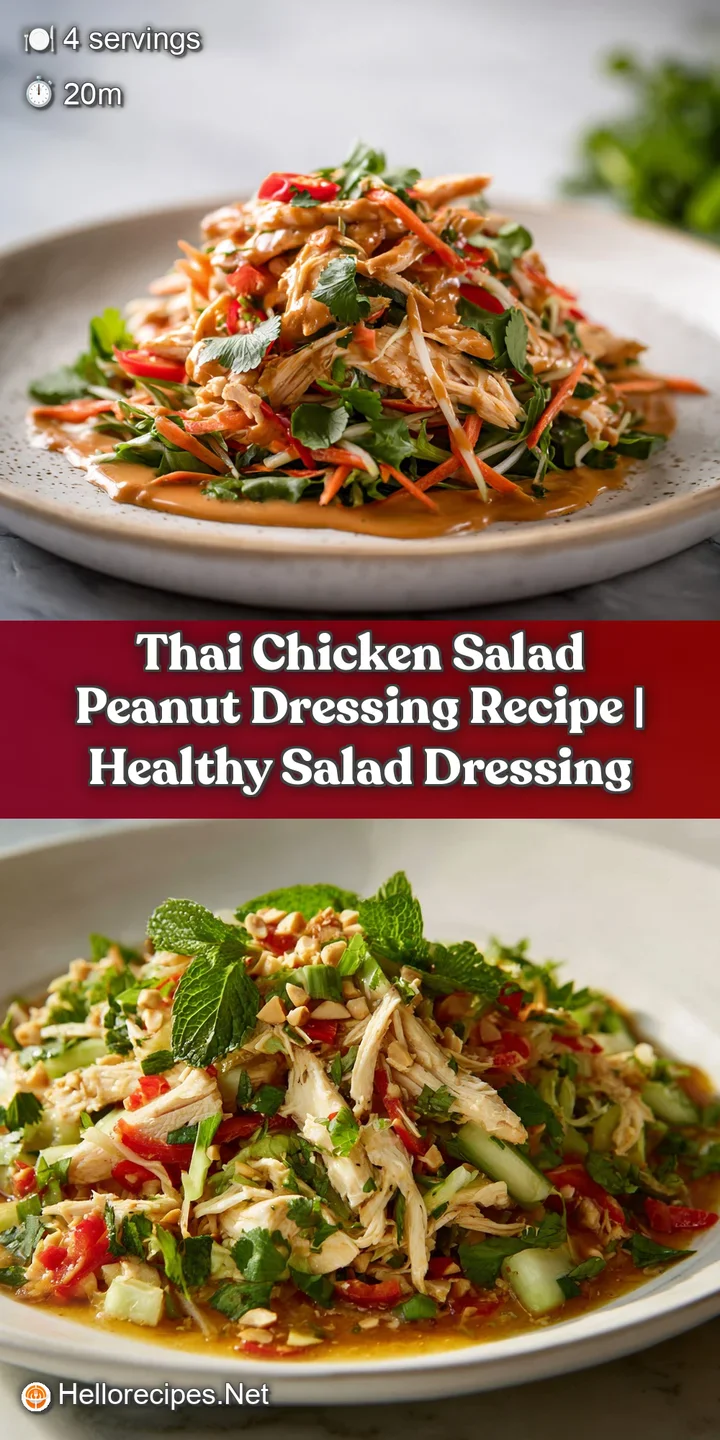
Presentation is the final step in the gastronomy experience. To make this easy Thai chicken salad peanut dressing look as good as it tastes, think about height and color contrast.
- The Party Platter: Instead of a deep bowl, spread the salad on a wide, flat platter. This prevents the heavy ingredients from sinking to the bottom and keeps the 200g of purple cabbage visible.
- The Crunchy Wrap: Use large Bibb lettuce leaves as "cups" and fill them with the Thai peanut chicken salad. It’s a great way to serve this at a gathering without needing forks.
- Garnish Logic: Save a few sprigs of cilantro and a tablespoon of the 125g crushed peanuts (if using) for the very top. It provides a visual cue of what’s inside.
Whether you're making this for a quick Tuesday night meal or prepping it for a weekend gathering, the key is the emulsion. Once you master that silky, peanut heavy glaze, you'll find yourself putting it on everything from roasted broccoli to cold noodles.
Trust me, your fridge isn't complete without a jar of this stuff. Ready to get chopping? Let's crack on.
Recipe FAQs
Can I substitute brown sugar for the honey in the peanut dressing?
Yes, but adjust the liquid. Brown sugar is drier than honey, so you may need to add an extra 5ml of warm water to maintain the proper pourable consistency in the dressing.
How to achieve a non-wilted texture when making this salad ahead of time?
Keep the protein separate from the vegetables. Store the dressing separately, then only toss the vegetables right before serving; the acidity in the dressing will soften the greens too quickly if left overnight.
How to make the peanut dressing cling properly instead of pooling at the bottom?
Whisk vigorously to emulsify the peanut butter and acid. Use a glass jar and shake hard, ensuring you add a small amount of warm water last to lower the fat's surface tension; if you enjoyed mastering this stable emulsion, see how the same principle works in our Classic Homemade Caesar Dressing recipe.
Is it true that using store-bought peanut butter ruins the authentic Thai flavor profile?
No, it depends on the type of peanut butter. Stabilized peanut butter (with added oils) makes the dressing gummy; use natural, drippy peanut butter to achieve the necessary silky texture.
What is the best way to shred the chicken so it soaks up the dressing evenly?
Pull the chicken apart using two forks or your hands. This creates irregular, porous shreds that hold more sauce than uniformly sliced pieces, similar to the technique used when preparing poultry for a saucy dish like our Creamy Chicken Alfredo recipe.
How to substitute poultry for a vegetarian or vegan version of this salad?
Use extra firm tofu or roasted chickpeas. Press the tofu thoroughly to remove moisture, cube it, and pan-fry until golden brown to mimic the texture contrast provided by the chicken.
What is the primary role of the rice wine vinegar in this recipe?
The vinegar cuts through the richness of the peanut butter. Its acetic acid balances the heavy fat content, providing necessary palate cleansing acidity alongside the lime juice.
Thai Chicken Salad Peanut
Ingredients:
Instructions:
Nutrition Facts:
| Calories | 477 kcal |
|---|---|
| Protein | 50.3 g |
| Fat | 20.6 g |
| Carbs | 24.8 g |
| Fiber | 5.2 g |
| Sugar | 11.4 g |
| Sodium | 785 mg |
