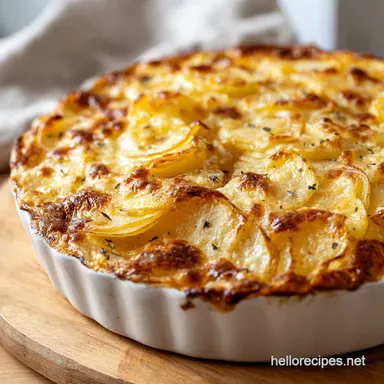
Creamy Au Gratin Potatoes: Failure-Proof
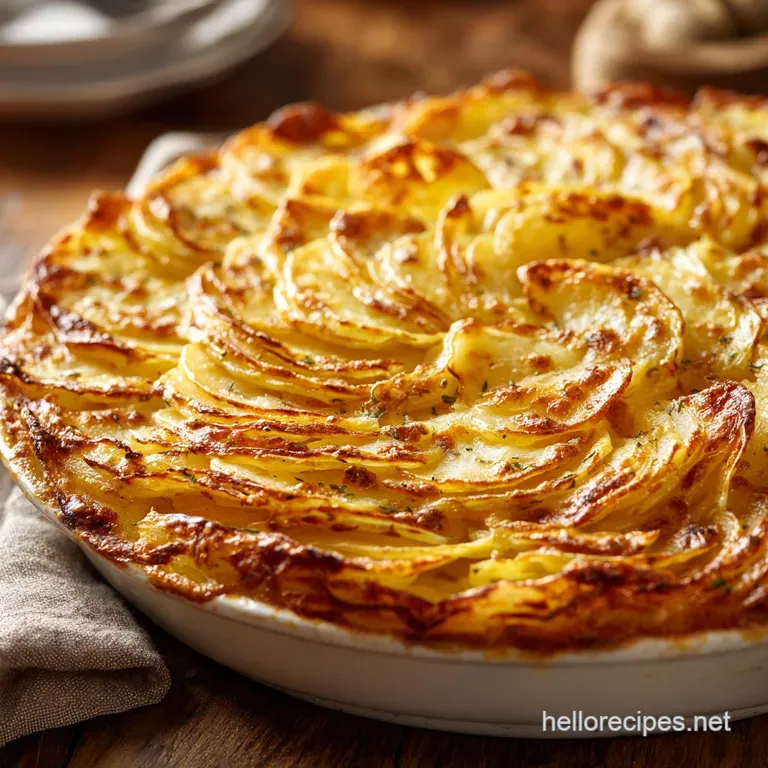
- Time:20 minutes active + 90 minutes baking = Total 110 minutes
- Flavor/Texture Hook: Mahogany colored crust with a silky, buttery center
- Perfect for: Holiday dinner side or a cozy Sunday roast
- The Secret to Creamy Au Gratin Potatoes
- Why This Method Works
- Component Analysis
- Gathering Your Essentials
- The Required Gear
- Step By Step Instructions
- Fixing Common Casserole Issues
- Tasty Flavor Twists
- Adjusting the Batch Size
- Storage and Reheating
- Plating for Visual Impact
- Recipe FAQs
- 📝 Recipe Card
Have you ever noticed how some potato bakes end up as a watery soup while others are thick and rich? It's a mystery that has ruined many a dinner party, including one of mine. I remember a rainy evening in a small cottage in Galway, trying to impress some local friends with a fancy side dish.
I used a waxy potato that refused to release its starch, and the result was a pool of cream floating over hard potato coins.
It was a total disaster, but it taught me the most important lesson about this dish. The secret isn't in the amount of cheese, but in the potato variety and the slice thickness. Once I switched to Yukon Golds and a mandoline, everything changed.
Now, I make this version whenever I want something that feels distinctive and modern but tastes like a warm hug.
You can expect a dish that has a shatter crisp top and a center that's almost like a custard. We're going to focus on getting that mahogany color on top without overcooking the insides. It's all about the balance of fats and heat, and I'm going to show you exactly how to nail it.
The Secret to Creamy Au Gratin Potatoes
When you're aiming for the best creamy au gratin potatoes, you have to treat the potatoes like the primary thickening agent. Most people think they need a flour based sauce, but that often leads to a gluey texture.
By slicing the potatoes thin and letting them simmer in cream, the natural starches leak out and create a velvety emulsion on their own.
The key is the layering. If you just toss everything in a bowl and dump it in a pan, you get uneven cooking. By layering the cheese and potatoes, you create little pockets of flavor that keep the dish from becoming one giant, monolithic block of starch. Trust me on this, the layering is where the magic happens.
Right then, let's look at why this actually works. It's not magic, just a bit of kitchen logic.
Why This Method Works
- Starch Release: Slicing Yukon Golds thinly allows just enough starch to escape into the cream, thickening it naturally.
- Fat Integration: The combination of butter and heavy cream prevents the cheese from breaking or becoming oily.
- Nutmeg Bridge: A tiny pinch of nutmeg doesn't make it taste like dessert, but it cuts through the heavy dairy to brighten the potato flavor.
- Slow Heat: Baking covered for the first hour ensures the centers are tender before the top browns.
| Method | Time | Texture | Best For |
|---|---|---|---|
| Fast (Parboiled) | 45 mins | Softer, less cohesive | Weeknight meals |
| Classic (Raw) | 110 mins | Structured, velvety | Holiday feasts |
Component Analysis
| Ingredient | Science Role | Pro Secret |
|---|---|---|
| Yukon Gold | Starch Source | Use these for the best balance of waxiness and fluff |
| Heavy Cream | Fat Base | Don't swap for milk alone or the sauce will split |
| Gruyère | Flavor/Bind | Grate it yourself to avoid the anti clumping starch |
| Nutmeg | Flavor Accent | Use freshly grated for a photographic, bright aroma |
Gathering Your Essentials
For this recipe, you need ingredients that bring both richness and a bit of sharp contrast. Don't bother with low-fat cheese or skim milk here, as you'll lose that signature mouthfeel.
- 2.5 lbs (1.1 kg) Yukon Gold potatoes, peeled and thinly sliced Why this? Perfect medium starch content for a thick sauce
- 3 tbsp (42 g) unsalted butter, melted Why this? Coats potatoes to prevent sticking
- 3 cloves garlic, minced Why this? Adds a sharp, savory base note
- 1 tsp (6 g) kosher salt Why this? Draws moisture out of potatoes
- ½ tsp (1 g) cracked black pepper Why this? Adds a woody heat
- 2 cups (475 ml) heavy cream Why this? Essential for the velvety emulsion
- 1 cup (240 ml) whole milk Why this? Lightens the sauce so it's not too heavy
- 2 cups (220 g) Gruyère cheese, grated Why this? Melts beautifully with a nutty flavor
- ½ cup (50 g) Parmesan cheese, freshly grated Why this? Adds a salty, crystalline crust
- ¼ tsp (0.5 g) ground nutmeg Why this? The secret aromatic lift
- 1 tbsp (4 g) fresh parsley, chopped Why this? Provides a fresh, green color accent
The Required Gear
You don't need a professional kitchen, but a couple of tools make this way easier. A mandoline is my top recommendation. If you try to slice 2.5 lbs of potatoes by hand to 1/8 inch, your arm will be shaking by the time you finish.
I suggest a 9x13-inch ceramic baking dish. Ceramic holds heat more evenly than glass or metal, which prevents the edges from burning before the middle is done. If you have a stand mixer such as KitchenAid, you can use the grating attachment for the cheese to save time.
Step by step Instructions
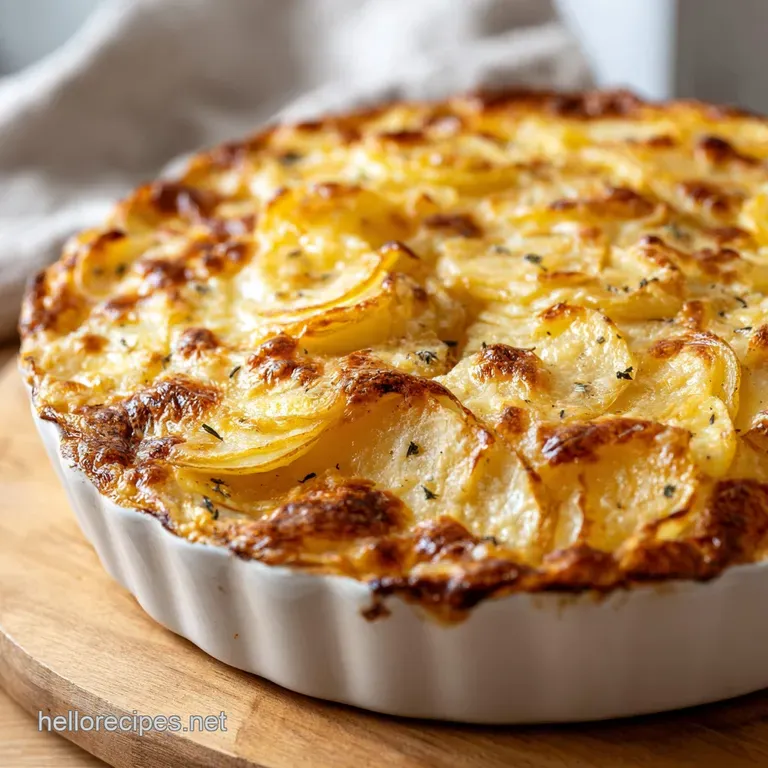
- Slice the potatoes into uniform 1/8 inch rounds using a mandoline slicer. Note: Uniform thickness ensures every slice cooks at the same rate
- In a large mixing bowl, toss the potato slices with melted butter and minced garlic until evenly coated.
- Lay half of the seasoned potatoes in the bottom of a 9x13-inch ceramic baking dish, overlapping them slightly.
- Sprinkle half of the grated Gruyère and Parmesan cheese over the first layer of potatoes.
- Repeat the layering process with the remaining potatoes and the rest of the cheese.
- Whisk together the heavy cream, whole milk, and ground nutmeg, then pour the mixture evenly over the potatoes.
- Cover the dish tightly with aluminum foil and bake at 180°C (350°F) until the potatoes are tender when pierced with a knife (usually around 70-75 mins).
- Remove the foil and bake for the final 15-20 minutes until the top forms a bubbling, mahogany colored crust.
- Garnish with chopped fresh parsley before serving.
Chef's Tip: To get an even more distinctive crust, sprinkle a tiny bit of extra Parmesan on top 5 minutes before the end. Also, freeze your butter for 10 mins before melting if you want it to emulsify faster with the garlic.
Fixing Common Casserole Issues
Making homemade creamy au gratin potatoes can sometimes lead to a few hiccups. The most common issue is a sauce that doesn't thicken, leaving you with a "soupy" result. This usually happens if the potatoes are sliced too thick or if you used a waxy potato like a red potato, which holds onto its starch too tightly.
Another annoying problem is the "oil slick," where a layer of yellow fat floats on top. This happens when the cheese is overheated or if you used a pre shredded cheese coated in cellulose. To avoid this, always grate your own cheese and keep the oven temperature steady.
Why Your Sauce Separated
If the cream and cheese split, it's usually due to a rapid temperature change. This can happen if you use a very high heat or if the cream wasn't fully incorporated. If you're struggling with consistency, you might find my creamy scalloped potatoes tips helpful for achieving a more stable bind.
| Problem | Root Cause | Solution |
|---|---|---|
| Soupy Sauce | Too thick slices | Use a mandoline for 1/8 inch cuts |
| Oil on Top | Pre shredded cheese | Grate Gruyère and Parmesan by hand |
| Raw Centers | Foil leak | Seal foil tightly to trap steam |
Common Mistakes Checklist
- ✓ Using red potatoes instead of Yukon Golds
- ✓ Forgetting to salt the potatoes before layering
- ✓ Skipping the covered baking phase
- ✓ Using low-fat milk which causes curdling
- ✓ Over stirring the layers during the bake
Tasty Flavor Twists
Once you've nailed the basic creamy au gratin potatoes, you can start playing with the profile. For a smoky depth, I love adding 1/2 cup of smoked paprika or some diced pancetta between the layers. The saltiness of the pork cuts through the richness of the cream.
If you want something more earthy, try adding a teaspoon of fresh thyme or some sautéed mushrooms. For those who want a more hearty meal, adding diced ham is a classic move that turns this side into a main. If you're looking for a different style of potato side, you might enjoy my cheesy scalloped potatoes which uses a slightly different sauce base.
For an Earthy Twist
Add 1/2 cup of sautéed leeks. Sauté them in butter first until they're soft and translucent, then layer them in with the cheese.
For a Smoky Depth
Swap the Parmesan for a smoked Provolone or add a pinch of chipotle powder to the cream mixture.
Adjusting the Batch Size
When you're making creamy au gratin potatoes for a crowd, you can't just double everything linearly. If you double the recipe, I recommend using two separate 9x13 pans rather than one deep pan. If the dish is too deep, the center will stay raw while the edges turn to charcoal.
For smaller batches, like a half portion, use an 8x8-inch pan. Reduce the baking time by about 20% because the heat reaches the center of a smaller mass faster. If you're scaling up, keep your salt and spices at 1.5x rather than 2x, as salt tends to intensify in larger dairy heavy bakes.
Decision Shortcut If you want a thinner, crispier gratin, do: Use a larger pan and spread the potatoes thinner. If you want a more custard like center, do: Increase the heavy cream by 1/4 cup.
If you're short on time, do: Slice potatoes thinner and increase oven temp to 190°C (375°F) for the final brown.
Storage and Reheating
This dish keeps surprisingly well in the fridge for up to 4 days. Store it in an airtight container. When you reheat it, the sauce can sometimes tighten up. To fix this, add a splash of milk to the edges of the dish before popping it in the oven.
Reheat at 160°C (325°F) for about 20 minutes. This slower heat prevents the cheese from breaking again. I don't recommend freezing this dish, as the cream and potato structure often break down, leading to a grainy texture upon thawing.
For zero waste, don't throw away those potato peels. Toss them in a bit of oil and salt, and roast them at 200°C (400°F) for 10 minutes for a quick, salty snack while the main dish bakes.
Plating for Visual Impact
Since this is a monochromatic dish, you need a color strategy to make it pop. I focus on three specific color accents to ensure the result looks photographic.
First, the mahogany crust. This is your primary visual draw. Don't pull the dish out when it's just "golden" - wait for that deep, dark brown. Second, the deep green of the fresh parsley. Add this only after the dish has rested for 5 minutes so the heat doesn't wilt the herbs instantly.
Finally, the pale cream interior. When you scoop the dish, make sure you get a cross section that shows the distinct layers of potato and cheese.
I recommend serving this on a dark colored platter to make the mahogany and green tones stand out. If you're serving it with a roast, place it slightly off center to create a more contemporary, asymmetrical look on the table.
Recipe FAQs
What is the difference between scalloped potatoes and au gratin potatoes?
Au gratin includes cheese and a browned crust. Scalloped potatoes typically rely on a cream sauce without the heavy cheese layers and mahogany colored top.
What's the secret to perfect au gratin?
Use a mandoline for uniform 1/8 inch slices. This ensures every potato piece cooks at the same rate, preventing some from being mushy while others stay hard.
How to make creamy potato gratin?
Layer sliced potatoes with butter, garlic, and cheese, then pour over a mixture of heavy cream, milk, and nutmeg. Bake covered until tender, then uncover for the final 15-20 minutes to brown the top.
Should I boil potatoes before au gratin?
No, there is no need to parboil. Slicing the Yukon Golds thinly allows them to cook through perfectly in the cream sauce during the 90-minute bake.
Is it true that only Russet potatoes work for this recipe?
No, this is a common misconception. Yukon Gold potatoes are preferred here because they hold their shape better while providing a naturally buttery texture.
Can I make this in a slow cooker?
Yes, though the oven provides a superior crust. If you prefer a slow cooked meal, try applying similar low-and-slow logic to our crockpot chicken.
How to prevent the sauce from separating when reheating?
Add a splash of milk to the edges of the dish before reheating. Bake at 325°F (160°C) for 20 minutes to keep the cheese and cream stable.
Creamy Au Gratin Potatoes