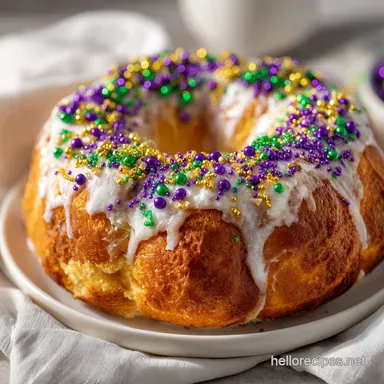
Guilt-Free Mardi Gras King Cake: Lighter Brioche
- Time:30 mins active + 2 hours rising/cooling = Total 3 hours
- Flavor/Texture Hook: Velvety citrus filling with a soft, pillowy crumb
- Perfect for: Festive parties, brunch gatherings, or a fun family baking project
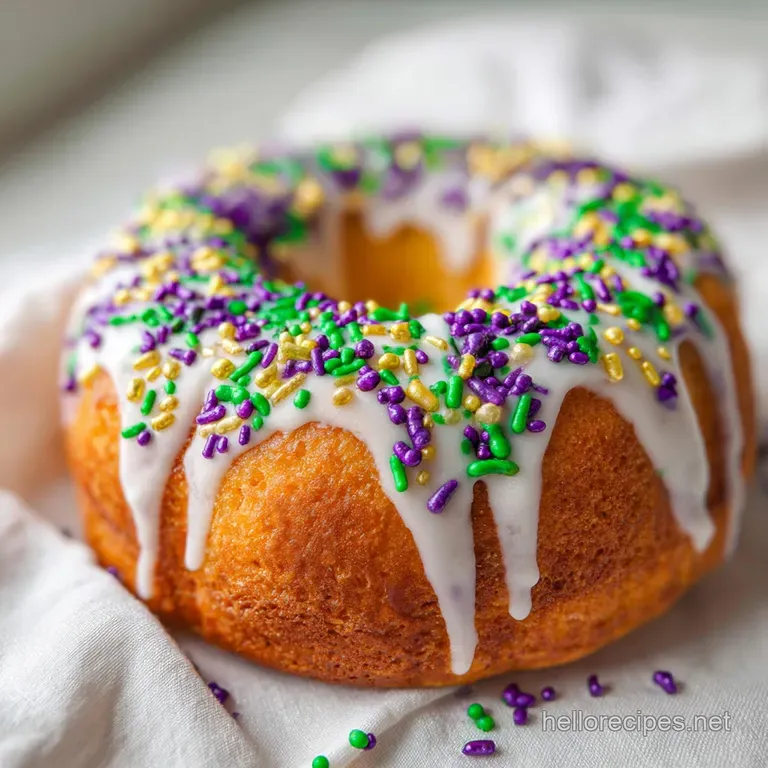
- Mardi gras king cake
- Why This Recipe Works
- Ingredient Deep Dive
- Gathering Your Essentials
- Tools for the Job
- From Prep to Plate
- What Can Go Wrong (and How to Fix It)
- Troubleshooting Common Issues
- Adjusting the Batch
- Busters of King Cake Lore
- Storage and Scraps
- Perfect Complements
- Recipe FAQs
- 📝 Recipe Card
The air in my kitchen right now smells like a warm hug and a hint of lemon. That specific, heady scent of yeast hitting warm honey is enough to make anyone hungry, regardless of the time of day. It's a vibrant, sweet aroma that fills every corner of the house, signaling that something special is happening in the oven.
Forget everything you've heard about needing a professional bakery or a 12 hour commitment to get a soft, airy result. There's this common myth that a traditional king cake has to be dense or requires an exhausting kneading process to be authentic. Honestly, that's just not true.
You can get a pillowy, cloud like texture without spending your entire Saturday in the kitchen.
The secret is all in the hydration and the choice of sweeteners. By using honey and a touch of Greek yogurt, we create a moisture barrier that keeps the cake from drying out. This mardi gras king cake is designed for the home cook who wants the wow factor of a New Orleans bakery but doesn't want to feel like they've run a marathon by the time the glaze is on.
Mardi gras king cake
I remember the first time I tried to make one of these. I followed a recipe that insisted on "industrial grade" kneading, and I ended up with something that felt more like a dinner roll than a festive cake. It was a total flop, but it taught me that the dough needs to breathe.
I realized that if you just give the yeast the right environment - warmth, a bit of honey, and enough time - it does all the heavy lifting for you.
Now, my approach is much more relaxed. I focus on the sensory cues. I wait for that specific "frothy" look on the yeast and the way the dough eventually pulls away from the bowl with a satisfying, clean snap. It's not about fighting the flour; it's about working with it.
When you finally pull this cake out of the oven, the smell is incredible. It's a mix of toasted butter and cinnamon that practically vibrates in the air. Then comes the best part: the glaze.
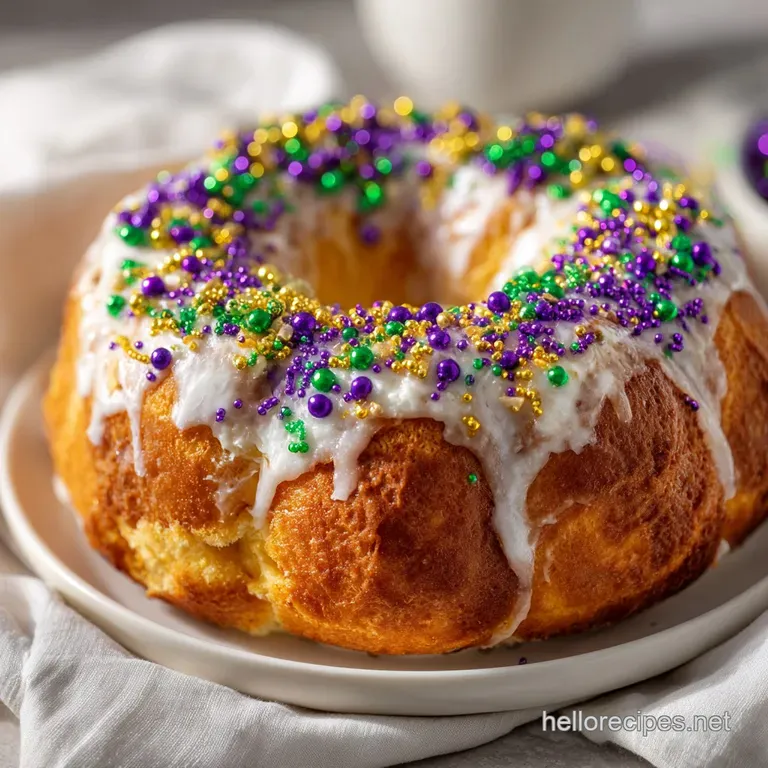
Drizzling that white icing over the warm cake and hitting it with the purple, green, and gold sugars makes it feel like a celebration before you even take the first bite.
Why This Recipe Works
- Honey Hydration: Honey is a humectant, meaning it grabs moisture from the air and holds onto it, keeping the crumb soft.
- Yogurt Tang: The acidity in Greek yogurt breaks down some of the gluten, resulting in a more tender, velvety bite.
- Temperature Control: Using warm (not hot) milk activates the yeast without killing it, ensuring a consistent rise.
- Zest Integration: Adding lemon zest directly into the cream cheese filling cuts through the fat, brightening the overall flavor.
| Method | Time | Texture | Best For |
|---|---|---|---|
| Fast Shortcut | 1 hour | Denser, bread like | Last minute guests |
| This Classic | 3 hours | Pillowy and airy | Traditional celebrations |
| Overnight | 12 hours | Complex, fermented | Maximum flavor depth |
Ingredient Deep Dive
Understanding what each part does helps you avoid those "why is my dough flat?" moments.
| Ingredient | Science Role | Pro Secret |
|---|---|---|
| Active Dry Yeast | Leavening Agent | Let it froth for 10 mins to ensure it's alive |
| Honey | Sugar Source/Moisturizer | Better than granulated sugar for a softer crust |
| Greek Yogurt | Texture Modifier | Keeps the cream cheese filling from becoming greasy |
| Lemon Zest | Flavor Balance | Rub the zest into the sugar to release oils |
Gathering Your Essentials
Here is everything you need to get this started. Make sure your dairy is at the right temperature so you don't end up with lumps in your filling.
- 3 cups (375g) all purpose flour Why this? Provides a reliable structure without being too chewy (Sub: Bread flour for a slightly more "bready" chew)
- 1/4 cup (50g) honey Why this? Keeps the cake moist and feeds the yeast (Sub: Maple syrup for a woodsy flavor)
- 2 1/4 tsp (7g) active dry yeast Why this? Standard reliable lift (Sub: Instant yeast, but skip the frothing step)
- 1/2 cup (120ml) warm milk Why this? Provides fats for a tender crumb (Sub: Warm almond milk for a dairy-free twist)
- 2 large eggs Why this? Adds richness and structure (Sub: 2 flax eggs for a plant based attempt)
- 4 tbsp (56g) unsalted butter, softened Why this? Creates a silky mouthfeel (Sub: Coconut oil for a tropical note)
- 1/2 tsp (3g) salt Why this? Tightens gluten and balances sweetness (Sub: Sea salt)
- 1 tsp (5g) vanilla extract Why this? Classic aromatic base (Sub: Almond extract for a nutty vibe)
- 4 oz (115g) low-fat cream cheese, softened Why this? Tangy, stable center (Sub: Mascarpone for extra richness)
- 2 tbsp (30g) plain Greek yogurt Why this? Adds creaminess without extra fat (Sub: Sour cream)
- 2 tbsp (25g) powdered sugar Why this? Sweetens filling without adding bulk (Sub: Honey)
- 1/2 tsp (2g) ground cinnamon Why this? Warm, festive spice (Sub: Nutmeg)
- 1 tsp (5g) lemon zest Why this? Brightens the heavy fats (Sub: Orange zest)
- 1 cup (120g) powdered sugar (for glaze) Why this? Dissolves quickly for a smooth finish (Sub: Icing sugar)
- 2 tbsp (30ml) milk (for glaze) Why this? Adjusts consistency (Sub: Water)
- 1/2 tsp (2g) vanilla extract (for glaze) Why this? Layers the flavor (Sub: Maple syrup)
- 2 tbsp (25g) granulated sugar Why this? For coloring (Sub: Coarse sanding sugar)
- purple, green, and gold food coloring Why this? Essential for the Mardi Gras look (Sub: Natural beet/turmeric powders)
Tools for the Job
You don't need a professional kitchen, but a few things make this way easier. I highly recommend a stand mixer such as KitchenAid because kneading by hand for 7 minutes is a workout I usually try to avoid.
- Stand mixer with a dough hook (or a sturdy bowl and a wooden spoon)
- Large mixing bowl for the first rise
- Rolling pin
- Baking sheet with parchment paper
- Hand mixer or whisk for the filling
- Small bowl for mixing colors
From Prep to Plate
Right then, let's get into it. Follow these steps and keep an eye on those sensory cues - they're more important than the timer.
Phase 1: The Low Sugar Rise
- Combine warm milk, honey, and yeast in the bowl of your mixer. Let it sit for 5-10 minutes until it looks frothy and smells like fresh bread. Note: If it doesn't bubble, your yeast might be dead; start over with fresh yeast.
- Add eggs, vanilla, and softened butter. Whisk these in until the mixture is smooth and combined.
- Slowly integrate the flour and salt. Knead on medium low speed for 5-7 minutes until the dough is smooth and pulls away cleanly from the sides of the bowl.
- Place the dough in a greased bowl and cover it with a damp cloth. Let it rise in a warm spot for 60-90 minutes until it has doubled in size and feels light and airy.
Phase 2: Filling and Shaping
- Punch down the risen dough with your fist to release the gas. Roll it out on a floured surface into a rectangle about 12x18 inches.
- Whip together the low-fat cream cheese, Greek yogurt, powdered sugar, cinnamon, and lemon zest until the mixture is velvety and no lumps remain.
- Spread the filling evenly across the dough, leaving a 1/2 inch border. Roll the dough tightly into a log and shape it into a large oval or circle.
Phase 3: The Golden Bake
- Bake at 350°F (180°C) for 30 minutes until the crust is golden brown and sounds hollow when tapped.
Phase 4: The Festive Finish
- Whisk together powdered sugar, milk, and vanilla to create a smooth glaze. Drizzle it over the cooled cake.
- Divide your granulated sugar into three bowls and mix in the purple, green, and gold colors. Sprinkle them over the glaze while it's still slightly tacky.
What Can Go Wrong (and How to Fix It)
Even the best of us hit a snag. Usually, it's just a matter of temperature or timing.
Troubleshooting Common Issues
| Issue | Solution |
|---|---|
| Why Your Dough Won't Rise | If your dough is still flat after 90 minutes, your environment is likely too cold. Yeast loves warmth, but not heat. If your house is chilly, try putting the bowl inside a turned off oven with the ove |
| Why Your Filling Leaks Out | Filling leaks usually happen because the dough wasn't rolled tightly enough or the filling was too runny. Make sure your cream cheese is softened but not melted. When rolling, think of it like a tight |
| Why Your Glaze Is Too Thin | If your glaze is running off the cake like water, you've added too much milk. Simply whisk in more powdered sugar one tablespoon at a time until it reaches a consistency that clings to the cake withou |
Common Mistakes Checklist
- ✓ Did you check that the milk wasn't boiling? (Too hot kills yeast)
- ✓ Did you let the cake cool before glazing? (Hot cake melts the icing)
- ✓ Did you leave the 1/2 inch border? (Prevents filling leaks)
- ✓ Did you knead until the dough pulled away? (Ensures the right structure)
Adjusting the Batch
If you're making this for a small group or a massive block party, you can tweak the size.
Scaling Down (1/2 Batch): Use a smaller baking sheet and reduce the bake time by about 20%. Since you can't easily use half an egg, beat one egg in a cup and measure out 2 tablespoons.
Scaling Up (2x Batch): Do not simply double the salt and spices - increase them to 1.5x to avoid an overwhelming taste. Work in batches if your mixer can't handle the volume. For the larger mass, lower the oven temperature by 25°F and extend the time by 5-10 minutes to ensure the center cooks through. This is similar to the precision needed when making classic fluffy vanilla cupcakes where temperature consistency is key.
Busters of King Cake Lore
"You must use a sourdough starter for authenticity." Not at all. While some regional versions use a pre ferment, a high-quality active dry yeast with honey provides that same depth of flavor and a much more reliable rise for the home cook.
"The cake must be dense to hold the filling." Actually, the opposite is true. A light, brioche style dough creates a better contrast with the rich cream cheese. If it's too dense, it feels more like a heavy bread than a celebratory cake.
Storage and Scraps
Storage Guidelines Keep your cake in an airtight container at room temperature for up to 2 days. For longer storage, the fridge is your friend for up to 5 days, but you'll want to wrap it tightly in foil to prevent it from drying out.
Freezing You can freeze slices of this cake for up to 2 months. Wrap each slice individually in plastic wrap, then place them in a freezer bag. Thaw in the fridge overnight or microwave for 15 seconds for a "just baked" feel.
Zero Waste Tips If you have leftover colored sugars, save them in a small jar for decorating other spring desserts. Any leftover cream cheese filling can be swirled into your morning oatmeal or used as a dip for apple slices.
If you have a bit of dough left over, shape it into small balls and bake them as mini buns for the week.
Perfect Complements
This cake is quite rich, so I love pairing it with something that cuts through the sweetness. A strong, dark roast coffee or a tart hibiscus tea works wonders.
If you're planning a full dessert spread, this pairs beautifully with some lighter options. For instance, if you want something equally creamy but in a different format, my mini salted caramel cheesecakes offer a great contrast in flavor.
Alternatively, keep it simple with a bowl of fresh berries or a platter of sliced citrus. The acidity of a fresh orange or grapefruit complements the cinnamon and honey notes of the mardi gras king cake perfectly. Trust me, the brightness of the fruit makes the whole experience feel a bit more balanced and vibrant.
Recipe FAQs
What is the king cake at Mardi Gras?
It is a cinnamon flavored cake decorated with purple, green, and gold sugars. If you appreciate a light, airy crumb, try our moist coconut cake.
Why does Mardi Gras have a king cake?
It symbolizes the Epiphany and the Three Kings. The cake is a central tradition during the Carnival season leading up to Lent.
Do you eat king cake on Fat Tuesday?
Yes, it is traditionally eaten on Fat Tuesday. This serves as the final indulgent celebration before the fasting period of Ash Wednesday begins.
What happens if you get the baby in a Mardi Gras king cake?
The person who finds the baby must host the next party or buy the next cake. It is a playful way to determine who leads the next celebration.
How to prevent the filling from leaking out during baking?
Roll the dough tightly into a log. Ensure the cream cheese is softened but not melted, and leave a 1/2 inch border around the edges of the filling.
Why isn't my king cake dough rising?
Your environment is likely too cold. If the dough is still flat after 90 minutes, place the bowl inside a turned off oven to provide the warmth yeast needs.
How to store king cake to keep it fresh?
Store in an airtight container at room temperature for up to 2 days. For longer storage, wrap the cake tightly in foil and keep it in the fridge for up to 5 days.
Mardi Gras King Cake