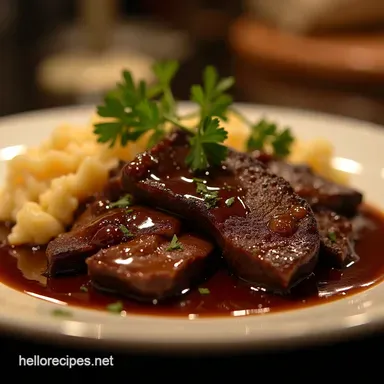
Balsamic Onion Beef Braise

- Total8 Hrs 41 Mins
- Servings6
- Calories805 kcal
- Time: 30 min active + 8 h 11 min cooking
- Taste: Sweet and savory with a sharp vinegary finish
- Best for: A cozy family dinner or weekend meal prep
Balsamic Onion Beef: A Rich Braise
The smell of rich brown-brown beef and sweet, softened onions filling your kitchen for eight hours is a mood in itself. This is one of those dishes that does the hard work for you while you're busy with other things.
The goal is a contrast between the deep, savory richness of the beef and the bright, tangy punch of the balsamic vinegar. You get meat that shreds with a fork and a glossy sauce that ties everything together.
Whether you're feeding a crowd or prepping for the week, this recipe delivers a heavy-hitting meal with very little active effort. It's all about the slow transition from a tough cut of meat to something tender.
Recipe Specs
| Feature | Detail |
|---|---|
| Prep Time | 30 minutes |
| Cook Time | 8 hours |
| Total Time | 8 hours 30 mins |
| Yield | 6 servings |
The Trick Behind the Texture
Collagen Breakdown: Low, steady heat melts the tough connective tissues in the chuck roast into gelatin. This creates a lush, melt-in-your-mouth feel that you can't get with fast cooking.
Acidic Tenderizing: The acetic acid in the balsamic vinegar helps break down muscle fibers from the outside in. This ensures the beef stays moist even after a long braise.
| Method | Time | Texture | Best For |
|---|---|---|---|
| Slow Cooker | 8 hours | Fall-apart tender | Hands-off cooking |
| Pressure Cooker | 90 mins | Tender but firmer | When you're in a rush |
The Main Ingredients
Beef chuck roast is the ideal choice for this dish. Thanks to its fat and connective tissue, it can endure eight hours of cooking without becoming dry. Using a leaner cut, such as sirloin, would likely result in a stringy and dry texture.
To cut through the richness of the beef, I use balsamic vinegar for acidity. I find that adding brown sugar creates a great contrast, mellowing the vinegar's sharpness to produce a balanced glaze.
I recommend yellow onions because their high sugar content caramelizes during the long cooking process, which adds a natural sweetness to the sauce.
Ingredients
- 3 lb beef chuck roast, cut into 4 large chunks Why this? High collagen ensures the meat becomes tender
- 2 tbsp vegetable oil Why this? Ideal for high-temperature searing
- 1 tsp salt
- 1 tsp black pepper
- 1 cup beef stock Why this? Provides the savory base for the braise
- 1/2 cup balsamic vinegar Why this? Adds acidity and a deep, dark color
- 2 tbsp brown sugar Why this? Balances the vinegar's tartness
- 4 cloves garlic, minced
- 3 large yellow onions, sliced into thick half-moons Why this? They soften and sweeten during the slow cook
- 4 large carrots, cut into 2-inch chunks
- 1 lb baby gold potatoes, halved
- 2 tbsp cornstarch Why this? Thickens the liquid into a glossy glaze
- 2 tbsp cold water
Your Kitchen Tools
- Slow cooker (6-quart or larger)
- Heavy skillet (cast iron works great)
- Tongs
- Whisk
- Small mixing bowl
Step-by-step Cooking
Stage 1: The Deep Sear
Dry the beef cubes with paper towels and season well with 1 tsp salt and 1 tsp black pepper. Bring 2 tbsp vegetable oil to a shimmer in a skillet set to medium-high. Brown the meat for 4-5 minutes per side until a dark, rich brown crust forms, then transfer the beef to the slow cooker.

Stage 2: Layering the Pot
Layer the halved baby gold potatoes and 2-inch carrot chunks at the base of the slow cooker. Scatter the sliced yellow onions over the vegetables, then nestle the seared beef on top. Note: Keeping vegetables at the bottom prevents them from overcooking into mush.
Stage 3: The Slow Braise
Stir together 1 cup beef stock, 1/2 cup balsamic vinegar, 2 tbsp brown sugar, and 4 minced garlic cloves in a small bowl. Pour this blend over the beef. Cover and cook on LOW for 8 hours until the beef is fork-tender and yields with zero resistance.
Stage 4: The Glossy Finish
Move the beef and vegetables to a platter. Strain the cooking juices into a saucepan. Whisk 2 tbsp cornstarch and 2 tbsp cold water into a slurry. Stir the slurry into the simmering liquid over medium heat for 3-5 minutes until the sauce is thick and glossy.
Pour the thickened balsamic onion sauce back over the beef and vegetables.

Quick Fixes
If the sauce is too thin, it usually means the liquid didn't reduce enough or the slurry wasn't cooked long enough. It will look translucent and run right off the spoon instead of coating it.
When the beef is still tough after eight hours, it's often because the cut of meat was too lean or the temperature was too low. Just give it another hour. If it's too tart, a pinch more brown sugar can balance the acid.
| Problem | Root Cause | Solution |
|---|---|---|
| Sauce is watery | Cornstarch not activated | Simmer slurry for 3-5 more minutes |
| Beef is chewy | Not enough cook time | Continue cooking on low for 1-2 hours |
| Taste is too sharp | Too much balsamic vinegar | Stir in 1 tsp brown sugar or honey |
Storing Leftovers
Store the beef and vegetables in an airtight container for 3 to 4 days in the fridge, as recommended by the USDA. The flavors actually deepen overnight as the meat continues to absorb the sauce.
This dish is freezer-friendly. Keep it in a freezer-appropriate bag for as long as 3 months. To reheat, let it defrost in the refrigerator for 24 hours. Gently warm the meat in a saucepan over low heat with a splash of roasted vegetable stock to loosen the glaze. For safety, heat the leftovers until they hit 165°F (74°C) throughout.
Variations and Swaps
If you want a different kind of sweetness, swap the brown sugar for honey. This creates a slightly floral profile and a thicker glaze. For an even more concentrated flavor, you can stir in a tablespoon of a balsamic glaze recipe right before serving.
For a different vegetable mix, try parsnips or turnips instead of carrots. They hold up well during the 8-hour cook and add an earthy contrast to the sweet onions.
| Original Ingredient | Substitute | Why It Works |
|---|---|---|
| Brown Sugar | Honey | Similar sweetness. Note: Adds a floral note |
| Baby Gold Potatoes | Parsnips | Similar density. Note: Adds an earthy, peppery flavor |
| Beef Stock | Vegetable Broth | Keeps the liquid base. Note: Lighter, less savory profile |
Best Side Pairings

Because the dish already features potatoes and carrots, you only need something to capture that glossy sauce. A side of garlic mashed potatoes or a piece of crusty sourdough bread works perfectly.
I also suggest a bright, fresh accompaniment to balance the richness. A simple arugula salad with lemon vinaigrette is a great choice, as the citrus and peppery notes contrast the deep, sweet flavors of the beef.
A Note on Searing
Many believe that searing "locks in the juices," but that is a common misconception. Meat loses moisture regardless of whether it is seared. The real purpose is flavor; browning creates a savory, complex crust that adds significant depth to the finished braise.
Before You Start Cooking
Which onion variety should I use?
Yellow onions provide the best flavor for this slow-cooked dish.
Tip: slice them into thick half-moons so they maintain some texture during the long cook.
How to keep the balsamic flavor from being overpowering?
Whisk brown sugar into the stock and vinegar mixture to balance the acidity.
Tip: stir in a tablespoon of balsamic glaze right before serving for a more concentrated taste.
Can this be served as a stew?
This recipe creates a hearty stew by combining beef, potatoes, and carrots in a thick, glossy sauce.
Tip: use a larger slow cooker if you decide to add more root vegetables.
Is a slow cooker used for this beef?
The beef and vegetables cook on LOW for 8 hours to ensure the meat becomes fork-tender.
Tip: sear the beef in a skillet first to develop a deep golden brown crust for better flavor.
Would honey work as a sweetener?
Honey replaces brown sugar effectively and adds a slightly floral profile to the sauce.
Tip: honey will create a thicker final glaze than brown sugar does.
Balsamic Onion Beef: Slow-Cooked