White Bean Roasted Veggie Soup: Silky and Hearty
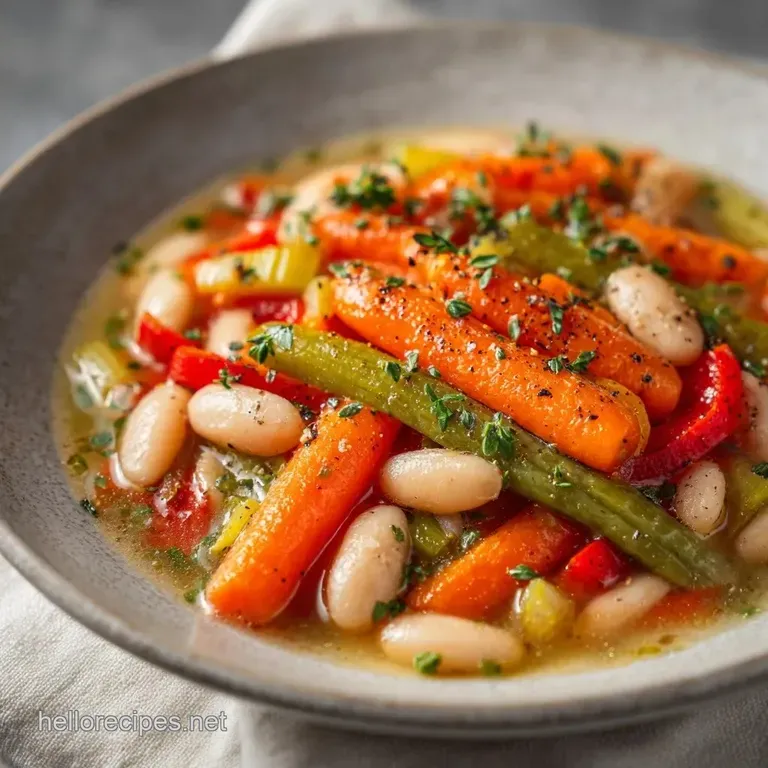
- Time: 15 min active + 25 min cooking
- Flavor/Texture Hook: Smoky, charred vegetables with a silky, creamy base
- Perfect for: Cozy weeknight dinners or plant based meal prep
- How to Actually Nail This White Bean Roasted Veggie Soup
- Recipe Specs
- The Building Blocks
- Equipment Needed
- Bringing It Together
- Avoiding Kitchen Disasters
- Troubleshooting Common Issues
- Dietary Adaptations
- Scaling the Batch
- Truths About Bean Soups
- Storage Guidelines and Zero Waste
- Perfect Complements
- High in Sodium
- Recipe FAQs
- 📝 Recipe Card
The smell of charred carrots and caramelized onions hitting the air is the only way I want to start a rainy Tuesday. I remember one November when the wind was rattling the windowpanes, and I had absolutely nothing in the fridge but some limp celery and a few cans of beans.
I didn't want a thin, watery broth, so I threw everything on a tray and cranked the heat.
That first tray of roasted veg changed how I look at soups. Instead of just boiling things together, which often tastes flat, roasting creates those little brown bits that taste like concentrated sunshine. It turns a basic meal into something that feels intentional and warm.
This White Bean Roasted Veggie Soup is my go to for those exact moods. It's hearty enough to be the main event but light enough that you don't feel like you need a nap immediately after eating. We're building flavors in layers, starting with the oven and ending with a bright hit of citrus.
How to Actually Nail This White Bean Roasted Veggie Soup
The biggest mistake people make with veggie soups is rushing the base. If you just throw raw carrots and onions into a pot, you get a "boiled" flavor. By roasting them at 200°C, you're forcing the natural sugars to brown.
This is what gives the soup a base that feels rich and savory rather than just salty.
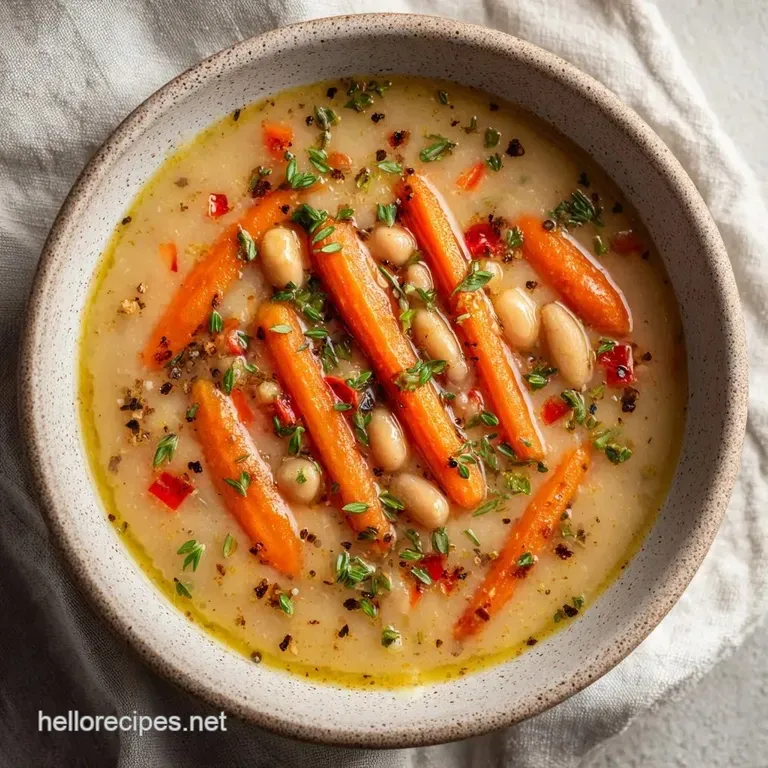
Another trick is the blending part. You don't want a smooth puree. If you blend the whole pot, you lose the soul of the dish. I use an immersion blender for just a few quick pulses. This breaks up some of the white beans to thicken the broth while leaving plenty of whole beans and roasted veggie chunks for texture.
Finally, the lemon juice at the end is non negotiable. When you have a lot of earthy flavors like beans, thyme, and smoked paprika, the soup can feel "heavy" on the tongue. A tablespoon of fresh lemon juice cuts right through that, waking up all the other ingredients.
It's the difference between a soup that tastes "okay" and one that tastes vibrant.
For Deep, Caramelized Flavor
Don't crowd your baking sheet. If the vegetables are piled on top of each other, they'll steam instead of roast. Use two trays if you have to. You want to see those dark, charred edges on the onions and carrots. That's where the magic is.
For a Creamy Texture Without Dairy
The cannellini beans are the heavy lifters here. Because they have a naturally buttery texture, they emulsify into the broth perfectly. If you want it even thicker, blend a few more beans before adding them to the pot.
For Maximum Nutrient Absorption
Adding the spinach or kale at the very end ensures the greens stay bright and don't overcook. The fat from the olive oil helps your body absorb the vitamins in the greens, so don't skimp on the roasting oil.
Recipe Specs
When you're planning your evening, it's helpful to know exactly how this fits into the schedule. This isn't a slow simmered all day affair, but it does require a bit of timing to make sure the broth is ready when the veg comes out of the oven.
| Detail | Specification |
|---|---|
| Active Prep | 15 minutes |
| Cooking Time | 25 minutes |
| Total Time | 40 minutes |
| Yield | 4 servings |
| Main Profile | Smoky & Velvety |
For those who prefer a different approach, here is how this compares to the traditional "stovetop only" method.
| Feature | Fast Sauté Method | Roasted Method (This Recipe) |
|---|---|---|
| Prep Effort | Low | Medium |
| Flavor Depth | Mild, clean | Deep, caramelized |
| Texture | Uniform | Varied (Chunks + Creamy) |
| Best For | Light lunch | Hearty dinner |
The Building Blocks
The ingredients here are simple, but each one has a specific job. We aren't just adding things for the sake of it. Everything from the tomato paste to the smoked paprika is there to build a layer of flavor.
| Ingredient | Science Role | Pro Secret |
|---|---|---|
| Cannellini Beans | Body & Texture | Rinse well to remove the "tinny" metallic taste |
| Tomato Paste | Umami Base | Fry it until it turns brick red to remove the raw edge |
| Lemon Juice | Acid Balance | Always add at the end to keep the flavor sharp |
| Smoked Paprika | Depth | Use a high-quality Spanish pimentón for a woodier taste |
If you have your own Homemade Roasted Vegetable Stock recipe, use it here. It will make the final result even more intense.
Ingredients and Substitutes
- 2 cups (300g) carrots, chopped into rounds Why this? Adds sweetness and a firm bite
- Substitute: Parsnips for a more peppery, earthy flavor.
- 2 cups (150g) celery, sliced Why this? Provides the essential aromatic base
- Substitute: Fennel for a slight anise note.
- 1 medium (150g) yellow onion, wedged Why this? Caramelizes beautifully in the oven
- Substitute: Shallots for a sweeter, milder taste.
- 1 large (150g) red bell pepper, diced Why this? Adds a bright, charred sweetness
- Substitute: Orange pepper or a handful of frozen peas (add at end).
- 2 tbsp (30ml) extra virgin olive oil Why this? High smoke point for roasting
- Substitute: Avocado oil if you prefer a neutral taste.
- 1 tsp (5g) dried thyme Why this? Earthy contrast to the sweet veg
- Substitute: Dried oregano or rosemary.
- 1/2 tsp (3g) salt Why this? Enhances all other flavors
- Substitute: Sea salt or kosher salt.
- 1/4 tsp (1g) black pepper Why this? Adds a subtle heat
- Substitute: White pepper for a more floral heat.
- 2 cans (15 oz/425g each) cannellini beans, drained and rinsed Why this? Creates the creaminess
- Substitute: Great Northern beans (similar texture, slightly milder).
- 6 cups (1.4L) low sodium vegetable broth Why this? Controls the salt levels
- Substitute: Water with a bouillon cube (careful with extra salt).
- 4 cloves (20g) garlic, minced Why this? Punchy aromatic depth
- Substitute: Garlic powder (use 1 tsp) if you're in a rush.
- 1 tbsp (15ml) tomato paste Why this? Adds richness and color
- Substitute: 2 tbsp tomato purée (will be slightly thinner).
- 1 tsp (2g) smoked paprika Why this? Gives a "fireplace" aroma
- Substitute: Regular paprika + a drop of liquid smoke.
- 2 cups (60g) fresh baby spinach or kale, chopped Why this? Freshness and color
- Substitute: Swiss chard or collard greens.
- 1 tbsp (15ml) fresh lemon juice Why this? Cuts through the richness
- Substitute: Apple cider vinegar for a tangier kick.
- 1/4 cup (10g) fresh parsley, minced Why this? Clean, herbal finish
- Substitute: Fresh cilantro or chopped chives.
Equipment Needed
You don't need a professional kitchen for this, but a couple of tools make it way easier.
- Large Baking Sheet: A rimmed one is best so the olive oil doesn't drip into your oven and cause a smoke alarm incident.
- Heavy Bottomed Pot: A Dutch oven or a stockpot works great. You want something that distributes heat evenly so the tomato paste doesn't burn.
- Immersion Blender: This is the real MVP. It lets you blend the soup directly in the pot without having to transfer hot liquid into a blender (which is a great way to burn your face).
- Chef's Knife: For getting those carrots and onions into consistent sizes so they roast at the same speed.
Bringing It Together
Now we get into the actual flow. I like to prep all my veg before I even turn on the oven. It makes the process feel like a breeze rather than a chore.
Phase 1: Roasting for Depth
- Preheat your oven to 200°C (400°F).
- On a large baking sheet, toss the carrots, celery, onion, and bell pepper with olive oil, thyme, salt, and pepper.
- Spread them in a single layer. Note: If they are touching too much, they will steam instead of char.
- Roast for 20 minutes until the edges are charred and the carrots are tender.
Phase 2: Building the Broth
- While the vegetables are in the oven, heat a splash of oil in your pot over medium heat.
- Add the minced garlic and tomato paste. Stir for 1-2 minutes until the paste turns a deep brick red. Note: This "fries" the paste, removing the raw metallic taste.
- Stir in the vegetable broth and smoked paprika. Bring the mixture to a gentle simmer.
Phase 3: The Final Fusion
- Carefully stir the roasted vegetables and the rinsed white beans into the simmering broth.
- Use your immersion blender to pulse the soup 3-4 times. Stop once the broth looks creamy but you can still see chunks of veg.
- Simmer for another 5 minutes to let the flavors marry.
- Remove the pot from the heat. Fold in the chopped spinach and lemon juice until the greens are just wilted.
- Garnish with minced parsley and serve.
Chef's Note: If you're using kale instead of spinach, add it in at step 10. Kale is heartier and needs an extra few minutes of simmering to soften up.
Avoiding Kitchen Disasters
Even the best of us mess up. Usually, it comes down to heat management or a lack of tasting as you go.
Troubleshooting Common Issues
| Issue | Solution |
|---|---|
| Why Your Soup is Too Thin | This usually happens if the beans weren't pulsed enough or if the broth evaporated too slowly. |
| Why Your Garlic Tastes Bitter | Garlic burns in seconds. If you add it to a screaming hot pot, it turns black and bitter. Keep your heat at medium and make sure the garlic is swimming in a bit of oil. |
| Why Your Soup Tastes "Flat" | If the soup feels like it's missing "something," it's almost always acid. Before you add more salt, try another squeeze of lemon. Acid brightens the other flavors and makes the roasted notes pop. |
Common Mistakes Checklist
- ✓ Did you crowd the pan? Make sure veg are in a single layer for charring.
- ✓ Did you rinse the beans? Get rid of that canning liquid for a cleaner taste.
- ✓ Did you fry the paste? Don't just stir it in; let it darken for 2 minutes.
- ✓ Did you over blend? Stop while you still have visible chunks of carrots and beans.
- ✓ Did you add lemon at the end? Don't boil the lemon juice, or it loses its zing.
Dietary Adaptations
This White Bean Roasted Veggie Soup is naturally plant based, but you can tweak it depending on who is sitting at your table.
For a White Bean Roasted Veggie Soup Slow Cooker Version
You can't roast in a slow cooker, so you have two choices. First, roast the veg in the oven as usual, then throw everything into the slow cooker on LOW for 4-6 hours. Second, if you're truly lazy, sauté the veg in a pan first, then slow cook.
Note that the flavor won't be as deep as the oven-roasted version.
To Make it Extra Protein Packed
If you need more protein, stir in some cooked quinoa or farro during the final simmer. You can also top each bowl with a dollop of Greek yogurt or a sprinkle of hemp seeds for an extra boost.
For a Low Sodium Version
Use "no salt added" canned beans and a homemade stock. Instead of salt, increase the amount of smoked paprika and add a pinch of red pepper flakes. This creates "perceived saltiness" through spice and smoke.
For a Zesty Mediterranean Twist
Swap the thyme for dried oregano and add a handful of halved kalamata olives at the very end. Serving this with a side of toasted sourdough or even some Sourdough Hawaiian Rolls adds a wonderful sweetness that contrasts with the salty olives.
Scaling the Batch
Making a huge pot for a party or just a tiny bit for yourself requires a few adjustments.
Scaling Down (Half Batch): Use a smaller baking sheet or a cast iron skillet for the roasting. Because there's less liquid in the pot, it will simmer faster. Reduce the cooking time in the pot by about 20% to prevent the soup from reducing too much and becoming a stew.
Scaling Up (Double or Triple Batch): Don't just double the salt and spices. Start with 1.5x the amount of salt and smoked paprika, then taste and adjust. If you're doubling the recipe, you MUST use two baking sheets.
If you pile all those vegetables onto one tray, they'll just boil in their own juices, and you'll lose that roasted flavor we're after.
| Scale | Pan Adjustment | Spice Adjustment | Liquid Adjustment |
|---|---|---|---|
| 1/2 Batch | Small sheet / Skillet | Exact half | Exact half |
| 2x Batch | Two separate trays | 1.5x then taste | Reduce liquid by 10% |
| 3x Batch | Three separate trays | 2x then taste | Reduce liquid by 15% |
Truths About Bean Soups
There are a few things people tell you about vegetable soups that just aren't true.
Myth 1: You need cream or butter for a "creamy" soup. Not true. The starch in cannellini beans acts as a natural thickener. When you pulse a few of them, they release their creaminess into the broth, giving you a velvety mouthfeel without any dairy.
Myth 2: Searing vegetables "seals in" the nutrients. Searing is for flavor, not nutrition. You actually lose a tiny bit of vitamins when roasting at high heat, but the trade off in taste is worth it. Plus, adding the greens at the end preserves the heat sensitive nutrients in the spinach.
Myth 3: Canned beans are "unhealthy" compared to dried. While dried beans are great, canned beans are perfectly fine if you rinse them. Rinsing removes the excess sodium and the metallic tasting starch. For a 40 minute soup, canned is the way to go.
Storage Guidelines and Zero Waste
Soup almost always tastes better the next day because the flavors have more time to hang out and get to know each other.
Fridge Storage: Store in an airtight glass container for up to 5 days. The soup might thicken in the fridge as the beans absorb more liquid. When you reheat it, just add a splash of water or broth to bring it back to the right consistency.
Freezing Instructions: This soup freezes beautifully for up to 3 months. However, if you added spinach, be aware that the greens will lose their structure and turn a darker green after thawing.
If you plan to freeze it, I recommend leaving the spinach out and stirring in fresh greens when you reheat the soup.
Zero Waste Tips:
- Veggie Scraps: Save the onion skins, carrot tops, and celery ends in a bag in your freezer. Once the bag is full, boil them to make a quick stock.
- Bean Liquid: If you didn't rinse your beans, you can use a tablespoon of the "aquafaba" (the bean liquid) to thicken other sauces.
- Stale Bread: Don't throw away old bread. Toss it with olive oil and garlic, bake until crispy, and use it as croutons for this soup.
Perfect Complements
Because this soup is so earthy and rich, you want sides that provide a bit of crunch or a sharp contrast.
A crisp green salad with a lemon tahini dressing works perfectly here. The bitterness of the greens balances the sweetness of the roasted carrots. If you want something heartier, a slice of toasted sourdough rubbed with a raw garlic clove is the classic choice.
For something a bit more indulgent, try serving this with a side of cheesy garlic bread. The fat from the cheese cuts through the acidity of the lemon in the soup. If you're looking for something unique, a side of roasted chickpeas with cumin and lime adds a great crunch that mirrors the texture of the beans in the soup.
High in Sodium
810 mg 810 mg of sodium per serving (35% 35% of daily value)
The American Heart Association recommends that most adults limit their sodium intake to no more than 2,300 mg per day.
Tips to Reduce Sodium
-
Upgrade Your Broth-30%
Replace the low-sodium vegetable broth with homemade unsalted vegetable stock or water to drastically lower the sodium base.
-
Eliminate Added Salt-25%
Remove the 1/2 tsp of salt entirely; the natural flavors of the aromatics and broth will carry the dish.
-
Switch to Dried Beans-20%
Use soaked and cooked dried cannellini beans instead of canned versions to avoid the preservatives and salt used in canning liquids.
-
Select No-Salt Added Paste-10%
Ensure the tomato paste you use is specifically labeled as 'no salt added' to avoid hidden sodium.
-
Enhance with Acid and Herbs
Increase the fresh lemon juice and parsley to provide a bright, zesty flavor that mimics the taste of salt.
Recipe FAQs
How to make a quick vegetable soup recipe?
Roast your carrots, celery, onion, and bell pepper at 400°F for 20 minutes. While they roast, simmer garlic, tomato paste, broth, and smoked paprika in a pot before combining everything and pulsing the beans for thickness.
Which spices are recommended to make white beans soup?
Dried thyme and smoked paprika are the ideal choices. Thyme adds an earthy note to the roasted vegetables, while smoked paprika provides a deep, savory warmth to the broth.
Which is the best and easiest vegetable soup recipe ever?
This roasted white bean soup is a top choice for simplicity and flavor. Roasting the vegetables first creates a charred, complex taste that usually takes hours of simmering to achieve.
What is a great bean soup recipe?
A creamy white bean soup using cannellini beans and roasted root vegetables. Pulsing the beans with an immersion blender creates a natural emulsion that makes the soup rich without adding dairy.
What are some good side dishes to serve with bean soup?
A toasted cheese sandwich is the perfect companion. This hearty soup pairs beautifully with a grilled cheese for a complete, comforting meal.
How to make a vegetable soup and make it taste good?
Roast the vegetables to develop charred edges and finish the pot with fresh lemon juice. The roasting adds depth, while the acid from the lemon brightens the flavors and prevents the soup from tasting flat.
What should be a special vegetable recipe?
A roasted vegetable soup featuring a bean based emulsion. It elevates basic ingredients like cannellini beans and carrots into a sophisticated dish with a professional, creamy texture.
White Bean Roasted Veggie Soup