Sausage Herb Stuffing: the Ultimate Golden-Crusted Sage Recipe
- Setting the Standard: Why This Sausage Herb Stuffing is a Must-Make
- The Science of Succulence: Achieving the Perfect Stuffing Texture
- Essential Ingredients for the Best Sausage Herb Stuffing
- Step-by-Step: Crafting Your Golden-Crusted Stuffing
- Stuffing Troubleshooting: Chef's Tips and Avoiding Common Mistakes
- Preparation, Storage, and Serving Suggestions
- Recipe FAQs
- 📝 Recipe Card
Setting the Standard: Why This Sausage Herb Stuffing is a Must Make
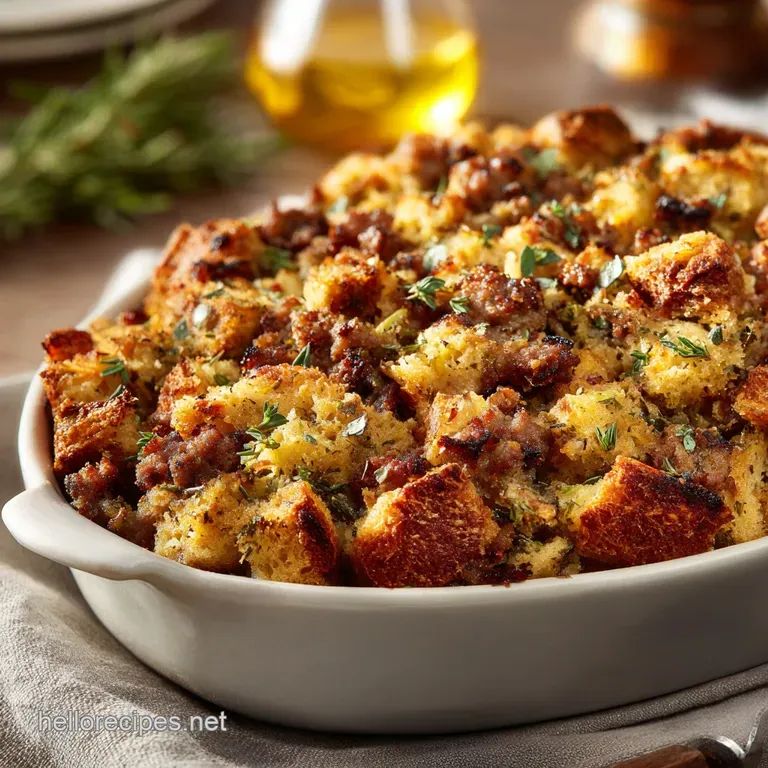
That smell? It instantly signals the holidays, better than any carol or festive light. It’s the deep, savory aroma of fresh sage frying in rich pork fat alongside caramelized onions and celery. Forget the main course for a second; this perfectly crunchy, moist stuffing is genuinely the real star of the table.
People worry that preparing a delicious, memorable stuffing is tough or fussy, but it’s actually one of the easiest Thanksgiving sides to nail. This recipe is designed to be largely make-ahead, which honestly saves your sanity when the oven is overflowing.
Plus, it uses cheap, hearty ingredients that pack a huge flavour punch, proving that simple is often best.
I’ve tried every single variation under the sun, but this classic Sausage Herb Stuffing remains the absolute gold standard. Right then, let’s crack on and get this golden masterpiece sorted because dry, bland stuffing is simply not allowed here.
The Science of Succulence: Achieving the Perfect Stuffing Texture
The Unsung Hero of the Festive Table
Stuffing is pure comfort food, providing that essential textural counterpoint to the silky mashed potatoes and the rich gravy. What we are really aiming for is the perfect dichotomy: incredibly moist and soft on the inside, while maintaining that incredibly crisp, golden brown crust on the surface.
We achieve this through careful moisture control and strategic use of fat.
Stuffing vs. Dressing: Clarifying the Terminology
Okay, let's settle this for the purists. When it's cooked inside the bird, it’s technically stuffing. When it’s baked separately in a casserole dish like we are doing here it’s technically a Sausage Herb Dressing .
I call it stuffing anyway, because everyone understands what I mean, and honestly, who cares what the dictionary says? The external bake is safer, and critically, it gives you that glorious, shatteringly crisp top that you just can’t get from the inside of a turkey.
A Blueprint for Success: What Makes This Recipe Different
This version leans heavily into the rich pork flavor and tons of fresh sage, which should be non-negotiable in your recipe. We aren't messing around with too many extra add-ins; we want that fundamental, savory core flavour to shine through.
I once made the mistake of adding way too much liquid right after I dried the bread, resulting in a sad, dense brick instead of light pockets of flavour. Learn from my errors and trust the process!
The Crucial Role of Fat and Liquid Absorption
The key to truly Best Sausage Herb Stuffing is managing the moisture balance perfectly. We use the rendered pork fat left from browning the sausage to sauté the onions and celery, which infuses the entire base with deep, savory flavor.
The dry bread then acts like a perfect, flavourful sponge, soaking up all this fat and stock mixture without disintegrating into mush.
Building the Flavor Base: Sautéing the Aromatics
We call this building a flavour base for a reason. Don't rush the sautéing of the onions and celery they need a full 8 to 10 minutes over medium heat until they are completely soft and translucent.
If they still have a crunch, they won't absorb the herbs correctly, and you'll end up with raw-tasting veg. Adding the garlic, sage, and thyme right at the end for just one minute wakes up their essential oils.
Why Stale Bread is Non-Negotiable
Fresh bread is the enemy of good stuffing, full stop. If you try to use soft, fresh cubes, they will turn into a terrible, gummy paste the second warm liquid hits them. Stale or thoroughly toasted bread cubes are like little hard sponges, designed to soak up maximum flavor without dissolving.
Seriously, if you ignore one tip, don't let it be this one. You need to dry it out properly, whether overnight or in the oven.
Essential Ingredients for the Best Sausage Herb Stuffing
Selecting the Right Pork Sausage
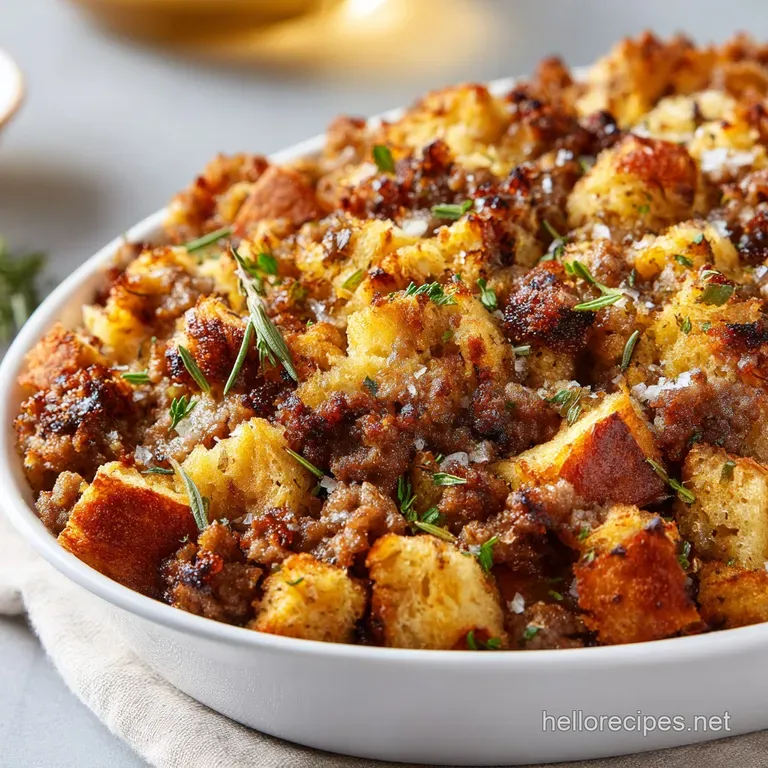
This recipe works best with a high-quality mild Italian sausage or a classic English Butcher’s pork sausage. You want that fat content and a good blend of salt and seasoning already built in. If you want to take this recipe in a slightly sweeter direction, you could easily add a diced apple and a handful of cranberries along with the aromatics. If that sounds like your jam, you should definitely check out my Sausage Apple and Cranberry Stuffing: The Cracking Recipe for Crispy Tops recipe!
Best Bread Choices for Maximum Soak (The Staling Method)
Sourdough is my absolute favourite because its density holds up beautifully. Good quality sandwich bread or French baguettes work too, but avoid light, airy white bread or pre-sliced toast loaves. Those cheap breads turn into cement under pressure!
Once you cube your bread, spread it on a sheet pan and leave it uncovered overnight.
Mastering the Herb Blend: Fresh Sage and Thyme Notes
Sage is the soul of this Sausage Herb Stuffing . Do not, under any circumstances, use dried ground sage here; it tastes like dust. You must use fresh sage, finely chopped, because the aromatic oils are what marry so perfectly with the pork fat.
Thyme provides a lovely earthy, subtle balance to the pungent sage, making this combination flawless.
The Secret to Moisture: Choosing Your Stock
The liquid binder here is crucial. We use chicken stock mixed with lightly beaten eggs. Always use warm or hot stock because it helps the dried bread immediately begin the absorption process. Low-sodium stock is best because you can control the final seasoning level yourself.
If you have some incredible homemade stock leftover from prepping a bone broth, this is the place to use it!
| Ingredient | Substitute Suggestion | Notes |
|---|---|---|
| Pork Sausage | Ground Turkey or Chicken Sausage | Warning: Add 1 2 Tbsp extra butter/oil, as poultry is much leaner. |
| Unsalted Butter | Salted Butter (reduce added salt by 1/2 tsp) | Can also substitute rendered schmaltz (chicken fat) for savory depth. |
| Sourdough Bread | Brioche or Challah (for richness) | Must still be fully dried out, or it will turn mushy immediately. |
| Chicken Stock | Vegetable Stock | Works fine, but you lose some savory depth. |
| Fresh Thyme | Fresh Rosemary | Use slightly less rosemary as it is much stronger. |
step-by-step: Crafting Your Golden Crusted Stuffing
Preparing the Bread Cubes (Drying vs. Toasting)
If you haven’t left your bread out overnight, spread the cubes on a large rimmed baking sheet. Pop them into a 300°F (150°C) oven for about 15 minutes, tossing halfway through, until they feel dry and hard all the way through. Place them in your largest mixing bowl.
Browning the Sausage and Building the Flavor Base
Melt a small amount of butter in your skillet and add the sausage meat, breaking it up really well with a wooden spoon. Cook until it’s perfectly browned and no trace of pink remains.
Remove the sausage with a slotted spoon and put it into the bowl with the bread, but keep that glorious rendered fat in the skillet. Now add the remaining sautéing butter, the onion, and the celery to the fat and cook until they are completely soft (8- 10 minutes).
Stir in the minced garlic, sage, and thyme, cooking until that incredible, nutty aroma hits you (about 1 minute).
Combining and Hydrating the Mixture
Pour all the sautéed vegetables and the fat directly over the sausage and bread in your bowl. Gently toss everything to coat the bread cubes thoroughly. Next, whisk the lightly beaten eggs into the warm stock.
Pour the stock mixture slowly over the stuffing mixture while gently tossing with your hands or a spatula. Do not stir aggressively. The bread should be thoroughly moistened but not dripping wet.
Chef’s Note: The Squeeze Test
When you squeeze a handful, it should just clump together firmly, and maybe a tiny bit of liquid should run out. If it’s dry and crumbly, add another splash of stock. If it’s dripping, you’ve added too much you can try to compensate by adding a few tablespoons of panko breadcrumbs.
Baking for Maximum Crunch and Interior Heat
Transfer the mixture into a generously buttered 9x13 inch casserole dish. This is where we ensure that amazing crust! Dot the top evenly with the reserved 2 tablespoons of cold butter, then cover the dish tightly with foil. Bake for 30 minutes at 375°F (190°C).
Then, remove the foil and bake for another 15 to 20 minutes until the top is deeply golden brown and shattered crisp.
Stuffing Troubleshooting: Chef's Tips and Avoiding Common Mistakes
Preventing a Soggy Bottom: Managing Liquid Ratios
The biggest mistake people make is pouring in all the liquid at once without monitoring the bread's absorption. Always add the liquid slowly. If you end up with too much liquid, the heat from the oven steams the bread rather than baking it, resulting in that dreaded soggy bottom. The goal is moist, not saturated.
Achieving that Golden Brown Crust
The crust is everything. It comes down to two things: fat and airflow . First, ensure the top surface is dotted with butter. Second, make sure you take the foil off for the last 15- 20 minutes of baking.
If you want maximum crust (and cute presentation), you can even bake this mix in buttered muffin tins; these little Sausage Herb Stuffing Muffins have the most surface area possible!
How to Test for Doneness Safely
Because this recipe contains raw eggs and raw sausage, you must ensure it reaches a safe temperature. The center of the stuffing should register 165°F (74°C) on an instant read thermometer. Don’t trust colour alone; the internal temperature is the only measure of safety.
Scaling the Recipe for Large Gatherings
This recipe scales up wonderfully, but stick to the ratios exactly. If you double the batch, divide it into two separate casserole dishes instead of cramming it into one large container. A thick, deep container won't allow the heat to penetrate the center quickly enough, making the middle dense and gummy.
Preparation, Storage, and Serving Suggestions
make-ahead Strategy for Stress Free Cooking
Trust me on this: When you are juggling three main side dishes and maybe prepping your Turkey Brine: Aromatic Herb Citrus Recipe for Juicy Roasting , you need easy wins. You can prepare this mixture completely (up to the point of baking) up to 24 hours ahead of time. Cover the dish tightly and refrigerate. When ready to bake, pull it out 30 minutes before baking to take the chill off, then proceed with the covered and uncovered baking steps. You might need an extra 5- 10 minutes of baking time since the mixture is cold.
Proper Freezing and Reheating of Sausage Stuffing
But does it freeze well? You bet it does.
- Freezing: Once fully baked and cooled, cut the stuffing into serving portions. Wrap them tightly in cling film, then foil, and place them in a freezer bag. They will keep well for up to 3 months.
- Reheating: Thaw the portions overnight in the fridge. Place them back into an oven safe dish, cover loosely with foil, and reheat at 350°F (175°C) until piping hot all the way through (about 20- 30 minutes). If you want to crisp up the top again, remove the foil for the last 5 minutes.
- Storage: Leftovers should be kept in an airtight container in the refrigerator for up to 4 days.

Recipe FAQs
Why is my stuffing dry and crumbly instead of moist?
Dry stuffing is typically a sign of insufficient liquid absorption. Ensure you use the full measure of chicken stock and fat to properly saturate the bread cubes before baking.
If the mixture still looks dry before baking, stir in an extra splash of warm stock until the stuffing is moist but not overly wet or soggy.
Can I prepare this sausage stuffing ahead of time?
Absolutely. You can fully assemble the stuffing combining all ingredients but leaving the baking step for later up to 24 hours in advance.
Cover the baking dish tightly and refrigerate; just remember to allow it to sit at room temperature for 30 minutes before placing it in the oven to ensure even cooking.
How do I prevent the stuffing from becoming mushy or soggy?
The foundation of a good stuffing is properly dried or toasted bread, as fresh bread absorbs liquid too quickly and breaks down into mush.
To ensure a crisp, golden crust, avoid covering the stuffing for the entire bake time; aim to bake it uncovered for at least the final 20 minutes to let moisture escape.
I don't have pork sausage. What other meats can I use as a substitute?
high-quality mild or hot Italian sausage is an excellent substitute and provides fantastic seasoning.
You can also use ground turkey or chicken, though you should add rendered bacon fat or clarified butter to compensate for the lower fat content and keep the stuffing moist.
Is it safe to bake this sausage stuffing inside a turkey or chicken?
For optimal food safety, it is generally recommended to bake stuffing separately in a casserole dish.
If you choose to stuff a bird, you must fill the cavity loosely and immediately before roasting, ensuring the internal temperature of the stuffing reaches 165°F (74°C) before serving.
Can I adapt this recipe for a vegetarian or meat free option?
Yes, substitute the pork sausage with a firm, seasoned plant based ground product, and be sure to use high-quality vegetable stock instead of chicken stock.
For added richness and texture, incorporate sautéed wild mushrooms, toasted walnuts, or pecans into the mixture.
How long can I store leftover baked sausage stuffing, and can I freeze it?
Leftover baked stuffing can be stored tightly covered in the refrigerator for up to 3 to 4 days.
Alternatively, cool the leftovers completely, wrap them tightly, and freeze for up to three months; reheat slowly in a 350°F (175°C) oven until warmed through.
Ultimate Sausage Herb Stuffing Recipe
Ingredients:
Instructions:
Nutrition Facts:
| Calories | 420 calories |
|---|---|
| Fat | 25 g |
| Fiber | 3 g |
