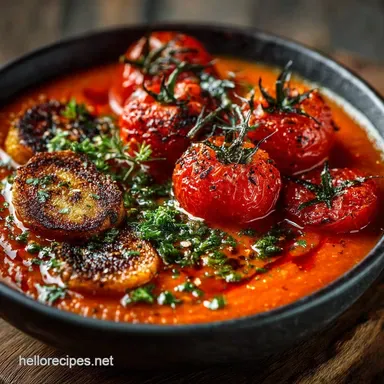
The Sunkissed Classic Tomato Soup with Basil Swirl
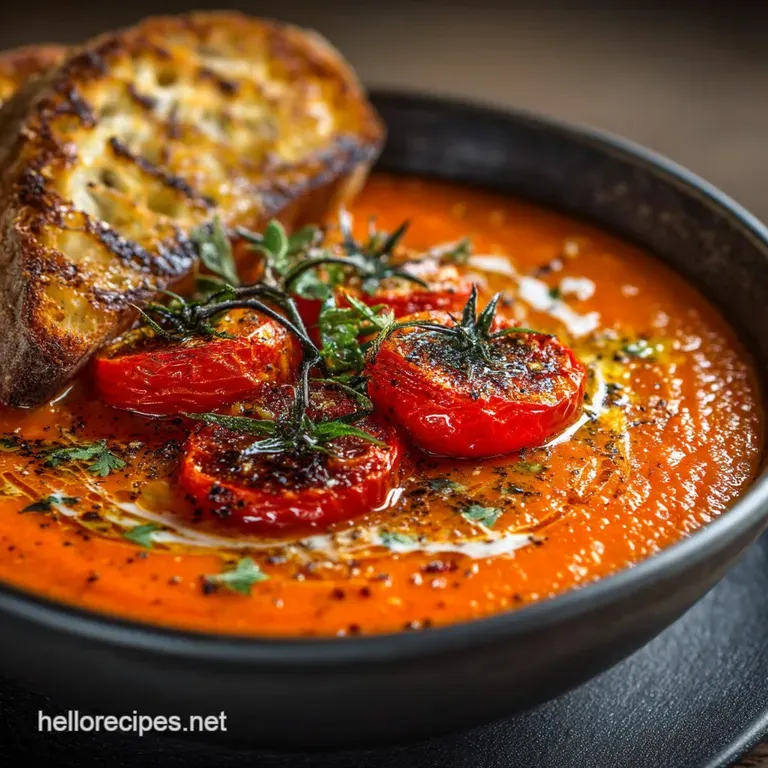
- Ditching the Tin: Why This Roasted Tomato Soup Redefines Comfort Food
- The Secret to Soul-Warming Depth: Roasting vs. Simmering
- Assembling Your Arsenal: What Makes This Recipe Sing
- Phase One: Transforming Raw Ingredients into Roasting Gold
- The Blending Magic: Achieving Silky Perfection
- Final Touches: Seasoning and Achieving Maximum Smoothness
- Elevating Your Bowl: Serving Suggestions Beyond the Standard Cracker
- Recipe FAQs
- 📝 Recipe Card
Ditching the Tin: Why This Roasted Tomato Soup Redefines Comfort Food
There are few dishes as universally beloved as tomato soup . It conjures immediate feelings of nostalgia, safety, and warmth. However, let’s be honest: too many encounters with this classic involve a metallic tang and a disconcertingly bright colour emanating from a tin can.
That ends today. We are moving firmly into the realm of superior flavour with this tomato soup recipe . This version transforms humble produce into something deeply satisfying, smoky, and complex.
It’s the kind of bowl you crave on a chilly evening, the kind that makes you understand why people dedicate cookbooks to perfecting simple comfort foods. This isn't just a snack; it's a culinary hug, built entirely from scratch .
The Secret to Soul Warming Depth: Roasting vs. Simmering
Many traditional recipes call for simmering raw vegetables in broth until they soften before blending. While fast, this method often leaves the soup tasting bright, sharp, and somewhat one-dimensional. Our approach prioritizes deep flavour development through heat application before any liquid is added.
A Garden Fresh Promise in Every Spoonful
To achieve true culinary magic in a fresh tomato soup recipe , we must capture the essence of the sun-ripened vegetable at its peak. By roasting the tomatoes, onions, and carrots, we are concentrating their natural sugars and developing profound layers of flavour that simmering alone cannot replicate.
This process transforms acidity into sweetness and bulk into body, ensuring that every spoonful of this homemade tomato soup sings with vitality.
Setting Expectations: This Isn't Just Any Tomato Soup
Our goal here is not merely to warm you up; it is to present the best tomato soup recipe you will ever taste. This particular preparation, which uses 3 lbs of Roma or plum tomatoes halved lengthwise, ensures a rich base.
Combined with aromatics like large yellow onions and carrots, we build a foundational sweetness that perfectly balances the eventual acidity of the cooked tomatoes.
The Essential Role of Caramelization in Flavour Building
Caramelization is the star player. When the sugars in the vegetables meet the high, dry heat of the oven (set to 400° F or 200° C), they break down and reform into hundreds of new flavour compounds.
This results in that slightly smoky, slightly sweet complexity that defines exceptional tomato soup . We toss the vegetables generously with olive oil, salt, pepper, and dried oregano before they embark on their 35 to 40-minute roasting journey, ensuring the exterior browns beautifully while the interior becomes fork tender.
Assembling Your Arsenal: What Makes This Recipe Sing
Crafting a stellar soup requires attention to the quality of your components and the precision of your technique. While the overall process is rated as easy requiring only about 20 minutes of active prep the ingredients must be chosen carefully to support the deep roasting process.
Curating the Perfect Produce for Peak Sweetness
The quality of your tomato soup ingredients dictates the final flavour. We rely heavily on Roma or plum tomatoes because their lower water content results in a denser, sweeter roast.
Alongside them, we include 2 medium carrots, which add an often overlooked earthy sweetness, and 6 large garlic cloves, which roast whole beneath their skins, emerging mellow and sweet rather than harsh and spicy.
Tools of the Trade: Non-Negotiable Kitchen Equipment
While you can certainly manage with standard pots, certain equipment elevates this recipe. A large, rimmed baking sheet is crucial for ensuring the vegetables have adequate space to roast rather than steam.
Most importantly, an immersion blender is highly recommended for achieving a seamless texture directly in the pot, minimizing cleanup and splatter risks. If using a standard blender, remember to work in small batches once the soup has cooled slightly.
Basil Infusion: Prepping the Herb Swirl Separately
To truly elevate this dish beyond the standard and to ensure that vibrant green garnish truly pops we prepare a bright, flavourful basil swirl separately. This involves blanching one packed cup of fresh basil leaves quickly in boiling water, shocking them in ice water to set that emerald colour, and then blending them vigorously with 1/4 cup of quality extra virgin olive oil.
This herbaceous drizzle adds a fresh, peppery counterpoint to the rich, roasted base.
Understanding Tomato Choices: Roma vs. Heirloom for Best Results
For this tomato soup from scratch , Romas are usually ideal due to their meaty texture. However, if you are making this during peak summer season, feel free to substitute with a mix of ripe heirloom tomatoes.
Heirlooms can bring wonderfully unique flavour notes, though they do contain more water, so monitor your simmering time accordingly.
Related Recipes Worth Trying
- Rich Hearty Beef and Pearl Barley Soup Recipe — Forget watery broths This Beef Barley Soup recipe builds deep flavour through searing for a truly hearty comfort soup that sticks to your ribs Get the...
- Best Creamy Chicken and Rice Casserole Recipe No Canned Soup — Forget bland weeknight dinners This easy chicken and rice casserole recipe skips the canned soup for a luxurious homemade sauce Pure comfort food bliss
- Best 30Minute Homemade Potato Soup Recipe Easy Creamy — This easy stovetop potato soup recipe delivers velvety hearty flavour in under 35 minutes Perfect for a quick supper discover how to make the best homemade...
Phase One: Transforming Raw Ingredients into Roasting Gold
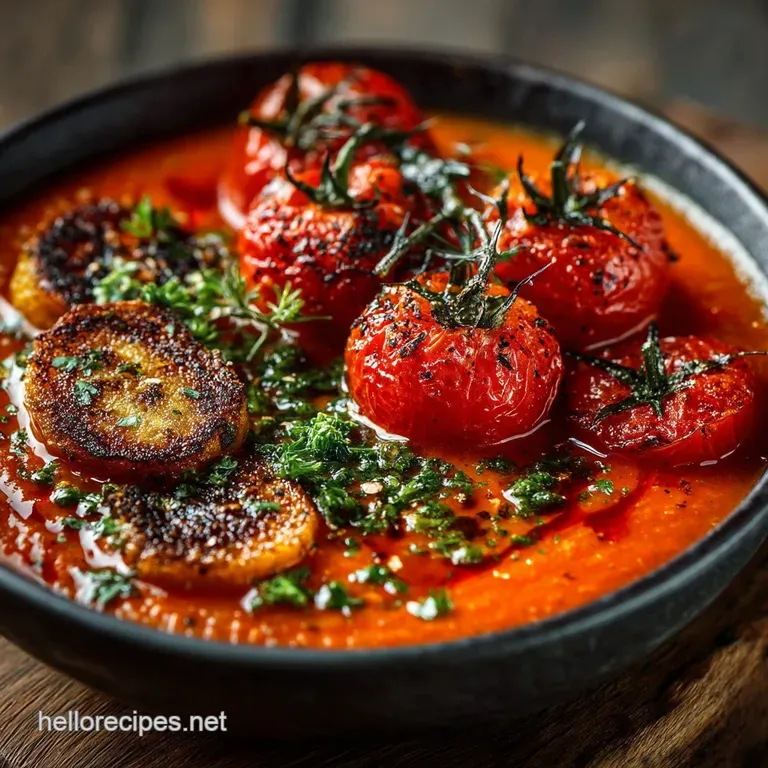
The first major step involves the oven. Preheat your oven to 400° F ( 200° C). Take your halved tomatoes, roughly quartered onion, chopped carrots, and the whole, unpeeled garlic cloves. Drizzle these generously with 1/4 cup of olive oil.
Sprinkle them with 1 teaspoon of dried oregano, along with salt and pepper (start with 1 teaspoon of salt). Spread everything across your large baking sheet in a single layer. Roast this medley for 35 to 40 minutes.
You are looking for the edges of the tomatoes to blister and the onions to take on a light char this visual cue signals maximum flavour extraction.
The Blending Magic: Achieving Silky Perfection
Once the vegetables are beautifully softened and slightly smoky, they must transition into liquid form. First, extract the sweet, roasted garlic; the skins should slip right off. Now, move to the stovetop. In your large soup pot, melt 2 tablespoons of unsalted butter over medium heat.
Add 2 tablespoons of tomato paste and cook it down for a full minute until it darkens slightly; this crucial step removes any raw taste and deepens the umami. Next, add all the roasted vegetables (including every bit of glorious pan juice), 2 large bay leaves, and 4 cups of low-sodium vegetable or chicken stock.
Bring this mixture to a gentle boil, then reduce the heat, cover partially, and let it simmer for about 15 minutes, allowing the flavours to truly marry. After simmering, carefully remove and discard the bay leaves before beginning the blending process.
Final Touches: Seasoning and Achieving Maximum Smoothness
This is where the texture is perfected and the final seasoning adjustments are made.
Prepping the Vegetables for Optimal Surface Area
We ensured the vegetables were chopped or halved to maximize their surface area during roasting. This prevents steaming and guarantees that necessary browning occurs, creating the flavour foundation for the entire tomato soup .
The Roasting Protocol: Temperature and Timing Secrets
The 400° F ( 200° C) temperature is non-negotiable for achieving that sweet caramelization in the 35-minute window. Any cooler, and you risk the vegetables stewing rather than roasting.
Building the Base: Sautéing Aromatics Post Roast
The brief sauté of the tomato paste in butter is essential. It’s a flavour multiplier, adding a savoury richness that coats the tongue and provides a wonderful depth missing in simpler recipes.
The Immersion Blending Technique: Avoiding Splatter Disasters
If using an immersion blender, hold the head of the blender fully submerged before turning it on, and keep it submerged until you are finished blending. This keeps the potentially hot liquid contained within the pot, guaranteeing safety and minimizing mess while you work toward a wonderfully smooth consistency.
Straining for Supreme Silkiness: Optional but Recommended
For that restaurant quality, almost impossibly smooth texture, pass the blended soup through a fine mesh sieve, pressing down firmly on the solids with the back of a ladle. While optional, this step removes any residual seeds or tough bits of carrot skin, lending an unmatched velvety mouthfeel to your homemade tomato soup .
Return the strained, silky liquid to the clean pot. Now, stir in the optional 1/4 cup of heavy cream (or coconut milk for a dairy-free option). Taste meticulously, adding that single teaspoon of sugar only if the tomatoes lean too acidic.
Elevating Your Bowl: Serving Suggestions Beyond the Standard Cracker
While this robust soup is fantastic on its own, the right accompaniment turns it into a complete meal. Of course, nothing truly compares to dipping something substantial into this rich liquid.
Vegan Conversion: Making This Tomato Soup Plant Powered
This recipe is inherently versatile. To ensure it remains entirely plant powered, use vegetable stock instead of chicken stock, and substitute the 2 tablespoons of butter with olive oil, utilizing the richness of the optional coconut milk in place of heavy cream for the final swirl.
The Cheesy Toastie Companion: Recommended Pairings
The ultimate sidekick to tomato soup and grilled cheese is a non-negotiable reality. We recommend using sharp cheddar cheese pressed between thick slices of sourdough bread the tang of the cheddar cuts beautifully through the soup's richness.
Troubleshooting Texture: Fixing Runny or Over Thickened Soup
If your soup appears too thin, simply allow it to simmer uncovered over low heat for an extra 10 minutes to reduce slightly. If it becomes overly thick, whisk in reserved stock or a splash of water until the desired pourable consistency is achieved.
Freezing Instructions: Maintaining Freshness for Months Ahead
This tomato soup freezes exceptionally well. Allow the soup to cool completely, then transfer it to freezer safe, airtight containers, leaving about an inch of headspace for expansion. Properly frozen, it maintains excellent quality for up to three months.
Thaw overnight in the refrigerator and reheat gently on the stovetop.
Recipe FAQs
What's the secret to making this Tomato Soup taste better than the stuff out of a tin?
The real game changer here is roasting the tomatoes, onions, and carrots first; this concentrates their sugars and gives the soup a wonderful depth and slight smokiness you just can't get from boiling. Don't skip toasting your tomato paste either it deepens the flavour immensely before you add the stock.
Can I make this Tomato Soup ahead of time, and how should I store leftovers?
Absolutely! This soup keeps brilliantly for up to four days in the fridge, tasting even better the next day once the flavours have had a good kip. For longer storage, it freezes like a dream for up to three months; just be sure to leave some headspace in your container for expansion.
My tomatoes are a bit tart; what's the remedy for sour soup?
That’s a common issue depending on the season, but fear not, it's easily fixed! After blending and just before you finish seasoning, stir in a tiny bit of sugar we suggest one teaspoon to start. This won't make the soup sweet, but it perfectly balances out any aggressive acidity from the tomatoes.
How do I get that really smooth, velvety texture that you see in fancy restaurants?
While an immersion blender does a grand job, the professional trick is to press the blended soup through a fine mesh sieve afterwards. This catches any stubborn seeds or skins, yielding that utterly silky texture that’s perfect for swishing around with some thick cream or a crusty bit of bread.
I want to make this vegan what swaps should I make?
It’s simple enough to make vegan friendly! Ensure you use vegetable stock instead of chicken, and substitute the butter with a good quality olive oil. For the creamy element, full fat coconut milk works a treat and adds a lovely richness, though you can skip it entirely if you prefer a lighter broth.
Roasted Fresh Tomato Soup