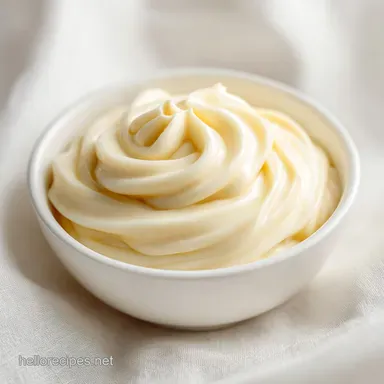
Easy Homemade Mayonnaise: Silky and Tangy
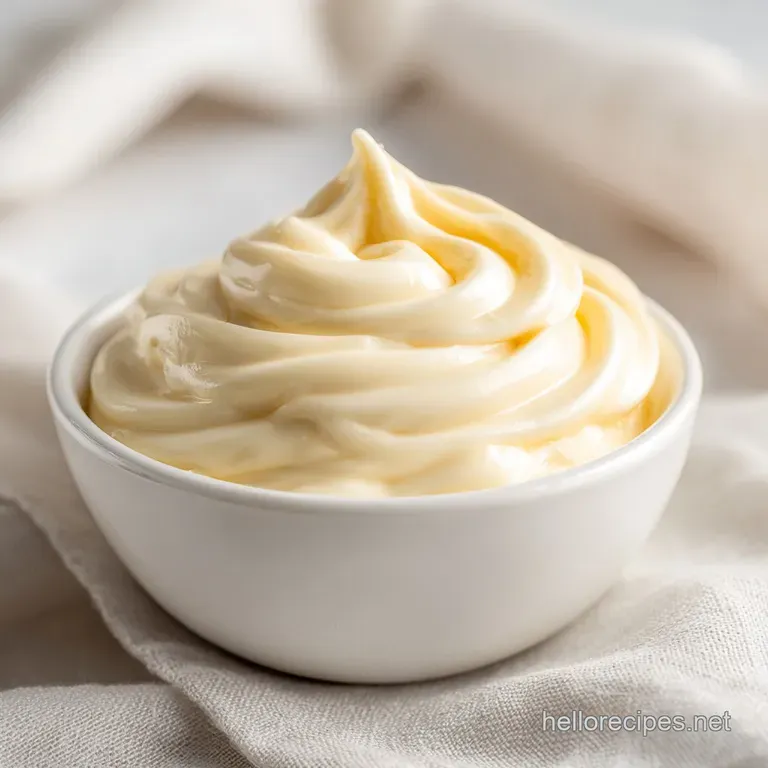
- Time: 2 min active = Total 2 min
- Flavor/Texture Hook: Silky, thick, and tangy
- Perfect for: Quick sandwiches, dipping sauces, or keto friendly meal prep
Have you ever wondered why some store-bought jars taste like plastic while a fresh batch smells like a bright summer morning? It's all about that sharp, clean hit of lemon and the pungent kick of Dijon mustard hitting your nose the second you open the jar.
When you first see the oil and egg sitting in layers, it feels like they'll never mix, but then happens in a blink.
One time, I was trying to impress some friends with a fancy dip, and I tried whisking by hand for twenty minutes. My arm was shaking, and the sauce was still a runny mess. Then I tried the immersion blender trick in a tall jar, and the way the white cream suddenly surged from the bottom was honestly like a magic trick.
It's that instant transformation from liquid to velvet that makes this method so satisfying.
Making your own Homemade Mayonnaise isn't about being a pro, it's about using a little bit of physics to your advantage. You'll get a sauce that's cleaner, fresher, and way more customizable than anything in a plastic squeeze bottle. Let's get into how to actually do it without the stress.
The Secret to Silky Homemade Mayonnaise
The most important part of this process is the "vortex." When you use a narrow jar, the blender head creates a powerful whirlpool that pulls the oil down into the egg base at incredible speeds.
This creates thousands of tiny oil droplets that are too small to merge back together, which is exactly what gives the sauce its thickness.
The Egg Bridge: The proteins in the egg act like glue, grabbing onto both the oil and the lemon juice to keep them from separating.
Acidic Breakdown: Lemon juice and mustard break the oil into smaller pieces, making it easier for the egg to wrap around them.
The High Speed Force: The blender blades spin so fast they literally smash the oil into the water based ingredients, creating a stable bond.
Temperature Balance: Using room temperature ingredients helps the oil integrate more smoothly, though the blender method is forgiving.
| Method | Time | Texture | Best For |
|---|---|---|---|
| Immersion Blender | 2 mins | Ultra smooth, thick | Speed and consistency |
| Hand Whisking | 15-20 mins | Slightly grainier | Small batches, no gear |
| Standard Blender | 5 mins | Aerated, fluffy | Very large quantities |
Component Analysis and Roles
Understanding what each part does helps you tweak the flavor later. I've found that the oil is the most critical choice here, as it defines the entire profile of your Homemade Mayonnaise.
| Ingredient | Science Role | Pro Secret |
|---|---|---|
| Large Egg | The Binder | Use room temp eggs for a more stable bond |
| Neutral Oil | The Body | Use avocado oil for a cleaner, sustainable taste |
| Lemon Juice | The Stabilizer | Freshly squeezed is a must for that bright aroma |
| Dijon Mustard | The Emulsifier | Adds a pungent depth that cuts through the fat |
For the oil, you want something with a neutral taste. According to Serious Eats, using a strong extra virgin olive oil can sometimes result in a bitter taste when blended at high speeds. I usually stick to grapeseed or avocado oil to keep the focus on the lemon and mustard.
Ingredients and Smart Swaps
Right then, here is what you need. Make sure your jar is narrow enough that the blender head almost touches the sides - this is non negotiable for the vortex to work.
- 1 large egg Why this? Provides the lecithin needed to bind oil and water
- 1 tbsp lemon juice Why this? Adds acidity and freshness
- 1 tsp Dijon mustard Why this? Helps stabilize the emulsion
- 1/4 tsp salt Why this? Enhances all other flavors
- 1/8 tsp white pepper Why this? Adds a subtle heat without black specks
- 1 cup neutral oil Why this? Creates the creamy structure
| Original Ingredient | Substitute | Why It Works |
|---|---|---|
| Neutral Oil (1 cup) | Avocado Oil (1 cup) | Similar neutral profile. Note: More sustainable and heart healthy |
| Lemon Juice (1 tbsp) | Apple Cider Vinegar (1 tbsp) | Same acidity level. Note: Adds a slightly fruitier, fermented tang |
| Dijon Mustard (1 tsp) | Yellow Mustard (1 tsp) | Still provides binding. Note: Less complex flavor, more "classic" |
| Large Egg (1 unit) | Aquafaba (3 tbsp) | Chickpea water mimics egg proteins. Note: Makes it vegan but slightly less stable |
The Right Gear
You don't need a fancy kitchen, but you do need an immersion blender (something like a Bamix or KitchenAid). The most critical piece of equipment is actually the jar. If the jar is too wide, the blender will just spin the ingredients around without pulling the oil down.
You want a tall, narrow container that snugly fits the blender head.
I once tried using a wide mixing bowl, and it was a disaster. The oil just floated on top, and I ended up with a broken, oily soup. Trust me, the jar is the secret weapon here.
Step by step Method
Ready to make Homemade Mayonnaise? Let's crack on. Pay attention to the smell - you'll notice the pungent mustard and sharp lemon dominate at first, then mellow out into a creamy aroma as the oil integrates.
- Add the egg, lemon juice, Dijon mustard, salt, and pepper to the bottom of a tall, narrow glass jar.
- Pour the neutral oil on top and let the ingredients settle for 30 seconds until the oil sits in a distinct layer. Note: This ensures the blender hits the egg first.
- Place the immersion blender head firmly into the bottom of the jar, covering the egg.
- Turn the blender on high speed and hold it steady for 15-20 seconds until a thick, white cream forms at the bottom.
- Watch for the "window" of clear oil remaining at the top of the jar.
- Slowly tilt the blender head slightly to one side.
- Lift the blender head upward in a gradual, slow motion until all the oil is pulled into the mix.
- Blend for another 5 seconds until the texture is velvety and uniform.
- Taste and add a pinch more salt if it needs a boost.
Fixing Sauce Failures
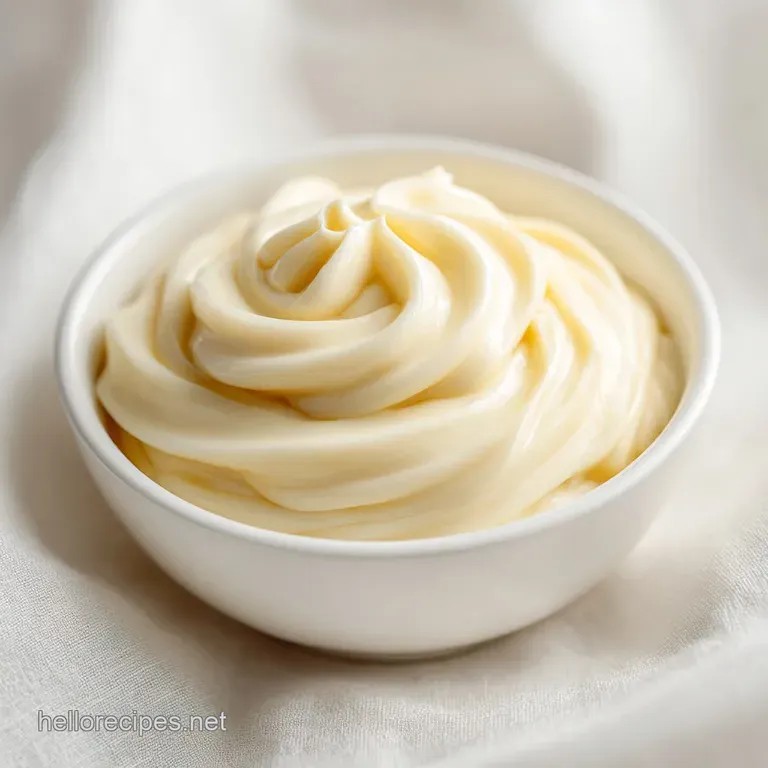
Even with the best gear, things can go sideways. If your Homemade Mayonnaise looks like a thin soup instead of a thick cream, don't panic. It usually just means the oil was added too fast or the ingredients were too cold.
Why Your Sauce Stayed Liquid
This usually happens when the blender doesn't create a strong enough vortex, or you lifted the blender too early. If the oil hasn't been "smashed" into the egg, it stays separate.
Why Your Sauce Separated
This is known as a "broken" sauce. It often happens if the oil was poured in too quickly in a hand whisked version, or if the temperature difference between the egg and oil was too extreme.
| Problem | Root Cause | Solution |
|---|---|---|
| Runny/Liquid | Blender lifted too fast | Start over with a new egg, slowly whisking the broken sauce into it |
| Separated/Oily | Temperature shock | Ensure egg is room temperature and re emulsify with a blender |
| Too Tart | Too much lemon | Stir in a teaspoon of warm water or a pinch of sugar |
Common Mistakes Checklist
- ✓ Jar is too wide (Must be narrow for the vortex)
- ✓ Lifting blender too quickly (Must be a slow, gradual lift)
- ✓ Using extra virgin olive oil (Can cause bitterness)
- ✓ Forgetting the mustard (Mustard is a key binder)
- ✓ Blender not touching the bottom (Must cover the egg completely)
Tweaking for Different Diets
One of the best things about making your own is that you can control exactly what goes in. If you're following a keto lifestyle, this is already a winner since it's almost entirely healthy fats. But you can take it further by swapping the oil for organic avocado oil.
If you want something with a bit more kick, you can easily transform this into a Spicy Mayo recipe by adding Sriracha and a touch of honey. For those avoiding eggs, using aquafaba (the liquid from a can of chickpeas) works surprisingly well, though the texture is a bit more airy.
Scaling Your Batch
When you want to make a larger amount of Homemade Mayonnaise, don't just double everything in the same jar. The volume of oil can overwhelm the blender's ability to create that initial vortex.
Scaling Down (½ Batch): Use a significantly narrower jar. If you use a standard jar for half a batch, the blender head won't be submerged enough to start the emulsion. Beat one egg in a bowl and use exactly half of it.
Scaling Up (2x-4x): Work in batches. I recommend making two separate jars rather than one giant one. If you must do a large batch, reduce the salt by about 10% and taste before adding more, as salt can become overpowering in larger volumes.
Truth About Mayo Myths
There's a lot of old school advice out there that just doesn't hold up to modern tools.
Myth: You must whisk by hand for the "real" texture. Truth: Immersion blenders actually create a more stable, finer emulsion than hand whisking, resulting in a smoother, more velvety feel.
Myth: Only white distilled vinegar works. Truth: Fresh lemon juice provides a more complex, bright aroma and the same acidic stability as vinegar.
Storage and Zero Waste
Since this doesn't have the preservatives of store-bought brands, you have to be a bit more careful. Store your Homemade Mayonnaise in an airtight glass jar in the fridge for up to 7 days.
Storage Tip: Always keep the mayo submerged in its own oil or use a piece of parchment paper pressed against the surface to prevent oxidation (that brownish layer on top).
Zero Waste: Don't toss the lemon peels! I usually zest them and freeze them for baking, or simmer them in a small pot of water to make a quick citrus syrup. If you have a tiny bit of mayo left in the jar, add a splash of hot water and a bit of garlic to make a quick pan sauce for fish.
Flavor Pairing Ideas
Once you've got this base, the possibilities are endless. It's the perfect foundation for aiolis, remoulades, or just a simple dip.
For the ultimate sandwich experience, try using this as the base for an Ultimate BLT Sandwich with some roasted garlic folded in. The creaminess cuts through the saltiness of the bacon perfectly.
You can also stir in fresh dill and capers for a tartare style sauce that's incredible with grilled salmon. If you're feeling adventurous, add a teaspoon of smoked paprika and a drop of liquid smoke for a "baconnaise" that's a total crowd pleaser.
Trust me, once you realize how easy it is to make Homemade Mayonnaise, you'll never go back to the store-bought stuff. It's faster, tastier, and feels like a little win every time that velvet cream appears in your jar.
Recipe FAQs
How to make homemade mayonnaise?
Combine the egg, lemon juice, mustard, salt, and pepper in a jar, then pour oil on top. Let the mixture settle for 30 seconds before blending from the bottom up.
Is it true that homemade mayonnaise is unsafe to eat?
No, this is a common misconception. It is perfectly safe when made with fresh ingredients and stored in the refrigerator for up to 7 days.
What are the ingredients used for mayonnaise?
Use one egg, lemon juice, Dijon mustard, salt, white pepper, and neutral oil. These simple ingredients create a stable, creamy emulsion.
How to make your own natural mayonnaise?
Blend fresh ingredients using an immersion blender in a tall, narrow glass jar. Start at the bottom and lift the head slowly to integrate the oil into a velvety texture.
Why is my homemade mayonnaise not thickening?
Hold the blender head firmly at the bottom for 15–20 seconds before moving. Lifting the blender too quickly prevents the thick, white cream from forming.
How should I store homemade mayonnaise to keep it fresh?
Store it in an airtight glass jar in the fridge for up to 7 days. Keep the mayo submerged in its own oil or use parchment paper on the surface to prevent oxidation.
Can I use this emulsification technique for other dressings?
Yes, this skill applies to many creamy sauces. If you nailed the stable emulsion here, use the same whisking method in our Buttermilk Ranch for similar professional results.
Homemade Mayonnaise in 2 Minutes