Garlic Butter Chicken and Potatoes Recipe
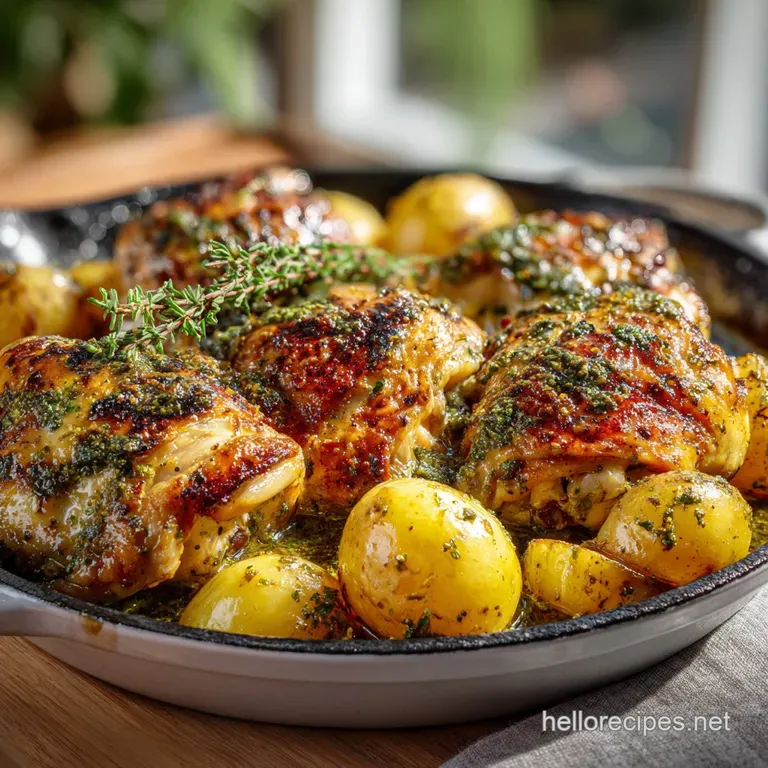
- Time: Active 15 minutes, Passive 25 minutes, Total 40 minutes
- Flavor/Texture Hook: Shattering crispy potato skins with velvety garlic infused butter
- Perfect for: High protein weeknight recovery or impressive beginner friendly hosting
- Master This Garlic Butter Chicken and Potatoes Recipe
- Why This Flavor Profile Wins
- The Science Behind the Ingredients
- Components of a Sustainable Meal
- Essential Kitchen Gastronomy Tools
- Executing the Pan Seared Method
- Correcting Common Culinary Errors
- Adapting for Nutritional Requirements
- Sustainable Storage and Reuse
- Curating the Ideal Side Pairings
- Recipe FAQs
- 📝 Recipe Card
Master This Garlic Butter Chicken and Potatoes Recipe
The second those halved chicken thighs hit the olive oil, the kitchen fills with that high pitched, aggressive sizzle that every home cook lives for. It’s the sound of surface moisture evaporating to make room for a deep, golden crust.
I remember the first time I tried this; I was so impatient that I crowded the pan with 450g of cold potatoes all at once, which immediately dropped the temperature. Instead of a sear, I got a sad, grey steam. It was a lesson learned the hard way: heat is your best friend, but crowded space is your worst enemy.
We’re going for a specific sensory experience here. Think of the way the smoked paprika blooms in the hot butter, turning the oil a vibrant crimson while releasing an earthy, toasted aroma that hits the back of your throat.
This isn't just a meal; it's a study in kitchen gastronomy where we turn humble tubers and protein into something that tastes like a high end bistro dish. You’ll want to keep some crusty bread nearby to swish through the remaining garlic lemon emulsion trust me, it’s liquid gold.
This Garlic Butter Chicken and Potatoes Recipe is designed for efficiency without sacrificing the technical details that matter. We are focusing on a sustainable way to cook one pan, minimal cleanup, and high-quality fats.
By the time you squeeze that final tablespoon of lemon juice over the skillet, the steam will carry the scent of fresh Italian parsley and toasted garlic right to your neighbors' doors. Let’s get the skillet hot and do this properly.
Why This Flavor Profile Wins
- Maillard Reaction: Searing the 680g of chicken at high heat creates hundreds of new flavor compounds that simply don't exist in boiled or poached poultry.
- Starch Gelatinization: Quartering the 450g of baby Yukon Golds exposes more surface area, allowing the internal starches to hydrate and soften while the exterior dehydrates into a crisp shell.
- Fat Soluble Aromatics: The smoked paprika and dried oregano are "bloomed" in the 56g of salted butter, which extracts their essential oils and distributes flavor more evenly than dry seasoning.
- Acid Balance: The 1 tablespoon of fresh lemon juice acts as a chemical brighten er, cutting through the 33g of fat per serving to reset your palate between bites.
| Chicken Thickness | Internal Temp | Rest Time | Visual Cue |
|---|---|---|---|
| 1.5 cm (halved) | 74°C (165°F) | 5 minutes | Juices run clear, flesh is opaque |
| 2.5 cm (whole) | 74°C (165°F) | 8 minutes | Springy texture when pressed |
| 3.5 cm (thick) | 74°C (165°F) | 10 minutes | Thermometer hits center without bone contact |
The key to success here is understanding heat retention. Similar to the method used in this Whole 30 Meal recipe, we rely on a heavy bottomed pan to maintain a constant sizzle even when the room temperature ingredients are added.
The Science Behind the Ingredients
The Architecture of the Crisp
To achieve that specific "shatter" on the potato skin, we need to manage the surface pH and moisture. Yukon Golds are naturally creamy, but they need high heat to achieve a caramelized exterior.
| Ingredient | Science Role | Pro Secret |
|---|---|---|
| Salted Butter (56g) | Emulsification & Flavor | Add in the last 5 minutes to prevent milk solids from burning |
| Fresh Garlic (6 cloves) | Aromatic Foundation | Mince finely but don't paste it; you want tiny bits that brown without dissolving |
| Smoked Paprika (1 tsp) | Color & Terpene Bloom | The oil soluble pigments (carotenoids) provide that deep orange hue |
It is vital to use fresh garlic here rather than the pre jarred stuff. The sulfur compounds in fresh garlic are much more volatile and provide a sharper, more innovative flavor profile that cuts through the richness of the butter.
Components of a Sustainable Meal
This recipe uses straightforward, sustainable ingredients that you likely already have. I always opt for local baby Yukon Golds because their thin skins mean no peeling less waste and more fiber.
- 680g Boneless Chicken Thighs: Trimmed and halved. Why this? Thighs stay succulent at high temperatures compared to lean breast meat.
- 450g Baby Yukon Gold Potatoes: Quartered into even segments. Why this? They have a buttery texture that mirrors the pan sauce.
- 56g Salted Butter: Divided for searing and finishing. Why this? Salted butter adds an extra layer of seasoned depth.
- 6 Cloves Garlic: Minced fresh. Why this? Provides the punchy aromatic backbone of the entire dish.
- 1 tsp Smoked Paprika: Why this? Adds a smoky "charred" flavor without needing an outdoor grill.
- 1 tsp Dried Oregano: Why this? Earthy notes that pair specifically well with poultry.
- 0.5 tsp Red Pepper Flakes: Why this? Adds a gentle back of-the throat warmth.
- 1/4 cup Italian Parsley: Chopped. Why this? Freshness to balance the heavy fats.
- 1 tbsp Lemon Juice: Why this? Necessary acidity to emulsify the pan juices.
| Original Ingredient | Substitute | Why It Works |
|---|---|---|
| Salted Butter | Ghee (56g) | Higher smoke point; adds nutty, toasted notes. |
| Chicken Thighs | Chicken Breast | Leaner but dries out faster reduce cook time by 4 minutes. |
| Smoked Paprika | Chipotle Powder | Adds heat and smoke use half the amount (0.5 tsp). |
While fresh ingredients are the gold standard for gastronomy, sometimes we need shortcuts. Let's look at how choosing fresh versus preserved ingredients impacts the final plate.
| Component | Fresh Version | Shortcut Version | Sensory Impact |
|---|---|---|---|
| Garlic | Freshly minced | Jarred minced garlic | Jarred is milder and often has a metallic aftertaste |
| Herbs | Fresh Italian Parsley | Dried Parsley | Dried lacks the vibrant green color and "grassy" freshness |
| Citrus | Fresh Lemon Juice | Bottled Lemon Juice | Bottled is more acidic but lacks the floral lemon oils from the zest |
Essential Kitchen Gastronomy Tools

You don't need a lab, but you do need the right technology. A heavy duty cast iron skillet (like a Lodge 30cm) is the best choice here because it holds heat like a champion. If you use a thin non stick pan, the temperature will plummet the moment the chicken hits the oil, leading to a "steamed" rather than "seared" texture.
You’ll also want a sharp chef's knife to quarter those 450g of potatoes evenly. Consistency in size equals consistency in cooking. If one potato wedge is huge and another is tiny, you'll end up with a mix of raw and mushy centers.
Finally, a sturdy metal spatula is great for scraping up the "fond" those brown bits stuck to the bottom of the pan that hold all the concentrated flavor.
Executing the Pan Seared Method
- Prep the protein. Pat the 680g of chicken thighs bone dry with paper towels. Note: Surface moisture is the enemy of a golden brown sear.
- Season the base. Toss the chicken with sea salt, black pepper, and half of the smoked paprika.
- Sear the chicken. Heat 2 tbsp olive oil in the skillet over medium high heat. Place chicken in the pan and cook for 5-7 minutes until a deep golden crust forms and the meat releases easily.
- Rest the meat. Remove the chicken to a plate. Do not wash the pan; we want those brown bits!
- Crisp the potatoes. Add 28g of butter to the skillet. Toss in the 450g of quartered Yukon Golds.
- Sauté until golden. Cook the potatoes for 10-12 minutes, stirring occasionally until the edges are translucent and the skins are blistered and brown.
- Bloom the aromatics. Push potatoes to the side. Add the remaining 28g of butter, minced garlic, oregano, and red pepper flakes.
- The Scent Checkpoint: Cook for 60 seconds until the garlic smells buttery and toasted, and the paprika turns the butter a deep sunset red.
- Combine and finish. Return chicken to the pan. Drizzle with 1 tbsp lemon juice and toss everything together for 2 minutes until the sauce looks glossy and velvety.
- Final garnish. Scatter the 1/4 cup of chopped parsley over the top and serve immediately while the potatoes are still crackling.
Chef's Tip: To ensure the potatoes are fluffy inside, par cook them in the microwave for 3 minutes before they hit the skillet. This "pre gelatinizes" the starch so the skillet time is focused purely on the exterior crunch.
Correcting Common Culinary Errors
Why Your Potatoes Are Mushy
If your potatoes feel soggy rather than crispy, you likely didn't use enough heat or you moved them too often. Starch needs uninterrupted contact with a hot, oiled surface to dehydrate and form a crust. If you stir every 30 seconds, you’re just steaming them in their own moisture.
Preventing Burned Garlic Bitter Notes
Garlic has a very low burn point due to its sugar content. If you add it at the start with the potatoes, it will turn black and acrid long before the potatoes are soft. Always add garlic during the last 2-3 minutes of cooking to preserve its sweet, pungent aroma.
| Problem | Root Cause | Solution |
|---|---|---|
| Chicken is tough | Overcooked past 74°C | Use a meat thermometer and pull at 72°C; carryover heat will finish it. |
| Sauce is greasy | Butter didn't emulsify | Add a splash of water or chicken stock and stir vigorously to bind the fat. |
| Potatoes are raw inside | Wedges were too large | Quarter them into 2cm pieces or par boil them before searing. |
Common Mistakes Checklist
- ✓ Don't crowd the pan: If the chicken pieces are touching, work in two batches to ensure a proper sear.
- ✓ Dry the chicken: Any water on the surface of the meat will turn into steam, preventing the Maillard reaction.
- ✓ Use a high smoke point oil: Olive oil is great for flavor, but don't let it reach the point where it starts smoking heavily.
- ✓ Let it rest: Give the chicken 5 minutes off the heat before serving so the juices redistribute into the muscle fibers.
Adapting for Nutritional Requirements
If you're looking for an even faster version of this poultry technique, you might enjoy my Awesome Sauce Chicken recipe which focuses on a 30 minute turnaround. But for this specific skillet dish, we can easily pivot based on your dietary needs.
Crafting a Creamy Garlic Butter Chicken and Potatoes
To turn this into a more indulgent, velvety dish, add 120ml of heavy cream and 30g of grated Parmesan cheese during the final 3 minutes of simmering. The cheese acts as an emulsifier, binding the butter and lemon juice into a thick, luxurious sauce that coats every potato wedge.
Balancing Sweet and Savory (Honey Garlic)
For those who love a gastropub twist, whisk 2 tablespoons of raw honey into the lemon juice before adding it to the pan. The sugars in the honey will caramelize quickly, creating a sticky, glossy lacquer over the chicken that balances the spicy red pepper flakes perfectly.
Sustainable Storage and Reuse
- Fridge: Store in an airtight glass container for up to 4 days. The flavors actually deepen as the garlic and spices infuse the potato starches overnight.
- Freezer: Not recommended for the potatoes. While the chicken freezes well for 2 months, potatoes undergo "retrogradation" when frozen the starch crystals change, resulting in a mealy, watery texture upon thawing.
- Reheating: Avoid the microwave if possible, as it makes the chicken rubbery and the potatoes soft. Instead, toss everything back into a hot skillet with a teaspoon of butter for 5 minutes to restore the "shatter" to the potato skins.
- Zero Waste Tip: Don't throw away the parsley stems! Finely mince them and add them to the pan at the same time as the garlic. They contain more concentrated "green" flavor than the leaves and add a nice textural crunch.
Curating the Ideal Side Pairings
Since this Garlic Butter Chicken and Potatoes Recipe is quite rich and savory, you want sides that provide a sharp contrast. A simple arugula salad with a balsamic vinaigrette is innovative because the peppery greens cut right through the butter.
If you’re hosting a larger crowd and want to double down on the tubers, you could serve this alongside my How to Make recipe for a truly garlic focused feast. Alternatively, steamed green beans or roasted asparagus with a shaving of lemon zest will echo the citrus notes in the pan sauce while adding a much needed pop of color to the plate.
The Physics of the Rise (Potato Edition)
Mechanism: When the quartered baby Yukon Golds hit the hot 56g of butter, the surface moisture flashes into steam, creating tiny microscopic craters on the skin. As these craters dehydrate, they form a rigid, lattice like structure of carbonized starch that we perceive as "crunch."
This dish is a testament to how innovative techniques like temperature control and aromatic blooming can turn a simple list of ingredients into a restaurant quality meal. Just remember: keep the pan hot, keep the chicken dry, and don't be afraid of the garlic!
Let me know how yours turns out did you get that perfect sizzle?

Recipe FAQs
What's the secret to really flavorful butter chicken?
Bloom the spices in hot fat first. Adding smoked paprika and oregano directly into the melted butter for about 60 seconds before adding other ingredients releases their fat-soluble flavor compounds. This technique of blooming extracts maximum flavor that simply tossing them in raw won't achieve.
What spices enhance garlic butter potatoes?
Smoked paprika, dried oregano, and a pinch of red pepper flakes. The smoked paprika delivers a deep, savory warmth mimicking grilling, while oregano adds an earthy, Mediterranean counterpoint to the richness of the butter.
Is it okay to cook raw chicken and potatoes together?
No, cook them sequentially in stages. Chicken needs high, direct heat for searing, while potatoes require a longer cook time submerged in fat to soften before crisping. Cook the chicken first, remove it, then use the rendered fat to start the potato cooking process.
What is the secret ingredient for crispy potatoes?
Par-cooking or ensuring the skillet is scorching hot. To achieve a true shatter, you must ensure the potato surface moisture evaporates quickly, leading to dehydration and crisping, not steaming.
If you want to master texture control for all starches, see how the same principles of surface dehydration work in our How to Mash recipe.
How do I prevent the garlic from burning before the chicken is done?
Add minced garlic only during the last few minutes of the cooking cycle. Garlic has a low burn threshold; add it only after the potatoes are largely tender and right before you return the chicken to the pan to finish simmering. This ensures the flavor blooms without turning bitter.
Can I substitute chicken thighs with chicken breasts?
Yes, but reduce the cooking time by about four minutes. Chicken breasts are significantly leaner, meaning they dry out much faster under the high heat required for searing the potatoes. You must pull them from the pan sooner to avoid toughness, similar to the careful temperature management needed for lean cuts in the Classic Chicken Francese recipe.
What makes the pan sauce glossy instead of greasy?
A vigorous whisk with an acid agent. The final tablespoon of fresh lemon juice, when tossed vigorously with the rendered fat and meat drippings, acts as an emulsifier. This process binds the liquid components, creating a stable, velvety sauce rather than separate pools of oil and liquid.
Garlic Butter Chicken Potatoes
Ingredients:
Instructions:
Nutrition Facts:
| Calories | 538 kcal |
|---|---|
| Protein | 36g |
| Fat | 33g |
| Carbs | 22g |
| Fiber | 3g |
| Sugar | 1g |
| Sodium | 685mg |
