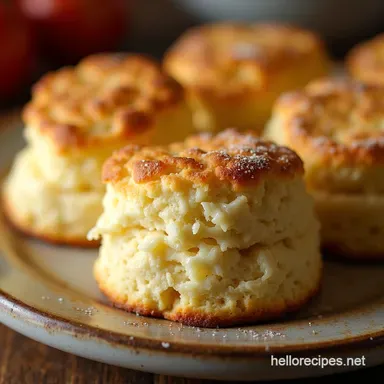
Cloudlight Layered the Only Flaky Buttermilk Biscuit Recipe Youll Ever Need
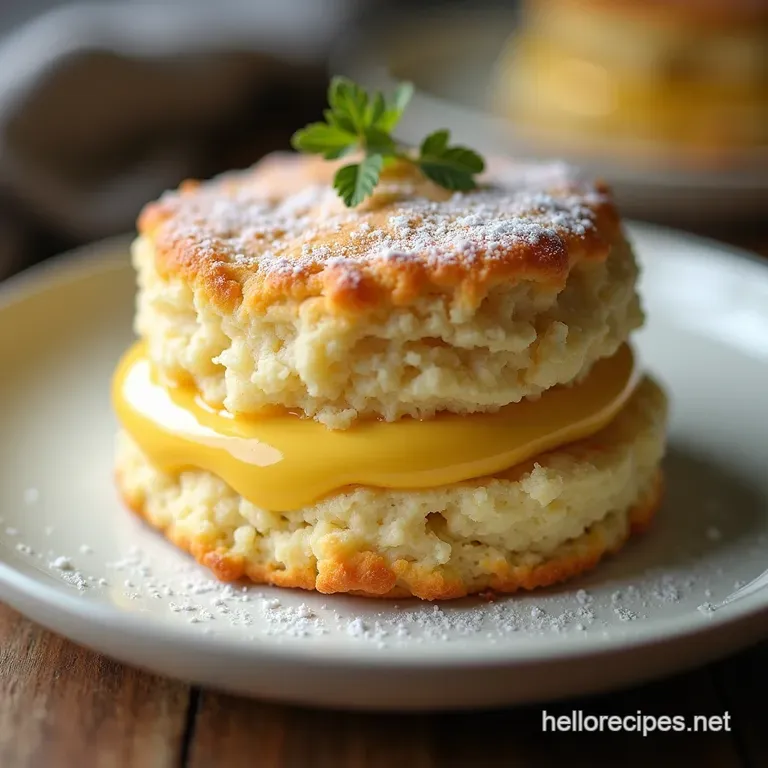
- Why These Flaky Buttermilk Biscuits Redefine Comfort Food
- The Secrets to Achieving Maximum Rise in Your Baking
- Assembling Your Arsenal: Required Components for Superior Flakiness
- Mastering the Technique: Folding, Cutting, and Achieving True Biscuit Elevation
- Baking Perfection: From Pan to Plate
- Elevating Your Creation: Savory and Sweet Pairings
- Troubleshooting and Storage for Tomorrow's Breakfast
- Recipe FAQs
- 📝 Recipe Card
Why These Flaky Buttermilk Biscuits Redefine Comfort Food
There is a profound, almost nostalgic satisfaction that comes with biting into a truly exceptional biscuit. It’s more than just bread; it’s the foundation of countless cherished meals, from Sunday morning brunches to hearty winter suppers.
Forget the dense, uniform hockey pucks you might encounter elsewhere; the goal here is height, tenderness, and those distinct, ethereal layers that shatter delicately upon contact.
This Flaky Buttermilk Biscuits Recipe isn't just a set of instructions; it's a commitment to achieving that perfect Southern style texture. These cloud light creations, made entirely Flaky Buttermilk Biscuits From Scratch , prove that simple ingredients, handled with care, can yield extraordinary results.
They are the centerpiece of any table they grace, demanding attention with their golden crust and impossibly airy interior.
The Secrets to Achieving Maximum Rise in Your Baking
The ultimate test of a biscuit lies in its rise. We are aiming for biscuits that stand tall, proud beacons of baking success, rather than squat little rounds. Achieving this dramatic elevation requires understanding the interplay between our ingredients and temperature, which is precisely what separates an adequate biscuit from a spectacular one.
Moving Beyond Dense Disks: A Crumb Structure Promise
The key to avoiding dense disks lies entirely in how we treat the flour and fat. When we combine ingredients too vigorously or for too long, the gluten in the flour develops excessively. While this is desirable in artisanal breads that need chew, for a tender biscuit, it’s the enemy.
We want just enough mixing to hydrate the dry ingredients, but no more. Our folding technique, detailed later, is designed to create numerous distinct layers of butter separated by flour, ensuring that when they hit the heat, those layers puff up individually, guaranteeing a light, open crumb structure.
This Simple Buttermilk Biscuit Recipe prioritizes gentle handling above all else.
The Essential Role of Cold Temperature in Layer Perfection
If there is one non-negotiable rule when making these Flaky Buttermilk Biscuits , it is temperature control. Every component the butter, the buttermilk, even your hands if you can help it needs to be frigid. Why?
When those frozen cubes or grated pieces of butter meet the heat of the oven, they don't immediately melt into the dough. Instead, they create pockets of steam. This trapped steam forces the dough layers apart, resulting in the characteristic lift and flakiness we crave.
If the butter is soft, it integrates too smoothly, leading to a cake like texture rather than flaky stratification.
A Southern Baking Heritage Captured in Every Bite
The inclusion of buttermilk is not merely for tang; it is a chemical necessity for this particular outcome. Buttermilk is acidic, and that acidity reacts beautifully with the baking soda we incorporate, providing an extra, rapid lift during baking.
This historical component, central to true Homemade Buttermilk Biscuits , imparts a subtle brightness that balances the richness of the butter, making each bite complex, yet utterly comforting. This depth of flavor is what solidifies these as truly memorable.
Assembling Your Arsenal: Required Components for Superior Flakiness
While the process might seem involved, the ingredient list itself is blessedly short. For this batch, which yields about 10 to 12 standard biscuits, we require 2 ½ cups of all-purpose flour, 1 tablespoon of fresh baking powder, 1 teaspoon of baking soda, 1 teaspoon of fine sea salt, and just 1 teaspoon of sugar for subtle balance.
The crucial element, however, is the fat and the liquid.
Essential Tools Beyond the Mixing Bowl
While a large mixing bowl is necessary, the tools you use to combine the ingredients are surprisingly important for temperature control. While a food processor can be used quickly, many seasoned bakers prefer a reliable pastry blender or even two sturdy table knives for cutting the fat into the flour.
This tactile connection allows you to feel the size of the butter pieces without transferring too much body heat to the mixture, ensuring the foundation of your Flaky Buttermilk Biscuits remains perfectly chilled.
Why High Fat European Butter Makes a Difference
We call for 8 tablespoons (one stick) of unsalted butter, and I strongly recommend seeking out a higher fat European style butter if available. Traditional American butter is typically 80% butterfat, whereas European varieties hover around 82% or higher.
That extra percentage of fat translates directly to more water content, which becomes steam, which translates directly to a greater, more dramatic rise. For this recipe, keeping the butter frozen solid and cutting it into small, half inch cubes is the critical first step in preparing for a successful bake.
Many success stories in making Flaky Buttermilk Biscuits can be traced back to using Flaky Buttermilk Biscuits Grated Butter technique if you need to ensure small pieces, but for layering, cubes work best.
Measuring Accuracy: The Key to Lightness, Not Density
When dealing with low-hydration baked goods like biscuits, accuracy is paramount. Flour should always be spooned lightly into the measuring cup and then leveled off; scooping directly from the bag compacts the flour, meaning you might add up to 20% too much, resulting in a dry, heavy final product.
Sticking precisely to the listed measurements ensures the proper ratio of liquid to dry ingredients for this Easy Buttermilk Biscuit Recipe .
Related Recipes Worth Trying
- Best Homemade Apple Pie Recipe Flaky AllButter Crust — Master the classic apple pie with this foolproof recipe for a shatteringly flaky buttery crust and a warm spiced apple filling Get baking
- The Heritage Apple Pie Flaky AllButter Crust Recipe — Master the ultimate homemade apple pie with this stepbystep recipe featuring a shatteringly flaky crust and perfectly spiced filling Its pure comfort
- The Best Homemade Peach Cobbler with Flaky Biscuit Topping — Forget soggy crusts Nail this easy peach cobbler recipe featuring a light buttery buttermilk biscuit topping that bakes up perfectly golden Your new...
Mastering the Technique: Folding, Cutting, and Achieving True Biscuit Elevation
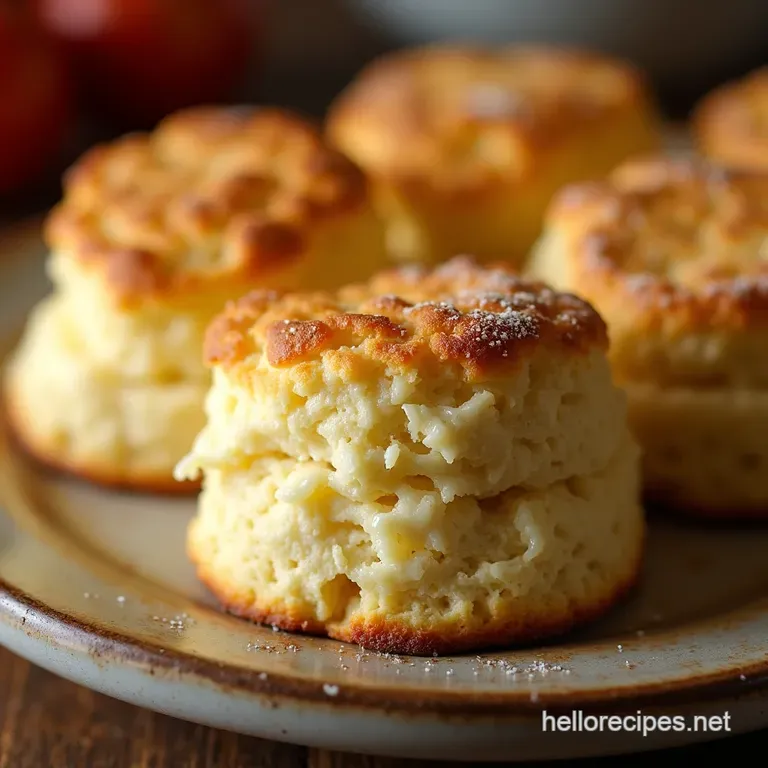
Once the dry ingredients are whisked and the frozen butter is incorporated until the mixture resembles coarse crumbs with some almond sized chunks remaining, we introduce the liquid. Pour in 1 cup of very cold buttermilk. Use a fork to gently coax the mixture together until it just forms a shaggy mass.
Overmixing here activates gluten unnecessarily. Turn the dough onto a lightly floured surface immediately.
Cutting in the Fat: Keeping Ingredients Icy Cold
This stage is where patience pays dividends. You need to work quickly but deliberately. After the initial incorporation of the buttermilk, the dough should still feel cool and slightly rough. If you notice the dough becoming sticky or the butter visibly softening, stop.
Wrap the entire mass in plastic wrap and chill it in the refrigerator for 10 minutes. This brief rest allows the gluten to relax and the fat to re-harden, setting you up perfectly for the lamination process that defines a true Flaky Buttermilk Biscuits From Scratch success.
The Gentle Art of the Three Fold Laminate (The Flaky Buttermilk Biscuits Method)
This folding technique is what separates a standard biscuit from true layered perfection. Pat the shaggy mass into a rough rectangle about an inch thick. Fold the rectangle into thirds, like folding a business letter. Rotate the dough 90 degrees. Gently roll or pat it out again to about ¾-inch thickness.
Repeat this tri-fold process two more times, for a total of three folds. Each fold creates a new set of layers. After the final fold, roll or pat the dough out to a final thickness of ¾ inch this ensures significant height when baked.
Preventing Sticking: The Proper Preparation of the Baking Surface
For maximum rise, many prefer to place their biscuits right next to each other on the baking sheet; this contact encourages them to push upward rather than outward. Whether you choose that method or space them an inch apart, always line your baking sheet with parchment paper.
This prevents sticking, but crucially, it also aids in even bottom browning.
Oven Dynamics: Achieving the Golden Crown
Before baking, use a 2 to 2.5 inch round cutter. Dip the cutter in flour and press straight down into the dough; never twist the cutter. Twisting seals the edges, choking off the rise. Place the cut rounds on your prepared sheet. For an extra rich top, brush lightly with melted butter.
Bake in a preheated 425° F ( 220° C) oven for just 12 to 15 minutes. You are looking for a dramatic puff and a deep golden brown hue.
This quick, hot bake ensures the Quick & Easy Buttermilk Biscuits rise dramatically before the outside fully sets.
Baking Perfection: From Pan to Plate
The moment those glorious biscuits emerge, brush the tops immediately with a touch more melted butter. This adds shine, flavor, and helps soften the crust just slightly, preparing them for immediate enjoyment.
If you were aiming for Flaky Biscuits Cast Iron , the process is similar, but the cast iron skillet should be preheated inside the oven to ensure the bottom sets instantly, yielding an incredible crust.
Elevating Your Creation: Savory and Sweet Pairings
These biscuits are versatile anchors for a wide array of flavors. They are, naturally, the perfect foundation for smothered sausage gravy, which requires a biscuit robust enough to absorb the sauce without immediately disintegrating.
For a sweeter approach, the inherent tang of the buttermilk pairs brilliantly with sharp blackberry jam or homemade strawberry preserves.
Troubleshooting and Storage for Tomorrow's Breakfast
Making Flaky Buttermilk Biscuits perfectly the first time is a triumph, but knowing what to do if they aren’t quite right, or how to save leftovers, ensures you always have success ready to go.
Complementary Flavors: Gravy and Compound Butter Suggestions
To elevate savory service, try a compound butter infused with fresh thyme and cracked black pepper. For sweet indulgence, a drizzle of local honey mixed with a pinch of cinnamon on a warm biscuit is unbeatable. These enhancements elevate even the simplest Easy Buttermilk Biscuit Recipe .
Reviving Day-Old Layers: Reheating for Maximum Tenderness
If you find yourself with leftovers, do not resort to the microwave! To bring back that fresh from-the-oven appeal, wrap the biscuits tightly in foil and place them in a 350° F ( 175° C) oven for about 8 to 10 minutes.
The foil traps the moisture, allowing the steam to re-fluff the layers, restoring much of the original tenderness.
Freezing Strategies: Preserving Freshness for Later Baking
The freezer is your best friend when making large batches. You can freeze the biscuits either baked or unbaked. If freezing unbaked, place the cut rounds (after the 15-minute chill) on a tray, flash freeze until solid, then transfer to a freezer bag.
When ready to bake, place the frozen rounds directly onto a lined pan and add about 5 extra minutes to the baking time.
Altitude Adjustments: Tweaking Ratios for High Elevations
Baking at high altitudes affects leavening agents. If you reside above 3,000 feet, you may need to reduce the baking powder slightly (by about ½ teaspoon) and increase the liquid by about 1 to 2 tablespoons to counteract the drier air and lower atmospheric pressure, ensuring your Flaky Buttermilk Biscuits don't over rise and then collapse dramatically.
Recipe FAQs
My biscuits always come out dense instead of flaky what am I doing wrong with my Flaky Buttermilk Biscuits?
This is usually down to two culprits: overmixing the dough or letting the butter get warm. You must handle the dough as little as possible; mix only until the wet and dry ingredients are just combined. If you see large patches of dry flour, that's fine the folding process will incorporate them later.
Can I use regular milk instead of buttermilk if I’m in a pinch?
You can, but they won't be quite right! Buttermilk provides the necessary acidity to react with the baking soda, which is crucial for that beautiful lift. If you must substitute, mix 1 cup of whole milk with 1 tablespoon of white vinegar or lemon juice and let it sit for 5 minutes before using.
Why do I have to freeze the butter and chill the dough so much?
It’s all about steam! When the rock hard, cold butter hits the hot oven, it melts rapidly, releasing steam that forces the dough layers apart, creating that signature flakiness. Warm butter melts immediately into the flour, resulting in a dense, cake like texture instead of defined layers.
What’s the trick to getting tall, straight sided biscuits?
Don't twist the biscuit cutter when you press it into the dough; you need to press straight down and pull straight up. Twisting seals the edges shut, preventing the steam from lifting the biscuit evenly. Also, chilling the cut biscuits for 15 minutes before baking helps them hold their shape when they hit the heat.
How should I store leftover biscuits, and can I freeze the dough?
Leftover biscuits are best eaten the day they are made, but you can store them airtight at room temperature for up to two days. To revive them, splash a tiny bit of water on them and warm them in a 350°F oven for a few minutes.
Yes, the dough freezes brilliantly cut them out, place them on a tray, freeze solid, and then store them in a freezer bag for up to three months!
Can I add savoury flavours like cheese or herbs to this basic Flaky Buttermilk Biscuit recipe?
Absolutely, this recipe is a fantastic blank canvas for customisation! For savoury treats, fold in about 1/2 cup of grated sharp cheddar and some chopped chives right after you add the buttermilk. Make sure your additions are cold to maintain the integrity of the butter layers.
Flaky Buttermilk Biscuits