Chicken Piccata with Lemon Butter Sauce
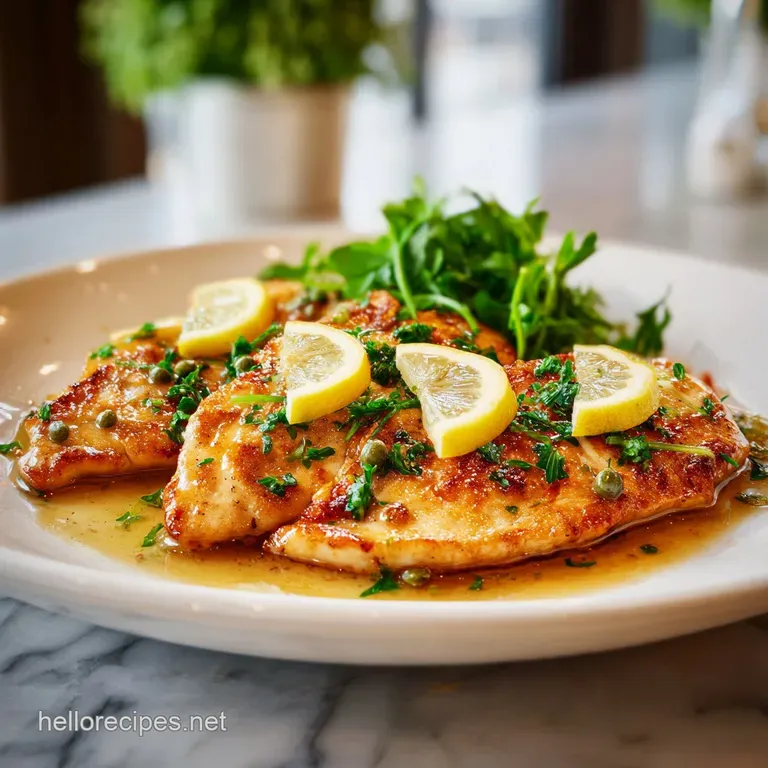
- Time: Active 10 mins, Passive 15 mins, Total 25 mins
- Flavor/Texture Hook: Velvety lemon butter glaze with a salty caper pop
- Perfect for: High efficiency weeknight dinners or impressive date nights
- Mastering Your Homemade Zesty Chicken Piccata
- Why This Flavor Profile Works Perfectly
- Analyzing the Core Flavor Components
- Selecting the Best Ingredients and Substitutes
- Step by Step Cooking Process Instructions
- Solving Common Searing and Sauce Problems
- Customizing Your Chicken Piccata Flavor Profile
- Debunking Myths About This Classic Dish
- Storing Leftovers to Maintain Best Quality
- What to Serve With This Chicken
- Recipe FAQs
- 📝 Recipe Card
Mastering Your Homemade Zesty Chicken Piccata
The second that thin, flour dusted chicken hits the hot oil, you hear it that sharp, energetic sizzle that promises a crisp exterior. But it’s the moment the white wine hits the pan that the real magic happens.
A cloud of steam carries the scent of toasted flour and fermented grapes, filling your kitchen with an aroma that feels like a high end bistro. I remember the first time I attempted this; I was so worried about the "fancy" name that I overcooked the meat into shoe leather.
Now, I use a more technical approach to ensure the poultry stays succulent while the sauce reaches that coveted, glossy consistency.
We aren't just making dinner here; we are exploring the gastronomy of acid and fat. This isn't about heavy creams or long braises. It’s about speed, temperature control, and the molecular dance of emulsification.
You’ll find that by managing the thermal mass of your pan, you can achieve a coating that doesn't just sit on the chicken but becomes one with it. If you’ve ever had a soggy or greasy version of this dish, we’re going to fix that today using a few modern techniques I’ve picked up over years of trial and error.
Trust me, once you nail the timing of the lemon juice reduction, you’ll never look at a plain chicken breast the same way again. We’re aiming for a sauce that is thin enough to pour but thick enough to coat the back of a spoon with a silky, translucent sheen.
It’s a fast paced process, but it’s incredibly rewarding when those briny capers start to burst against the buttery backdrop.
Why This Flavor Profile Works Perfectly
The success of this dish relies on a few core principles of food science that transform simple ingredients into something sophisticated.
- Maillard Adhesion: The light flour coating creates a textured surface area that allows the sauce to cling through capillary action rather than sliding off.
- Cold Fat Suspension: Whisking cold, cubed butter into the hot reduction prevents the fat from separating, resulting in a stable, velvety emulsion.
- Volatile Acid Balance: The combination of malic acid from wine and citric acid from lemon cuts through the density of the butter to refresh the palate.
- Thermal Consistency: Pounding the meat to a uniform 1/4 inch thickness ensures the proteins denature at the exact same rate, preventing dry edges.
| Thickness | Internal Temp | Rest Time | Visual Cue |
|---|---|---|---|
| 1/4 inch | 165°F | 3 mins | Opaque center, juices run clear |
| 1/2 inch | 165°F | 5 mins | Golden brown crust, no pink |
| 3/4 inch | 165°F | 6 mins | Firm to the touch, deep gold |
When you are working with thin cutlets, the window between "just right" and "overdone" is narrow. This is why having your internal temperature goals in mind is vital for a successful Chicken Piccata recipe that remains moist.
Analyzing the Core Flavor Components
Understanding the technology of your ingredients helps you manipulate the final outcome of the dish.
The Physics of the Velvety Emulsion
To get that professional sheen, you must respect the temperature of your lipids. Adding the butter while it’s still cold allows the milk solids to incorporate slowly into the water based lemon juice and broth, creating a thick suspension. If the butter is too warm, it simply melts into an oil slick.
| Ingredient | Science Role | Pro Secret |
|---|---|---|
| All Purpose Flour | Starch barrier | Sift with salt for even micro crusting |
| Dry White Wine | Solvent/Acid | Use a high acidity bottle for better deglazing |
| Cold Butter | Emulsifier | Keep it in the fridge until the very last second |
Selecting the Best Ingredients and Substitutes
Using high-quality, sustainable ingredients makes a massive difference in a dish with so few components. Always opt for fresh citrus over the bottled variety to ensure the volatile oils in the zest enhance the aroma.
- 1 lb chicken breasts: Sliced horizontally and pounded. Why this? Uniform thickness ensures every bite cooks at the same speed.
- 0.5 cup all purpose flour: For dredging.
- 1 tsp kosher salt: Enhances the natural savory notes.
- 0.5 tsp black pepper: Adds a subtle heat.
- 2 tbsp olive oil: For the over high heat sear.
- 2 tbsp unsalted butter: Used for the initial browning.
- 0.5 cup dry white wine: Like Pinot Grigio.
- 0.25 cup fresh lemon juice: Provides the essential bright zing.
- 0.25 cup low sodium chicken broth: Adds depth without excess salt.
- 3 tbsp capers: Drained and rinsed. Why this? These provide "salt spikes" that contrast the creamy sauce.
- 4 tbsp cold unsalted butter: Cubed for the final emulsion.
- 0.25 cup fresh parsley: Finely chopped for a grassy finish.
| Original Ingredient | Substitute | Why It Works |
|---|---|---|
| Dry White Wine | Extra chicken broth + 1 tsp vinegar | Mimics acidity but lacks the complex fermented depth |
| Capers | Chopped green olives | Provides a similar briny punch with a meatier texture |
| All Purpose Flour | Rice flour | Creates an even crispier, shatter like crust; gluten-free |
step-by-step Cooking Process Instructions
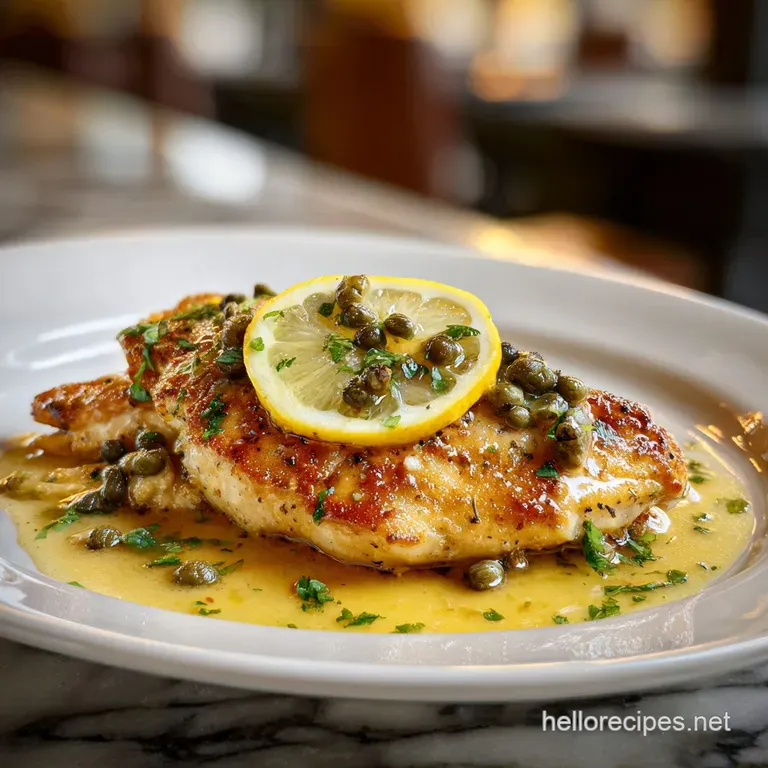
- Prep the poultry. Slice the 1 lb chicken breasts in half horizontally and pound them between plastic wrap to 1/4 inch thickness. Note: This breaks down tough fibers for a more tender result.
- Dredge the cutlets. Mix 0.5 cup flour with 1 tsp salt and 0.5 black pepper, then coat the chicken, shaking off any excess.
- Heat the pan. Add 2 tbsp olive oil and 2 tbsp butter to a large skillet over medium high heat until the butter foam subsides and smells nutty.
- Sear the chicken. Work in batches to avoid crowding; cook for 3 minutes per side until the coating is golden and has a slight shatter.
- Deglaze the surface. Remove chicken to a plate and pour in 0.5 cup white wine, scraping the bottom with a wooden spoon.
- Reduce the liquids. Add 0.25 cup lemon juice, 0.25 cup broth, and 3 tbsp capers, simmering for about 3-5 minutes until the liquid is reduced by half.
- Mount the sauce. Turn heat to low and whisk in the 4 tbsp cold cubed butter one piece at a time until the sauce is glossy and velvety.
- Finish and serve. Return chicken to the pan to coat in the sauce, then garnish with 0.25 cup chopped parsley.
Solving Common Searing and Sauce Problems
Getting that perfect balance of a crispy exterior and a silky sauce can be tricky if the temperatures aren't managed correctly.
Why Your Sauce Turned Out Greasy
If you see oil pooling at the edges of your sauce, the emulsion has broken. This usually happens because the pan was too hot when the butter was added, or the butter wasn't cold enough. The fat melted too quickly to be trapped by the water molecules in the lemon juice and broth.
What If I Don't Have White Wine?
While wine adds a specific layer of acidity and sugars, you can substitute it with more broth and a splash of white wine vinegar or extra lemon juice. The result will be slightly less complex, but it still provides the necessary brightness to balance the fats.
| Problem | Root Cause | Solution |
|---|---|---|
| Sappy or gummy coating | Too much flour left on chicken | Shake off all excess flour until only a fine dust remains |
| Dry, tough meat | Overcooked due to uneven thickness | Ensure all pieces are pounded to a strictly uniform 1/4 inch |
| Thin, watery sauce | Not enough reduction | Simmer the wine and broth longer before adding the cold butter |
Common Mistakes Checklist ✓ Pat the chicken dry with paper towels before dredging to prevent a soggy crust. ✓ Don't skip the "shake" excess flour will fall off in the pan and burn.
✓ Use a stainless steel or cast iron pan for the best Maillard reaction (non stick doesn't brown as well). ✓ Always rinse your capers; the brine they sit in is often overly metallic and salty. ✓ Slice your parsley right before serving to keep the aromatics fresh and vibrant.
Customizing Your Chicken Piccata Flavor Profile
This dish is surprisingly adaptable. If you are looking for something with a bit more weight, you might enjoy trying an Awesome Sauce Chicken recipe for a different flavor profile.
- Doubling the recipe
- Increase the meat and flour linearly, but only increase the salt and spices by 1.5x to avoid over seasoning.
- Working in batches
- Never crowd the pan. If you put too much chicken in at once, the temperature drops and the meat steams instead of searing.
- Halving the recipe
- Follow the measurements exactly, but use a smaller skillet to prevent the sauce from evaporating too quickly.
| Feature | Fresh Lemon | Bottled Juice | Impact |
|---|---|---|---|
| Aroma | High (Essential Oils) | Low | Fresh has a much more "bistro style" scent |
| Flavor | Bright/Tart | Muted/Bitter | Bottled often has preservatives that alter the sauce |
| Gastronomy | Superior Emulsion | Standard | Fresh juice interacts better with the cold butter |
- If you want a crunchier texture, use half flour and half panko breadcrumbs for the dredge.
- If you want a deeper flavor, add a teaspoon of nutritional yeast or finely grated parmesan to the flour mix.
- If you want a milder sauce, stir in a tablespoon of heavy cream at the very end.
Debunking Myths About This Classic Dish
Many people believe that the flour coating is just for "crunch." In reality, the primary function of the flour in this specific gastronomy is to act as a thickener for the sauce as it re enters the pan. The starch gelatinizes slightly when it hits the liquid, helping the lemon butter glaze adhere to the protein.
Another common misconception is that you must use expensive wine. The truth is that the subtleties of a $50 bottle are lost once you boil it down with lemon and capers. An affordable, crisp, dry white wine is actually preferred because it won't introduce unwanted oaky or sweet notes that clash with the citrus.
Storing Leftovers to Maintain Best Quality
Storing this dish requires a bit of care because the sauce can separate when reheated. I recommend keeping the chicken and sauce in an airtight container in the fridge for up to 3 days. When you’re ready to eat, don't just microwave it that’s a recipe for rubbery meat.
Instead, put it in a small pan over low heat with a splash of water or broth to loosen the sauce back into its velvety state.
For zero waste, save your lemon peels! You can toss them into a container of white vinegar to create a natural kitchen cleaner or zest them into a small jar of salt to make a quick finishing seasoning for fish or vegetables.
If you have leftover parsley stems, don't toss them; they have incredible flavor and can be thrown into a freezer bag for your next batch of homemade stock.
What to Serve With This Chicken
Since the sauce is the star of the show, you want a side that can act as a vehicle for all that liquid gold. I usually lean toward a simple pasta or a crusty piece of sourdough. If you’re looking for a vegetable heavy pairing, this works beautifully alongside a roasted Broccoli Casserole recipe.
- Angel Hair Pasta: The thin strands catch the capers and sauce perfectly.
- Creamy Polenta: Provides a soft, neutral base that lets the lemon shine.
- Garlic Smashed Potatoes: The crannies in the potatoes hold onto the butter glaze.
- Steamed Asparagus: Adds a fresh, snappy crunch to the plate.
Chef's Tip: To keep your chicken coating from getting soggy while you finish the sauce, place the seared cutlets on a wire rack over a baking sheet in a 200°F oven. This allows air to circulate so the bottom doesn't steam!
Recipe FAQs
What is chicken piccata made of?
Thin, pounded chicken cutlets dredged in seasoned flour and pan-seared. The sauce is classically made by deglazing the pan with white wine, then adding lemon juice, chicken broth, capers, and finishing by whisking in cold butter for a velvety emulsion.
What is the secret to a good chicken piccata?
Temperature control during the final sauce construction. The secret is mounting the sauce by whisking in very cold, cubed butter off the heat, which creates a stable, glossy emulsion rather than separating into an oily mess. If you enjoyed mastering the technique of temperature control here, apply the same stable emulsion principle to our Classic Chicken Francese recipe for perfect results.
What does piccata mean?
Piccata refers to the preparation style, not the main ingredient. In culinary terms, it means thinly sliced meat (usually veal or chicken) that is lightly dredged in flour, sautéed, and served in a sauce typically featuring lemon, butter, and capers.
What is the difference between chicken marsala and piccata?
Marsala uses Marsala wine and mushrooms, while Piccata uses lemon juice and capers. Marsala sauce is darker and richer due to the fortified wine reduction and earthy mushrooms, whereas piccata is bright, acidic, and relies on a lighter white wine base.
How should I pound the chicken breasts for piccata?
Pound the chicken uniformly to a thickness of 1/4 inch. Place the cutlets between plastic wrap or parchment paper and use a flat meat mallet to gently tap, working from the center outward to ensure even cooking and tenderness.
Can I substitute the white wine in the piccata sauce?
Yes, you can substitute the wine, but balance the acid. Replace the volume of wine with equal parts low-sodium chicken broth and one teaspoon of distilled white vinegar or lemon juice to mimic the necessary tartness for deglazing the pan.
Is it true that I must use fresh lemon juice instead of bottled?
No, this is a common misconception, but fresh is highly recommended for quality. While bottled juice is convenient, fresh lemons contain essential oils in the zest that significantly boost the bright aroma and flavor, which is crucial for the final sauce profile.
Easy Chicken Piccata Recipe
Ingredients:
Instructions:
Nutrition Facts:
| Calories | 448 kcal |
|---|---|
| Protein | 35.8 g |
| Fat | 27.8 g |
| Carbs | 6.1 g |
| Fiber | 0.5 g |
| Sugar | 0.9 g |
| Sodium | 425 mg |
