Sausage Stuffing: Chefs Ultimate Sage and Apple Casserole (Baked to Perfection)
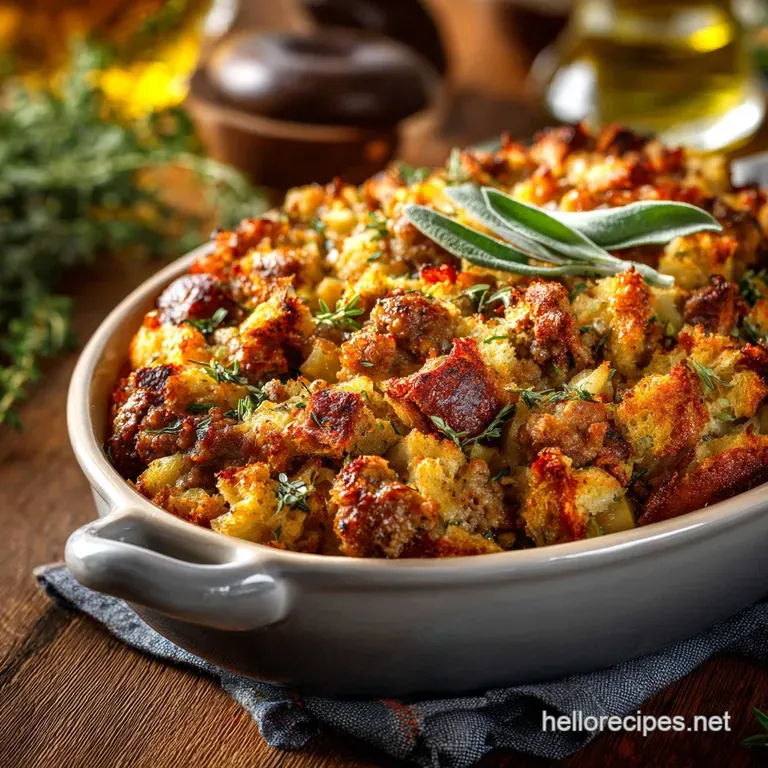
- Elevate Your Holiday Table: The Definitive Baked Sausage Stuffing
- Flavor Science: How This Sausage Stuffing Delivers Unmatched Depth
- Essential Components: Choosing the Best Ingredients for Sausage Stuffing
- Step-by-Step Method: Crafting the Ultimate Sage Stuffing Mixture
- Troubleshooting and Expert Tips for Perfect Holiday Stuffing
- make-ahead Strategy and Safe Storage for Your Sausage Stuffing
- Pairing the Perfect Side: What to Serve with Savory Stuffing
- Recipe FAQs
- 📝 Recipe Card
Elevate Your Holiday Table: The Definitive Baked Sausage Stuffing
When the air smells like sage and browned butter, you know you are winning. That savory, herbaceous cloud is the undisputed sign that the holidays have actually started, and it’s all thanks to this killer sausage stuffing recipe. You need that mix of deeply caramelized sausage and rustic, dried bread cubes.
Listen, stuffing gets a bad rap sometimes; people think it’s tricky or just a filler side dish. But this recipe is a lifesaver because it’s fast, reliable, and uses simple ingredients you likely already have.
It scales beautifully whether you're feeding eight people or thirty, and honestly, the leftovers are the best breakfast ever.
This is the traditional sausage stuffing I perfected after years of accidental soup stuffings and dry, crumbly messes. We are focusing on flavor depth, perfect moisture, and that absolutely mandatory crispy top. Let's quit making sad stuffing and crack on with the good stuff.
Flavor Science: How This Sausage Stuffing Delivers Unmatched Depth
I’m not one for fussy recipes, but I am obsessed with making things taste better . This sausage dressing recipe hinges on a few small decisions that pay off big time in flavor.
Stuffing vs. Dressing: Why Baking Separately is Best
Okay, let's settle the debate quickly: technically, if it’s cooked inside the bird, it’s stuffing; if it’s cooked in a dish, it’s dressing. We are making dressing, but I still call it homemade sausage stuffing because that's what we grew up with.
Baking it separately is simply smarter. This method ensures every single scoop gets a piece of that wonderful crispy crust, eliminating the risk of cross contamination and guaranteeing a perfectly moist center every time.
The Essential Role of Sage Sausage in Flavor
Sage is the backbone of traditional stuffing, and using sage flavored bulk sausage is my number one secret weapon. It does the seasoning work for you! You get that savory richness and necessary fat from the pork, plus the warm, earthy herb flavor all baked in. If you want to check out my seriously intense version, try the Grandmas Thanksgiving Stuffing: The Classic Browned Butter Sage Recipe .
Achieving the Perfect Crispy Top and Moist Center
The secret here is two-fold: dry bread and proper hydration. If your bread is rock hard, it sucks up the stock without turning instantly into paste, giving you structure. We bake it covered first to trap the steam and cook the interior thoroughly, then uncover it for the final 15 minutes to achieve that beautiful, crackly golden crust.
The Maillard Reaction: Browning the Sausage and Aromatics
This is where flavor is truly built. Don't just cook the sausage until it’s pink, cook it until it’s brown . Those little caramelized bits stuck to the bottom of the pan are liquid gold.
We then scrape them up with the celery and onion, ensuring those aromatics get infused with the deep, savory sausage flavor.
Balancing Richness: The Strategic Inclusion of Apple
Apples might sound weird, but trust me, they are amazing. We aren't making a sweet side dish, but the tartness of a Granny Smith cuts through the richness of the sausage and butter beautifully. It also softens perfectly into the dressing without disappearing completely. If you want to lean into the sweet savory thing, check out my recipe for Sausage Apple and Cranberry Stuffing: The Cracking Recipe for Crispy Tops .
Optimal Liquid Absorption for a Non-Mushy Texture
The biggest failure point is adding too much stock, turning your gorgeous stuffing into mushy bread pudding. You must add the stock slowly. The mixture should look moist and clump together when squeezed, but there should be zero liquid pooling at the bottom of your mixing bowl.
Essential Components: Choosing the Best Ingredients for Sausage Stuffing
You can’t make great stuffing from crummy ingredients. Think quality, robust flavors that can stand up to rich gravy and roasted meats.
Selecting the Right Bread Base: Sourdough, White, or French?
I prefer a blend of rustic white bread and sourdough for depth, but any sturdy, hearty loaf works well. Avoid squishy sandwich bread, it collapses too easily. Sourdough brings a lovely, tangy complexity that balances the rich sausage perfectly.
Sausage Spotlight: Mild, Hot, or Sage Bulk?
Go for high-quality bulk pork breakfast sausage. If you can find it labeled specifically as "sage sausage," that's the winner. If not, standard mild bulk Italian sausage is a great backup. Just make sure to remove the casings before you start browning it.
The Herb Element: Using Fresh vs. Dried Sage and Thyme
Always use fresh sage and thyme. Seriously. Dried herbs turn to dust and taste like potpourri in the oven. The fresh stuff releases potent oils that coat the bread beautifully as it bakes.
Stock Choices: Enhancing the Savory Base
Use a good quality low-sodium chicken stock or, ideally, homemade turkey stock if you happen to have some. Since the stock is the primary source of moisture and savory flavor, don't skimp here. Water is absolutely not a substitute!
| Ingredient | My Top Choice | Viable Substitution |
|---|---|---|
| Bread | Stale Sourdough/Rustic White Mix | Dried Cornbread or French Baguette |
| Sausage | Bulk Sage Breakfast Sausage | Mild Italian Sausage + Extra Fresh Sage |
| Butter | Unsalted Dairy Butter | Olive Oil or Plant Based Baking Stick |
| Apple | Granny Smith (Tart) | Omit entirely, or use a firm pear (Bosc) |
| Stock | Low-Sodium Chicken Stock | Turkey Stock (Use high-quality, not broth) |
step-by-step Method: Crafting the Ultimate Sage Stuffing Mixture
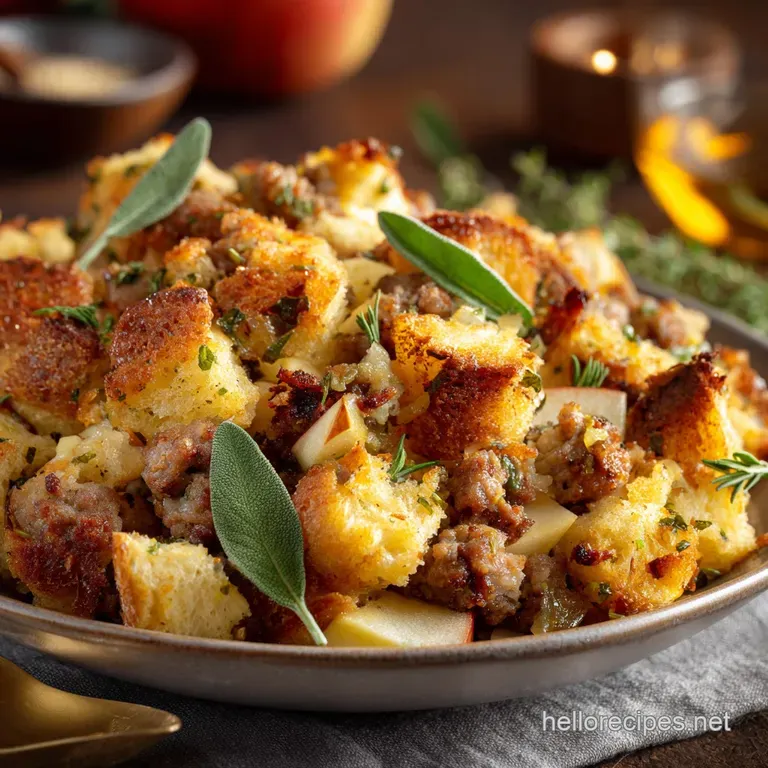
We are moving quickly here! Everything you do in the skillet is building the foundation for amazing flavor.
Prep Work: Staling or Drying the Bread Cubes
This is the least fun part, but it's essential. Cut your bread into consistent 1 inch cubes the day before. Spread them out on a sheet pan, leave them uncovered, and let them dry out until they are basically rock solid croutons. I once skipped this step and ended up with a brick of glue.
If you are in a rush, bake them at 300°F (150°C) for 15 minutes, stirring once.
Building the Flavor Foundation: Sautéing the Sausage and Veg
In a large pan, start by browning that sausage hard. Don't be afraid of the high heat; we want caramelization. Once done, scoop the sausage out and leave most of the rendered fat behind. Now, add your butter, then the celery, onion, and apple.
Cook them down until they soften and get translucent, picking up all that sausage goodness. Stir in the minced garlic and fresh herbs (sage and thyme) for just one minute until they smell incredible.
Chef's Note: The apple should be diced as small as the celery. If the pieces are too big, they won't soften fully and you’ll get pockets of crunchiness you don’t want in your stuffing.
The Final Mix and Hydration Check
Dump the sausage and sautéed vegetables into the bowl with your dried bread cubes. Whisk the eggs into your warmed stock (warm stock absorbs faster, a little trick I learned!). Start by pouring in only two-thirds of the stock mixture. Gently fold it all together, using a rubber spatula or clean hands.
Stop folding as soon as the liquid is distributed. Wait 5 minutes. If the mixture still looks dusty, add the remaining liquid slowly until it is uniformly moist but not wet.
Baking Time and Temperature Guide
Preheat the oven to 375°F (190°C). Transfer the mixture to a buttered 9x13-inch baking dish. Cover the dish tightly with foil. This ensures the interior steams and heats through completely. Bake it covered for 30 minutes, then pull that foil off!
This is the moment we start building the crust. Bake uncovered for another 15– 20 minutes until the top is deeply golden brown.
Troubleshooting and Expert Tips for Perfect Holiday Stuffing
If you've ever battled sad, dry, or soupy stuffing, these fixes are for you.
Preventing a Dry Stuffing: The Aluminum Foil Tactic
As mentioned, covering the stuffing for the first 30 minutes is crucial. If the edges are starting to dry out, you can also dot the top with small pats of butter before the uncovered phase.
If you pull it out and it still feels too dry, simply drizzle a couple tablespoons of warm stock over the top immediately after baking, then cover it again with foil for 10 minutes; it will steam itself back to life.
Fixing a Too-Soggy Mixture (Common mistake)
Help! You added too much stock, and it looks like soup. Don't panic. Quickly stir in about a half cup of plain breadcrumbs or panko, or maybe even some crushed-up crackers, to soak up the excess liquid.
If you realize the mistake before baking, spread the mixture thinly on a baking sheet and let it air dry for 15 minutes before transferring it to the casserole dish.
Achieving the Golden, Crusty Top
The final 15 minutes of baking, uncovered, is important, but crank up the heat slightly if you have to. If your stuffing is cooked through (165°F/74°C) but still pale, turn the oven up to 400°F (200°C) for the last 5 minutes, or use the broiler for 60 seconds (watch it like a hawk, seriously!). This high heat makes the outside of the Sausage Stuffing: Robust, Moist, and Crispy Oven Baked Stuffing crispy.
make-ahead Strategy and Safe Storage for Your Sausage Stuffing
You absolutely need a make-ahead plan for the holidays; who has time to chop celery on Thanksgiving morning?
Refrigerating the Unbaked Mixture
This sausage stuffing recipe is perfect for making ahead. You can fully prepare the mixture, right up to the point where you put it in the baking dish. Cover it tightly with plastic wrap and refrigerate for up to 24 hours.
Important: When baking, let the dish sit on the counter for 30– 45 minutes to lose the refrigerator chill before putting it in the hot oven. Add an extra 10– 15 minutes to the initial covered baking time.
Properly Freezing Cooked Sausage Stuffing
Yes, sausage stuffing freezes beautifully. Once it is fully baked and cooled completely, wrap the entire casserole dish tightly in plastic wrap, then foil. It will keep well for up to three months. To thaw, move it to the fridge overnight.
Reheating Instructions for Maximum Freshness
Reheat frozen stuffing low and slow. Place the thawed stuffing (still in the casserole dish) covered with foil in a 325°F (160°C) oven for about 20– 30 minutes, or until piping hot throughout.
Remove the foil for the last 5 minutes to crisp up that beautiful top again. If reheating individual servings, the microwave is fine, but the oven is always best for texture.
Pairing the Perfect Side: What to Serve with Savory Stuffing
This sausage stuffing is already a meal in itself, but it needs good friends on the plate. It pairs wonderfully with classic holiday fare like roast turkey or prime rib. The robust, savory profile also stands up beautifully to bolder vegetable dishes. Think glazed root vegetables, or maybe green beans tossed simply with browned butter. And seriously, don't forget the gravy. A rich, herby gravy is the required counterpart for any great Thanksgiving Stuffing Recipe: The Ultimate Golden Crusted Dish .
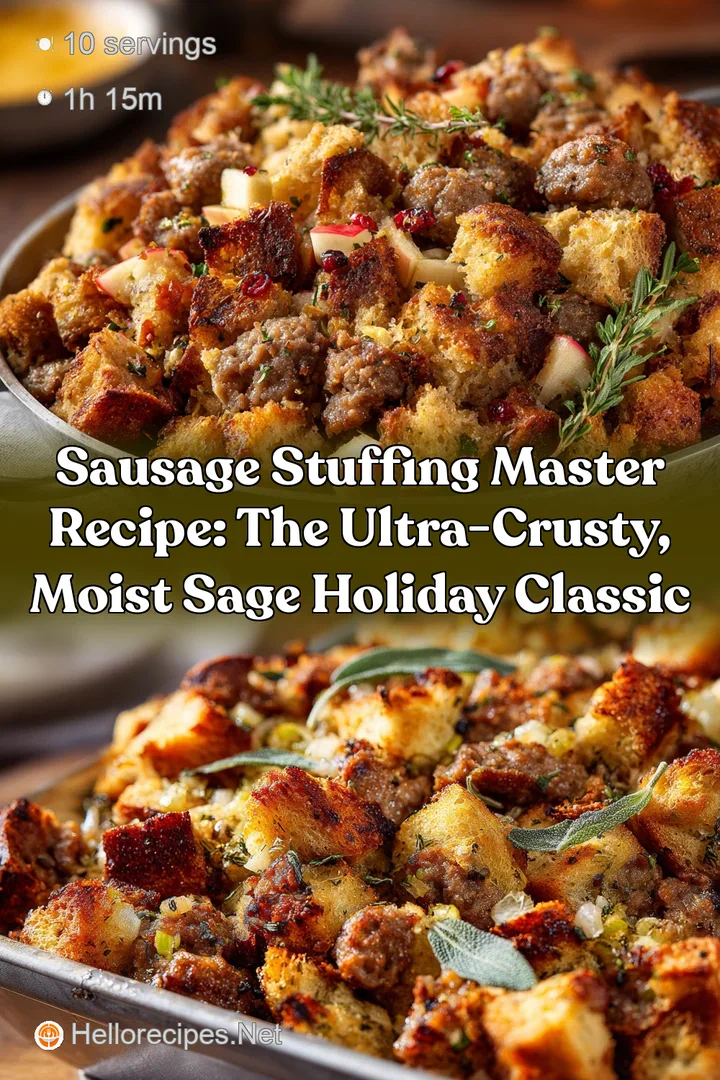
Recipe FAQs
Why did my stuffing turn out dry and crumbly?
Dryness typically occurs when the bread cubes were not sufficiently moistened before baking or if the stuffing was cooked uncovered for too long. Ensure the bread fully absorbs the stock mixture it should feel heavy and wet and cover the baking dish loosely with foil for the first 30 minutes to trap essential moisture.
Can I prepare this sausage stuffing a day ahead of time?
Yes, advance preparation is highly recommended for holiday ease. Mix all ingredients, including the stock, and transfer the stuffing mixture to the baking dish; cover and refrigerate for up to 24 hours.
Before baking, allow the dish to sit at room temperature for 30 minutes, and be aware that the total baking time may increase slightly since the mixture starts cold.
What type of bread works best for this hearty stuffing?
The best stuffings rely on sturdy, slightly stale, or toasted bread, such as sourdough, French baguette, or rustic Italian loaf. Avoid soft sandwich bread as it breaks down easily when wet, resulting in a dense, mushy texture rather than distinct cubes.
Can I substitute other meats for the sage sausage?
Certainly. You can use sweet or hot Italian sausage, or substitute ground pork mixed with additional sage and fennel seeds for flavor depth. For a leaner option, ground turkey or chicken sausage can be used, but you may need to add a bit more butter or oil to sauté the vegetables.
How should I store leftover stuffing, and can I freeze it?
Store leftover stuffing tightly covered in the refrigerator for up to 3 to 4 days, ensuring it is cooled quickly after serving. Stuffing freezes beautifully; pack it into an airtight container or freezer bag and freeze for up to 3 months, reheating slowly in the oven to restore its texture.
If I prefer a crisper top, what is the best technique?
To achieve a crunchy, browned top, ensure the stuffing is baked uncovered for the final 15-20 minutes of cooking. You can also lightly brush the top layer of bread cubes with melted butter before the final uncovered baking period, which aids browning and adds richness.
Is it safer to bake this stuffing outside the turkey?
Absolutely; baking stuffing outside the bird is the safest and most recommended method, as it eliminates risks associated with microbial contamination from poultry juices. Furthermore, it allows the stuffing to reach an internal temperature of 165°F (74°C) more uniformly, guaranteeing both safety and superior texture.
Ultimate Sage Sausage Stuffing Baked
Ingredients:
Instructions:
Nutrition Facts:
| Calories | 998 kcal |
|---|---|
| Protein | 37.8 g |
| Fat | 50.6 g |
| Carbs | 83.8 g |
