Sausage Stuffing: the Ultimate Sage Recipe with a Cracking Crispy Crust
- Mastering the Ultimate Sage and Sausage Stuffing
- The Science of Perfect Stuffing: Moisture and Crispness
- Essential Components for Authentic Sausage Stuffing
- Step-by-Step: Building Your Sage and Sausage Stuffing
- Expert Tips and Troubleshooting for Stuffing Success
- Make-Ahead, Storage, and Reheating Your Comforting Sausage Stuffing
- Perfect Pairings: What to Serve Alongside Sage Sausage Stuffing
- Recipe FAQs
- 📝 Recipe Card
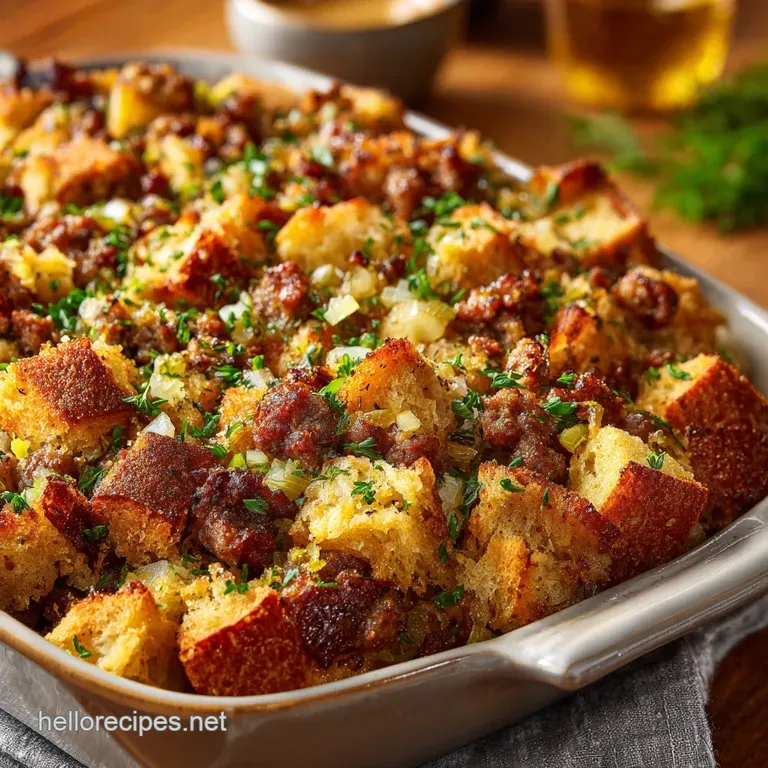
Mastering the Ultimate Sage and Sausage Stuffing
Can we just talk about that moment the stuffing hits the oven? The smell of sage, butter, and deeply browned sausage wafts through the house, instantly making everything feel cozy and right. It’s that perfect salty, savoury, herbaceous blanket you need on your plate.
Forget everything else; I’m eating the crispy edges first.
For too long, stuffing was seen as this intimidating, complicated holiday monster, usually ending up dry or utterly sodden. But listen up, this recipe is truly a lifesaver. It’s unbelievably simple to prep ahead of time, uses inexpensive ingredients, and delivers that deeply comforting, robust flavour every single time.
We are making a casserole dish, not wrestling with a turkey cavity today.
I have spent years perfecting this balance of moisture and crunch, learning exactly when to hold back on the stock and how to get that shattering golden crust. Ready to ditch the dry, crumbly stuff for good? Let’s crack on and make the best sausage stuffing your holiday table has ever seen.
The Science of Perfect Stuffing: Moisture and Crispness
I used to think making stuffing was just about mixing wet ingredients with dry bread, but that produces concrete. The secret to phenomenal sausage stuffing lies in understanding three key texture dynamics. We need a soft, moist interior that hasn't dissolved into sludge, alongside that crispy, irresistible top layer.
The Unsung Hero of the Holiday Plate
This sausage stuffing isn’t just a side; it is, quite frankly, the glue that holds the entire holiday meal together. It provides the necessary texture contrast and the rich, foundational savoury flavour that other sides often lack. When you use good quality pork sausage, the dish carries the flavour.
Why Bread Texture Matters More Than You Think
Fresh bread is your enemy here. If the bread is soft and pliable, it will instantly turn into mush when it meets the stock and melted butter. You need truly stale or dried bread. This allows the bread cubes to hold their structure and soak up the binding liquid like a sponge, ensuring they stay separate but moist inside. It’s the essential starting point for any successful stuffing recipe, and if you're planning ahead, you can't beat a recipe like Thanksgiving Stuffing Recipe: The Ultimate Golden Crusted Dish for tips on bread prep.
The Essential Flavour Profile: Sage, Pork, and Butter
In my opinion, Sage is non-negotiable when making true sausage stuffing. Its earthy, slightly peppery aroma pairs perfectly with pork and the sweetness of the sautéed onions.
When you combine the butter and the rendered sausage fat, you create the ultimate flavour vehicle that carries the sage and thyme throughout the entire dish.
Achieving the Golden Crust (The Maillard Reaction)
That deeply caramelized, golden brown crust isn't magic; it’s science, specifically the Maillard reaction. We achieve this by baking the stuffing covered first to ensure the centre cooks and steams.
Then, removing the foil exposes the top layer to dry heat, allowing the sugars and proteins in the egg and stock binder to crisp up gloriously.
The Role of Fat in Binding and Flavor Delivery
Fat in this case, butter and rendered sausage fat does so much more than just lubricate the pan. It acts as the primary binder alongside the eggs, coating the bread cubes and sealing in the moisture.
Using melted butter is critical because it integrates evenly, ensuring every single crumb gets saturated with rich flavour.
Balancing Liquids: The Key to a Moist Centre
This is where most home cooks fail. You must add the stock slowly, only until the bread cubes look moist but aren't sitting in a pool of liquid. I like to use warm stock because it absorbs much faster. If you go too heavy handed, your stuffing will be dense, heavy, and seriously disappointing.
Essential Components for Authentic Sausage Stuffing
We are keeping this simple and classic. This isn't the time for fancy wild rice blends, just pure, comforting, buttery goodness.
Choosing the Right Pork Sausage: Mild vs. Sage Infused
Go for quality pork sausage, preferably something labeled mild Italian or a high-quality British breakfast sausage. If you can find one already seasoned with sage, even better! I always remove the sausage meat from the casings; it breaks up more easily and renders out the fat perfectly.
| Ingredient | My Recommendation | Quick Substitute |
|---|---|---|
| Pork Sausage | Mild or Sage Pork | Ground Pork + 1 tsp Fennel Seed + Extra Sage |
| Bread | Stale White, Sourdough, or Brioche | Quality store-bought Cornbread (Dried) |
| Chicken Stock | Low Sodium Chicken Stock (Warm) | Vegetable Stock or Half Heavy Cream/Half Milk |
| Fresh Herbs | Sage and Thyme | 1 tsp Dried Poultry Seasoning (Use half the amount) |
| Butter | Unsalted | Salted Butter (adjust added salt accordingly) |
The Bread Debate: Sourdough vs. White Loaf Prep
While sourdough offers a lovely, tangy complexity, a simple, good quality white loaf or brioche is also fantastic. Just remember the size rule: cube everything into roughly 1 inch pieces. Small cubes will dissolve; giant cubes won't absorb enough liquid.
Aromatics Breakdown: The Art of Slow Sautéing
Do not rush the onions and celery. Seriously. You are not just softening them; you are building the foundation of flavour. Sautéing them slowly in the rendered sausage fat and butter for 8 to 10 minutes releases their sweetness and ensures they disappear smoothly into the final dish without being crunchy.
Stock vs. Milk: Selecting Your Binding Liquid
I prefer using warm, low-sodium chicken stock because it adds savoury depth without making the stuffing overly rich. Some people swear by using a mix of milk or heavy cream for a richer result, which definitely works if you want a fudgier, denser texture. Just remember: adjust your salt if using salted stock.
step-by-step: Building Your Sage and Sausage Stuffing
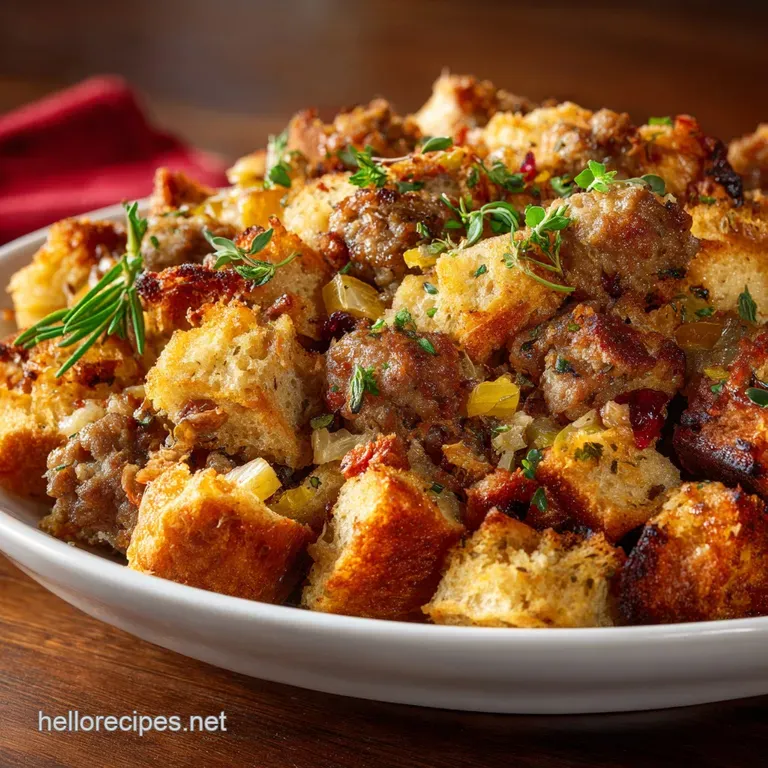
Trust me on the order here; building the flavour base correctly is essential for achieving that deep, cozy taste.
1. Prep the Bread and Sausage
Cube the bread and spread it out on a baking sheet. Leave it for several hours or quick dry it in a low oven until it feels dry to the touch, not soft. Brown the sausage meat in a large skillet until it's deeply golden and cooked through.
Remove the sausage to the mixing bowl with the bread, but keep that flavorful rendered fat in the skillet.
2. Develop the Aromatics
Reduce the heat to medium. Add the rest of the butter to the skillet with the reserved sausage fat. Tip in the diced onion and celery, cooking slowly until they are fully softened this takes patience, about 8 minutes.
Add the garlic, fresh sage, and thyme, cooking for just one minute until that incredible nutty aroma hits you.
3. Combine and Hydrate the Mixture
Scrape all the buttery, aromatic goodness into the bowl with the bread and sausage. Toss gently to combine everything thoroughly. Pour the lightly beaten eggs and chopped parsley over the mixture. Now for the crucial part: slowly drizzle in the warm stock , tossing as you go.
Stop when the mixture feels cohesive and moist, almost like wet sand, but before it starts looking soupy.
Chef’s Note: Always let the mixture sit for 5 minutes after adding the stock. The bread needs time to fully soak up the liquid; what looked dry initially might be perfectly moist after a short rest. If it's still too dry, add a splash more stock.
4. Bake and Achieve the Golden Crust
Scoop the stuffing into your prepared 9x13 dish, spreading it out lightly. Do not press down hard! Bake covered at 375°F (190°C) for 30 minutes to ensure a moist centre.
Remove the foil and bake for another 15 to 20 minutes until the top is crunchy and deeply golden brown. Make sure the internal temperature hits 165°F (74°C) for safety.
Expert Tips and Troubleshooting for Stuffing Success
I’ve made every stuffing mistake in the book (once I didn't drain the sausage fat, and the resulting grease puddle was tragic), so here are my genuine, hard earned tips.
Preparation: The Critical Bread Drying Process
If you decide to skip the quick oven dry and use day-old bread, you need to leave it uncovered on the counter for at least 12 hours. The bread must be truly hard and dry. This step ensures superior texture and prevents the final dish from turning into mush.
Browning the Sausage and Building the Base
Brown the sausage hard. This creates crucial savoury depth that you cannot get from gently cooking it. When sautéing the vegetables, if you use a little extra butter or fat than the recipe calls for, nobody will complain it ensures the resulting mixture is rich and perfectly hydrated.
Combining and Hydrating the Mixture
Always use your hands for the final mix. Seriously. It’s the only way to gently toss the mixture without breaking the bread while ensuring every cube gets evenly coated with the buttery aromatics and stock.
Baking Times: Covered vs. Uncovered Techniques
The covered bake is mandatory for moisture retention. If you skip this, the exposed bread will dry out before the centre has heated through. The uncovered bake is purely for texture and color. If the top starts browning too quickly, just lightly place the foil back on top.
Avoiding the Cardinal Sin of Soggy Stuffing
The solution here is simple: Do not compact the stuffing into the dish. When you lightly spoon the mixture in, the air pockets allow the heat to circulate and steam to escape, which results in a lighter, fluffier texture instead of a dense block.
The Temperature Check: Ensuring Safe Cooking
If you are cooking this outside the bird (which is always recommended for superior texture), you must still ensure the stuffing reaches 165°F (74°C) internally. Since it contains eggs and pork, food safety is key. Use a probe thermometer inserted into the centre of the casserole dish.
make-ahead, Storage, and Reheating Your Comforting Sausage Stuffing
This sausage stuffing recipe is absolutely perfect for making ahead, which is exactly what you need when hosting a big meal.
Can You Freeze Stuffing? Best Practices for Thawing
Yes, you absolutely can freeze stuffing! Cool the baked stuffing completely, then wrap the dish tightly in foil and plastic wrap, or transfer it to an airtight, freezer safe container. It keeps beautifully for up to 3 months. When ready to serve, thaw overnight in the fridge.
Reheat covered at 350°F (175°C) until warmed through, then remove the foil for the last 10 minutes to re-crisp the top.
Reheating Leftovers Without Drying Them Out
Leftover stuffing often goes dry when reheated because the bread cubes have already absorbed most of the fat. To combat this, place the leftover stuffing in a baking dish, sprinkle 1 2 tablespoons of extra stock or gravy over the top, and cover tightly with foil.
Reheat at 325°F (160°C) for about 20 minutes.
Scaling the Recipe: Tips for Large Holiday Feasts
If you need to double or triple this recipe, make sure you divide the resulting mixture across multiple 9x13 dishes. Cramming too much stuffing into one giant pan will seriously inhibit the crisp crust and increase the covered baking time dramatically. Also, remember to look at related recipes like the Sausage Herb Stuffing: The Best Golden Crusted Thanksgiving Side Dish for guidance on ingredient ratios when scaling.
Perfect Pairings: What to Serve Alongside Sage Sausage Stuffing
This stuffing is robust and can stand up to heavy hitters, but it also pairs perfectly with lighter fare.
The Essential Gravy Pairing
Gravy is not optional; it’s the stuffing’s soulmate. You need a rich, savory pan gravy to drizzle generously over the top. The gravy soaks into the soft interior while leaving the crispy edges alone pure heaven.
Complimentary Roasted Vegetables
Because the stuffing is so rich, I like to balance it with something bright and slightly acidic. Roasted Brussels sprouts with bacon (yes, more pork, why not?) or a simple green bean casserole work beautifully.
Beyond the Turkey: Using Stuffing in Other Dishes
Don't limit this glorious creation to just the holidays. If you have leftovers, or just feel like a deeply comforting weeknight meal, turn this into stuffing balls (cook them crispier for that) or use it as a base for a shepherd’s pie topping. You might also want to explore the variations in my Sausage Stuffing: Ultimate Sage and Apple Recipe (Baked Outside the Bird) if you’re looking to inject a little sweetness into your next batch.
Recipe FAQs
Why did my sausage stuffing turn out dry and crumbly?
Stuffing dryness is usually caused by either insufficient stock or over baking. Ensure the bread mixture feels adequately moist before baking it should resemble wet oatmeal, not just damp crumbs.
If the mixture looks dry halfway through cooking, try drizzling a few spoonfuls of extra stock or melted butter over the top and covering it tightly for 10 minutes.
Can I assemble the stuffing a day in advance?
Absolutely. You can fully assemble the stuffing, including adding the stock, and refrigerate it in its baking dish for up to 24 hours before baking. Just ensure you cover it tightly with cling film to prevent the surface from drying out in the fridge.
For best results, allow it to sit at room temperature for 30 minutes before placing it in the oven.
How do I ensure the top is crispy but the inside remains moist?
The key is controlling the exposure to heat. Cover the stuffing dish tightly with foil for the first two-thirds of the baking time; this traps the steam, ensuring the interior cooks thoroughly and remains tender.
Remove the foil for the final 15 minutes to allow the top layer of bread cubes to brown, crisp up, and caramelize perfectly.
What is the best way to handle leftovers, and can I freeze this stuffing?
Leftovers should be stored in an airtight container in the refrigerator for up to 3-4 days. Cooked sausage stuffing freezes exceptionally well; portion it out, cool it completely, and freeze for up to 3 months.
Thaw it overnight and reheat covered in the oven at 350°F (175°C) until piping hot throughout to retain moisture.
Can I substitute the pork sausage for ground poultry?
Yes, you can use ground turkey or chicken, but be mindful that the flavor will be milder, and the mixture will be leaner. If substituting, ensure you add extra fat, such as a few tablespoons of melted butter, and boost the seasoning, perhaps with a touch of fennel seed or smoked paprika, to maintain the stuffing's robust profile.
What type of bread is best for this sausage stuffing recipe?
We recommend a sturdy, slightly crusty white loaf, such as a good sourdough or pain de mie, cut into 1 inch cubes. Crucially, the bread must be properly dried out, either left uncovered overnight or lightly toasted in a low oven; this prevents the final dish from becoming dense or mushy once the stock is added.
I think I added too much stock, and the mixture looks soggy. What can I do?
If the mixture is waterlogged, try adding a handful of extra dry bread crumbs or toasted bread cubes to absorb the excess liquid before baking. Alternatively, spread the stuffing thinly on a baking sheet and bake for 10 minutes at a low temperature; this gentle heat will help evaporate some of the moisture before you transfer it to the main baking dish.
Ultimate Sage Sausage Stuffing
Ingredients:
Instructions:
Nutrition Facts:
| Calories | 375 calories |
|---|---|
| Fat | 22 grams |
| Fiber | 3 grams |
