Tomato Soup Recipe Fresh
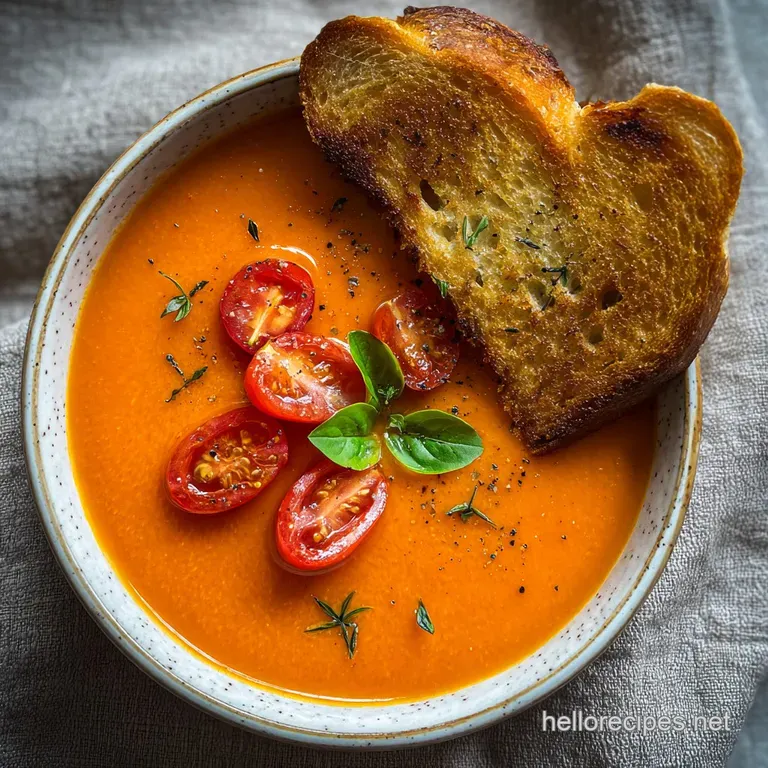
- Time: Active 15 minutes, Passive 45 minutes, Total 1 hours
- Flavor/Texture Hook: Smoky, jammy, and incredibly silky
- Perfect for: Seasonal harvests or a sophisticated weekend lunch
- Crafting the Perfect Tomato Soup Recipe Fresh
- The Molecular Science of Caramelization
- Fundamental Components and Technical Composition
- High Performance Tools for Modern Cooking
- Technical Execution for the Ultimate Result
- Correcting Textural and Flavor Anomalies
- Innovative Variations for Every Palate
- The Science of Why it Works
- Sustainable Storage and Waste Reduction
- Artful Presentation and Finishing Touches
- Debunking Common Tomato Myths
- Recipe FAQs
- 📝 Recipe Card
Close your eyes and imagine the scent of charred tomato skins and caramelized onions wafting through your kitchen. It’s a concentrated, jammy aroma that signals something far more complex than a standard lunch.
When we use this tomato soup recipe fresh, we’re not just boiling vegetables; we’re using thermal technology to transform simple produce into a concentrated essence of summer.
I’ve spent years trying to mimic the deep, umami rich profiles found in high end gastronomy, only to realize that the secret isn’t a hidden ingredient it’s the application of heat.
Most people simmer their tomatoes in a pot, which is fine, but it often results in a watery, one dimensional flavor. We’re going to fix that by letting the oven do the heavy lifting, creating a base that is naturally sweet and incredibly fragrant.
We’ve all had those days where we crave a bowl of something warm, but the metallic tang of canned soup just doesn’t cut it. This recipe is my solution for a sustainable, vegetable forward meal that feels indulgent without being heavy.
Right then, let’s get into the mechanics of how to make this work perfectly in your own kitchen.
Crafting the Perfect Tomato Soup Recipe Fresh
The secret to this dish lies in the chemistry of the roast. By exposing the tomatoes to dry, high heat, we trigger a specific enzymatic breakdown that you simply cannot achieve through boiling. This isn't just about cooking; it's about altering the molecular structure of the fruit to maximize sweetness.
Trust me on this the charred bits on the baking sheet are where the real magic happens.
If you enjoy this kind of vegetable forward approach to seasonal cooking, you might also like the Hearty & Wholesome recipe for cabbage soup. Both recipes focus on maximizing the natural profile of the ingredients through careful preparation.
The Science of Why it Works
Sugar Concentration: Roasting evaporates the high water content in tomatoes, concentrating the natural fructose and glucose for a sweeter, more intense flavor. Maillard Reaction: The high heat creates new flavor compounds as amino acids and sugars react, producing the signature smoky, savory notes.
Chef's Tip: Roast your garlic cloves with the skins on. This protects the delicate interior from burning, allowing the garlic to steam inside its own "wrapper" until it becomes a buttery, sweet paste.
The Molecular Science of Caramelization
When we talk about flavor in a fresh soup, we are really talking about the balance of acidity, sweetness, and fat. Roasting is the most effective technology we have for shifting that balance.
The over high heat environment causes the tomato skins to blister and "shatter" slightly, releasing volatile compounds that add a subtle smokiness to the final blend.
Precise Components for a Balanced Profile
| Ingredient | Science Role | Pro Secret |
|---|---|---|
| Fresh Tomatoes | Pectin Breakdown | Roasting breaks down cell walls, ensuring a velvety, emulsion like texture when blended. |
| Large Yellow Onion | Sulfur Conversion | Heat transforms sharp sulfur compounds into sweet, savory molecules that provide a base note. |
| Balsamic Vinegar | pH Alignment | A late stage addition of acid brightens the deep, roasted sugars and balances the heavy cream. |
Choosing the right variety of tomato is vital. Roma and San Marzano are preferred because they have a lower water to flesh ratio, which means more flavor and less thinning out during the roasting process.
If you use vine ripened tomatoes, expect a slightly more acidic and thinner consistency, which may require a few extra minutes of simmering.
The olive oil acts as a heat conductor and a solvent for fat soluble flavor compounds. Don't be shy with it; the 3 tablespoons listed are necessary to ensure the vegetables don't just dry out.
We want them to sizzle and caramelize in the oil, creating a rich fond on the bottom of the pan that we will eventually scrape into the blender.
Fundamental Components and Technical Composition
Here is exactly what you need to gather. I always recommend using sea salt rather than table salt, as the larger crystals provide a more controlled seasoning experience.
- 3 lbs fresh tomatoes (Roma, San Marzano, or Vine ripened), halved - Sub: 2 cans (28oz) whole peeled tomatoes, drained. Why this? Fresh provides a cleaner, more vibrant acidity than processed alternatives.
- 1 large yellow onion, quartered - Sub: 2 large shallots. Why this? Onions provide the foundational savory umami that supports the tomato.
- 6 cloves garlic, peeled and left whole - Sub: 1 tsp garlic powder (added to the broth). Why this? Whole cloves become sweet and nutty when roasted.
- 3 tbsp extra virgin olive oil - Sub: Avocado oil. Why this? high-quality fat carries the flavor across the palate.
- 1 tsp sea salt - Sub: Kosher salt. Why this? Enhances every other flavor without being "salty."
- 1/2 tsp cracked black pepper - Sub: White pepper. Why this? Adds a subtle, woody heat.
- 2 cups low sodium vegetable or chicken broth - Sub: Water with a bouillon cube. Why this? Provides the liquid volume and additional depth.
- 1/2 cup fresh basil leaves, packed - Sub: 1 tbsp dried basil. Why this? Adds a fresh, peppery, aromatic finish.
- 1 tbsp balsamic vinegar - Sub: Red wine vinegar. Why this? Cuts through the richness and adds a touch of sweetness.
- 1/2 tsp red pepper flakes - Sub: Pinch of cayenne. Why this? Provides a background warmth to the soup.
- 1/4 cup heavy cream - Sub: Full fat coconut milk. Why this? Creates a luxurious, silky mouthfeel.
Many people wonder if they can skip the fresh basil, but it's the aromatic heart of this recipe. If you're looking for another way to use fresh herbs in a savory context, the Oxtail Soup recipe is an incredible exploration of slow simmered flavors and aromatics.
High Performance Tools for Modern Cooking
To get that bistro quality finish, the right tools are essential. You don't need a professional kitchen, but a high speed blender makes a massive difference in the texture.
- Large Rimmed Baking Sheet: Essential for spreading the vegetables out. If they are crowded, they will steam instead of roast.
- High Speed Blender or Immersion Blender: A stand blender (like a Vitamix) will produce a much smoother, airier texture than an immersion blender.
- Large Dutch Oven or Stockpot: For combining the roasted base with the broth.
- Silicone Spatula: For scraping every bit of that liquid gold roasted fat off the baking sheet.
Technical Execution for the Ultimate Result
- Prep the vegetables. Slice 3 lbs of fresh tomatoes in half and quarter the large yellow onion.
- Season the tray. Place tomatoes, onion, and 6 garlic cloves on the sheet. Drizzle with 3 tbsp extra virgin olive oil and sprinkle with 1 tsp sea salt and 1/2 tsp black pepper. Note: Toss well to ensure everything is evenly coated in oil.
- The Roast. Bake at 400°F (204°C) for 45 minutes until the tomato skins are charred and the onions are soft.
- Transfer the base. Carefully move all roasted vegetables and their juices into a blender or large pot.
- Add the aromatics. Toss in 1/2 cup fresh basil leaves and 1/2 tsp red pepper flakes.
- Integrate the broth. Pour in 2 cups low sodium vegetable or chicken broth.
- The Blend. Process on high for 2 minutes until the mixture is completely velvety and no skin fragments remain.
- The Simmer. Pour the mixture into a pot and bring to a low simmer. Watch for small bubbles breaking the surface.
- Balance the flavors. Stir in 1 tbsp balsamic vinegar and 1/4 cup heavy cream. Note: The balsamic acts as a "brightness" corrector here.
- Final Seasoning. Taste and add more salt if needed, then serve immediately while steaming.
Correcting Textural and Flavor Anomalies
Even with the best ingredients, variations in tomato acidity can throw things off. Here is how to troubleshoot the most common issues.
| Problem | Root Cause | Solution |
|---|---|---|
| Soup is too thin | Excess water in tomatoes | Simmer uncovered for 10-15 minutes to reduce liquid. |
| Soup is too acidic/sour | Underripe tomatoes | Add 1 tsp of honey or sugar to neutralize the acid. |
| Soup is grainy | Incomplete blending | Pass the soup through a fine mesh sieve for a professional finish. |
Why is my soup too thin?
This usually happens if you use vine ripened tomatoes, which have more juice than Roma tomatoes. The best way to fix this is to simmer the soup on the stovetop before adding the cream. This allows the steam to escape and thickens the base naturally.
What if my tomatoes aren't sweet enough?
If you're making this out of season, the tomatoes might lack that natural sugar. Don't worry roasting helps, but a tiny pinch of sugar or a touch more balsamic vinegar can bridge the gap. Gastronomy is all about reacting to your ingredients.
Innovative Variations for Every Palate
One of the best things about this recipe is how adaptable it is to different lifestyles and flavor preferences.
- Vegan Variation: Swap the heavy cream for full fat coconut milk or a cashew cream. Note: Coconut milk adds a slight tropical note, while cashew cream is more neutral.
- Smoky Twist: Add a whole roasted red bell pepper or a teaspoon of smoked paprika to the blender for a "fire roasted" flavor profile.
- Herbaceous Swap: Try using fresh oregano or thyme instead of basil for a more earthy, Mediterranean vibe.
Decision Shortcut
- If you want a richer finish, stir in a tablespoon of cold butter right before serving.
- If you want a spicier kick, double the red pepper flakes and add a dash of hot sauce.
- If you want a heartier meal, serve this over a bowl of cooked orzo or with a side of sourdough grilled cheese.
The Science of Why it Works
Protein Denaturation: While there is little protein in tomatoes, the small amount in the heavy cream provides structure and stability to the emulsion. Emulsification Stability: The fat in the olive oil and cream binds with the water in the tomatoes, creating a smooth, cohesive liquid that won't separate as it cools.
Chef's Tip: To deepen the color and umami of the soup, add a tablespoon of tomato paste to the baking sheet during the last 10 minutes of roasting. The paste will caramelize (a process called pincé), adding an incredible mahogany depth to the final dish.
Sustainable Storage and Waste Reduction
I’m a huge believer in zero waste cooking. If you find yourself with leftover soup or scraps, don't toss them!
- Fridge
- Store in an airtight container for up to 4 days. The flavor actually improves as it sits and the aromatics meld.
- Freezer
- This soup freezes beautifully for up to 3 months. I recommend freezing it without the cream if you plan to keep it long term, then adding the cream when you reheat it to prevent any separation.
- Reheating
- Warm gently on the stovetop over low heat. Avoid boiling vigorously once the cream has been added, as this can cause the dairy to "break" or curdle.
Zero Waste Tips: Don't throw away your basil stems! You can toss them into the roasting pan with the tomatoes and onions to extract their flavor, then discard them before blending.
If you have leftover soup that isn't quite enough for a full meal, use it as a poaching liquid for fish or a base for a spicy pasta sauce.
Artful Presentation and Finishing Touches
We eat with our eyes first, especially when it comes to a simple bowl of soup. To make this look as good as it tastes, think about contrast.
Aesthetic Plating and Garnish Strategy
- The Cream Swirl: Drizzle a teaspoon of heavy cream in a circular motion on top of the soup. Use a toothpick to drag through the cream to create a marble effect.
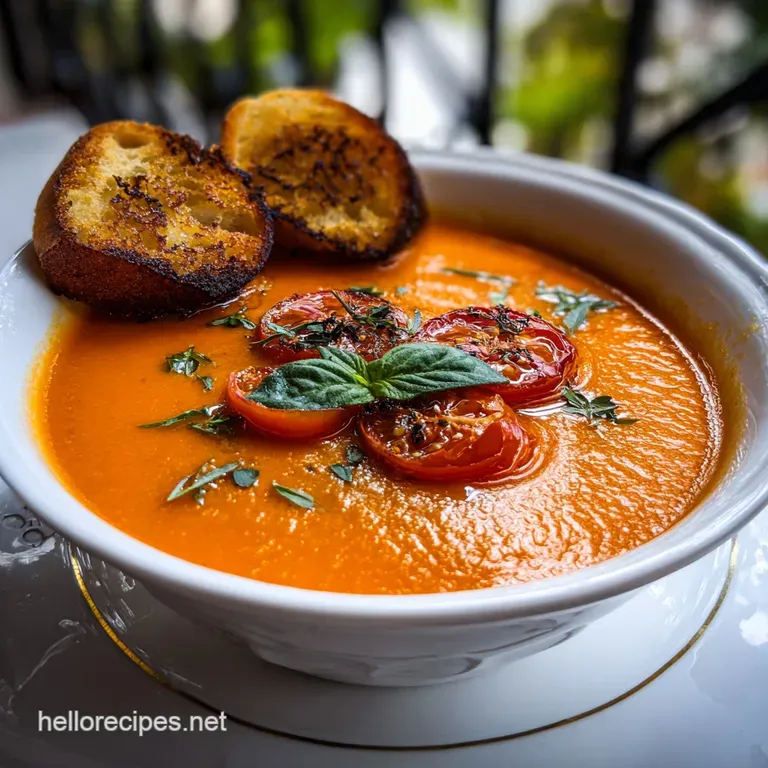
- Texture Contrast: Add a handful of homemade sourdough croutons or a sprinkle of toasted pine nuts for a "shatter" effect against the velvety soup.
- Fresh Greenery: A few small, whole basil leaves or a drizzle of basil oil provides a vibrant green pop against the deep orange red of the tomatoes.
Debunking Common Tomato Myths
There's a lot of misinformation out there about cooking with fresh tomatoes. Let's clear some of it up so you can cook with confidence.
Myth 1: You must peel tomatoes before making soup. Absolutely not. When you roast the tomatoes and use a high speed blender, the skins are pulverized into the liquid, contributing fiber and deep color. Peeling is a tedious step that actually removes flavor.
Myth 2: Fresh is always better than canned. In the height of summer, yes. However, in the dead of winter, a high-quality canned San Marzano tomato will often have more flavor than a "fresh" tomato that has been shipped halfway across the world. Use what is best in the moment.
Myth 3: Adding sugar is "cheating." Think of sugar as a seasoning, just like salt. If your tomatoes are out of balance, a tiny bit of sugar isn't cheating it's technical correction. The goal is a balanced end product.
Right then, you're all set to make the best bowl of tomato soup you've ever had. It's simple, sustainable, and uses basic culinary technology to achieve extraordinary results. Let me know how yours turns out I bet it smells incredible already!

Recipe FAQs
How to make fresh tomato soup?
Roast the vegetables first. Halve 3 lbs of fresh tomatoes and quarter a large onion, then toss with olive oil, salt, and pepper. Roast at 400°F (204°C) for 45 minutes until charred. Blend the roasted vegetables with garlic, broth, basil, and balsamic vinegar until smooth.
Simmer, then stir in cream and serve.
What are the three ingredients in tomato soup?
Tomatoes, onion, and garlic are foundational. These three vegetables, when roasted, create the deep, complex flavor base for fresh tomato soup. Additional ingredients like broth, herbs, and cream enhance this base but aren't strictly essential for the initial flavor profile.
How to deepen the flavor of tomato soup?
Roast the tomatoes and aromatics deeply. High heat caramelizes the natural sugars in the tomatoes and onions, creating smoky, jammy notes. Adding a tablespoon of tomato paste during the last 10 minutes of roasting also intensifies the umami and color, similar to the technique used for Easy Marinara Sauce Recipe with Garlic and Herbs.
Do you need to peel fresh tomatoes for soup?
No, you do not need to peel them. Roasting the tomatoes and then using a high speed blender will break down the skins entirely. The skins contribute fiber and a deeper color to the soup, making peeling an unnecessary and time consuming step.
Can I use canned tomatoes for this recipe?
Yes, canned tomatoes can be a good substitute, especially out of season. Use two 28-ounce cans of whole peeled tomatoes, drained. While fresh tomatoes offer brighter acidity in peak season, high-quality canned varieties provide concentrated flavor when fresh ones are less optimal, much like the base for a robust Traditional Ukrainian Classic Borscht Soup Hearty Beef Beet.
How can I make my fresh tomato soup richer?
Incorporate a dairy or fat element. Stirring in heavy cream, a swirl of crème fraîche, or even a tablespoon of cold butter at the end of cooking will add luxurious richness and a silky mouthfeel. Full fat coconut milk is an excellent vegan alternative for a creamy finish.
What makes fresh tomato soup taste bland?
Insufficient flavor development or unbalanced seasoning. If the tomatoes weren't roasted enough for caramelization, or if key aromatics like onion and garlic were omitted or underdeveloped, the soup will lack depth.
Always taste and adjust salt, pepper, and acidity with balsamic vinegar at the end to bring out the full flavor profile.
Tomato Soup Recipe Fresh
Ingredients:
Instructions:
Nutrition Facts:
| Calories | 194 kcal |
|---|---|
| Protein | 4.0 g |
| Fat | 13.3 g |
| Carbs | 17.4 g |
| Fiber | 4.1 g |
| Sugar | 10.8 g |
| Sodium | 502 mg |
