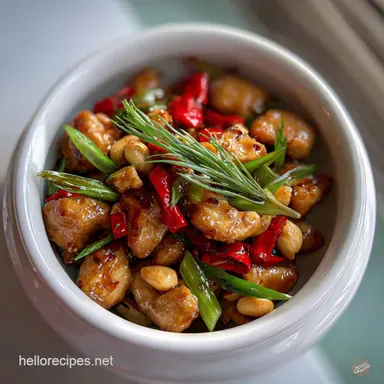
Kung Pao Chicken with Dried Chilies

- Total50 Mins
- Servings4
- Calories425 kcal
- Time: 20 min prep + 10 min cook + 20 min marinating
- Taste: Savory, spicy, and slightly sweet with a nutty crunch
- Best for: A quick weeknight meal that outshines takeout
Kung Pao Chicken
Hear that crackle? That's the sound of diced chicken hitting a shimmering pan of oil. This stir-fry hits a specific sweet spot where spicy dried chilies and rich peanuts clash with a bright, tangy glaze.
You don't need a 100,000 BTU commercial burner to get the right texture. As long as you don't crowd the pan, a standard home stove can produce that deep, rich brown crust.
This version focuses on a vibrant contrast. We're pairing the tender, "velvety" meat with a punchy sauce and the sharp snap of green onions. It's fast, bold, and doesn't require a trip to a specialty store.
How It Comes Together
- Cornstarch Coating: The marinade creates a thin barrier. This keeps the chicken moist while the outside browns quickly.
- High-Heat Searing: Using a high flame ensures the meat browns in minutes without steaming in its own juices.
- Layered Aromatics: Toasting the chilies first releases their oils into the fat, flavoring everything that follows.
| Method | Time | Texture | Best For |
|---|---|---|---|
| Wok | Fastest | Charred, smoky | High heat / Large batches |
| Stainless Steel Skillet | Moderate | Deep brown crust | Precision / Smaller portions |
The choice of pan mostly changes how you move the food. A wok allows for a constant toss, while a skillet lets you sear the meat undisturbed for a better crust.
Recipe Specs
The flavor map for this dish relies on three pillars: the heat from dried red chilies, the acidity of rice vinegar, and the earthy richness of sesame oil. These elements create a high-contrast profile that keeps each bite interesting.
I like to serve this with a side of steamed jasmine rice to soak up the extra glaze. If you want something lighter, some sautéed bok choy or snap peas work well.
Ingredient Deep Dive
- 1 lb chicken breast, cut into 1/2-inch cubes
- 4 tbsp low-sodium soy sauce
- 2 tbsp chicken stock
- 1 tbsp + 1 tsp rice vinegar
- 1 tbsp + 1 tsp cornstarch
- 1 tbsp brown sugar
- 1 tsp sesame oil
- 3 tbsp vegetable oil
- 1/2 cup unsalted roasted peanuts
- 8 dried red chilies, cut in half
- 3 cloves garlic, finely minced
- 1 tbsp fresh ginger, grated
- 2 green onion stalks, sliced into 1-inch pieces
| Ingredient | Role | If You Don't Have It |
|---|---|---|
| Chicken Breast | Primary protein | Thighs (richer, more fat) |
| Cornstarch | Thickening/Tenderizing | Arrowroot powder |
| Rice Vinegar | Tangy brightness | Apple cider vinegar (stronger) |
| Chicken Broth | Sauce foundation | Homemade vegetable stock |
Tools You'll Need
You'll need a wok or a heavy-bottomed stainless steel skillet. Non-stick pans don't handle high heat as well and often fail to produce a proper sear. A sturdy whisk and a medium mixing bowl for the marinade are the only other essentials.
Key Steps
Prepping the Protein
In a medium bowl, mix the diced chicken breast with 1 tbsp soy sauce, 1 tbsp chicken broth, 1 tsp rice vinegar, and 1 tbsp cornstarch. Stir until the meat is thoroughly coated. Let the chicken marinate for 20 minutes.
Whisking the Signature Sauce
In a separate small bowl, whisk together 3 tbsp soy sauce, 1 tbsp chicken broth, 1 tbsp rice vinegar, 1 tbsp brown sugar, 1 tsp sesame oil, and 1 tsp cornstarch. Stir until the sugar has dissolved. Note: Stir this again right before adding it to the pan so the cornstarch doesn't settle.
Searing the Chicken
Heat 2 tbsp of vegetable oil in a wok or large heavy-bottomed stainless steel skillet over high heat until shimmering. Add the chicken in a single layer. Cook undisturbed for 2-3 minutes until a golden-brown crust forms, then flip and stir-fry for another 3-5 minutes until it measures 165°F (74°C) internally.
Transfer the meat to a plate.

Toasting the Aromatics
Lower the heat to medium-high and stir in the remaining 1 tbsp of vegetable oil. Add the dried red chilies and toast for 30 seconds until they smell fragrant. Quickly add the minced garlic and grated ginger, cooking for 30-60 seconds.
Glazing the Dish
Return the seared chicken to the pan along with the roasted unsalted peanuts and sliced green onions. Pour the prepared Kung Pao sauce over the mixture. Toss constantly for 1-2 minutes until the sauce thickens into a glossy glaze and coats every piece of kung pao chicken.

Avoiding Kitchen Disasters
Preventing Sauce Clumps
If the cornstarch settles at the bottom of the bowl, you'll get lumps in your glaze. Give the sauce a vigorous whisk immediately before pouring it into the pan.
Stopping Chilies from Burning
Dried chilies go from toasted to burnt in seconds. Once they smell fragrant, add the garlic and ginger immediately. The moisture from the aromatics drops the temperature slightly and stops the chilies from scorching.
Avoiding Overcooked Meat
Chicken breast dries out quickly. Use a thermometer to hit 165°F (74°C) and remove it from the heat immediately. It will finish resting on the plate.
Managing Heat Levels
If you find the dried chilies too intense, shake out the seeds before adding them to the pan. Most of the heat lives in the white membranes inside the chilies, and the seeds pick up that heat.
How to Serve and Enjoy

Plate this immediately while the peanuts are still crunchy and the sauce is shimmering. It's a vibrant dish that looks best when the green onions are still bright.
I prefer adding a sprinkle of toasted sesame seeds on top for extra texture. For those who love heat, a side of chili oil adds a nice layer of depth.
Keeping It Fresh
Keep leftovers for 3 to 4 days in a sealed glass jar in the refrigerator, following USDA food safety guidelines for leftovers.
To reheat, warm the food in a skillet over medium heat until it reaches 165°F (74°C) inside. Stir in some water or chicken broth to thin the sauce. Skip the microwave to ensure the peanuts stay crisp. Freezing isn't recommended, as the sauce will separate and the peanuts lose their crunch.
Easy Swaps and Add-Ins
| Original Ingredient | Substitute | Why It Works |
|---|---|---|
| Brown Sugar | Honey | Comparable sweetness. Note: Makes the glaze slightly stickier |
| Chicken Breast | Extra Firm Tofu | A plant-based alternative. Note: Press tofu first to ensure it sears |
| Peanuts | Cashews | Offers a creamier taste. Note: Less "nutty" than peanuts |
For a different flavor profile, try a Honey-Ginger Twist by doubling the ginger and replacing the brown sugar with honey. If you prefer an Extra Spicy Szechuan version, stir in a teaspoon of fermented bean paste (Doubanjiang) while sautéing the aromatics.
Since this is a kung pao chicken variation, make sure plant-based alternatives like tofu are seared intensely to preserve that signature contrast between the crisp outside and tender inside.
High in Sodium
875 mg of sodium per serving (38% of daily value)
The American Heart Association suggests limiting intake to no more than 2,300 mg of sodium per day
Tips to Reduce Sodium
-
Swap Soy Sauce
Use coconut aminos instead of reduced-sodium soy sauce, which generally provides a similar savory taste with much less sodium.
-
Upgrade Your Broth
Switch to no-salt-added chicken broth or use water instead to remove extra processed salt.
-
Boost Aromatics
Increase the amount of fresh ginger and minced garlic to enhance the flavor depth without needing additional salt.
-
Add Extra Acidity
Slightly increase the rice vinegar or incorporate fresh lime juice to brighten the profile and mimic a salty taste.
-
Emphasize Spices
Utilize dried red chilies or a dash of black pepper to provide a flavor punch that lowers the reliance on salt.
Recipe FAQs
What is the difference between Hunan chicken and Kung Pao Chicken?
Kung Pao features peanuts and dried chilies, while Hunan chicken typically focuses on fresh chilies and lacks peanuts.
Tip: use a wok for the most authentic charred flavor.
How do I control the heat when the dried chilies are too spicy?
Remove the seeds from the dried red chilies before adding them to the pan.
Tip: toast them briefly to mellow the sharp sting.
Can I use substitute dried chilies like cayenne or arbol?
Yes, these varieties work well as alternatives for heat.
Tip: adjust the amount based on your personal spice tolerance since heat levels vary.
Is this recipe intended to serve four people?
Yes, the quantities provided are designed for four servings.
Tip: avoid crowding the pan to ensure the chicken sears rather than steams.
What should I do if the sauce gets too thick after sitting?
Stir in a small splash of chicken broth or water while reheating.
Tip: heat the chicken in a pan over medium heat for the best texture.
How to store leftover Kung Pao chicken?
Place the cooked chicken in a sealed container and keep it in the refrigerator.
Tip: reheat in a skillet to maintain the crispness of the peanuts.
Why include cornstarch in the chicken marinade?
The cornstarch creates a protective barrier that keeps the meat moist under high heat.
Tip: let the chicken marinate for the full 20 minutes for the best velveting effect.
Kung Pao Chicken with Dried Chilies