Garlic Herb Chicken Carrot Plate: Crisp Skin
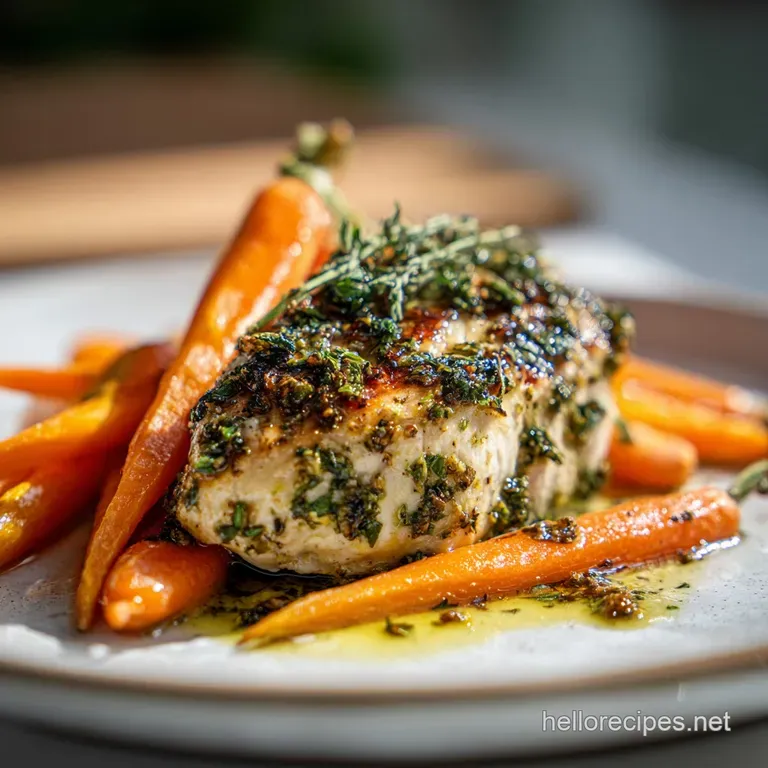
- Time: Active 20 minutes, Passive 45 minutes, Total 1 hours 5 mins
- Flavor/Texture Hook: Shatter crisp skin meets honey cumin glazed sweetness
- Perfect for: High impact weeknight dining or sustainable meal prep
- Creating a Better Garlic Herb Chicken Carrot Plate
- Gastronomy Behind the Flavor Contrast
- Essential Ingredient Science Analysis
- Sourcing Sustainable High-Quality Elements
- Precision Kitchen Technology Tools
- Executing the Perfect Staggered Roast
- Solving Texture and Flavor Issues
- Innovative Adaptations and Flavor Swaps
- Debunking Roasting Myths
- Optimal Storage and Sustainable Reuse
- Plating for Maximum Sensory Impact
- Recipe FAQs
- 📝 Recipe Card
Creating a Better Garlic Herb Chicken Carrot Plate
We've all been there, staring at a tray of beige, uninspiring poultry and limp vegetables that tasted more like "obligatory health food" than a real meal. I remember one specific Tuesday where my chicken was pale and rubbery while my carrots had the consistency of wet cardboard, a total failure of kitchen technology.
It was a frustrating waste of quality ingredients, and it forced me to rethink how we approach the physics of the oven.
The solution wasn't adding more fat or salt, but rather mastering the contrast between the savory intensity of rosemary infused fat and the bright, floral sweetness of a honey cumin glaze.
This Garlic Herb Chicken Carrot Plate Recipe solves the "soggy vegetable" crisis by treating the chicken and carrots as two distinct entities that happen to finish their journey on the same plate.
You get that satisfying sizzle when the pan comes out, and the aroma of roasted garlic paste hitting the air is enough to make anyone forget their workday stress.
You aren't just making a "chicken dinner" here, you're practicing a bit of home based gastronomy. We are going to use specific techniques, like creating a garlic herb slurry and utilizing high surface area roasting, to ensure every bite has a distinct personality.
This dish is about the interplay of textures, the snap of a carrot against the rich, juicy yield of a bone in thigh, all tied together with a zest of lemon that cuts through the richness like a lightning bolt.
Gastronomy Behind the Flavor Contrast
Thermal Lag Calibration: Bone in chicken thighs possess high thermal mass, requiring significant time for heat to penetrate the connective tissue, while carrots need sustained high heat to break down hemicellulose without turning to mush.
By halving the carrots lengthwise, we increase the surface area for Maillard browning, ensuring they caramelize in the same window the chicken reaches its safe internal temperature.
The Physics of Thermal Equilibrium
This recipe relies on radiant heat to render the subcutaneous fat of the chicken while simultaneously using conductive heat from the pan to blister the carrot skins. The addition of honey to the carrots lowers the temperature required for caramelization, creating a deep amber crust that contrasts the savory garlic herb rub.
| Cooking Method | Skin Texture | Interior Moisture | Active Attention |
|---|---|---|---|
| Cast Iron Stovetop | Extremely Crispy | High Risk of Drying | High - Constant Flipping |
| Oven Roasting (Recommended) | Evenly Rendered | Maximum Succulence | Low - Set and Forget |
| Air Fryer | Glass like Crunch | Moderate | Medium - Requires Batching |
By choosing the oven for this Roasted Garlic Herb Chicken with Carrots, we allow the convection currents to circulate around the chicken thighs, which is vital for that "shatter crisp" skin. If you prefer a faster acting acid profile, you might want to look at how the technique differs in my Lemon Chicken with recipe where the sauce is built in the pan.
Essential Ingredient Science Analysis
Understanding the molecular behavior of your components is the first step toward consistent results in any Homemade Garlic Herb Chicken Carrot Plate.
| Component | Science Role | Pro Secret |
|---|---|---|
| Garlic Paste | Sulfur Emulsification | Smashing garlic into a paste releases more allicin, which bonds better to chicken skin than sliced cloves |
| Honey | Hygroscopic Glaze | Honey attracts moisture and promotes rapid browning at lower temperatures than granulated sugar |
| Bone In Thighs | Insulation & Flavor | The bone acts as a thermal conductor, cooking the meat from the inside out while preventing protein strands from tightening |
| Cumin Seeds | Lipid Soluble Aroma | Cumin's essential oils (cuminaldehyde) are fat soluble, meaning they bloom beautifully when roasted in avocado oil |
Chef's Tip
Freeze your garlic cloves for 5 minutes before smashing them. It makes the cell walls brittle, allowing you to create a much smoother paste that integrates seamlessly into the olive oil slurry without leaving burnt chunks on the skin.
Sourcing Sustainable high-quality Elements
When building your Quick Garlic Herb Chicken Carrot Dinner, focus on the quality of the bird. I always look for air chilled chicken because it hasn't been pumped full of water weight. This means less steam in the oven and a much better sear.
For the carrots, find "rainbow" varieties if possible, they each have slightly different sugar concentrations that add complexity to the final plate.
- 4 bone in, skin on chicken thighs (1.5 lbs): The skin is your flavor insurance policy.
- 2 tbsp extra virgin olive oil: Use a robust, peppery oil for the herb rub.
- 4 cloves garlic: Smashed into a paste with the side of a knife.
- 1 tbsp fresh rosemary: Finely minced to release the piney volatile oils.
- 1 tsp fresh thyme leaves: Stripped fresh from the woody stem.
- 1 tsp kosher salt: Use Diamond Crystal if available for better coverage.
- 1/2 tsp cracked black pepper: Grind it fresh, the pre ground stuff tastes like dust.
- 1 lb whole carrots: Peeled and halved lengthwise to maximize browning.
- 1 tbsp honey: A dark wildflower honey adds an innovative earthy note.
- 1 tbsp avocado oil: Chosen for its high smoke point during the roast.
- 1/2 tsp cumin seeds: These provide a savory "pop" that mimics traditional gastronomy techniques.
- 1 tsp lemon zest: This is your "bright" contrast element added at the very end.
| Original Ingredient | Substitute | Why It Works |
|---|---|---|
| Chicken Thighs | Chicken Drumsticks | Similar fat content and bone in structure. Note: Reduce cook time by 5-8 minutes |
| Fresh Rosemary | Dried Rosemary | Use 1/3 the amount. Note: Texture will be more needle like and less "velvety" |
| Honey | Maple Syrup | Provides a similar sugar to moisture ratio with a woodier flavor profile |
| Avocado Oil | Grapeseed Oil | Both have high smoke points (above 400°F), preventing acrid flavors in a hot oven |
Precision Kitchen Technology Tools
You don't need a professional laboratory to make an Easy Garlic Herb Chicken and Carrots meal, but specific tools do make the chemistry of cooking much easier. A heavy rimmed baking sheet (half sheet pan) is superior to a glass casserole dish because the low sides allow moisture to escape, preventing the chicken from "stewing" in its own juices.
- Cast Iron Skillet or Heavy Baking Sheet: Essential for heat retention and even browning.
- Instant Read Thermometer: This is the only way to guarantee the chicken reaches 165°F (74°C) without becoming dry.
- Microplane Grater: For that ultra fine lemon zest that perfumes the dish without adding bitterness.
- Kitchen Twine (Optional): If your thighs are particularly large, you can tuck them for even cooking.
Executing the Perfect Staggered Roast
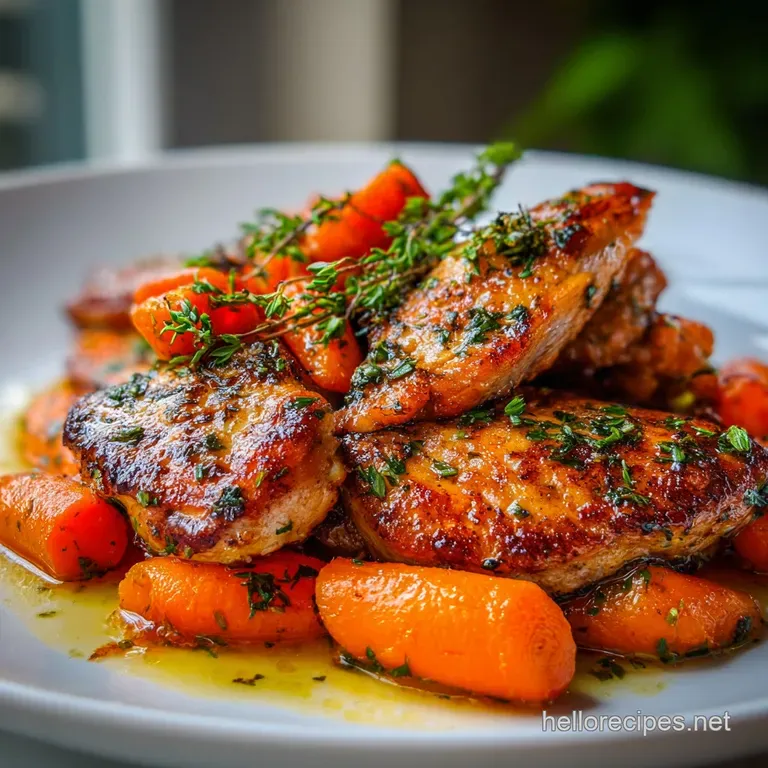
- Prep the chicken. Pat the 4 chicken thighs completely dry with paper towels. Note: Surface moisture is the enemy of a crispy Maillard reaction.
- Create the slurry. Mix 2 tbsp extra virgin olive oil, 4 cloves garlic paste, 1 tbsp rosemary, 1 tsp thyme, 1 tsp salt, and 1/2 tsp pepper in a small bowl.
- Apply the aromatics. Rub the herb mixture under the skin and all over the surface of the chicken.
- Prepare the vegetables. Toss the 1 lb halved carrots with 1 tbsp avocado oil, 1 tbsp honey, and 1/2 tsp cumin seeds in a separate bowl.
- Initiate the roast. Place chicken thighs on the baking sheet and roast at 400°F (205°C) for 15 minutes until the fat begins to render and sizzle.
- Add the carrots. Carefully slide the tray out and arrange the carrots around the chicken in a single layer.
- Continue roasting. Bake for another 25 to 30 minutes until the carrots are tender and charred at the edges.
- Verify doneness. Check that the internal chicken temperature hits 165°F (74°C) with an instant read probe.
- The finishing touch. Sprinkle the 1 tsp lemon zest over the entire tray immediately upon removal from the oven.
- Rest the protein. Let the chicken sit for 5 minutes until the juices redistribute throughout the muscle fibers.
For a version that focuses even more on the speed of the cook, you might enjoy the How to Make recipe which streamlines the process for a half hour turnaround.
Solving Texture and Flavor Issues
Even a Simple Garlic Herb Chicken and Carrots Dinner can go sideways if the heat isn't managed correctly. The most common "fail" is soggy skin. If your oven doesn't vent well, the steam from the carrots can actually soften the chicken skin you worked so hard to crisp up.
Rubbery, Pale Skin
This usually happens because the oven temperature was too low or the skin wasn't dried properly before seasoning. If you notice this halfway through, don't panic. Increase the heat to 425°F for the final 10 minutes, but watch the honey on the carrots closely so it doesn't burn.
Burnt Garlic Bitterness
Garlic burns at a lower temperature than chicken fat renders. If you put big chunks of garlic on top of the skin, they will turn black and bitter. This is why we use a paste and try to rub some of it under the skin where it's protected from the direct radiant heat of the oven element.
| Problem | Root Cause | Solution |
|---|---|---|
| Carrots are crunchy | Cut too thick or crowded | Slice into thinner batons or ensure 2cm of space between each carrot piece |
| Honey is scorched | Sugar concentration too high | Add 1 tsp of water to the honey oil mix to dilute the sugar slightly |
| Dry chicken meat | Overcooked past 175°F | Use a thermometer and pull the chicken at 160°F; carryover cooking will do the rest |
Common Mistakes Checklist:
- ✓ Never crowd the pan; if the ingredients are touching, they will steam instead of roast.
- ✓ Don't skip the "pat dry" step for the chicken skin.
- ✓ Avoid using "baby carrots" which are often too watery for over high heat roasting.
- ✓ Ensure your oven is fully preheated for at least 20 minutes before the tray goes in.
- ✓ Use kosher salt rather than table salt to avoid an over salted "chemical" taste.
Innovative Adaptations and Flavor Swaps
If you want to scale this Garlic Herb Chicken Carrot Oven Bake, remember that adding more meat to the pan increases the moisture level in the oven.
- Scaling Down (2 servings): Use a smaller toaster oven pan but keep the temperature the same. Check doneness 5 minutes earlier as the smaller thermal mass may cook faster.
- Scaling Up (8 servings): Use two separate baking sheets. Rotate them from top to bottom racks halfway through to ensure even heat distribution.
- The Breast Version: If using chicken breasts, reduce the initial roast time to 5 minutes before adding carrots, as breasts dry out much faster than thighs.
- Mediterranean Twist: Swap the cumin for dried oregano and add 1/2 cup of pitted kalamata olives to the pan during the final 15 minutes of roasting.
| Servings | Chicken Amount | Carrot Amount | Pan Size |
|---|---|---|---|
| 2 People | 2 Thighs (0.75 lb) | 0.5 lb Carrots | 9x13 inch pan |
| 4 People | 4 Thighs (1.5 lbs) | 1.0 lb Carrots | Half sheet pan |
| 6 People | 6 Thighs (2.25 lbs) | 1.5 lbs Carrots | Two half sheet pans |
Debunking Roasting Myths
One of the biggest myths in home cooking is that you should "baste" the chicken with its own juices while it roasts. In reality, pouring liquid over the skin while it's trying to crisp up is the fastest way to make it soggy. The fat should render out, not be poured back on.
Another misconception is that the "best" way to cook carrots is to boil them before roasting. This actually destroys the pectin structure and washes away the natural sugars. Roasting from raw, especially with a honey acid glaze, preserves the integrity of the vegetable and results in a much more complex flavor profile.
Optimal Storage and Sustainable Reuse
Storage: This Best Garlic Herb Chicken and Carrots Recipe keeps beautifully in the fridge for up to 4 days. Store the chicken and carrots together in an airtight glass container to keep the moisture levels stable. When reheating, avoid the microwave if possible; it turns the skin flabby.
Instead, use a toaster oven at 350°F (175°C) for 10 minutes to bring back the "shatter" factor.
Zero Waste Tips: Don't throw away the carrot peels or the chicken bones! I save the peels in a freezer bag for making vegetable stock later. The chicken bones can be simmered with the herb stems (rosemary and thyme) to create a rich, sustainable bone broth that's a perfect base for a future risotto or soup.
If you have leftover carrots, they are incredible when cold, chopped up and tossed into a grain salad with some feta cheese.
Plating for Maximum Sensory Impact
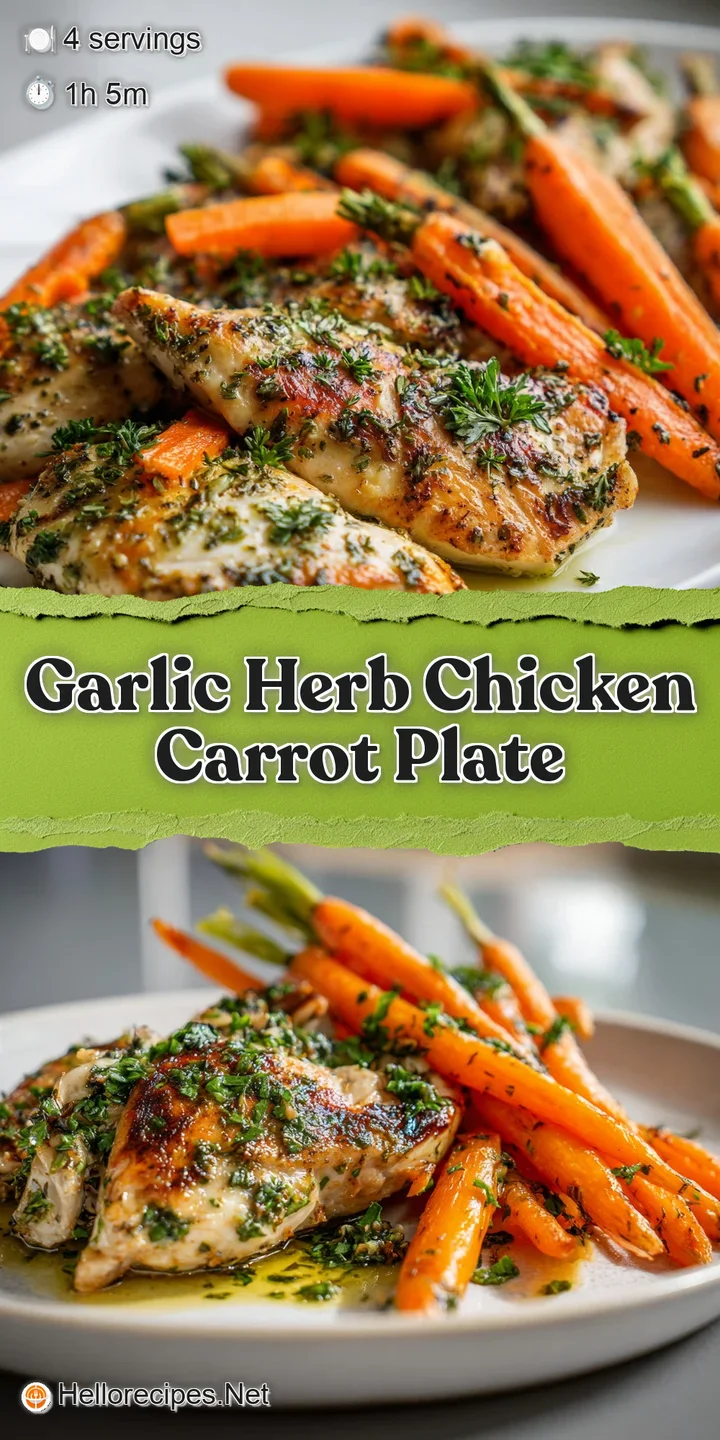
To truly enjoy this Chicken Carrot Plate, presentation should highlight the color contrast. I like to lay a bed of the vibrant, honey glazed carrots down first, then nestle the golden brown chicken thighs on top. The way the lemon zest catches the light against the dark herb rub is visually stunning.
The taste profile is a deliberate zig zag: the savory, garlic heavy chicken hits your palate first, followed immediately by the sweet, earthy warmth of the cumin honey carrots. The lemon zest provides the necessary acidity to reset your taste buds between bites.
It’s an innovative take on a classic "meat and veg" plate that proves you don't need a professional kitchen to achieve gourmet results. Trust me, once you hear that first crunch of the skin and taste the velvety interior of the carrots, this will become your go to method for roasting.
Recipe FAQs
Should I rest the chicken before slicing or serving?
Yes, rest for exactly 5 minutes. This allows the muscle fibers to relax and reabsorb the internal juices, ensuring maximum succulence.
How do I prevent the chicken skin from becoming soggy during roasting?
Pat the skin completely dry before seasoning. Surface moisture creates steam, inhibiting the Maillard reaction necessary for crispness; use high initial heat to encourage rendering.
Can I use boneless, skinless chicken thighs instead of bone-in?
No, stick with bone-in for optimal results. The bone acts as a thermal regulator, preventing the meat from drying out before the carrots are perfectly caramelized.
How to ensure the carrots are tender and caramelized, not mushy?
Halve the carrots lengthwise and toss them separately with honey and avocado oil. This maximizes the surface area for browning while the honey aids in achieving caramelization before the chicken is done.
Is it true that basting the chicken frequently helps it stay moist?
No, this is a common misconception. Basting during the high heat roast cools the skin surface, which actively prevents the rendering process needed for crispness.
How can I use the leftover pan drippings effectively?
Deglaze the pan with a splash of white wine or chicken stock immediately after removing the solids. If you are looking to enhance your sauce base, check out our guide for mastering a quick savory reduction in the 15-Minute Creamy Garlic Sauce recipe.
What is the necessary internal temperature for safety and texture?
Pull the chicken at 160°F (71°C) for guaranteed succulence. Due to carryover cooking, the temperature will rise to the safe 165°F (74°C) minimum while resting, ensuring juiciness.
Garlic Herb Chicken Carrot Plate
Ingredients:
Instructions:
Nutrition Facts:
| Calories | 544 kcal |
|---|---|
| Protein | 31g |
| Fat | 36g |
| Carbs | 15g |
| Fiber | 3.2g |
| Sugar | 9.5g |
| Sodium | 480mg |
