Oma Helgas Simple Silky Pfannkuchen
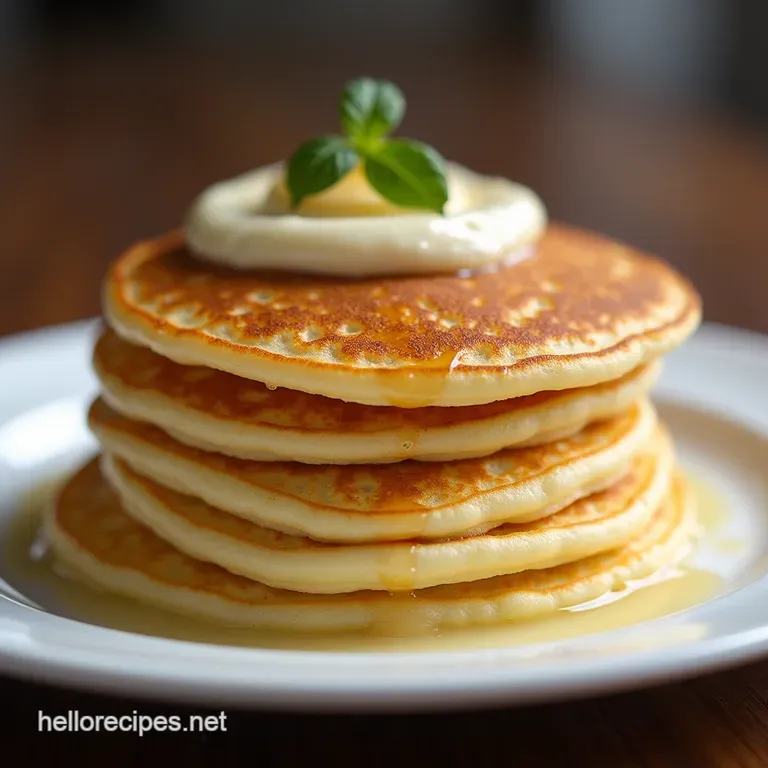
- Unveiling the Charm of True German Pancakes Pfannkuchen
- Why Oma Helga's Recipe Reigns Supreme Over Fluffier Alternatives
- The Essential Components for Flawless Thin Pancakes
- Mastering the Art of Mixing and Cooking Pfannkuchen
- Elevating Your Experience: Serving Suggestions and Variations
- Troubleshooting and Storage for Leftover Delights
- Recipe FAQs
- 📝 Recipe Card
Unveiling the Charm of True German Pancakes Pfannkuchen
As a chef, I hold a deep appreciation for dishes that require minimal fuss yet deliver maximum comfort. Few foods fit this description better than the humble pancake, but today, we are bypassing the towering stacks of American flapjacks and diving headfirst into the elegant world of German home cooking: the Pfannkuchen .
These are not the fluffy, cake like discs you might expect; rather, they are the delicate, silken cousins thin, slightly eggy, and versatile enough to anchor a breakfast spread or serve as a light supper base.
This specific Pfannkuchen recipe I’m sharing, inspired by the wisdom of classic German kitchens, is the definitive foundation for mastering this style of thin pancakes recipe .
Why Oma Helga's Recipe Reigns Supreme Over Fluffier Alternatives
When comparing Pancakes vs Pfannkuchen , the difference lies fundamentally in texture and batter composition. While American pancakes rely on baking powder to create lift and air pockets, these German pancakes recipe derivatives utilize a high ratio of eggs and liquid, yielding a flat, pliable product.
This approach means our Easy Pfannkuchen is remarkably straightforward to execute, requiring only basic whisking rather than careful folding to preserve lift.
The result is a delicate, almost crepe like texture, which we achieve using just 1 cup of flour, 2 large eggs, and a blend of milk and water for perfect hydration. This recipe yields about 8 to 10 beautifully thin pancakes, perfect for serving 3 to 4 people, and requires only 10 minutes of active preparation time before a recommended 30-minute rest.
Setting the Stage: Thin, Silky, and Authentic
The goal here is authenticity. These thin pancakes recipe classics are designed to be folded or rolled around a filling, making them structurally sound yet tender on the palate.
We are aiming for that signature, slightly chewy edge and a tender, creamy centre, achieved by using milk combined with water specifically, 1 cup of milk and 1/2 cup of water.
That little bit of added water, especially if you use sparkling, contributes a lightness that is subtle but critical to the overall mouthfeel. A single tablespoon of granulated sugar is included to enhance the overall flavour profile, though it can easily be omitted if you plan on going entirely savoury.
The Comfort Food Heritage of the Pfannkuchen Style
The history of the Pfannkuchen ties deeply into European comfort food traditions. They are the quintessential Sunday morning fare, often served simply with lemon and sugar, or as a sweet or savoury wrap for lunch. This recipe embodies that accessible, nourishing quality.
It is straightforward a true Chef Pfannkuchen recipe that prioritizes technique and ingredient quality over complex chemistry. The simplicity ensures that even beginners will find this a rewarding bake, cementing its status as an all-time favourite in European home cooking.
Distinguishing This Recipe from Dutch Baby Wonders
While many modern American recipes blur the lines between various flatbreads, it’s important to note that this Authentic Pfannkuchen differs significantly from a Dutch Baby or a Yorkshire pudding.
Those styles rely heavily on the oven and a very hot, fat-coated pan to create massive puff and dramatic edges. In contrast, our method keeps the action entirely on the stovetop, using a frying pan to create thin, uniform layers.
This stovetop method is what defines the classic thin style, allowing us to control the browning precisely, ensuring a lovely pale hue accented by delicate golden spots.
The Essential Components for Flawless Thin Pancakes
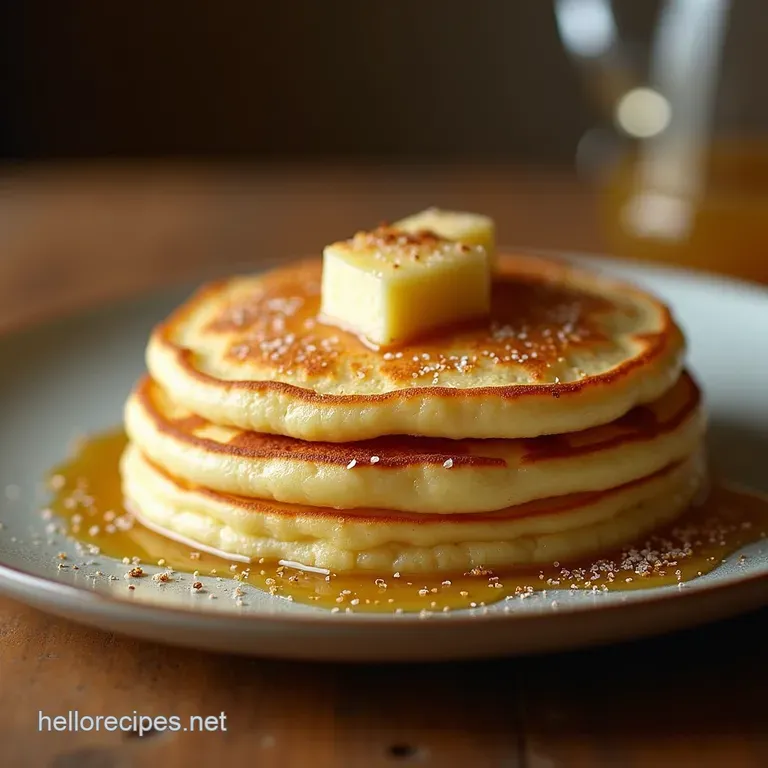
Success in crafting beautiful Pancakes Pfannkuchen lies almost entirely in the batter consistency and the preparation process. We require ingredients that are simple but treated with respect.
For the foundation of our batter, we start with 125g (about 1 cup) of all-purpose flour, 2 room temperature large eggs, the combined milk and water, a small pinch of salt (essential for balancing the flavour), and 15g (1 tablespoon) of melted unsalted butter.
Gathering Your Pantry Staples for Perfect Batter Consistency
The magic word for thin pancakes is smoothness . While you can use a hand mixer, a sturdy whisk is perfectly adequate for achieving the right texture. Ensure your measuring is accurate, as too much flour will immediately turn these delicate discs into something closer to a heavy crepe.
The melted butter should be incorporated last, just before the batter rests, adding richness without weighing down the mixture too early.
The Crucial Role of Resting Time: A Batter Secret
If there is one non-negotiable secret to transforming good batter into great batter, it is resting. Allowing the mixture to sit at room temperature for a minimum of 30 minutes is vital. During this time, the flour particles fully hydrate, and the gluten strands relax.
Skipping this step often results in batter that snaps back when poured, leading to tougher, slightly elastic pancakes. Patience here ensures that melt-in-your mouth tenderness we are aiming for in this German pancakes recipe .
Recommended Cookware for Optimal Browning
A good 8- to 10 inch (20-25 cm) non-stick frying pan is your best friend here. Because we are aiming for a very thin layer, the surface area needs to be consistent and non-reactive.
Avoid cast iron unless you are extremely experienced with temperature control, as it can create hot spots that scorch the delicate batter before it sets properly. You will also need a ladle for consistent pouring and a thin rubber spatula, ideal for gently easing under the thin pancake for flipping.
Related Recipes Worth Trying
- Easy Brunch Menu Ideas Lemon Ricotta Pancakes Lazy Sunday — Need easy brunch menu ideas These lemon ricotta pancakes are light fluffy and perfect for a lazy weekend A simple elevated twist on a classic Get the recipe now
- Coconut Mango Pancakes Delicious Breakfast Ideas Without Eggs — Looking for easy breakfast ideas without eggs These fluffy coconut mango pancakes are a tropical delight A quick dairy-free breakfast thats perfect for...
- Banana Oatmeal Pancakes: My Family's Healthy ish Fave! — Whip up the best banana oatmeal pancakes! This easy recipe is packed with oats and banana goodness. Flour free, sugar-free options too. Get the recipe now!
Mastering the Art of Mixing and Cooking Pfannkuchen
The process from bowl to plate moves quickly once the batter is rested. The technique focuses on speed and temperature management to achieve a consistent, evenly cooked product every single time.
Creating a Lump Free Base for Your Pancakes Pfannkuchen
To guarantee a lump free base, we employ a classic technique: build the paste first. Start by whisking your flour, salt, and optional sugar together. Then, create a well in the centre and drop in the eggs.
Whisk the eggs vigorously, slowly drawing in only the flour immediately surrounding them until you have a thick, cohesive paste. Only once this paste is smooth do you begin gradually whisking in the milk and water alternately. Finally, stream in the melted butter.
This ensures every bit of flour is dissolved into the wet ingredients before the mixture becomes too voluminous to manage smoothly.
The Perfect Pan Temperature: Hot But Not Smoking
Heat management is paramount. Set your pan over medium heat. You are looking for a temperature that is hot enough to set the batter quickly about 1– 2 minutes per side but not so hot that the butter smokes instantly upon contact.
A good test is to flick a single drop of water onto the surface; if it sizzles energetically and evaporates immediately, you’re ready to go. Lightly grease the pan with a very thin coating of butter or neutral oil before the first pancake, and then sparingly thereafter.
Swirling Technique: Spreading the Batter Thinly
This is where the "thin" in thin pancakes recipe comes to life. Pour approximately one-quarter cup of batter into the very centre of the hot pan. Immediately lift the pan from the heat and tilt and swirl it in a circular motion.
The batter should race to cover the entire base in a thin, even layer. If you have large gaps or areas where the batter clumps, you may need to add a touch more liquid to your remaining batch or simply discard that first trial pancake.
Flip Timing: When to Turn for Textbook Results
Do not rush the flip. Allow the first side to cook undisturbed for about 90 seconds to two minutes. You will know it’s time when the edges look dry, slightly curled up, and you can easily slide a spatula underneath without resistance. The surface will look opaque rather than wet.
Gently slide your spatula under and flip quickly. The second side requires much less time usually only 30 to 60 seconds as the pan retains residual heat. Slide the finished pancake onto a waiting plate and immediately repeat the process, stacking them one atop the other to maintain warmth and softness.
Elevating Your Experience: Serving Suggestions and Variations
These Pancakes Pfannkuchen are inherently versatile, forming the base for endless sweet and savoury creations. The rich, eggy flavour profile acts as a wonderful canvas.
Sweet Toppings That Complement the Eggy Profile
For a truly classic presentation, dust the stack liberally with powdered sugar and pair it with a sharp, tart counterpoint like fresh lemon juice the way they are often enjoyed street side in Germany.
Alternatively, rolling them around a smear of Nutella or cottage cheese mixed with raisins offers deep, satisfying sweetness.
Transforming Pfannkuchen into a Savoury Supper
To shift this to a main course, simply omit the optional sugar from the batter. Once cooked, fill the warm, pliable discs with finely grated Gruyère, quality ham, or sautéed mushrooms and spinach.
Roll them tightly and serve immediately alongside a crisp green salad dressed with a sharp vinaigrette to cut through the richness.
Troubleshooting and Storage for Leftover Delights
Even the simplest recipes sometimes hit a snag. Understanding these quick fixes ensures your next batch remains perfect.
Can These Be Frozen? Storage Guidance
Yes, these freeze wonderfully. Once cooled completely, stack the Pfannkuchen with parchment paper squares layered between each one to prevent sticking. Wrap the stack tightly in plastic wrap, followed by a layer of foil, and freeze for up to two months.
To reheat, place them directly from frozen onto a lightly buttered pan over medium low heat, covering the pan for a few minutes to steam them back to softness, then quickly flip to re-crisp the edges.
Altitude Adjustments and Ingredient Swaps
If you are cooking at high altitude, you might find that the batter spreads too thin. Try reducing the water slightly (use 1/4 cup instead of 1/2 cup) or adding an extra teaspoon of flour to the dry mix.
For dairy-free cooking, substituting the milk with unsweetened almond or soy milk works beautifully, though the texture will be marginally less rich than the traditional whole milk version.
Remember, achieving that perfect, thin texture is the hallmark of this beloved crepes recipe style, and a little practice with your pouring technique is all it takes.
Recipe FAQs
My Pancakes Pfannkuchen batter seems lumpy; can I still use it or do I have to start over?
Don't fret, we’ve all been there it happens when you throw all the milk in at once! If the lumps are small, letting the batter rest for 30 minutes will often allow the flour to relax and the lumps to smooth out naturally.
For bigger lumps, a quick blitz with a stick blender or even straining the batter through a fine sieve will sort it right out without wasting your ingredients.
What’s the secret to getting those lovely thin edges instead of thick, doughy ones?
It’s all down to the pan temperature and how you pour. Make sure your non-stick pan is properly heated over medium heat it should sizzle when butter hits it. Use less batter than you think you need (about 1/4 cup), pour it quickly into the centre, and immediately lift and swirl the pan in a swift, confident motion so the mixture coats the base thinly.
I made too many! How should I store leftovers, and can I freeze these thin pancakes?
These store brilliantly, unlike some of their fluffy cousins. For refrigeration, stack them flat between pieces of parchment paper (baking paper) and keep them in an airtight container for up to three days.
For freezing, stack them with parchment in between, wrap tightly, and they will keep for up to two months; just thaw and warm them gently in a dry pan.
My first pancake is always a disaster is there a way to stop this from happening?
Ah, the classic 'sacrifice pancake'! That first one is essentially calibrating your pan temperature and getting the fat distribution right, so don't worry too much about it. If you find the pan is too cold or too hot, adjust the heat after the first attempt.
A perfectly seasoned pan often needs less fat on subsequent attempts, so the first pancake pays its dues!
Can I make Oma Helga’s Pfannkuchen recipe healthier or lower in carbs?
You certainly can tweak the recipe for a lighter approach! For lower carbs, substitute half the flour with almond flour or a dedicated low-carb baking blend, though you might need slightly more liquid.
To make them lighter overall, ensure you use sparkling water instead of still water in the batter, as the bubbles provide lift without added calories.
Easy Pfannkuchen Recipe
Instructions:
Nutrition Facts:
| Calories | 120 Cal |
|---|---|
| Fat | 4g |
| Fiber | 1g |
