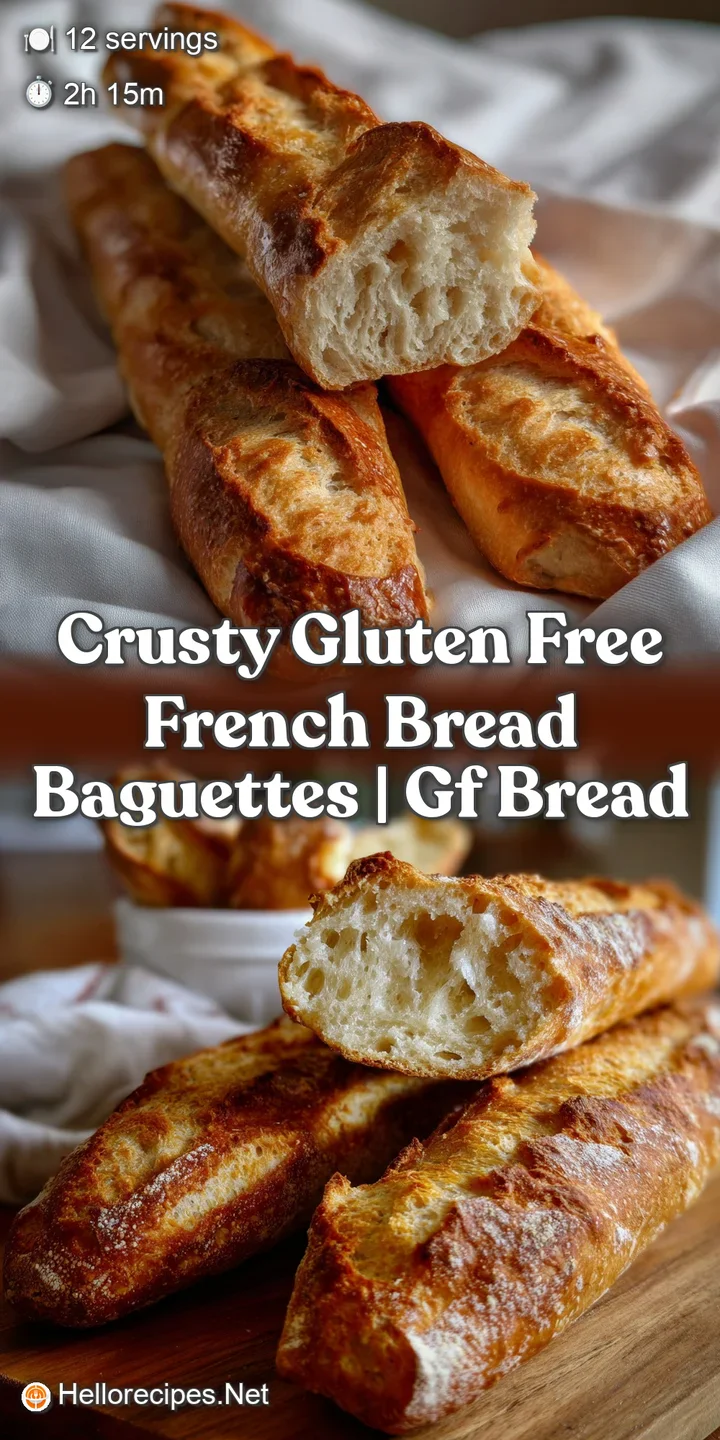
Crusty Gluten Free French Bread Baguettes
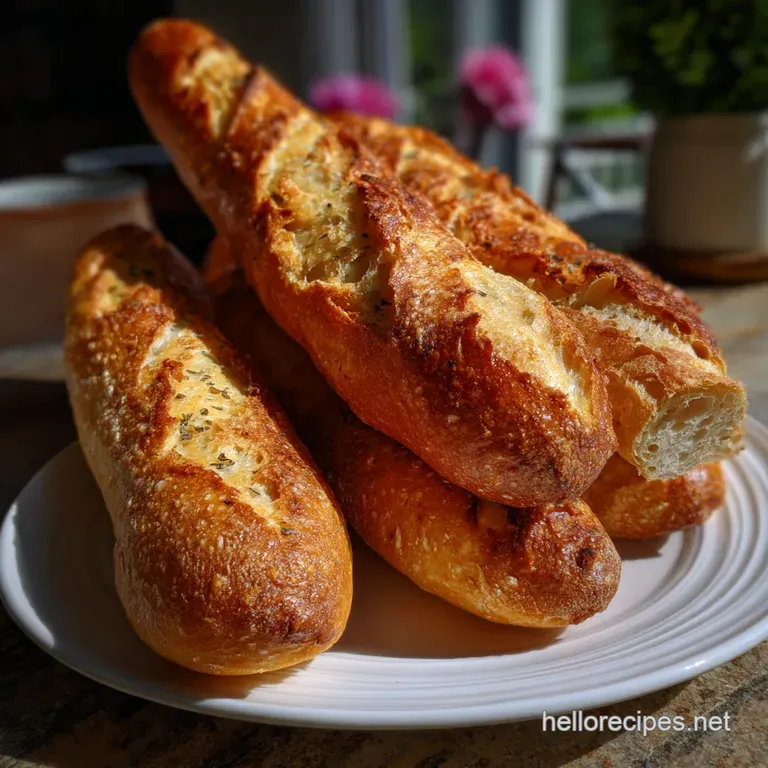
- Effort/Time: Moderate | 2 hours 15 mins
- Flavor Hook: Nutty sorghum undertones with a deep, caramelized mahogany crust.
- Perfect for: Charcuterie boards, sustainable bruschetta, or high-end sandwiches.
- Mastering the Ultimate Crusty Gluten Free French Bread Baguettes
- The Science of Why This Rise and Structure Works
- Precision Hydration Metrics and Thermal Performance Specifications
- The Alchemy of Structure: Selecting Your Elements
- Essential Gastronomy Tools for Superior Crust Development
- The Step-by-Step Architecture of an Authentic Baguette
- Solving Common Crust Failures and Crumb Density Issues
- Innovative Flavor Architectures and Ingredient Adaptations
- ⚗️ The Scaling Lab: The Physics of Quantity
- Debunking Common Bread Myths
- Preserving Structural Integrity: Storage and Rejuvenation
- Sustainable Serving Protocols for the Modern Gastronomer
- Recipe FAQs
- 📝 Recipe Card
Mastering the Ultimate Crusty gluten-free French Bread Baguettes
There is nothing more demoralizing than spending $15 on a specialty gluten-free loaf only to have it crumble into flavorless dust the moment you take a bite. I spent years chasing a baguette that didn't feel like a compromise, wasting dozens of bags of expensive flour on loaves that either turned into gummy bricks or stayed as pale as a ghost.
The financial sting of throwing away high-quality ingredients is exactly what drove me to stop guessing and start looking at the molecular technology behind a great rise. Successfully achieving Crusty gluten-free French Bread Baguettes requires precision.
I once destroyed three batches in a single afternoon because I thought I could skip the psyllium gel step and just toss the powder in with the dry ingredients. The result was a gritty, flat mess that lacked any structural integrity.
It was a humbling lesson in the physics of hydration; without that gelled network, the carbon dioxide from the yeast simply escapes, leaving you with a dense, sad slab of baked starch.
The breakthrough came when I looked at the gastronomy of starch gelatinization and the Maillard reaction. By utilizing a high hydration dough boosted by the moisture retention properties of psyllium husk and a specific steam injection method in the oven, we can create a baguette that actually "sings" as it cools.
That auditory crackle isn't just luck; it’s the result of rapid moisture evaporation and the contraction of a properly developed crust on your Crusty gluten-free French Bread Baguettes.
The Science of Why This Rise and Structure Works
- Hydrocolloid Network Formation: Psyllium husk powder acts as a structural scaffolding, mimicking the elasticity of gluten by trapping gas bubbles during fermentation.
- Starch Gelatinization: Sorghum flour and the GF blend absorb the 105°F water, swelling to create a velvety crumb that resists the typical "gritty" gluten-free texture.
- The Maillard Reaction: Sugar and amino acids in the flour react under high heat to produce a mahogany colored crust and complex, toasted aromas.
- Steam Physics: Introducing water into the hot oven delays crust formation, allowing the dough to expand fully (oven spring) before the exterior sets into a shattering shell.
Precision Hydration Metrics and Thermal Performance Specifications
| Metric | Value | Significance |
|---|---|---|
| Water Temperature | 105°F–110°F | Optimal range for yeast metabolism without thermal death. |
| Hydration Ratio | High (approx 90%+) | Necessary for GF flours to hydrate fully and prevent staling. |
| Baking Temperature | 450°F (232°C) | Triggers rapid expansion and immediate caramelization. |
Decision Shortcut
- If you want a thicker, crunchier crust: Extend the bake time by 5 minutes and use a heavy duty Lodge Cast Iron Pan for steam.
- If you want a softer, sandwich style loaf: Brush with melted butter immediately after baking to soften the exterior.
- If you want maximum flavor depth: Let the shaped baguettes cold proof in the fridge for 2 hours before baking.
The Alchemy of Structure: Selecting Your Elements
When making these Crusty gluten-free French Bread Baguettes, the quality of your flour blend is the most innovative variable you can control. I recommend using Bob’s Red Mill gluten-free 1 to-1 Baking Flour because its starch-to-protein ratio is specifically calibrated for structural stability.
| Ingredient | Chemical/Physical Role (Science) | The Pro Secret (Why This Matters) |
|---|---|---|
| Psyllium Husk Powder | Cross links to form a visco elastic gel | Prevents the bread from collapsing and provides "chew." |
| Sorghum Flour | High protein grain structure | Adds a nutty flavor profile and aids in browning via the Maillard reaction. |
| Apple Cider Vinegar | Acidifies the environment | Strengthens the yeast and creates a lighter, more aerated crumb. |
| Egg Whites | Protein denaturation and leavening | Provides structural "lift" and a glossy, professional finish. |
Essential Ingredients and Substitutions:
- 3 cups (420g) Bob's Red Mill GF All-Purpose Flour:Why this? Provides the starch base for gelatinization and crumb structure. (Sub: King Arthur Measure for Measure).
- 0.5 cup (60g) Sorghum Flour:Why this? Adds complex flavor and improves the nutritional profile of the loaf. (Sub: Oat flour for a sweeter, more tender crumb).
- 2 tbsp (18g) Whole Psyllium Husk Powder:Why this? Essential for elasticity; provides the "pull" characteristic of wheat bread. (Sub: None recommended for this specific baguette structure).
- 1.5 cups (355ml) Warm Water (105°F–110°F): (Sub: Unsweetened almond milk for a richer, more toasted aroma).
- 3 tbsp (45ml) Extra Virgin Olive Oil: (Sub: Melted avocado oil for a more neutral flavor profile).
- 2 tsp (8g) Granulated Sugar: (Sub: Honey or maple syrup; both will slightly darken the crust faster).
Essential Gastronomy Tools for Superior Crust Development
For an authentic result, skip the flat baking sheet. You need a KitchenAid Stand Mixer with a paddle attachment to thoroughly incorporate the psyllium gel hand mixing rarely achieves the necessary homogeneity.
A perforated baguette pan is another non-negotiable tool; it allows hot air to circulate 360 degrees around the dough, ensuring the bottom is just as crisp as the top.
If you're looking for more technical bakes, this dough handling technique is quite similar to the pliability needed for our gluten-free Flour recipe. The final proofing of these Crusty gluten-free French Bread Baguettes is critical for success.
The step-by-step Architecture of an Authentic Baguette
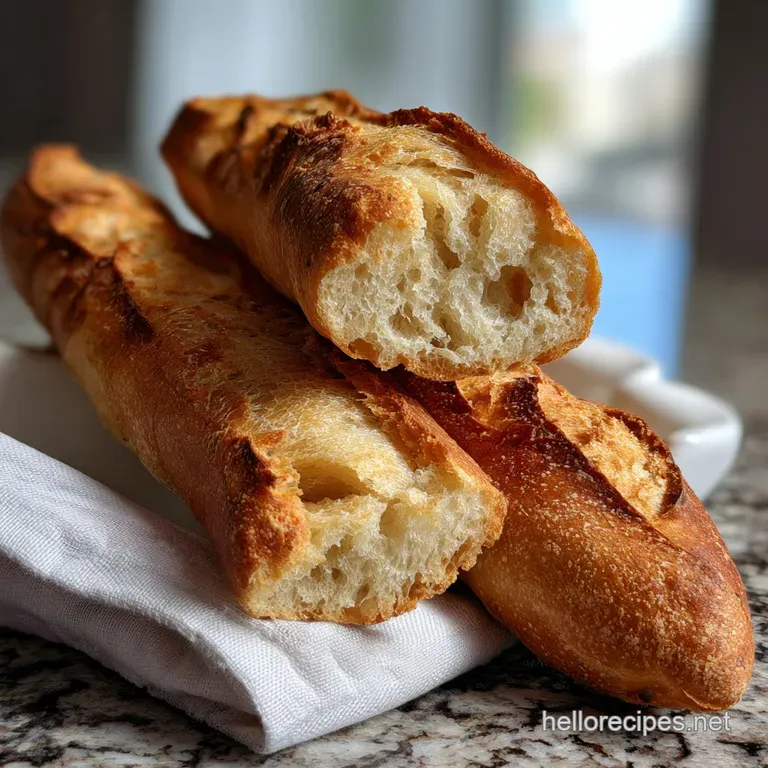
- Whisk 1 tbsp (9g) active dry yeast and 2 tsp (8g) sugar into 1.5 cups (355ml) warm water until the mixture becomes foamy and smells like fresh champagne (about 10 mins).
- Combine 2 tbsp (18g) psyllium husk powder with 0.5 cup (118ml) warm water in a separate bowl until a thick, heavy gel forms.
- Sift 3 cups (420g) GF flour, 0.5 cup (60g) sorghum flour, and 1.5 tsp (9g) sea salt into your KitchenAid Stand Mixer bowl.
- Add the yeast mixture, psyllium gel, 2 egg whites, 1 tsp apple cider vinegar, and 3 tbsp olive oil until a shaggy, sticky dough begins to pull away from the sides.
- Beat on medium speed for 4 minutes until the dough is smooth, stretchy, and smells like sweet, fermented grain.
- Transfer to a lightly oiled bowl and cover for 1 hour until the volume has visibly doubled and the surface looks taut.
- Divide the dough into two equal portions on a surface dusted with sorghum flour until you can shape them into long, sleek logs.
- Proof on a baguette pan for 45 minutes until the loaves look puffy and feel airy when gently poked.
- Score three diagonal slashes into the top using a sharp blade until the inner dough is slightly exposed.
- Bake at 450°F with a pan of water on the bottom rack for 25 minutes until the crust is mahogany brown and the loaves sound hollow when tapped.
Aroma Checkpoint 1: When the yeast blooms, it should smell sharp and bright. If it smells musty or like nothing at all, your yeast is dead. Start over. Aroma Checkpoint 2: During the final proof, the dough will emit a mild, sweet fragrance similar to malt.
This is a sign of healthy fermentation.
Solving Common Crust Failures and Crumb Density Issues
Why Your Crust is Soft and Leathery
When Crusty gluten-free French Bread Baguettes come out of the oven with a leathery skin rather than a shattering shell, it’s usually due to a lack of steam or a cooling error.
If the oven isn't humid enough during the first 10 minutes, the starch on the surface won't gelatinize properly, leading to a dull finish. On top of that,, if you leave the bread in the pan to cool, steam gets trapped against the bottom, turning your hard earned crust into a soggy mess.
| Problem | Root Cause | The Fix | Pro Protocol |
|---|---|---|---|
| Gummy Center | Underbaking or sliced too soon | Bake to internal temp of 205°F | Wait 1 hour before slicing to allow starches to set. |
| No Rise | Water too hot or old yeast | Use a thermometer for 105°F | Store yeast in the freezer to maintain viability. |
| Pale Crust | Not enough sugar or low heat | Increase oven temp to 450°F | Use an egg wash for a high gloss, deep gold finish. |
Why the Bread is Gummy Inside
This is the most common complaint in the gluten-free world. Because GF flours rely on starches, they need to reach a specific internal temperature (205°F–210°F) to "set." If you pull the bread too early, the starches remain in a semi liquid state, resulting in a gummy, wet interior.
Achieving the perfect internal structure is what defines great Crusty gluten-free French Bread Baguettes.
Innovative Flavor Architectures and Ingredient Adaptations
Creating Crusty gluten-free French Bread Baguettes provides a baseline for several innovative variations. You can treat this recipe as a canvas for sustainable, seasonal additions.
| Original Ingredient | Substitute | Why It Works |
|---|---|---|
| Extra Virgin Olive Oil | Garlic Infused Oil | Adds pungent, roasted depth without changing fat content. |
| Sorghum Flour | Buckwheat Flour | Creates a darker, earthier loaf with more mineral notes. |
| Granulated Sugar | Malt Extract (GF) | Provides a more authentic "bakery" flavor and darker browning. |
Roasted Garlic and Rosemary Baguette
Fold in 4 cloves of mashed roasted garlic and 1 tbsp of fresh chopped rosemary during the final mixing stage. The aroma of rosemary hitting the hot crust is one of the greatest olfactory experiences in the kitchen. This version pairs exceptionally well with our 5Minute Liquid Gold recipe.
Seeded Artisan Baguette
Brush the shaped loaves with egg wash and coat heavily with a mix of flax, sesame, and sunflower seeds. The seeds protect the crust from over browning while adding a distinct, crunchy texture and healthy fats.
⚗️ The Scaling Lab: The Physics of Quantity
When you decide to double this recipe to make four Crusty gluten-free French Bread Baguettes, the thermodynamics shift significantly.
- Fermentation Acceleration: A larger mass of dough generates more internal heat (an exothermic reaction). Check your first rise 15 minutes earlier than the single batch time.
- The Evaporation Paradox: If you use a single pan of water for steam when doubling the bread, the extra dough will absorb the moisture faster. Use two steam pans to ensure consistent crust development.
- Pan Crowding: Do not bake more than two baguettes on one rack. Crowding the oven drops the ambient temperature too quickly, which kills your "oven spring" and results in flat bread.
- Flavor Saturation: Scale the salt to exactly 2.5 tsp for a double batch. Salt doesn't just provide flavor; it regulates yeast activity. Too much will stunt the rise.
Debunking Common Bread Myths
- Myth: You must knead gluten-free dough for 10 minutes.
- Truth: Since there is no gluten to develop, over mixing actually incorporates too much air, which can cause the bread to collapse in the oven. 4 5 minutes is the sweet spot.
- Myth: "All-purpose" GF flour is all you need for bread.
- Truth: Most AP blends are heavy on rice flour. Adding sorghum or oat flour is essential for the structural and flavor complexity required for a baguette.
Preserving Structural Integrity: Storage and Rejuvenation
Storage: These Crusty gluten-free French Bread Baguettes are best eaten within 6 hours of baking. After that, store them in a paper bag at room temperature for up to 24 hours.
Do not store in plastic at room temperature, as it will destroy the crust's texture.
Freezing: Slice the bread before freezing. Wrap tightly in foil and place in a freezer bag. They will stay fresh for up to 3 months. To reheat, bake the frozen slices at 350°F for 8 minutes until the crust re-shatters.
💡 ZERO WASTE PHILOSOPHY: Don't discard stale baguette ends. Transform: Pulse them into coarse breadcrumbs and toast with olive oil and salt.
Science: The high starch content makes for an exceptionally crunchy topping for pasta or salads, and the sorghum adds a toasted, nutty flavor that far surpasses store-bought crumbs. You can also use these crumbs in our gluten-free Thanksgiving Recipes for incredible texture.
Sustainable Serving Protocols for the Modern Gastronomer
To truly experience the aroma and texture of these Crusty gluten-free French Bread Baguettes, serve them alongside high-quality fats. A grass fed butter with flaky sea salt is classic, but a sustainable dipping oil made with cold pressed rapeseed oil and fresh herbs highlights the sorghum's earthy notes.
Aroma Checkpoint 3: When the bread is finished, it should smell like toasted nuts and caramelized sugar. If you smell anything "sour" or "yeasty," the bread may be underbaked in the center.
For a brunch setting, these baguettes are the perfect vessel for a sweet and savory spread. If you're a fan of flaky pastries, you might also enjoy the texture of our gluten-free Pop Tarts recipe, which uses similar starch stabilization technology to achieve a shattering crust.
Comparison: Fresh Baked vs. Shortcut
| Feature | Homemade GF Baguette | store-bought "Frozen" GF Baguette |
|---|---|---|
| Texture | Shattering crust, airy crumb | Dense, often "spongy" or crumbly |
| Aroma | Complex, toasted, nutty | Neutral or slightly chemical |
| Ingredients | Whole grains (Sorghum), no preservatives | High in cornstarch and preservatives |
The technology of gluten-free baking has evolved. By focusing on the science of hydration and the innovative use of psyllium and sorghum, you can move away from the "bread as a vehicle" mindset and return to bread as the star of the table.
Enjoy the sizzle and the shatter of your amazing Crusty gluten-free French Bread Baguettes.
Recipe FAQs
What is the most critical ingredient for structure in this GF bread?
Whole psyllium husk powder. It mimics gluten by creating a visco elastic gel that traps gas, preventing collapse. If you enjoyed controlling dough structure here, see how the same principle of hydrocolloid setting works in our Foolproof Traditional Irish Soda Bread Recipe Ready in 55 Min.
How do I achieve a truly shattering crust, not a chewy one?
Inject steam aggressively at 450°F. Steam delays surface drying, allowing maximum oven spring before the crust sets. If the oven isn't humid enough, the starch gelatinizes prematurely, resulting in a dull, leathery exterior.
Can I substitute the sorghum flour with white rice flour?
No, sorghum is essential for flavor. Rice flour lacks the protein content needed to support structure and will make the crumb gummy. Sorghum provides necessary minerals and a nutty depth that lightens the final bake.
Why does my crumb remain gummy even after baking fully?
Internal starches failed to set completely due to low final temperature. Starch gelatinization requires reaching at least 205°F internally to fully set the dough matrix.
- Verify oven calibration with a separate thermometer
- Do not slice bread until it cools to 140°F
- Increase bake time by 5 minutes minimum
Is using a stand mixer mandatory for the psyllium gel?
Yes, thorough mixing is required. The paddle attachment ensures the psyllium fully incorporates into the liquid, creating a stable, homogenous gel structure needed for elasticity.
What is the difference between baking soda and yeast here?
Yeast provides primary leavening volume, while vinegar balances pH. Yeast produces CO2 for the rise, but the acid (vinegar) strengthens the yeast activity and improves crumb tenderness.
Should I cold proof longer than 45 minutes?
Cold proofing for 2 hours optimizes flavor maturation. A longer, slower proof allows complex flavor compounds from the sorghum to develop fully before hitting the intense heat. This technique is similar to the slow fermentation used in our Homemade Caraway Rye Bread The Robust Classic Loaf You Deserve.
Crusty gluten-free Baguettes
Ingredients:
Instructions:
Nutrition Facts:
| Calories | 184 kcal |
|---|---|
| Protein | 3.5 g |
| Fat | 3.7 g |
| Carbs | 34.2 g |
| Fiber | 3.2 g |
| Sugar | 0.7 g |
| Sodium | 312 mg |
