Cabbage Steaks: the Ultimate Caramelized Roasted Veggie Main
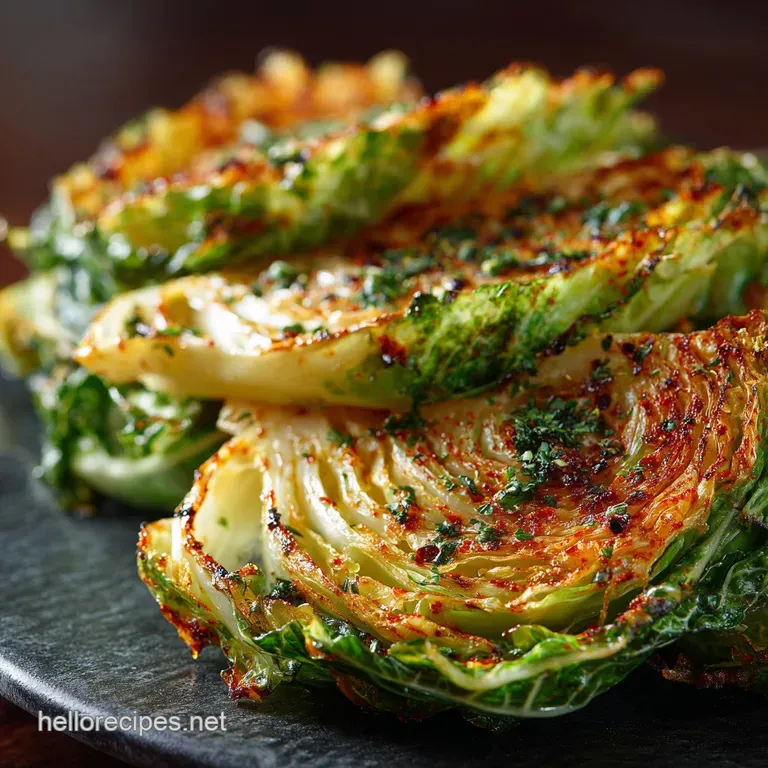
- Transforming the Humble Head: Meet Your New Favorite Cabbage Steaks
- Achieving Maximum Flavor: The Science Behind Caramelization and Char
- Essential Components for Caramelised Cabbage Steaks
- Step-by-Step Guide: How to Prepare and Roast Cabbage Steaks
- Troubleshooting and Advanced Techniques for Perfect Cabbage Steaks
- Making Ahead and Keeping Leftovers Fresh
- Pairing Your Roasted Cabbage Steaks
- Recipe FAQs
- 📝 Recipe Card
Transforming the Humble Head: Meet Your New Favorite Cabbage Steaks
Seriously, the smell of these roasting Cabbage Steaks will make your kitchen feel like a proper steakhouse, minus the massive grocery bill. It’s smoky, garlicky, and nutty, nothing like that sad boiled stuff you might remember from childhood.
The high heat transforms the humble brassica; the edges turn beautifully crispy and caramelised while the middle stays tender.
This recipe is a total weeknight hero, I’m telling you. It uses one of the cheapest veggies around and transforms it into an elegant, robust main meal or the best veggie side dish you’ve ever had. Minimal prep work and minimal fuss means maximum flavor payoff, which is exactly how I like to cook.
I’ve tried cooking cabbage every way imaginable sliced thin, simmered in soup, even stuffed like my grandma’s Hearty Cabbage Rolls Golabki A Family Comfort Food Recipe . But trust me, this simple technique for Cabbage Steaks in oven is the absolute winner. Let’s skip the fluff and get these gorgeous steaks on your table right now.
Achieving Maximum Flavor: The Science Behind Caramelization and Char
What Defines a Perfect Cabbage Steak?
A perfect Cabbage Steak must be two things: deeply caramelized on the outside and fork tender on the inside. We are not aiming for soft, watery cabbage; we want sweetness, char, and resistance. Keeping the whole slice together is also essential for even cooking and presentation, which means the core must stay intact.
A Brief Look at Nutritional Value
Cabbage is an absolute powerhouse, packed with fiber and vitamins, especially when roasted instead of boiled away. This recipe uses healthy fats like olive oil to ensure nutrient absorption, making this one of the tastiest and healthiest Cabbage Recipes Healthy you can make.
It truly holds its own as a hearty meal.
The Essential Tools for Roasting Success
You don't need fancy equipment here, just the basics. A truly sharp knife is critical for slicing cleanly through the thick head. Crucially, you must use a large, rimmed baking sheet lined with parchment paper this ensures the sugars that release won't stick and burn instantly.
High Heat vs. Boiling: Why Roasting is Critical
Boiling cabbage washes away all the flavor and leaves you with sulfurous smells. Roasting at high heat, specifically 400°F (200°C), coaxes out the natural sugars stored in the cell walls of the vegetable.
This allows them to caramelize quickly, delivering that incredible sweet and nutty flavor we crave in these Roasted Cabbage Steaks .
The Role of Fat in Crispiness and Flavor Transfer
We use a dynamic duo here: olive oil and melted butter. Olive oil has a higher smoke point, which is great for the overall roast. However, adding just a little melted butter ensures incredible richness and helps the spices adhere beautifully to the surface, resulting in maximum crispiness.
I learned this trick when I totally scorched a batch by using only butter once lesson learned!
How Smoked Paprika Elevates Simple Brassica
Smoked paprika is the secret weapon that makes these feel so substantial and "meaty." This spice delivers deep, rich, savory notes that are often lacking in purely vegetarian side dishes. It’s non-negotiable if you want that truly impressive depth of flavor in your Cabbage Steaks.
Essential Components for Caramelised Cabbage Steaks
Choosing the Right Cabbage Head (Selecting the Optimal Density)
Always choose a large, very firm head of green cabbage. You need density for slicing. Give the head a good squeeze; if it feels loose or squishy, it’s not going to hold up when you slice it into 1 inch thick steaks. Loose outer leaves should be discarded first.
Detailed Ingredient List and Scaling Options
Here is exactly what you need for four beautiful, thick Roasted Cabbage Steaks . You can easily double the rub and use two baking sheets if you are feeding a crowd.
| Component | Ingredient | Quantity | Notes |
|---|---|---|---|
| Cabbage | Green Cabbage | 1 large head | Keep that core intact! |
| The Rub | Olive Oil | 1/4 cup | Essential for over high heat roasting. |
| Melted Butter | 2 Tbsp | Adds richness and browning. | |
| Fresh Garlic | 4 large cloves | Minced or grated finely. | |
| Smoked Paprika | 1 Tbsp | Must be smoked for flavor depth. | |
| Kosher Salt | 1 tsp | Season generously. | |
| The Finish | Parmesan Cheese | 1/4 cup | Freshly grated is best. |
Smart Swaps: Parmesan and Spice Substitutions
Every great home cook needs reliable swaps. Don't let a missing ingredient stop you from making this.
| Ingredient | Viable Substitution | Why It Works |
|---|---|---|
| Green Cabbage | Savory Cabbage or Red Cabbage | They hold up well to slicing, though red cabbage may take longer to soften. |
| Smoked Paprika | Standard Paprika + Pinch of Cumin | Cumin adds an earthy depth, though you lose some smokiness. |
| Melted Butter | Extra 1 Tbsp Olive Oil | Keeps the fat content, but reduces the richness. |
| Parmesan Cheese | Nutritional Yeast (with garlic powder) | Provides that cheesy, savory tang without dairy. |
| Dried Oregano | Dried Thyme or Italian Seasoning | Any savory, earthy herb works well here. |
step-by-step Guide: How to Prepare and Roast Cabbage Steaks
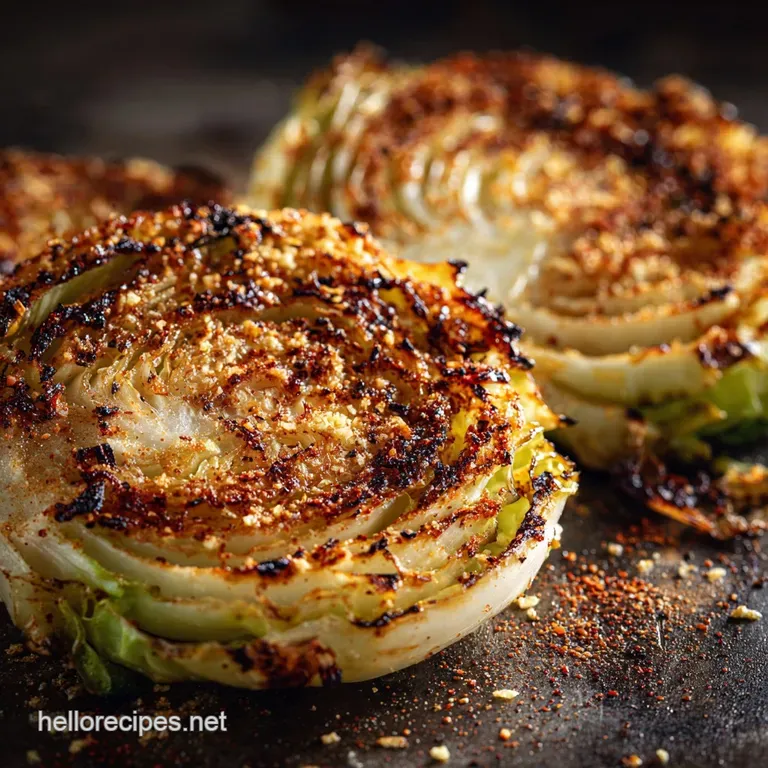
Prepping the Steaks: The Crucial Cutting Technique
- Prep the Oven and Pan: Preheat your oven to 400°F (200°C). Line a large, rimmed baking sheet with parchment paper— don’t skip the paper, seriously.
- Slice Smartly: Trim the stem end slightly, but leave the core completely intact. Place the cabbage core side down and slice lengthwise into four thick, 1 inch (2.5 cm) "steaks." You absolutely must ensure the central core runs through each slice to hold it together during the flip.
Seasoning Strategy: Ensuring Full Coverage and Adhesion
- Mix the Rub: In a small bowl, whisk together the olive oil, melted butter, minced garlic, smoked paprika, oregano, salt, and pepper. It should be a thick, pungent paste.
- Coat Thoroughly: Arrange the four cabbage steaks flat on the prepared sheet. Using a basting brush, generously coat both sides of each steak with the seasoning rub. Be thorough!
Roasting Timeline and Temperature Check for Tenderness
- Initial Roast (15 Minutes): Place the sheet in the preheated oven. Roast for 15 minutes. This begins the caramelization process on the bottom.
- Flip and Continue (10 15 Minutes): Carefully turn the steaks over using a wide, thin metal spatula. Brush them again with any seasoned oil that has pooled on the parchment. Return to the oven and roast for another 10– 15 minutes until the edges are deep golden brown and slightly crispy.
The Final Finish: Adding Parmesan for a Golden Crust
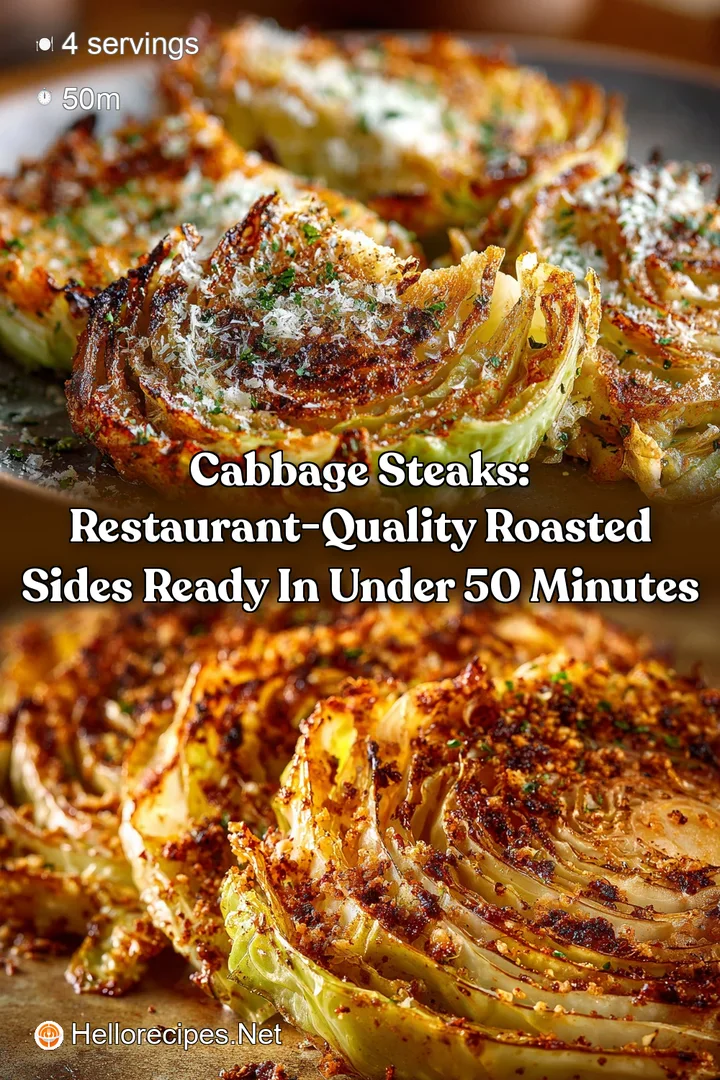
- Add Cheese: After the second roasting period (total 25– 30 minutes), sprinkle the grated Parmesan cheese evenly over the top of the steaks (if using).
- Final Bake (3 5 Minutes): Return the steaks to the oven until the cheese is melted, bubbly, and starting to brown, and the cabbage core is easily pierced with a fork. Garnish immediately with fresh parsley and serve hot.
Chef's Note: If your oven tends to run cool, you might need a total cook time closer to 35 minutes. Don’t panic if it takes longer; focus on the visual cue of deep charring, not just the clock.
Troubleshooting and Advanced Techniques for Perfect Cabbage Steaks
Preventing Soggy Steaks: Managing Moisture
Cabbage releases a surprising amount of water as it cooks. If you overcrowd the pan, the steam gets trapped, and you essentially end up boiling the steaks instead of roasting them. Always use a large pan and keep space between the slices.
If you need to make more than four, use two separate baking sheets.
Temperature Control: Avoiding Scorching vs. Undercooking
If the edges are burning before the middle is tender, your oven might have hot spots. Try moving the pan to a lower rack, or slightly reducing the heat to 375°F (190°C) for the last ten minutes. If the cabbage is tender but still pale, blast it under the broiler for 60 seconds (watch it like a hawk!).
The Importance of a Preheated Baking Sheet
This is a trick I use for everything, even my My Secret Cabbage Steak Recipe Balsamic Glazed Bliss variation. If you put the steaks on a cold pan, they spend the first 5– 7 minutes waiting for the metal to heat up, delaying the crucial caramelization stage. Pop the pan in the oven while it preheats for an extra crispy bottom.
Making Ahead and Keeping Leftovers Fresh
Safe Storage Practices for Cooked Cabbage
You can store cooked Cabbage Steaks in an airtight container in the refrigerator for up to 4 days. After that, they start losing their desirable texture. I wouldn't recommend prepping the whole head and storing it raw; it oxidizes quickly.
Best Methods for Reheating Roasted Steaks (Crisping Them Up)
But does it freeze well? Not really. Once frozen and thawed, the water released makes the texture spongy just stick to fresh cooking. To reheat leftovers, you must use the oven or an air fryer.
Pop them back on a baking sheet at 375°F (190°C) for 8– 10 minutes until sizzling hot and the edges re-crisp. Microwaving them will result in tragic sogginess.
Pairing Your Roasted Cabbage Steaks
These Roasted Cabbage Recipes are incredibly versatile. They are sturdy enough to be the star of a meatless Monday or act as a powerful side to a main course.
Suggested Sauces and Drizzles
While these steaks are flavorful enough on their own, a finishing drizzle adds punch.
- Lemon Garlic Aioli: A simple, creamy dip with a bright tang cuts through the richness of the paprika.
- Chimichurri: The fresh herbs and vinegar are a fantastic contrast to the smoky char.
- Simple Aged Balsamic Glaze: This adds an incredible depth of sweet acidity, similar to my other popular recipe linked above.
Suggested Mains and Sides
Because these Cabbage Steaks are so savory, they pair beautifully with simple grains or proteins. Try serving them alongside slow cooked pork, or for a lighter meal, pair them with a side of creamy polenta or roasted root vegetables. They also work brilliantly as a hearty side to a warm bowl of soup, like my favorite Comforting cabbage in soup recipe: Grandma's Secret! .
Recipe FAQs
How thick should the slices be so the cabbage steaks don't disintegrate?
The ideal thickness for cabbage steaks is between 1 and 1.5 inches. This ensures the slices maintain enough structural integrity and hold the core intact, preventing the "steaks" from collapsing into individual leaves during the high heat roasting process.
Why are my cabbage steaks soggy instead of developing crispy, charred edges?
Sogginess usually results from overcrowding the baking sheet, which traps steam instead of allowing moisture to evaporate. Ensure there is plenty of space between the steaks; if necessary, use two trays and rotate them halfway through cooking.
Also, verify that your oven temperature is hot enough (at least 400°F) to promote rapid caramelization.
How can I make these Cabbage Steaks entirely vegan?
To convert this recipe to be fully vegan, simply substitute the Parmesan cheese with nutritional yeast for a cheesy, savoury flavour boost. You can also use a high-quality plant based Parmesan substitute, adding it immediately after roasting so it melts slightly from the residual heat.
My cabbage tasted slightly bitter after roasting. How can I prevent or fix this?
While high heat roasting usually reduces bitterness, sometimes very fresh or slightly undercooked cabbage retains this flavour. You can easily counteract the bitterness by finishing the dish with a light drizzle of balsamic glaze or a teaspoon of pure maple syrup or honey (if not vegan) right before serving.
Can I prepare the cabbage steaks ahead of time?
Yes, you can certainly prepare the cabbage up to 24 hours in advance by washing, drying, and slicing it into the designated steaks. Store the dry, cut steaks tightly wrapped or in an airtight container in the refrigerator, applying the oil and seasoning immediately before they go into the hot oven.
Can I use types of cabbage other than standard green or white cabbage?
While firm green cabbage is ideal due to its density, you can use Savoy cabbage, though it may require slightly less roasting time as it is generally more tender. Red cabbage also works beautifully, but be aware it is slightly less sweet and will bleed color onto your baking sheet.
What is the best way to store and reheat leftover cabbage steaks?
Store cooled leftovers in an airtight container in the refrigerator for up to 3 4 days. To maintain texture, avoid the microwave when reheating; instead, flash heat them quickly in a hot frying pan or a toaster oven until the edges crisp up again.
Crispy Roasted Cabbage Steaks Recipe
Ingredients:
Instructions:
Nutrition Facts:
| Calories | 343 kcal |
|---|---|
| Protein | 7.9 g |
| Fat | 23.1 g |
| Carbs | 25.8 g |
