A Grandmères Cure the Classic Clearbroth Chicken Noodle Soup
- Moving Beyond the Can: The Philosophy of a Proper Broth
- Finding Comfort in a Bowl: Why Chicken Noodle Soup Endures
- The Essential Building Blocks for Superior Flavour
- Tools of the Trade: Equipment for Effortless Soup Making
- Stage One: Crafting Your Glorious Golden Chicken Broth
- Stage Two: Final Assembly of Your Chicken Noodle Soup
- Mastering Your Batch: Expert Tips for the Best Chicken Noodle Soup
- Elevating the Classic: Creative Twists and Ingredient Swaps
- Recipe FAQs
- 📝 Recipe Card
Moving Beyond the Can: The Philosophy of a Proper Broth
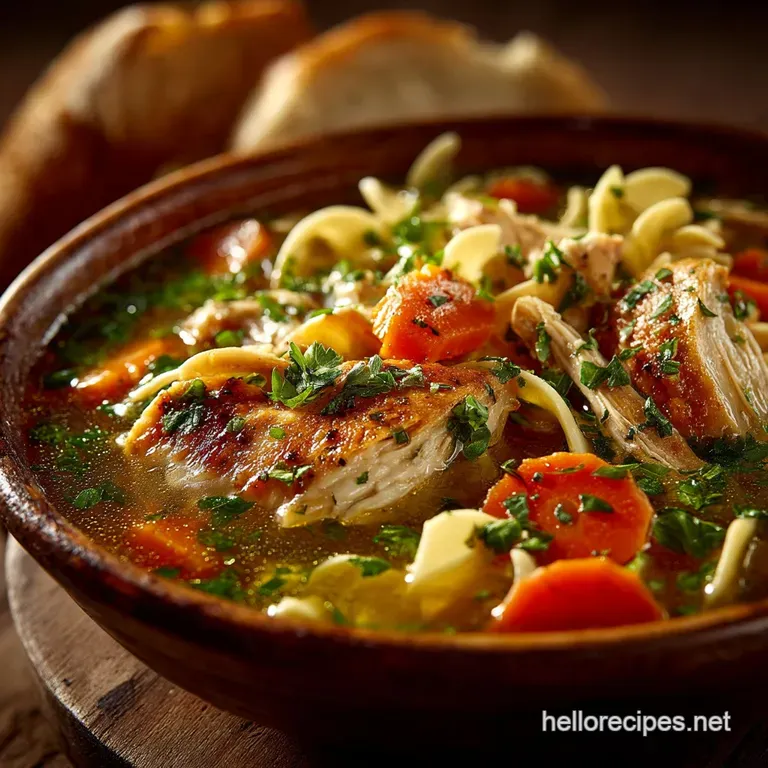
When we talk about crafting a truly restorative bowl of Chicken Noodle Soup , we must first address the foundation: the broth. This isn't just heated water; it is a complex extraction of flavour, collagen, and body, transforming simple ingredients into a glorious, golden liquid.
Achieving this depth requires patience and a specific technique, moving far beyond the shortcuts offered by pre-made, high sodium cubes. The goal is to build a profile that is clean, clear, and intensely savoury a true Grandmère's Cure that relies on a lengthy, low-and-slow simmer to extract maximum goodness from the bones and aromatics.
Finding Comfort in a Bowl: Why Chicken Noodle Soup Endures
Few dishes hold the emotional resonance of this classic. It is the ultimate culinary comfort, the universal remedy that transcends cultural boundaries. Whether you are seeking a hearty meal for a hungry family or trying to determine what is the best soup for flu?
, the answer inevitably points to this iconic preparation. Rich in hydrating liquids and easily digestible protein (around 34 38g per serving), this Family style Chicken Noodle Soup offers both sustenance and soothing warmth.
It’s a medium difficulty dish, not because the steps are hard, but because achieving excellence demands attention to time and detail namely, a minimum 90-minute simmer and careful attention to clarifying the broth.
Why True Gold Comes from Slow Simmering
The secret to a pristine, flavourful broth lies in the slow simmer not a rolling boil. We start with 1.5 kg of bone-in chicken parts (or a carcass) and 4.5 litres of cold water. Starting cold ensures that the bones heat up gradually, allowing impurities to dissolve slowly and rise to the surface as scum.
After bringing the pot just to the boil, you must immediately reduce the heat to the lowest setting, maintaining only the occasional, gentle bubble for 90 minutes.
This controlled heat facilitates the slow conversion of collagen into gelatin, providing the desirable rich mouthfeel without clouding the liquid.
The Mirepoix Ratio: Balancing Sweetness and Savory Depth
The aromatic foundation of this soup hinges on the classic French mirepoix —a blend of onion, carrot, and celery. For the initial broth base, we use these vegetables in a rough chop (leaving the onion skins on for a deeper colour), alongside peppercorns, bay leaves, and fresh thyme, adding 2 teaspoons of Kosher salt to aid in extraction.
These bulk ingredients simmer with the bones, donating their essential aromatic oils. Crucially, a second, finely diced batch of these same vegetables is sautéed in butter later in Stage Two, providing a fresh, tender sweetness and texture to the final bowl, perfectly balancing the deep savouriness of the broth.
The Restorative Power of Simple, Unadulterated Ingredients
The integrity of a great broth relies on allowing natural flavours to shine. Our version avoids any shortcuts, proving that the most restorative meals are often the simplest. By focusing on whole, fresh ingredients bones for body, vegetables for subtle sweetness, and fresh herbs like thyme and parsley we produce a clean flavour profile.
The final addition of fresh lemon juice is non-negotiable; this acid cuts through the richness of the chicken, brightening the overall taste and making the flavour truly "pop."
The Essential Building Blocks for Superior Flavour
To answer the fundamental question, how to make chicken and noodles? the focus shifts to sourcing quality components. For the deepest flavour extraction, we require 1.5 kg of bone-in chicken parts thighs are excellent, or a whole carcass for the initial broth.
Separately, for the final assembly, you will need 3 tablespoons of unsalted butter for sautéing the aromatics (a medium onion, three carrots, three celery stalks, and four cloves of minced garlic).
The structure is completed by 100g of dried egg noodles, providing a quick cooking, comforting texture, and the final flourish of fresh parsley and lemon.
Tools of the Trade: Equipment for Effortless Soup Making
While this chicken noodle soup recipe relies heavily on technique, having the right equipment ensures success and efficiency.
Selecting the Right Chicken Pieces for Maximum Gelatin
To ensure your broth has a luxurious body, prioritize bones rich in collagen. A mixture of 1.5 kg of chicken bone-in thighs and necks or backs is ideal. The fat and connective tissue render during the long simmer, resulting in a richer, thicker mouthfeel that is the signature of a superior homemade broth.
If you want a darker, more complex flavour, remember to roast your bones at 400° F ( 200° C) for 30 minutes before simmering.
Navigating the Noodle Aisle: Best Shapes for Soup
We specify 100g of traditional dried egg noodles for their rapid cooking time (just 5– 7 minutes) and classic association with this dish. However, smaller pasta shapes like alphabet pasta or mini rotini work equally well.
The key is using a small shape that complements, rather than dominates, the spoonful of soup.
The Aromatic Trinity: Prepping Carrots, Celery, and Onion
Preparation is distinct for the two uses of the mirepoix. For the broth, a rough chop is sufficient as these ingredients will be strained out. For the second addition, achieving fine, even dice is important for visual appeal and ensuring they soften completely in the final 10-minute simmer without becoming mushy.
Must Have Kitchen Gear for Broth Success
The single most important item is a very large stock pot a minimum 8-quart (7.5 litre) capacity is needed to handle the 4.5 litres of liquid and the substantial volume of chicken and vegetables. Essential for clarity is a fine mesh sieve or colander, preferably lined with cheesecloth, for the final straining.
If you prefer a hands off approach, note that a slow cooker or a chicken noodle soup crock pot can maintain the perfect low simmer required for Stage One, simplifying the long cooking time.
Related Recipes Worth Trying
- Homemade Creamy Chicken Noodle Soup with a Proper Velvety Broth — The ultimate Creamy Chicken Noodle Soup recipe featuring a rich roux for a silky lumpfree broth Quickened with rotisserie chicken its a proper hug in a bowl...
- Ultimate Creamy Chicken Alfredo The Secret to a Stable Velvety Sauce — Forget split sauces Our Chicken Alfredo recipe guarantees a silky restaurantquality emulsion This rich Creamy Chicken Alfredo Recipe is your new favourite...
- Wok Masters 30Min GingerSesame Chicken Asian Noodles — Skip the takeaway This 30 Minute Dinner Recipe uses velveting for tender chicken and features massive gingersesame flavour The perfect Weeknight Asian Dinner
Stage One: Crafting Your Glorious Golden Chicken Broth
Begin by placing your 1.5 kg of chicken bones and the roughly chopped initial vegetables (onion, carrots, celery) into the large stock pot. Pour in the 4.5 litres of cold water until everything is fully submerged.
Heat over high until the water just begins to bubble rapidly, then immediately reduce the heat to the absolute lowest setting. Using a skimmer or large spoon, meticulously remove any foam or grey impurities that rise to the surface; this crucial step ensures a clear broth.
Once skimmed, add the initial seasoning 2 teaspoons of Kosher salt, black peppercorns, bay leaves, and thyme sprigs. Allow this gentle simmer to proceed, undisturbed, for a minimum of 90 minutes.
Finally, carefully ladle the resulting liquid through your fine mesh sieve into a separate, clean container, discarding all solids. This concentrated liquid is your broth.
Stage Two: Final Assembly of Your Chicken Noodle Soup
With your liquid gold secured, the final assembly is swift. This is where we fully build the texture and herbaceousness of the definitive chicken noodle soup recipe .
The Initial Sear: Locking in Depth Before the Simmer
Return the large pot to medium heat and melt 3 tablespoons of unsalted butter. Add the second batch of finely diced onions, carrots, and celery, along with a pinch of salt. Sauté patiently for 8– 10 minutes until the vegetables are translucent and fully softened, a critical step for developing their flavour without browning.
Next, stir in the minced garlic and cook for just 1 minute until wonderfully fragrant.
Skimming and Clearing: Ensuring a Pristine Broth
While the initial skimming in Stage One removed major impurities, you must ensure the final broth remains clear. Once the strained broth is added back to the pot with the sautéed vegetables, bring it back up to a gentle simmer.
Any small impurities from the vegetables that rise should be skimmed, maintaining that pristine clarity.
Achieving Perfect Noodle Texture (The Al Dente Method)
Once the broth is simmering gently, add the 100g of dried egg noodles. Cook for the package recommended time usually 5– 7 minutes until they are al dente , meaning they have a slight bite in the centre.
If you anticipate having leftovers, cook the noodles in a separate pot of salted water and add them to the individual bowls just before serving. This prevents them from swelling and absorbing all your precious broth overnight.
Integrating the Cooked Chicken Back into the Mix
Stir in the 2 cups (300g) of pre-cooked, shredded chicken meat. This meat can be taken from the bones used to make the broth, or for those aiming for a Quick & Easy Chicken Noodle Soup , this is the perfect opportunity to utilize shredded meat from a chicken noodle soup with rotisserie chicken .
Simmer for 10 minutes, allowing the meat to absorb the glorious broth flavours before proceeding to the final seasoning.
Mastering Your Batch: Expert Tips for the Best Chicken Noodle Soup
The difference between good soup and phenomenal soup often comes down to the finishing touches.
One essential tip is the liberal use of acid: remove the soup from the heat and stir in 1 tablespoon of fresh lemon juice, instantly brightening the heavy, savoury notes. If your soup tastes flat, it almost certainly needs more salt, or that lift of acid.
On top of that,, to combat the noodle absorption issue, always keep the noodles separate if storing leftovers. If pressed for time, a truly Quick & Easy Chicken Noodle Soup can be made by substituting the homemade broth with a high-quality, low-sodium store-bought stock and exclusively using rotisserie chicken for the meat component, drastically reducing the total cook time.
Elevating the Classic: Creative Twists and Ingredient Swaps
Once you’ve mastered the classic chicken noodle soup recipe , the possibilities for variation are endless.
Storing Leftovers and Freezing the Broth Safely
For maximum longevity and quality, cool the strained broth completely before transferring it to airtight containers. The clear broth freezes excellently for up to three months. If storing leftover soup that already contains vegetables and chicken, ensure any included noodles were cooked separately (as advised above) before chilling.
Otherwise, the noodles will rapidly become mushy and soak up the valuable liquid, leaving you with little more than a thick stew the next day.
Troubleshooting: Why Is My Broth Cloudy?
The number one culprit for a cloudy broth is aggressive boiling. If the liquid is agitated violently, small fat and protein particles emulsify throughout the liquid instead of remaining on the surface to be skimmed. Always maintain the gentlest possible simmer, and ensure you skim immediately after the initial boil.
Starting with cold water is also critical to prevent cloudiness.
Transforming Texture: Making a Creamier Variation
While the traditional recipe focuses on a clear, clean broth, you can transform the texture easily. Once the soup is finished and removed from the heat, stir in a half cup of heavy cream (120ml).
This addition creates a rich, velvety mouthfeel, especially when paired with a substitution of fresh dill for the traditional parsley and thyme, creating a decadent, hearty alternative.
Dietary Swaps: gluten-free and Low-Sodium Adjustments
Making this dish accommodating is simple. For a gluten-free adaptation, swap the dried egg noodles for rice vermicelli, small GF rotini, or even zucchini noodles added right at the end.
To control the sodium level (which starts around 750mg per serving), always use unsalted butter and low-sodium stock if substituting the base. By starting with just 2 teaspoons of Kosher salt in the broth, you maintain control and can adjust incrementally at the final tasting stage.

Recipe FAQs
My noodles went all mushy overnight! How do I store leftover Chicken Noodle Soup properly?
Ah, the classic tragedy! Starch absorbs your beautiful broth like a sponge. The top tip here is to follow the 'Pro Trick' and cook your noodles separately; only add them to the individual bowls just before serving.
If you have already mixed the soup, it will still be edible for 3 4 days in the fridge, but expect the noodles to be very soft. For long term storage, freeze the broth (without the noodles) in airtight containers it keeps splendidly for up to three months.
Why isn't my glorious Chicken Noodle Soup broth as clear and golden as yours?
Getting a crystal clear broth is all down to patience and temperature control, not just luck! The main culprits for cloudy broth are starting with hot water or letting the soup boil vigorously rather than gently simmering.
Ensure you always start with cold water and meticulously skim off all the impurities (the grey foam) that rise to the surface during the first 20 minutes. Maintaining a gentle simmer where you only see the occasional bubble is the key to achieving that pure gold colour.
I fancy a change; can I jazz up this classic recipe with different vegetables or herbs?
Absolutely, go wild! This recipe is a fantastic base for seasonal swapping. You could toss in some frozen peas and sweetcorn near the end for colour, or replace some of the carrots with parsnips for a sweeter, earthy flavour.
For herbs, if thyme isn't your cup of tea, try using fresh dill or marjoram for a slightly different character. Just remember that the foundational mirepoix (onion, carrot, celery) is essential for that classic flavour depth.
Two hours is a bit of a marathon. Can I use store-bought stock to speed things up a bit?
We won't tell anyone if you want to skip the big simmer, but be warned: you sacrifice some serious depth of flavour! If you must cheat, use a high-quality, low-sodium chicken stock or bone broth from a carton.
To boost the flavour quickly, roast the shredded chicken meat (or simply a few chopped carrots and onions) briefly before adding them to the store-bought stock. That little bit of caramelisation will add a richness that helps bridge the gap.
Is Chicken Noodle Soup actually good for you, or is the ‘cure all’ status just an old wives' tale?
It’s no myth it truly is restorative! Our homemade version is packed with protein (from the bones and meat) and essential vitamins and minerals from the lengthy slow simmer, like collagen and electrolytes.
The steam helps clear the airways, and the simple vegetable structure (mirepoix) delivers crucial Vitamin A and C. It’s proper nourishment disguised as comfort food a brilliant bonus!
Classic Clearbroth Chicken Noodle Soup
Ingredients:
Instructions:
Nutrition Facts:
| Calories | 858 kcal |
|---|---|
| Protein | 27.3 g |
| Fat | 38.1 g |
| Carbs | 60.1 g |
| Fiber | 22.1 g |
| Sodium | 575 mg |
