Whipped Shortbread Cookies: Velvet Texture
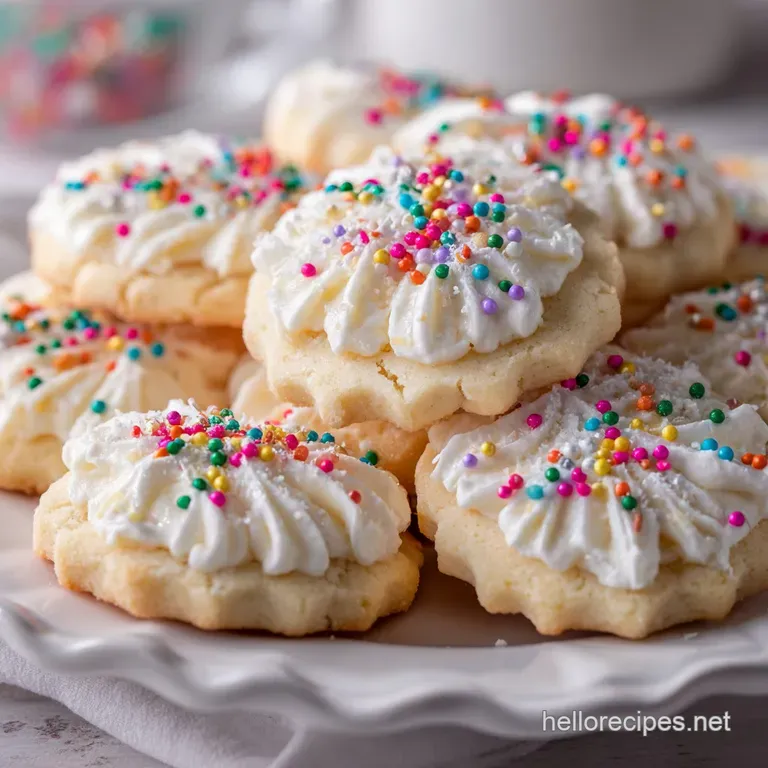
- Time: Active 20 minutes, Passive 15 minutes, Total 35 minutes
- Flavor/Texture Hook: A buttery, salt flecked crumb that offers a delicate shatter before melting into a silky finish
- Perfect for: High end holiday gifting, sustainable afternoon tea, or beginner bakers looking to master fat emulsion techniques
- Melt in Your Mouth Whipped Shortbread Cookies
- Why This Aerated Butter Technique Always Works
- Recipe Specs for Yield and Time Management
- The Building Blocks of a Velvety Cookie
- Modern Gastronomy Tools for Superior Results
- Step by Step Piped Precision Method
- Fixing Common Structure and Texture Issues
- Innovative Flavor Profiles to Explore
- Freezing and Reheating for Long Term Storage
- Curated Pairings for a Gastronomic Experience
- Myths Regarding Whipped Doughs
- Recipe FAQs
- 📝 Recipe Card
Melt in Your Mouth Whipped Shortbread Cookies
The kitchen is currently a haze of sweet, floral vanilla and the deep, lactic scent of grass fed butter. I remember my first attempt at this specific whipped shortbread cookies recipe; I was convinced I had ruined the batch because the dough looked more like a stiff buttercream frosting than a traditional cookie base.
I almost walked away, but the aroma was too captivating to ignore a concentrated, nutty fragrance that promised something special.
Instead of tossing it, I grabbed a piping bag and hoped for the best. As they baked, the house didn't just smell like sugar; it smelled like a high end patisserie in the heart of Paris. When I finally took that first bite, the cookie didn't just crumble it vanished.
It was a complete shift in how I viewed simple baking. This isn't just about mixing ingredients; it’s about using modern kitchen technology, like your stand mixer, to change the physical state of fat.
We often think of cookies as dense or chewy, but these are an exercise in lightness. They are the result of patience and a bit of food science, proving that when you treat basic ingredients with the right technique, the results are nothing short of gastronomic art.
You are going to love how these shatter with the slightest pressure, releasing a burst of salt tinged sweetness that lingers just long enough to make you reach for a second one.
Why This Aerated Butter Technique Always Works
The Gastronomy of Suspended Air Bubbles: High speed whipping incorporates millions of microscopic air pockets into the cool butter. These gas bubbles expand rapidly when hitting the heat of the oven, creating a delicate, honeycomb like internal structure.
- Starch Interference: The addition of cornstarch prevents long gluten chains from forming, ensuring the crumb remains tender rather than tough.
- Thermal Stability: Using cool butter (65°F) allows the air pockets to hold their shape during the whipping process without the fat melting prematurely.
- Saccharide Solubility: Powdered sugar contains a small amount of cornstarch and dissolves faster than granulated sugar, contributing to the velvety mouthfeel.
- Evaporative Lift: As the moisture in the butter evaporates during baking, it pushes against the aerated structure, reinforcing the "whipped" height of the cookie.
Before we dive into the specific components, it is helpful to understand how different cooking environments affect the final product. While the oven is the gold standard for this recipe, curious cooks often wonder about alternative methods.
| Cooking Method | Time | Texture | Best For |
|---|---|---|---|
| Convection Oven | 12-14 minutes | Uniformly crisp, light golden | Maximum volume and aeration |
| Standard Oven | 15 minutes | Soft center, delicate shatter | Classic melt in-your mouth feel |
| Stovetop Pan | 10 minutes | Dense, toasted, shortbread like | Quick batches (not recommended for whipped texture) |
Choosing the right method ensures you get the specific structural outcome you desire. For this recipe, the oven provides the consistent, dry heat necessary to set the delicate air bubbles we've worked so hard to create. If you are looking for another bake with a focus on fat ratios, you might find the technique in The Quintessential Apple recipe equally fascinating.
Recipe Specs for Yield and Time Management
To achieve the best shortbread cookies recipe results, precision is your best friend. We aren't just "mixing until combined"; we are monitoring temperatures and times to ensure the emulsion is perfect.
These cookies rely on the physical properties of the butter, so keeping a kitchen thermometer nearby can actually be a huge help.
Precision Checkpoints
- Butter Temperature: Ensure your salted butter is exactly 65°F. It should be pliable but still hold a fingerprint without feeling oily.
- Whipping Duration: You must whip the butter and sugar for a full 10 minutes on medium high speed to achieve the necessary volume.
- Bake Temperature: A low 300°F is critical to prevent the cookies from browning too quickly before the structure sets.
Component Analysis
| Ingredient | Science Role | Pro Secret |
|---|---|---|
| Salted Butter | Primary fat and flavor | Use grass fed for a higher yellow carotene content |
| Cornstarch | Gluten inhibitor | Sift it twice with the flour to ensure even distribution |
| Powdered Sugar | Fine grain sweetener | Never swap for granulated; the weight to volume ratio is different |
The Building Blocks of a Velvety Cookie
When selecting your elements, consider the sustainability of your ingredients. Choosing high-quality, ethically sourced butter not only supports better farming practices but also provides a deeper, more complex flavor profile.
The fat content in the butter is the backbone of these easy whipped shortbread cookies, so this is not the place to skimp.
- 1 cup (227g) salted butter, softened but cool (65°F): Why this? high-quality fat provides the essential structure and the primary flavor profile of the cookie.
- Substitute: Unsalted butter plus 1/4 tsp extra salt.
- 0.5 cup (60g) powdered sugar, sifted: Why this? Dissolves instantly to create a smooth, non gritty texture in the whipped base.
- Substitute: 1/2 cup granulated sugar pulsed in a blender until fine.
- 1 tsp (5ml) pure vanilla extract: Why this? Acts as a flavor enhancer that bridges the gap between the butter and sugar.
- Substitute: 1/2 tsp almond extract for a nutty twist.
- 1.5 cups (190g) all purpose flour, spooned and leveled: Why this? Provides the necessary protein structure to hold the air pockets.
- Substitute: 1.5 cups Measure for-Measure gluten-free flour.
- 0.5 cup (60g) cornstarch: Why this? Breaks up the gluten for a tender "melt in-your mouth" experience.
- Substitute: 1/2 cup arrowroot powder for a similar starch profile.
- 1 pinch fine sea salt: Why this? Sharpens the sweet notes and balances the richness of the butter.
- Substitute: Kosher salt (finely crushed).
Modern Gastronomy Tools for Superior Results
To master this piped shortbread cookies recipe, your equipment needs to be up to the task of intense aeration. A standard hand mixer can work, but a stand mixer such as a KitchenAid is the preferred technology here because it can maintain a high, consistent speed for the required duration without overheating the motor or the dough.
You will also want a sturdy piping bag with a large open star tip (like a Wilton 1M or 2D). The dough is thick, and a flimsy plastic bag might burst under the pressure. Using a heavy duty silicone bag or a reinforced canvas one is a more sustainable choice and gives you much better control over the final shape. If you've ever worked with dough that is too soft to pipe, you'll know it's a frustration we want to avoid. If you're into dough textures that don't require baking, our Edible Cookie Dough recipe offers a completely different experience in fat stability.
Finally,, high-quality parchment paper or a silicone baking mat is non negotiable. These cookies are delicate and have a high fat content; you don't want them sticking to the tray and shattering before they even reach your cooling rack.
A heavy gauge aluminum baking sheet will also ensure even heat distribution, preventing the bottoms from scorching while the tops stay pale.
step-by-step Piped Precision Method

- Prep the environment. Preheat your oven to 300°F and line two baking sheets with parchment paper. Note: A lower temperature prevents the delicate fats from melting too fast.
- Cream the butter. Place the 227g of cool butter in the bowl of your stand mixer. Beat 3 minutes until pale and creamy.
- Add the sweetener. Sift in the 60g of powdered sugar and 5ml of vanilla extract. Listen for the motor to stabilize as the sugar incorporates.
- The long whip. Turn the mixer to medium high and whip for exactly 10 minutes. Note: This is the critical step where we build the air lattice structure.
- Whisk the dry ingredients. In a separate bowl, whisk together the 190g flour, 60g cornstarch, and a pinch of salt. Inhale the clean, wheaty aroma of the sifted flour.
- Low speed integration. Turn the mixer to the lowest setting and slowly add the dry mixture. Mix only until the last streak of flour disappears.
- Fill the bag. Transfer the dough into a piping bag fitted with a star tip. Note: If the bag is too full, the heat from your hands will melt the butter.
- Pipe the rosettes. Pipe 1 inch mounds onto the prepared sheets, spaced 2 inches apart. Observe the sharp ridges formed by the piping tip.
- Bake with precision. Bake for 15 minutes until the bottoms are just barely golden and the kitchen smells like toasted cream.
- Cool completely. Allow the cookies to sit on the hot sheet for 5 minutes before transferring to a wire rack. Wait for the cookies to set so they don't crumble upon touch.
Fixing Common Structure and Texture Issues
Even with the best intentions, baking can be unpredictable. But what about the sogginess? Or the dreaded spread? We can fix that. Most issues with this recipe stem from the temperature of the butter or the duration of the whipping process.
If you find your cookies are losing their shape, it is usually because the butter became too warm during the 10 minute whip.
Why Your Cookies Spread Too Much
When the butter gets too warm (above 70°F), it loses its ability to hold those tiny air bubbles. In the oven, instead of the air expanding and lifting the cookie, the butter simply melts and flows outward.
If this happens, try chilling the piped cookies on the baking sheet for 15 minutes before they go into the oven. This "cold set" technique helps the fat solidify just enough to hold the ridges of the piping.
| Problem | Root Cause | Solution |
|---|---|---|
| Gritty Texture | Sugar didn't dissolve | Use only sifted powdered sugar; avoid granulated |
| Tough Crumb | Overworked gluten | Mix dry ingredients on low speed for less than 30 seconds |
| Greasy Bottoms | Butter was too soft | Ensure butter is 65°F at the start and chill dough if needed |
Common Mistakes Checklist
- ✓ Using room temperature butter instead of "cool" butter (leads to spreading).
- ✓ Skipping the 10 minute whip (the cookies will be dense, not airy).
- ✓ Measuring flour by dipping the cup into the bag (this packs it down, use the spoon and level method).
- ✓ Baking at a temperature higher than 300°F (causes browning before the center is set).
- ✓ Forgetting to sift the powdered sugar (creates lumps in the velvety dough).
Innovative Flavor Profiles to Explore
While the classic version is hard to beat, the beauty of this whipped shortbread cookies recipe is its versatility. You can easily adapt the flavor profile to suit different seasons or themes. For example, during the holidays, many people look for christmas whipped shortbread cookies with a bit of festive flair.
The Holiday Peppermint Twist
Fold in 1/4 cup of finely crushed peppermint candies after the flour is incorporated. The scent of mint mingling with the buttery aroma is absolutely intoxicating. You could also dip half of the cooled cookie into melted dark chocolate for a more decadent treat.
The chocolate provides a bitter contrast to the sweet, melt in your mouth shortbread cookies base.
Savory Lemon & Thyme
For a more modern, gastronomic approach, add the zest of one organic lemon and 1 teaspoon of finely chopped fresh thyme to the butter while whipping. The citrus oils are released by the friction of the whisk, creating a bright, sophisticated aroma that pairs beautifully with a dry white wine or a strong Earl Grey tea. If you're looking for more complex flavor layering, the techniques in our Simply Decadent German recipe can give you some great ideas for frosting and filling pairings.
Freezing and Reheating for Long Term Storage
These cookies are surprisingly hardy when it comes to storage, provided they are kept away from moisture. Because of the high fat content, they can easily pick up odors from the fridge or freezer, so an airtight container is a necessity.
- Storage: Keep in an airtight container at room temperature for up to 7 days.
- Freezing Baked Cookies: Place cooled cookies in a single layer on a baking sheet to freeze, then transfer to a freezer safe bag for up to 3 months.
- Freezing Raw Dough: You can pipe the rosettes onto a tray, freeze them solid, and then store them in a bag. Bake directly from frozen, adding 2-3 minutes to the total time.
- Zero Waste Tip: Don't throw away the butter wrappers! Use the buttery side to grease other pans or wipe down your cooling rack. Also, any broken cookie crumbs make an incredible topping for Greek yogurt or a base for a sustainable cheesecake crust.
Curated Pairings for a Gastronomic Experience
Serving these cookies is all about highlighting their delicate nature. They are fantastic on their own, but they truly shine when paired with something that offers a bit of contrast in texture or acidity.
- Beverage Pairing: A crisp, sparkling cider or a tart hibiscus tea cuts through the richness of the butter perfectly.
- Dessert Board: Serve these alongside fresh berries and a dollop of unsweetened whipped cream. The "soft shortbread cookies" texture complements the snap of a fresh strawberry beautifully.
- Afternoon Tea: These are a natural fit for a tea service. Their pale, elegant appearance looks stunning on a tiered stand.
Myths Regarding Whipped Doughs
"You can't over whip butter." Actually, you can. While we want a lot of air, if the butter starts to look curdled or oily, you've gone too far or the environment is too warm. The goal is a texture that looks like thick, stable whipped cream.
"Salted butter is for toast, not baking." This is a common misconception. In a recipe with so few ingredients, salted butter provides a built in flavor depth that unsalted butter often lacks. The salt helps to highlight the floral notes in the vanilla and the sweetness of the sugar.
"Whipped shortbread cookies without cornstarch are the same." Not quite. While you can make 3 ingredient shortbread cookies with just butter, sugar, and flour, the cornstarch is the "secret" technology that provides that unique, powdery melt away sensation.
Without it, the cookie will be much crispier and more like a traditional biscuit.
Decision Shortcut
- If you want a crunchier cookie, reduce the cornstarch by half and increase the flour by the same amount.
- If you want a more decorative look, use a smaller star tip and pipe "stars" instead of rosettes.
- If you want maximum melting sensation, ensure you whip for the full 10 minutes and don't skip the sifting.

Recipe FAQs
What's the difference between whipped shortbread and regular shortbread?
Whipped shortbread is lighter and more tender. This is achieved by creaming butter and sugar for an extended period, incorporating air, which creates a delicate, melt-in-your mouth texture. Regular shortbread is denser and crisper due to less aeration.
Do whipped shortbread cookies need cornstarch?
Yes, cornstarch is essential for the signature texture. It acts as a gluten inhibitor, ensuring the cookies remain tender and crumbly rather than tough. If you enjoyed controlling cookie spread here, the same fat ratio logic applies to our Dreamy Vanilla Bean Homemade Ice Cream Recipe - So Creamy!.
What is the 321 rule for shortbread?
The 321 rule is a traditional ratio for simple shortbread: 3 parts flour, 2 parts butter, 1 part sugar. This ratio yields a classic, crumbly shortbread. Whipped shortbread, however, uses a different method and often incorporates cornstarch.
What is the secret to shortbread?
The secret to perfect shortbread is the quality of the butter and precise mixing. For whipped shortbread, it's the aeration of the butter; for traditional, it's ensuring the butter is cold and not overmixed. If you master the techniques for creamy batters here, you can apply them to our How to Make the Best Sweet Cream Pancakes: A Delicious 25-Minute Recipe!.
Can I substitute granulated sugar for powdered sugar in whipped shortbread?
No, stick with powdered sugar for the best texture. Granulated sugar has larger crystals that don't dissolve as easily, resulting in a gritty texture. Powdered sugar creates the signature smooth, velvety mouthfeel characteristic of whipped shortbread.
Why are my whipped shortbread cookies spreading too much?
The butter was likely too warm during the creaming process. If butter is above 70°F, it loses its ability to hold air bubbles. For best results, ensure your butter is cool (around 65°F) and consider chilling the piped dough briefly before baking to help it set.
How do I get crispier shortbread instead of melt-in-your mouth?
Reduce the cornstarch and increase the flour. For a crispier texture, use less cornstarch and more all-purpose flour in your recipe. Also, baking at a slightly higher temperature for less time can promote crispiness rather than tenderness.
Whipped Shortbread Cookies

Ingredients:
Instructions:
Nutrition Facts:
| Calories | 78 kcal |
|---|---|
| Protein | 0.5 g |
| Fat | 5.2 g |
| Carbs | 7.2 g |
| Fiber | 0.1 g |
| Sugar | 1.7 g |
| Sodium | 41 mg |
