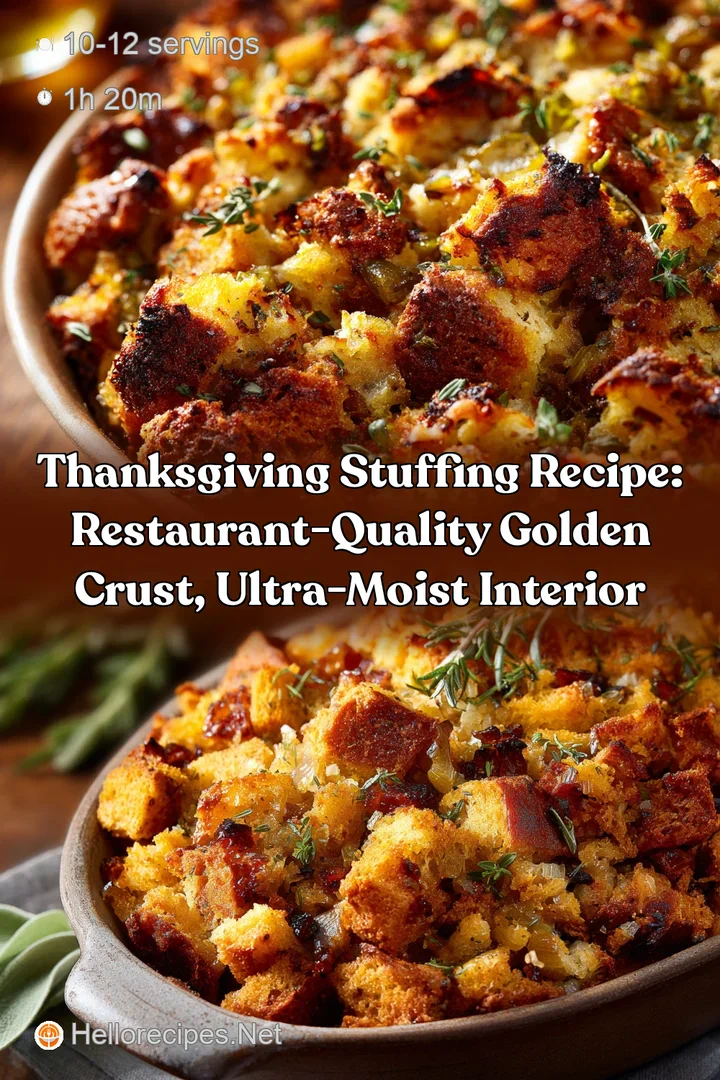
Thanksgiving Stuffing Recipe: the Ultimate Golden-Crusted Sage Butter Dressing
- The Essential Guide to the Best Thanksgiving Stuffing Recipe
- The Science of Perfect Stuffing Texture and Flavor
- What You Need: Essential Ingredients for Golden Stuffing
- Mastering the Method: Step-by-Step Instructions
- Stuffing Success: Expert Tips and Troubleshooting
- Make-Ahead Mastery: Storing and Reheating
- Pairing Your Classic Thanksgiving Stuffing
- Recipe FAQs
- 📝 Recipe Card
The Essential Guide to the Best Thanksgiving Stuffing Recipe
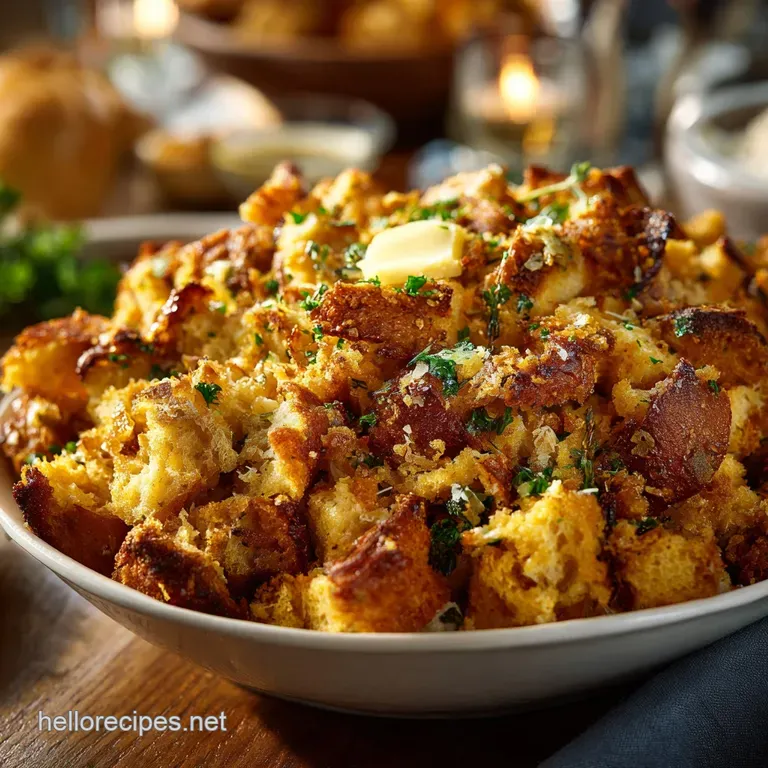
That smell, you know the one. It hits you when you finally open the oven door deeply aromatic sage, rich butter, and toasted bread goodness. The best part of Thanksgiving dinner isn't actually the turkey, honestly; it’s the sound of that glorious, golden brown crust cracking when you scoop out a portion of the stuffing.
This classic Thanksgiving Stuffing Recipe is truly my holiday secret weapon. It uses simple, non-fussy ingredients, and requires zero complicated techniques, making it totally achievable even when your kitchen is pure chaos.
We bake this one outside the bird, achieving a superior, safer texture compared to the traditional stuffed method.
I’ve personally made every mistake possible over the years, from soup like stuffing to bone dry bricks that nobody wanted. Now I know the critical tricks, and I'm sharing the absolute best technique for deeply savory, perfectly golden, and beautifully moist homemade stuffing.
Let’s crack on and guarantee you stuffing perfection this year.
The Science of Perfect Stuffing Texture and Flavor
If you want amazing stuffing, you need to stop thinking of it as a bunch of ingredients thrown together. It's actually a precise structure a savory custard that holds perfectly toasted bread cubes. Understanding a few key points means the difference between fluffy perfection and heavy mush.
Stuffing vs. Dressing: Understanding the Key Difference
The main difference between "stuffing" and "dressing" used to be where it was cooked. If it went inside the bird, it was stuffing; if it was baked in a dish, it was dressing. Now, thanks to food safety (and better crusts!), most modern recipes call for oven baking it in a dish, regardless of the name. I call this stuffing, but trust me, it’s cooked like a dressing. If you are interested in the Southern approach, my recipe for Southern Thanksgiving Menu: Classic Cornbread Dressing Recipe is a beautiful alternative to this bread based classic!
The Core Flavor Profile: Sage, Onion, and Celery Base
This trifecta is the classic foundation for Thanksgiving flavor, known as the American holy trinity of stuffing aromatics. The onion and celery must be cooked low and slow in ample butter until they are completely translucent and tender. This extracts all their earthy sweetness before they even hit the bread.
We add the sage and thyme after the vegetables are off the heat; the residual warmth awakens their oils without burning them.
Equipment Checklist: Tools for Easy Stuffing Prep
You don't need specialized gadgets for this, but size matters, especially when mixing. You absolutely need a baking dish that is large enough to hold the mixture without packing it down too much.
You should also ensure you have an extra large mixing bowl for combining the dry bread with the wet aromatics if you try to mix this in a standard bowl, you’ll crush the bread cubes.
The Critical Role of Properly Dried Bread
This is where 90% of stuffing fails, turning into glue instead of fluffy goodness. Bread is essentially a sponge full of moisture. If you add butter and stock to fresh bread, it immediately collapses and turns heavy. Drying the bread is non-negotiable.
We need the bread to be firm, almost rock hard on the outside, so it can soak up the glorious butter and stock mixture without losing its shape.
Achieving the Golden Crust (The Maillard Reaction)
The Maillard Reaction is just the fancy food science term for browning and flavor development. We achieve this golden, crispy top layer by using plenty of butter and ensuring the final stage of baking is done uncovered at a slightly higher temperature.
The steam from the initial covered bake keeps the inside moist, while the uncovered blast provides that vital, irresistible crunch.
Liquid Ratios for Ultimate Moisture
The goal isn't to soak the bread like French toast. The goal is to hydrate the bread just enough so that when you squeeze a handful, it holds its shape but doesn't drip liquid. If you add all four cups of stock immediately, you risk drowning the mixture.
Always hold back about 1/2 cup of stock until you see how thirsty your specific bread is. Different breads absorb liquid differently, so this needs a visual check, not a strict measurement.
What You Need: Essential Ingredients for Golden Stuffing
We are sticking to the essential components that make this classic dressing unforgettable: good bread, ample butter, and fresh herbs. The sausage adds richness, but the basic structure remains savoury and herbaceous.
Choosing the Right Bread Base (Stale is Best)
Forget flimsy sliced sandwich bread. You need a hearty loaf with a decent structure that can handle soaking. My favourites are Sourdough, a sturdy French baguette, or Challah. They cube beautifully and maintain integrity even when saturated with butter and stock. If you're looking for something with a richer flavor profile, you might enjoy my Grandmas Thanksgiving Stuffing: Golden, Buttery Sage Dressing which focuses heavily on Challah bread and browned butter.
Herb Selection: Fresh vs. Dried Sage and Thyme
Use fresh herbs, period. Dried sage can taste dusty or overpowering, but fresh sage, paired with fresh thyme, brings a bright, earthy warmth that defines the holiday flavor. Yes, it’s an extra chopping step, but it delivers 100% on flavor.
Binder Options: Using Eggs and Stock Correctly
The stock (warmed, please!) provides moisture and flavor, while the lightly beaten eggs act as the binder. When baked, the proteins in the egg set, giving the stuffing that slightly custardy, cohesive structure. If you skip the eggs, the finished stuffing will be more crumbly and loose.
Smart Substitutions for the Thanksgiving Stuffing Recipe
| Ingredient | Standard Amount (Approx.) | Viable Substitute | Notes on Flavor Impact |
|---|---|---|---|
| Unsalted Butter | 225 g (1 cup) | high-quality Olive Oil or rendered Duck Fat | Olive oil reduces richness; Duck fat adds serious savory depth. |
| Hearty Bread | 1.3 kg (3 lb) | Cornbread (dried) | Changes the dish significantly (becomes dressing); requires more liquid. |
| Chicken Stock | 950 ml (4 cups) | Vegetable Stock or Water + Bouillon | Vegetable stock makes it vegetarian but can be less savory. |
| Sausage (Optional) | 150 g | 100g of Pancetta or Smoked Bacon | Provides smokiness instead of the mild fennel notes of Italian sausage. |
Mastering the Method: step-by-step Instructions
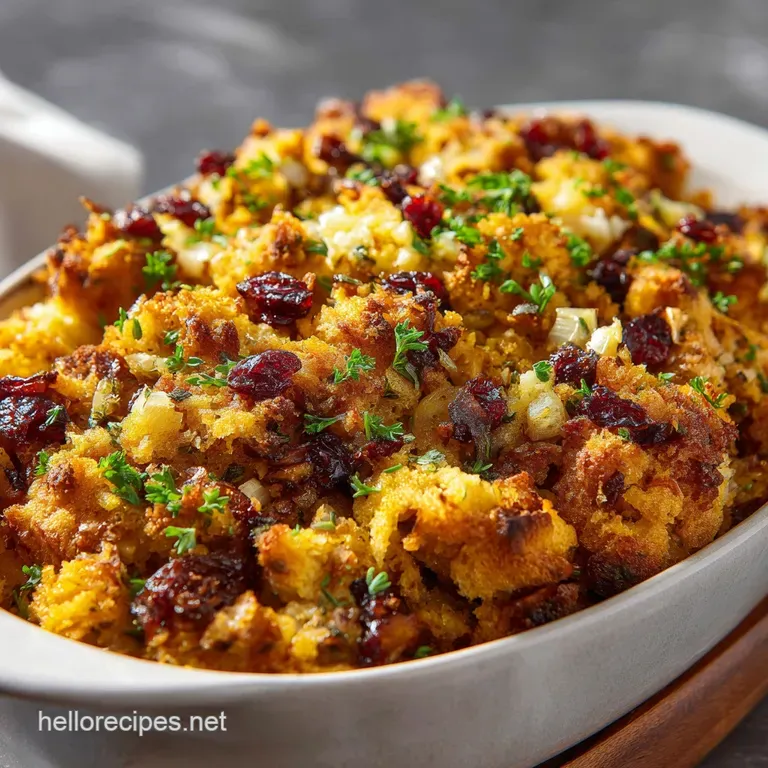
This process is broken down into four easy stages. Just focus on one at a time, and you’ll be golden.
Step 1: Drying and Cubing the Bread Properly
Cube your bread into 1 inch pieces, keeping them relatively uniform for even drying. Spread them out on baking sheets and leave them uncovered on the counter overnight that's the easiest way!
If you forget (I always do!), bake the cubes in a 150°C (300°F) oven for about 15 minutes until they feel genuinely dry and slightly crunchy, tossing them halfway through.
Step 2: Sautéing the Aromatics (Mirepoix Preparation)
Melt that generous amount of butter in your large skillet. Add the finely diced onion and celery, cooking them gently over medium heat until they are completely soft and translucent. This should take 8 to 10 minutes; don't rush this step or you’ll end up with crunchy, raw-tasting veg. If you’re using Italian sausage, brown it first, drain the fat, and set it aside before starting the vegetables. For a truly robust dish, check out my recipe for Sausage Stuffing: Robust, Moist, and Crispy Oven Baked Stuffing .
Step 3: Combining, Resting, and Hydrating the Mixture
Remove the skillet from the heat, then immediately stir in the fresh sage, thyme, salt, and pepper. The heat wakes up those herbs beautifully. Combine the dried bread and cooked aromatics in that huge bowl you prepared. Now, gently pour the warmed stock and egg mixture over the top.
Use a spatula or your clean hands to toss lightly.
Crucial Chef’s Note: Do not add all the stock at once. Add 3 1/2 cups, toss, wait two minutes, and then check the texture. If it still feels dusty and crumbly, add the remaining stock gradually. It should feel like a lightly moistened sponge.
Step 4: Baking for Crispness and Deep Flavor
Transfer the stuffing mixture to the generously buttered baking dish. Remember not to compact it; keep it loose so the heat can circulate. Cover it tightly with foil and bake for 30 minutes to steam the interior, keeping it wonderfully moist.
Then, remove the foil and bake for another 15 to 20 minutes until the top is deeply golden and crispy.
Stuffing Success: Expert Tips and Troubleshooting
How to Prevent a Soggy Bottom
The biggest culprit is over moistening the bread, but the second issue is poor baking dish preparation. Always butter your dish generously ; the butter creates a protective, fatty layer that helps the bottom bread cubes crisp slightly instead of steaming against the glass.
Also, ensure you don't over pack the stuffing into the dish.
Fixing Stuffing That is Too Dry
If you baked your stuffing and it came out too crumbly and dry (it happens!), you have two options. First, generously drizzle a 1/2 cup of warmed stock or gravy over the top immediately after removing it from the oven. Let it rest for 10 minutes to absorb the liquid.
If it’s very dry, try covering it again with foil and letting it rest for 15 minutes so the steam can re-distribute.
Achieving Maximum Surface Crispness
Once you remove the foil, turn the heat up to 200°C (400°F) for the last 15 minutes. Also, don't be afraid to dot the top surface with an extra tablespoon of butter before the final uncovered bake. The fat aids the browning process wonderfully.
The Internal Temperature Check for Safety
Since this recipe includes raw eggs and optional sausage, you must ensure it reaches a safe internal temperature. The center of the stuffing should register 74°C (165° F) on an instant read thermometer. Sticking a thermometer in the middle ensures that custardy egg binder is fully set.
make-ahead Mastery: Storing and Reheating
Thanksgiving is stressful enough without worrying about stuffing on the big day. This recipe is designed to be largely prepped in advance.
Preparing Stuffing Up to 48 Hours in Advance
You can fully mix the bread, aromatics, stock, and egg mixture and put it into the buttered baking dish up to two days before serving. Cover it tightly and store it in the refrigerator.
When you are ready to bake, pull it out of the fridge about an hour ahead of time to let it temper slightly, then proceed with Step 4 (the covered bake).
Freezing Cooked Thanksgiving Stuffing
Yes, it freezes well! Bake and cool the stuffing completely. Slice it into individual serving portions and wrap each portion tightly in plastic wrap, then foil, or place in an airtight container. It keeps beautifully for up to three months. To reheat, thaw overnight in the fridge.
Place the portion in an oven safe dish, add a splash of stock, cover it, and reheat at 180°C (350°F) until warmed through (about 20 minutes).
Pairing Your Classic Thanksgiving Stuffing
This stuffing is rich, buttery, and incredibly savory, making it the perfect counterpoint to simpler vegetable sides. It pairs beautifully with something bright and caramelized, like my recipe for Thanksgiving Vegetable Side Dishes: Maple Brussels Sprouts Squash . Serve it hot, and don't forget the gravy!
Recipe FAQs
Why is my stuffing too dry, and how can I fix it?
Stuffing becomes dry primarily due to insufficient liquid or over baking. Ensure your bread cubes are fully saturated with the butter and broth mixture before baking; the mix should look wet, not just damp.
If you notice dryness during baking, quickly drizzle 1/4 cup of warm broth over the top and recover the dish with foil for 10 minutes to trap steam.
How far ahead of time can I prepare this stuffing mixture?
You can fully assemble the stuffing mixture (including the liquid) up to 24 hours in advance. Store the prepared mixture tightly covered in the refrigerator until ready to bake. Remember to let the cold stuffing sit at room temperature for 30 minutes before baking, and occasionally you may need to add a splash of extra broth before baking as the bread absorbs moisture overnight.
Can I bake this stuffing inside the turkey instead of in a separate dish?
It is generally safer and results in a better texture to bake the stuffing separately (known as "dressing"). Stuffing baked inside the turkey must reach an internal temperature of 165°F (74°C) to be safe, often leading to overcooked outer turkey meat.
Baking separately guarantees the perfect crisp-to-moist ratio and eliminates food safety concerns.
How can I ensure the top gets crispy while the inside remains moist and tender?
Achieving this perfect texture balance requires strategic covering. Bake the stuffing covered with foil for the majority of the cook time (the first 40 50 minutes) to steam the interior ingredients.
For the final 15 20 minutes, remove the foil and increase the oven temperature slightly to develop that beautiful, golden, buttery crust.
Can this recipe be adapted to be gluten-free or vegan?
Absolutely, for a gluten-free version, simply substitute certified gluten-free bread cubes, ensuring they are properly toasted before use. To make the recipe vegan, swap the chicken or turkey broth for a rich vegetable broth and substitute the dairy butter with a high-quality plant based butter alternative.
What is the best way to store and reheat leftover stuffing?
Store leftovers in an airtight container in the refrigerator for up to 3 to 4 days. When reheating, it is best done in the oven at 350°F (175°C), covered with foil to prevent further drying.
For microwave reheating, sprinkle a tablespoon of water or broth over the portion before heating to restore moisture and texture.
Can I use fresh herbs instead of dried herbs in the recipe?
Yes, fresh herbs will provide a superior and more vibrant flavor profile to the final dish. When substituting, use approximately three times the quantity of fresh, finely chopped herbs compared to the dried measurement called for.
Add the fresh herbs just before mixing in the liquid to ensure their aromatic oils are preserved during baking.
Ultimate Golden Thanksgiving Stuffing
Ingredients:
Instructions:
Nutrition Facts:
| Calories | 400 calories |
|---|---|
| Fat | 22.5 g |
| Fiber | 4 g |
