Salted Caramel Honeycrisp Apple Pie: the Definitive Autumn Showstopper
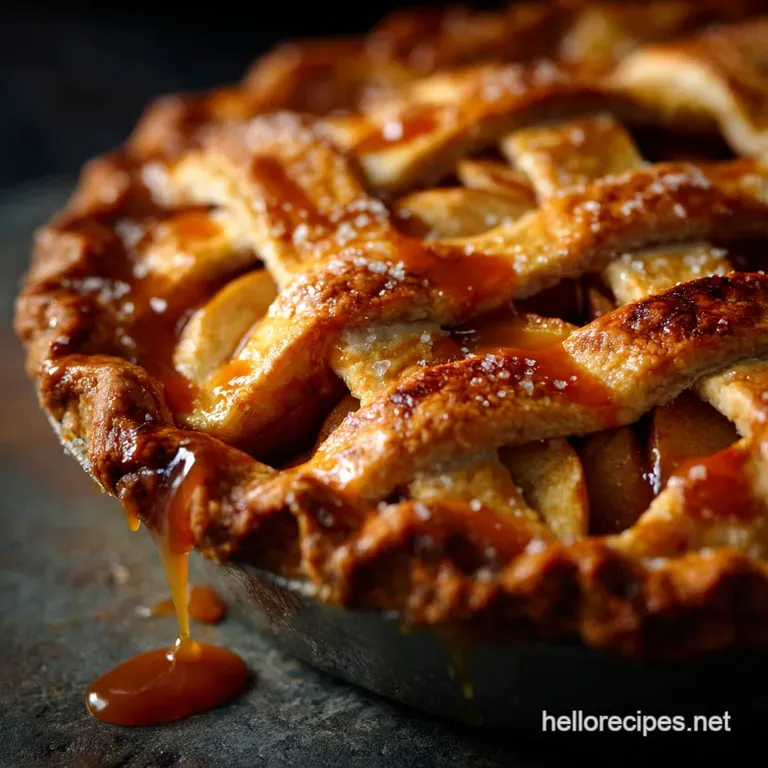
- The Autumn Showstopper: Salted Caramel Honeycrisp Apple Pie
- Achieving Structural Integrity: The Science Behind a Perfect Pie
- Essential Components and Detailed Ingredient Notes
- Phase-by-Phase Mastery: Crafting the Salted Caramel Honeycrisp Filling
- From Oven to Table: The Critical Baking Timeline
- Expert Tips and Troubleshooting for Your Apple Pie Success
- Preserving the Perfection: Storing and Freezing Salted Caramel Honeycrisp Apple Pie
- Complementary Pairings: Elevating Your Salted Caramel Experience
- Recipe FAQs
- 📝 Recipe Card
The Autumn Showstopper: Salted Caramel Honeycrisp Apple Pie
If I could bottle the smell of this pie, I'd be rich, seriously rich. That first whiff of melted butter, deep caramel, and sharp cinnamon instantly makes the whole house feel like pure fall magic.
The texture is just as brilliant: you get the flaky, shattering crust against the almost chewy, richly spiced caramel apples.
Look, making a truly amazing pie seems scary, especially if you have bad memories of pale crusts and runny centers. This recipe is a total lifesaver because we harness the magic of the Honeycrisp apple, ensuring no mushy filling, ever.
It’s an absolute showstopper that requires surprisingly few complex steps, making it perfect for those big Thanksgiving dinners.
I promise you, this isn't the pie that ends up with a soupy middle and a pale, sad crust. We’re doing things the smart way, using simple science and smart cooling techniques to deliver that stunning, perfect dessert. Let’s crack on and get sticky!
Achieving Structural Integrity: The Science Behind a Perfect Pie
This isn't witchcraft; it's basic physics and flavour pairings working together perfectly. The secret to an amazing pie is maintaining structural integrity throughout the bake, from the crust to the core.
We aren't just dumping apples and caramel into a shell; we are building layers of deliciousness that hold up to the heat.
The Magic of Honeycrisp: Choosing the Perfect Baking Apple
Choosing the right apple is 80% of the battle, trust me. We love the Honeycrisp because it has high acidity and a dense, crisp texture that resists turning into applesauce when baked at high heat.
Unlike softer apples, the Honeycrisp maintains its defined slices, giving you a satisfying, chewy bite inside the thick caramel.
Balancing Sweet and Savory: Our Salted Caramel Philosophy
The point of the flaky sea salt is not just to be salty; it’s to cut through the oppressive sweetness. A deep caramel, made properly until it's a rich amber color, already has layers of complexity.
Adding the salt prevents the dessert from tasting flat and heavy, lifting the entire flavour profile so you can eat a second slice.
Pie Anatomy: Understanding the Flaky Crust Foundation
Flakiness comes down to cold butter, minimal handling, and steam release. When those cold butter pockets melt in the oven, the water inside vaporizes instantly, pushing apart the flour layers. This is how you get those beautiful, light, airy gaps in the dough. If you need a refresher on the basics, you should definitely check out my Classic Apple Pie: Grandmas Homemade Flaky Crust Recipe .
Preventing the Soggy Bottom: Starch Management Techniques
Soggy bottoms happen when the liquid from the filling pools at the base of the crust before it has a chance to set. We manage this in two ways: using a generous amount of flour or cornstarch to thicken the caramel juice immediately, and by starting the bake at a high temperature.
The quick burst of heat at 425°F (220°C) flash sets the butter and the base crust.
The Maillard Reaction: Deepening the Caramel Flavor
We are taking the caramel way past the pale blonde stage, close to that rich, deep mahogany color. This is the Maillard Reaction at work, creating hundreds of complex, slightly bitter, toffee like flavour compounds.
Watch it closely, because the difference between nutty complexity and burnt bitterness is about 30 seconds.
Acidity vs. Sweetness: How Honeycrisp Cuts Through the Caramel
This is the beauty of the Honeycrisp. Its natural acidity balances the heavy sugar and butter content of the caramel sauce. Without that tart edge, the pie would just feel cloyingly sweet. The lemon juice we add to the apples helps push that tartness even further.
Essential Components and Detailed Ingredient Notes
We need excellent ingredients because this recipe relies on the pure taste of butter, apples, and that gorgeous salt. Don't skimp on quality here. This is your chance to shine!
The All-Butter Crust: Cold Fats and Gluten Development
Always use unsalted butter, and make sure it is ice cold, diced small. When you add the ice water, stop mixing the second the dough holds together. Overmixing develops tough gluten strands, which will ruin the texture we are going for.
Sourcing the Salt: Flake Sea Salt vs. Kosher Salt
For the caramel sauce, you need flaky sea salt (like Maldon). Its large, irregular crystals give you an intense pop of salinity when you bite into it. Do not substitute fine table salt or kosher salt in the caramel; they dissolve too quickly and won't give you that essential, noticeable crunch.
Filling Variations: When You Can't Find Honeycrisp
While Honeycrisp is my favourite, life happens and sometimes the produce section lets us down. You still need a firm, somewhat tart apple.
| Ingredient | My Preference | Viable Substitute |
|---|---|---|
| Baking Apple | Honeycrisp | A blend of Granny Smith (tart) and Fuji or Braeburn (structure/sweet) |
| Thickener | All-Purpose Flour | Cornstarch (will result in a slightly more glossy filling) |
| Butter (Caramel) | Unsalted Butter | high-quality shortening or full fat coconut cream (for dairy-free) |
| Heavy Cream | Warm Heavy Cream | Evaporated milk (if truly desperate, but texture changes) |
Spices and Aromatics: Enhancing the Caramel Layer
Cinnamon is a given, but don’t skip the freshly grated nutmeg. Trust me on this. It adds a warmth and complexity that elevates the caramel layer from standard sweet to deeply sophisticated. A tiny pinch of ground cardamom also works brilliantly if you're feeling brave.
Phase-by-Phase Mastery: Crafting the Salted Caramel Honeycrisp Filling
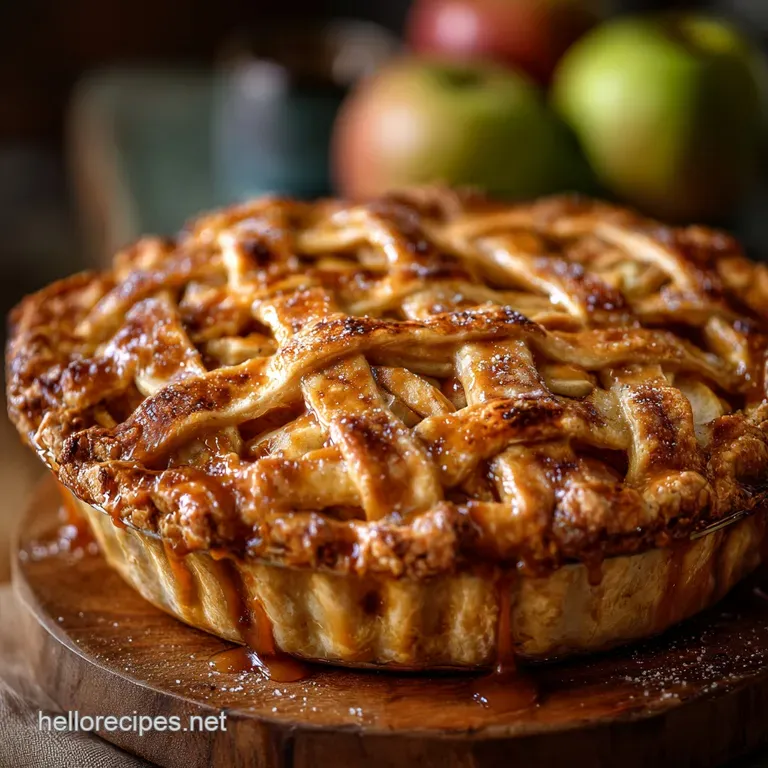
We divide this recipe into distinct phases to ensure nothing is rushed, especially the caramel. Rushing the caramel is where things go wrong, and that’s a sticky mess you don't want to clean up.
Step 1: Achieving the Perfect Amber Caramel Base
Combine your sugar and water in a heavy bottomed pot, swirling occasionally, but do not stir with a utensil. Once the liquid begins to bubble and brown, stand there and watch it. We are looking for a deep, coppery, gorgeous amber color.
When you remove it from the heat, whisk in the room temp butter immediately it will bubble up like a volcano! Finally, slowly pour in the warm heavy cream, whisking continuously. Adding the flaky salt last gives it texture.
Chef's Note: If your caramel seizes (turns into a hard, sugary lump) when adding the cream, put the pot back on very low heat and whisk gently. It will eventually melt back down. Don't panic!
Step 2: Coating the Apples and Preventing Excess Moisture
Once your apples are sliced and tossed with lemon juice, dry ingredients go on first (flour, cinnamon, nutmeg). This creates a protective, absorbent layer. Then, pour the cooled, thick caramel over the top.
Cooling the caramel slightly before mixing is crucial; hot caramel would start to cook the apples immediately, which we don't want.
Step 3: Lattice Weaving and Venting Strategies
Whether you opt for a full top crust or a lattice, you absolutely must vent your pie. As the filling cooks, steam needs to escape, and if it can't, it will blow out the sides or create a soggy steam pocket beneath the crust. If you use a lattice, ensure your strips are rolled evenly and woven tightly.
From Oven to Table: The Critical Baking Timeline
Baking this kind of deep dish pie requires two distinct temperatures. This technique ensures a golden crust without burning the delicate caramel and apples inside.
Temperature Cycling for an Even Bake
Start high, then go low. Baking at 425°F (220°C) for the first 15 minutes is non-negotiable it sets the crust immediately. Then, reduce the temperature to 375°F (190°C) to allow the apples to tenderize and the caramel to bubble gently without scorching the top.
Knowing When the Pie is Truly Done
Don't rely just on the crust color. Your pie is done when the crust is gorgeously golden brown and you see thick, viscous bubbles of caramel sauce escaping from the center vents. If it looks watery, it's not done.
You can also gently pierce a few apples with a skewer through a vent if they are fork tender, you're good.
The Essential Cooling Period: Setting the Filling
This is where I made my biggest mistake as a young cook: cutting the pie too soon. You must cool this pie for a minimum of two hours, or ideally, four hours. The starch (flour/cornstarch) needs time to fully gel and set the liquid caramel.
If you slice it hot, that beautiful filling will run everywhere like a delicious brown river. Patience, my friend.
Expert Tips and Troubleshooting for Your Apple Pie Success
Pie making is about learning from inevitable mishaps. Don't worry if your first one isn't perfect; mine certainly wasn't.
Diagnosing and Fixing a Leaky Crust
If the caramel starts to ooze out early, the crimp wasn't sealed properly, or you overfilled the pie. To fix a leaky edge during baking, quickly pull the pie out, gently push a small, reserved piece of raw dough or an aluminum foil patch over the hole, and return it to the oven immediately.
The Secret to Shiner, Deeper Caramel Flavor
Before baking, brush the top crust with an egg wash (one egg beaten with a splash of water) and sprinkle with coarse sugar. This creates a brilliant, golden shine and adds a textural crunch to the finished crust.
The "Blind Baking" Question: When to Partially Bake the Crust
I usually skip blind baking for this specific recipe because the high initial oven temperature (425°F/220°C) helps. However, if you are using an extremely watery apple blend, blind baking the bottom crust for 10 minutes weighted with pie weights can be excellent insurance against a soggy bottom.
Preserving the Perfection: Storing and Freezing Salted Caramel Honeycrisp Apple Pie
You might not have leftovers, but if you do, storing this pie correctly is key to enjoying it later. Planning ahead is the mark of a great baker! I use similar strategies when preparing my make-ahead Thanksgiving Desserts: The Salted Caramel Apple Crumble Tart .
Shelf Life of Baked vs. Unbaked Pie
- Baked Pie: Cover loosely with foil or plastic wrap once fully cooled. Store at room temperature for up to 2 days . If you need it longer, refrigerate for up to 5 days.
- Unbaked Pie: Assemble the entire pie, brush with egg wash, but do not cut the vents yet. Wrap tightly in several layers of cling film and then foil. Freeze for up to 3 months.
Reheating Slices Without Drying Out the Crust
Place individual slices on a foil lined baking sheet. Tent loosely with foil to protect the edges. Reheat in a preheated oven at 300°F (150°C) for 10– 15 minutes until warmed through. The low, slow reheat keeps the crust from turning rock hard.
Freezing Whole Pies: Best Practices
When baking a frozen, unbaked pie, do not thaw it first! Cut the vents, brush with egg wash, and place directly into a cold oven. Then, turn the oven on to 425°F (220°C). Bake for 20 minutes, then reduce the heat to 375°F (190°C) and bake for an additional 75– 90 minutes.
You may need to shield the edges sooner.
Complementary Pairings: Elevating Your Salted Caramel Experience
Serving this showstopper right is just as important as baking it right.
Serve this gorgeous pie warm with a giant scoop of proper vanilla bean ice cream. The cold, creamy vanilla melts into the warm, salty caramel, creating the perfect temperature and texture contrast. Or, if you want to get truly traditional, a generous drizzle of English pouring custard (crème anglaise) is divine.
For drinks, skip the overly sweet cocktail; a strong black coffee or a crisp, dry sparkling cider cuts through the richness beautifully. It's the perfect ending to any hearty meal.
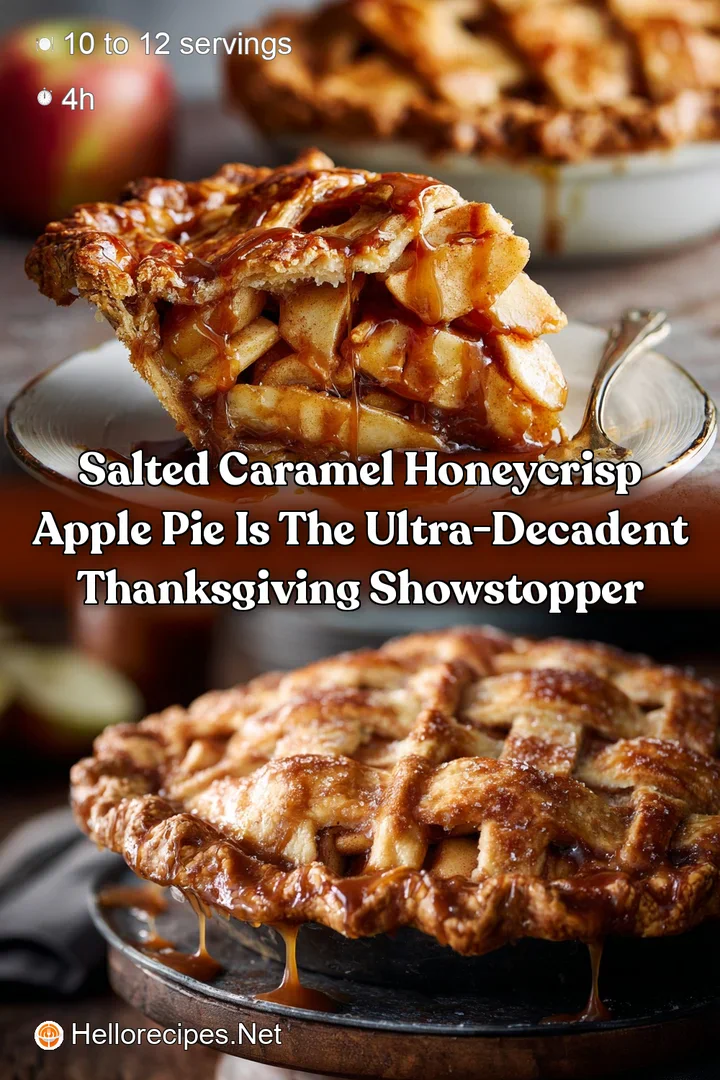
Recipe FAQs
Must I use Honeycrisp apples, or can I substitute them?
Honeycrisp apples are strongly recommended because they hold their shape beautifully and provide the necessary balance of sweetness and tartness without turning to mush. If you must substitute, choose a firm baking apple like Braeburn, Jonagold, or a mix of Granny Smith and Fuji to achieve a similar profile.
How do I prevent a soggy bottom crust, especially with a liquid filling like salted caramel?
The key to a crisp bottom is either blind baking the crust partially before adding the filling or using a moisture barrier. Try brushing the bottom crust with a thin layer of egg white or dusting it lightly with fine almond flour or crushed vanilla wafer crumbs before placing the apple filling.
Why did my salted caramel sauce harden or crystallize when I poured it into the pie?
Caramel hardening often occurs if the sugar was not fully dissolved before boiling, leading to crystallization. Ensure you clean the sides of the saucepan with a wet pastry brush while the sugar dissolves, and avoid stirring the mixture once it begins to boil.
If it hardens in the pie, it usually means the cooking temperature was too low, resulting in a fudge like texture rather than a smooth sauce.
The crust edges are browning too fast; how do I prevent the pie from burning?
This is a common issue with long baking times; use aluminum foil strips to create a protective ring around the exposed edges of the crust. Place this foil ring on the pie approximately halfway through the baking time, removing it only during the last 15 minutes to ensure the edges brown slightly but do not burn.
Can I make this Salted Caramel Honeycrisp Apple Pie ahead of time, and how should I store it?
A fully baked pie can be stored loosely covered at room temperature for up to two days. For longer storage, refrigerate the pie for up to four days, ensuring it has completely cooled before covering to prevent condensation, which can lead to a damp crust.
Can I freeze this pie, and is it better to freeze it baked or unbaked?
This pie freezes wonderfully both ways, though freezing unbaked often yields a fresher result. If freezing unbaked, wrap the assembled pie tightly in plastic wrap and foil; bake it directly from frozen, adding an extra 15 20 minutes to the total baking time.
How can I adapt this recipe to be dairy-free or vegan?
You can easily make this recipe vegan by substituting traditional butter with a high-quality plant based butter substitute in the pie crust. For the caramel sauce, replace the heavy cream with full fat coconut cream or a vegan condensed milk product, maintaining the same volume measurements.
Salted Caramel Honeycrisp Pie Showstopper
Ingredients:
Instructions:
Nutrition Facts:
| Calories | 500 calories |
|---|---|
| Fat | 28 g |
| Fiber | 4 g |
