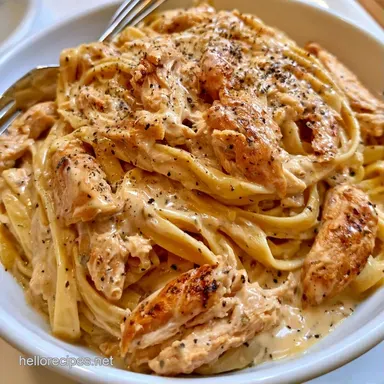
Chicken Alfredo with Rotisserie Chicken

- Prep & Cook: 5 min active + 15 min cooking
- Taste & Feel: Creamy, smooth, and savory
- Ideal for: Quick weekday meals or novice chefs
Have you ever noticed how restaurant pasta seems more unified than home-cooked versions? The secret is usually in the way the sauce adheres to the pasta. This rotisserie chicken alfredo uses a straightforward emulsion to ensure the sauce stays together and doesn't break on the plate.
It's all about balance. The savory, salty depth of the butter and Parmesan is offset by the zing of fresh garlic and a hint of warming nutmeg.
This is an efficient way to enjoy a hearty, filling meal without the hassle of prepping raw poultry for an hour. For the best experience, serve it in wide bowls to retain the warmth.
Recipe Specs
This meal is built for speed. By using rotisserie chicken, we eliminate the need to sauté or roast meat from scratch. The total time is just 20 minutes, making it one of the fastest ways to get a high-protein meal ready.
The key is the timing. You start the pasta first, then build the sauce in a skillet. By the time the noodles are al dente, the sauce is glossy and ready to receive the pasta.
Ingredients and Swaps
For the best result, grate your Parmesan by hand. Pre-shredded cheese is coated in cellulose to prevent clumping, which stops it from melting smoothly into the cream.
- 1 lb (450g) fettuccine pasta
- 1 tbsp (15g) kosher salt Why this? Coarse grains dissolve evenly for seasoned noodles
- 1/2 cup (115g) unsalted butter
- 2 cups (480ml) heavy cream Why this? High fat helps keep the sauce from breaking
- 3 cloves (15g) garlic, minced
- 1 1/2 cups (150g) freshly grated Parmesan cheese
- 1/4 tsp (1.5g) ground nutmeg
- 1/2 tsp (3g) black pepper
- 3 cups (450g) shredded rotisserie chicken
| Original Ingredient | Substitute | Why It Works |
|---|---|---|
| Fettuccine | Penne or Rigatoni | Holds more sauce in the ridges. Note: Adjust cook time to package |
| Heavy Cream | Half and Half | Lighter profile. Note: Sauce will be thinner and less stable |
| Parmesan | Pecorino Romano | Saltier, sharper flavor. Note: Use slightly less to avoid over-salting |
Kitchen Tools Needed
Only two main vessels are necessary. Boil the pasta in a large pot and simmer the sauce in a wide skillet. The wider base is better because it allows the cream to reduce more effectively and makes tossing the pasta spill-free.
When adding the cheese, a whisk is better than a spoon. It helps prevent Parmesan clumps when the cheese hits the hot cream, keeping the texture smooth.
How to Make It
Phase 1: The Pasta Foundation
Bring a large pot of water and 1 tbsp (15g) kosher salt to a rolling boil. Cook 1 lb (450g) fettuccine according to the package directions until al dente. Before draining, set aside 1/2 cup (120ml) of the starchy pasta water.

Phase 2: Creating the Emulsion
While the pasta boils, melt 1/2 cup (115g) unsalted butter in a large skillet, keeping the heat at medium. Stir in 3 cloves (15g) minced garlic and sauté for roughly 1 minute until aromatic but not browned.
Pour in 2 cups (480ml) heavy cream and simmer gently for 3-5 minutes until the sauce looks glossy and slightly thickens.

Phase 3: The Final Fold
Turn the heat to low. Gradually whisk in 1 1/2 cups (150g) freshly grated Parmesan cheese, adding one handful at a time and stirring constantly until smooth. Mix in 1/4 tsp (1.5g) ground nutmeg and 1/2 tsp (3g) black pepper.
Fold in 3 cups (450g) shredded rotisserie chicken, stirring until the meat hits 165°F/74°C internally. Toss in the cooked pasta, adding the reserved pasta water one tablespoon at a time if the sauce needs more fluidity to coat the noodles.

Why This Method Works
- Reserved Starch: The pasta water contains starch that acts as a glue, binding the fat in the butter and cream to the noodles.
- Gradual Cheese: Adding Parmesan slowly at low heat prevents the proteins from tightening and clumping, keeping the sauce smooth.
Avoiding Common Pitfalls

Fixing a Broken Sauce
If the sauce looks oily or separates, the heat was likely too high. Remove the pan from the heat immediately. Whisk in a tablespoon of warm pasta water or a splash of cream to bring the fats back into the emulsion.
Preventing Clumpy Cheese
Rubbery bits of cheese happen when the sauce boils after the cheese is added. Always drop your heat to low before whisking in the Parmesan. If it happens anyway, a quick whisking of a bit more cream can sometimes save it.
Stopping Dry Pasta
Pasta absorbs sauce quickly. If the dish looks dry a few minutes after plating, it is because the noodles soaked up the moisture. Using that reserved pasta water at the very end prevents this.
Storage and Reheating
Keep extras in a closed container in the fridge for up to 3 days. The sauce will likely thicken and almost solidify as it cools.
When reheating, avoid using the microwave on high to keep the cream from splitting. Instead, warm the pasta in a pan over low heat, adding 1-2 tablespoons of milk or water to loosen the sauce and stirring gently until the chicken reaches 165°F/74°C inside.
When reheating cooked leftovers, check with a food thermometer that the centre reaches 165°F (74°C); the appliance temperature and time alone do not confirm this.
Creative Flavor Twists
You can easily pivot this into a chicken alfredo with rotisserie chicken and broccoli. Steam the broccoli separately and fold it in with the chicken. For a different texture, try a baked chicken alfredo with rotisserie chicken by transferring the finished pasta to a baking dish, topping with more cheese, and broiling for 3 minutes.
If you want a heartier bite, use a rotisserie chicken alfredo casserole approach with short pasta like penne. This version holds up better in the oven. For those who like a contrast, I sometimes serve this alongside a garlic herb marinara sauce for dipping toasted bread.
| Variation | Key Change | Result |
|---|---|---|
| Mushroom | Add sautéed cremini | Earthier, woodsy flavor |
| Lemon | Zest of 1 lemon | Brighter, cuts the richness |
| Spinach | Fresh baby spinach | Adds color and nutrients |
The Best Side Dishes
To offset the richness of the chicken alfredo, I recommend a zesty side. A fresh arugula salad with a tangy lemon vinaigrette is a great choice, as the brightness cuts through the creamy sauce.
Roasted asparagus or sautéed kale are also excellent pairings. They add a crisp texture and slight bitterness that keep the dish from feeling too heavy.
High Sodium Content
842 mg of sodium per portion (37% of the daily value)
The American Heart Association suggests limiting sodium intake to 2,300 mg per day
Ways to Lower Sodium
-
Swap the Chicken
Replace the rotisserie chicken with home-cooked, unseasoned chicken breast to avoid the heavy brines and preservatives found in store-bought meat.
-
Limit Pasta Water Salt
Significantly reduce or omit the kosher salt used in the boiling water, as the other ingredients provide enough saltiness.
-
Reduce Parmesan
Use a smaller amount of freshly grated Parmesan or mix it with a bit of unsalted ricotta to maintain the creamy texture with less salt.
-
Add Citrus Zest
Stir in fresh lemon zest at the end of cooking to provide a bright, acidic pop that enhances the flavor without requiring extra salt.
-
Use Fresh Herbs
Incorporate freshly chopped basil or parsley to add aromatic depth and complexity to the cream sauce.
Recipe FAQs
What kind of pasta is best for Alfredo?
Fettuccine is the ideal choice because its wide surface area grips the creamy sauce. Other long, flat noodles also work well if you don't have fettuccine.
Can rotisserie chicken be used to make this simpler?
Yes, this recipe uses pre-cooked rotisserie chicken to keep the process quick. It ensures the entire meal comes together in about 20 minutes.
How do you make baked Alfredo pasta?
Transfer the cooked pasta and sauce into a baking dish and top with extra cheese. Bake the dish until the top is melted and bubbly.
What to do with leftover fettuccine alfredo?
Keep the leftovers in a sealed container in the refrigerator for 3 days. Gently reheat the pasta in a skillet over low heat with a bit of water to restore the sauce's consistency. When reheating cooked leftovers, check with a food thermometer that the centre reaches 165°F (74°C); the appliance temperature and time alone do not confirm this.
Chicken Alfredo with Rotisserie Chicken