Sausage Stuffing: the Ultimate Moist Pub-Style Stuffing for Roast Dinners
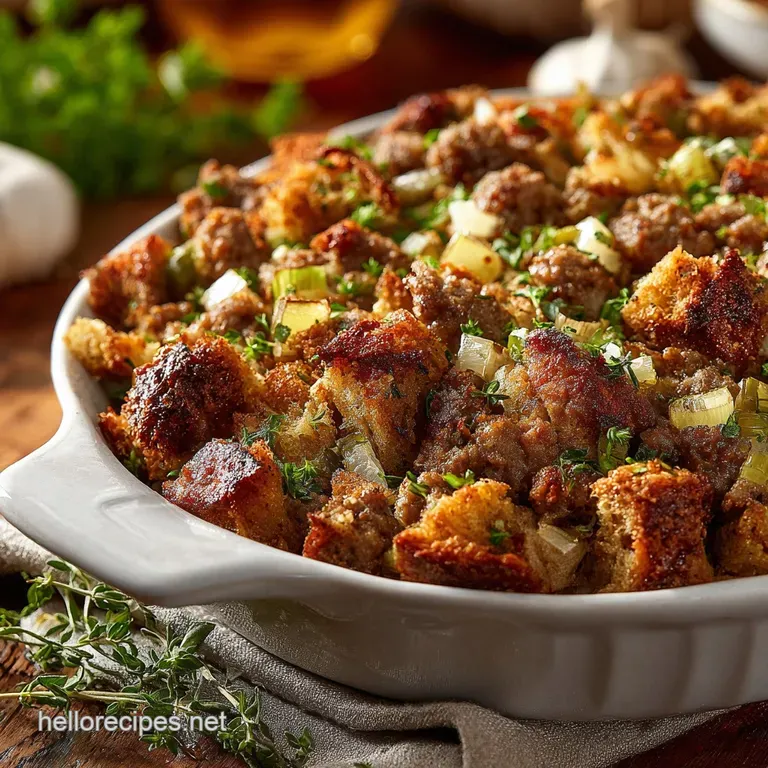
- The Proper Pub-Style Sausage and Sage Stuffing: An Overview
- The Science of Moisture: Why This Sausage Stuffing Recipe Works
- Essential Components: Ingredients for the Ultimate Sausage Stuffing
- Method: Crafting Your Sausage Stuffing, Step-by-Step
- Chef's Troubleshooting: Avoiding Dry Stuffing and Other Mistakes
- Make-Ahead Strategy and Safe Storage for Sausage Stuffing
- Perfect Pairings: What to Serve Alongside Classic Sausage Stuffing
- Recipe FAQs: Sausage Stuffing
- 📝 Recipe Card
The Proper Pub-Style Sausage and Sage Stuffing: An Overview
Can we talk about the smell of sausage stuffing baking? That savory hit of rich pork fat melting into fresh sage, mixing with caramelized onion it’s the scent of the holidays, honestly. It brings people to the kitchen before the main course is even carved.
This isn’t the dry, crumbly stuff your Aunt Mildred made; this is the good stuff, the kind with a moist, buttery centre and a killer crunchy crust.
I consider this the ultimate Thanksgiving or Sunday roast lifesaver because it’s surprisingly fast to assemble once your bread is prepped. Plus, using simple, cheap ingredients like high-quality pork sausage and humble bread elevates the entire meal without breaking the bank.
It holds up beautifully on a crowded plate, serving as the perfect savory sponge for all that glorious gravy.
We are diving deep into the secrets that ensure your stuffing is perfectly seasoned and never, ever soggy. Forget guesswork; we’re using real methods that professional kitchens rely on for the Worlds Best Stuffing Recipe . Get your biggest mixing bowl ready.
The Science of Moisture: Why This Sausage Stuffing Recipe Works
The goal of any Sausage Stuffing Recipe is balancing hydration and fat, which is much more complex than just dumping stock into bread. We want the bread to absorb flavor without becoming a dense, flavorless brick.
Drying the bread is non-negotiable because it creates thousands of tiny sponges ready to soak up the rich, rendered sausage fat and warm stock perfectly. This careful ratio is what keeps the center moist while allowing the top edges to achieve that beautiful golden crispiness we crave.
The Difference Between Stuffing and Dressing (and Why We Care)
Okay, let’s clear this up quickly because it matters for safety and texture. "Stuffing" is technically cooked inside the bird, while "Dressing" is baked separately in a casserole dish. We are making dressing, but we still call it stuffing because that’s what we grew up with.
Baking it separately, as we are doing here, ensures every bit reaches the safe internal temperature of 165°F (74°C). It also guarantees that wonderful, crispy exterior that you just cannot get if you cram it inside a turkey cavity.
Recipe Timeline: Preparation, Resting, and Baking
The most crucial step in this whole process is passive time. You cannot rush the bread drying phase, which takes 12 hours, sometimes up to two days, depending on your climate.
Active preparation chopping the veggies and cooking the Sausage Stuffing foundation only takes about 25 minutes, making this ideal for holiday prepping.
Once it’s mixed, it bakes fairly quickly, and a small resting period allows the flavors to truly set.
Achieving the Perfect Crust-to-Center Ratio
This is the key to the Best Oven Baked Stuffing Recipe . If you bake it uncovered the whole time, the center will dry out before the sausage is fully heated through. We employ the foil method: cover the stuffing tightly for the first 25 minutes of baking.
This traps the steam, ensuring a moist interior. Removing the foil for the last 15 minutes allows those top cubes to toast up beautifully, providing that essential contrast in texture.
The Role of Fat Rendered from high-quality Sausage Meat
Fat is flavor, plain and simple. When you cook the pork sausage meat, it releases delicious rendered fat, which we use to sauté our aromatics. This process is absolutely genius because it means the onion and celery are infused with the savory essence of the sausage before the whole mixture even comes together.
Do NOT drain off all the fat. This rendered fat is a non-negotiable ingredient for truly Moist Thanksgiving Stuffing .
Infusing Depth: Layering Aromatics Before Mixing
We’re not just throwing raw herbs into the mix and hoping for the best. The process involves gently sweating the onions and celery first, then adding the garlic, and finally blooming the fresh sage and thyme in the residual sausage fat.
This layering technique ensures that the herbs release their essential oils, giving us that deep, complex flavor that defines pub-style Stuffing Sausage Recipes . Trust me, taking the extra two minutes here is worth it.
Essential Components: Ingredients for the Ultimate Sausage Stuffing
You only need a few simple things, but their quality really shines through in a recipe like this. Skimp on the sausage, and your whole stuffing will taste flat.
Selecting the Best Pork Sausage Meat (Fat Content Matters)
Go for a high-quality, mild pork sausage, like an English Cumberland or a traditional breakfast blend. If you can’t find sausage meat, simply buy good pork sausages and squeeze them out of their casings. The crucial part? Fat content.
You need fat for flavor and moisture; aim for at least 20 25% fat, because lean ground pork will result in dry stuffing.
Mastering the Bread Base: Cubing, Drying, and Recommended Types
Sourdough or a robust country loaf works best here; those dense breads hold their shape when wet. Soft sandwich bread is too tender and turns instantly gummy when liquid is added. Cut your bread into consistent 1 inch cubes, which ensures even absorption.
If your bread is not stale, you MUST dry it out in the oven first. This is the secret to non-soggy stuffing.
Sage vs. Thyme: Achieving Classic Herb Balance
Sage is the star of this show, especially for Sausage Stuffing For Thanksgiving . We use a generous amount of fresh sage it’s pungent, earthy, and classically paired with pork. Thyme plays the supporting role, adding a subtle woody complexity.
Use fresh herbs; dried herbs just don't offer the same bright flavor in this specific dish.
Dairy and Liquid Options for Optimal Binding
We use a combination of warm stock and eggs for binding. Warm stock, whether chicken or veggie, absorbs faster than cold, preventing the bread from seizing up. The eggs act as a binder, setting the stuffing structure as it bakes.
If you wanted a richer flavor, you could substitute up to half a cup of stock with whole milk or half and half, but honestly, the rendered pork fat provides enough richness.
| Ingredient | Recommended Substitute | Why it Works |
|---|---|---|
| Pork Sausage Meat | Ground Turkey/Chicken + 2 Tbsp extra butter | Must increase fat and salt dramatically. |
| Sourdough Bread | Brioche (if you want sweeter) or Challah | Holds shape well, but use 10% less liquid. |
| Fresh Sage | 1 tsp Dried Rubbed Sage | Use sparingly; dried is much more potent. |
| Chicken Stock | Vegetable Stock or Stock Cube + Water | Adjust salt carefully if using concentrated cubes. |
Method: Crafting Your Sausage Stuffing, step-by-step
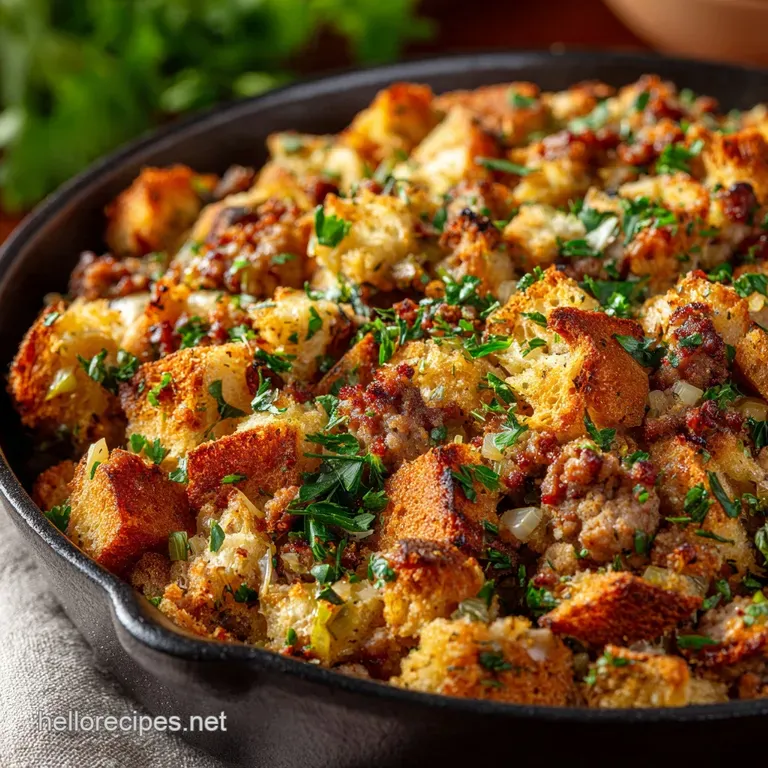
This process is straightforward, but attention to detail is everything. Let's crack on.
Preparing the Flavor Base: Softening and Toasting Aromatics
Start by melting butter and oil in your pan, then gently sauté the onions and celery until they are completely translucent not brown! This takes time, about 8– 10 minutes, but soft vegetables melt into the stuffing, adding moisture.
After adding garlic and the herbs, cook them just until they smell nutty and fragrant, maybe 60 seconds total.
The Importance of Thorough Hand Mixing (But Not Overworking)
Once the cooked sausage mixture and aromatics are in the bowl with the dry bread, pour the warm liquid over slowly. Now, gently use your hands. You want to feel the moisture distributing evenly, making sure no dry pockets of bread remain at the bottom. Mix just until combined.
Over mixing is the primary cause of gummy stuffing; the egg and starches activate too much, turning the whole thing rubbery.
Chef's Note: Let the mixture rest in the bowl for 5 minutes after mixing. This allows the dry bread to soak up the liquid fully, giving you a chance to truly judge the final texture. If it still looks dry, add another splash of stock.
Stuffing Balls vs. Baking in a Dish: Density Control
This recipe is structured for baking in a casserole dish, which naturally creates a perfect moist-to-crisp ratio. If you prefer Sausage Stuffing Balls Recipe (great for presentation!), know that they will bake faster, usually 25– 30 minutes, and may need a higher quantity of binder (add one extra egg).
Roll them lightly; do not compact them, or they’ll be dense hockey pucks.
Achieving Internal Temperature for Food Safety and Texture
Because we are using raw pork, the internal temperature must reach 165°F (74°C) for food safety. The foil method ensures this heat penetrates the center effectively. A temperature check with a probe thermometer is highly recommended, especially if you have a deep baking dish.
This also guarantees the eggs are properly set, giving you that lovely, springy texture rather than a mushy one.
Chef's Troubleshooting: Avoiding Dry Stuffing and Other Mistakes
We all mess up sometimes, don’t worry! I once used stale bread that wasn't properly dried, resulting in what I affectionately called "sausage porridge." Learn from my culinary crimes.
The Over Mixing Trap: Preventing a Rubber Texture
If you treat this like bread dough and stir vigorously, you develop the gluten in the bread and activate the starch in the eggs, leading to a gluey, rubbery texture. Use a folding motion, bringing the bottom ingredients up to the top. Stop mixing the second all the bread cubes look adequately moistened.
Adjusting for Too Much or Too Little Liquid
If your stuffing looks like soup, don’t panic. Gently fold in another ½ cup of freshly dried bread cubes (toss them in the toaster oven for 5 minutes). If your mix feels too dry, add warm stock slowly, 2 tablespoons at a time, until the mixture clumps slightly when squeezed.
It should feel moist, not wet.
The Foil Secret: Ensuring Moisture During Baking
As mentioned earlier, the foil is your shield. Always cover the stuffing tightly for the first two-thirds of the baking time. This prevents the surface area from losing moisture too quickly while allowing the heat to build up inside.
Only remove the foil in the final 15– 20 minutes to achieve that beautiful, crunchy top layer.
make-ahead Strategy and Safe Storage for Sausage Stuffing
This is truly one of the best holiday dishes because it loves to be prepared in advance. Why stress on the big day?
How Far in Advance Can You Prepare the Mix?
You can prepare the entire mixed stuffing and transfer it to the casserole dish up to 24 hours in advance . Cover it tightly with plastic wrap and refrigerate.
When you’re ready to bake, let it sit on the counter for about 30 minutes to take the chill off before placing it in the hot oven. You may need an extra 5– 10 minutes of baking time if it’s going in cold.
Safe Freezing and Reheating Instructions
You bet this freezes well! Unbaked stuffing (the mix in the casserole dish) can be frozen tightly wrapped in foil and plastic wrap for up to 3 months . Thaw it overnight in the fridge and bake as directed. Cooked stuffing can also be frozen, stored in airtight containers for 3 months.
To reheat, thaw overnight and bake at 350°F (175°C) covered, until piping hot (about 25 minutes).
Shelf Life of Cooked Stuffing
Provided the stuffing reached 165°F (74°C) during cooking and was rapidly cooled and refrigerated after the meal, cooked Sausage Stuffing Casserole will last safely in the fridge for 3 4 days .
Always use an airtight container to prevent it from absorbing fridge smells.
Perfect Pairings: What to Serve Alongside Classic Sausage Stuffing
This robust, savory stuffing needs equally confident companions. Naturally, it’s mandatory alongside any roast bird, but it pairs wonderfully with rich gravies. If you want a fun variation for the holiday, I highly recommend checking out my Thanksgiving Recipes: Proper Sausage Stuffing with Cider Sage next year for a deeper, earthier flavor profile. A tart side, like cranberry sauce or quick pickled red onions, is essential to cut through the richness of the sausage and butter.
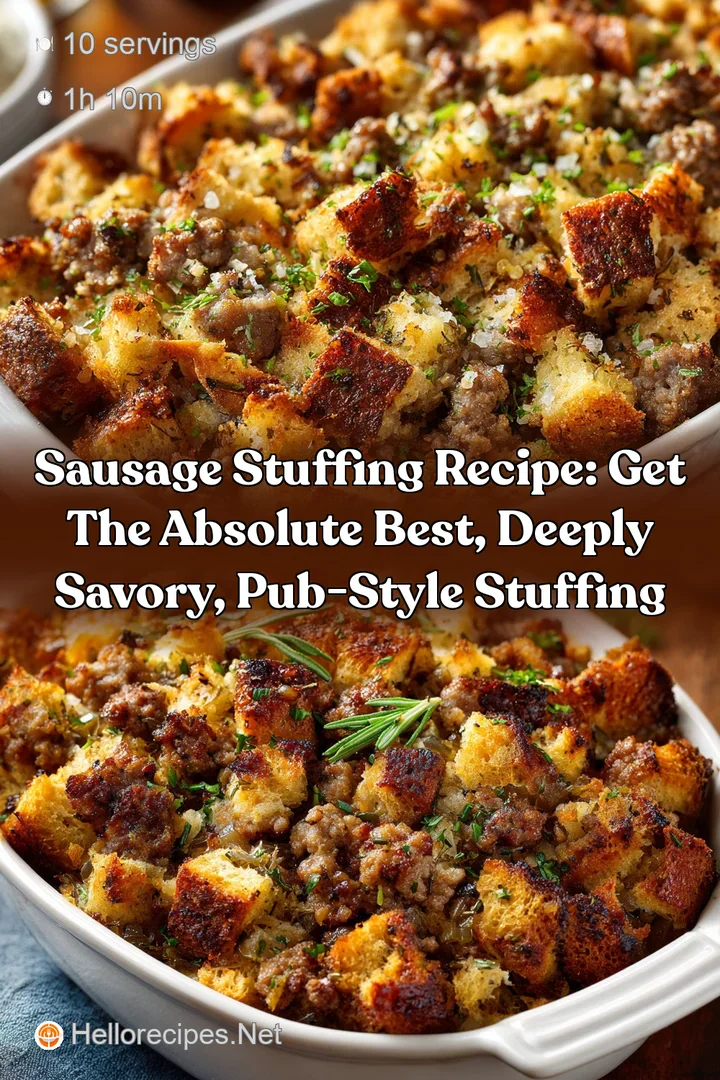
Recipe FAQs: Sausage Stuffing
Q1: Why did my sausage stuffing turn out dry and crumbly?
Stuffing dryness is usually caused by insufficient liquid (stock or butter) or overbaking. Ensure the bread mixture is thoroughly moistened and tacky before baking, not just damp. If the stuffing is already baked, try adding a few tablespoons of warm stock or melted butter and tenting it tightly with foil to reintroduce moisture before reheating.
Q2: Can I prepare the sausage stuffing mixture ahead of time?
Yes, assembling the stuffing ahead is a great time saver, especially for large meals. You can mix all the ingredients (up to the point of baking) and store the mixture, covered tightly, in the refrigerator for up to 24 hours.
When baking cold stuffing, you may need to add an extra 5-10 minutes to the total baking time to ensure it heats through evenly.
Q3: What internal temperature should the stuffing reach to be safe for consumption?
Whether baked separately or inside a bird, stuffing must reach a minimum internal temperature of 165°F (74°C) to be considered safe. Use an instant read thermometer inserted into the center of the dish to verify the temperature.
If baked in a casserole, this temperature is usually achieved after 30-40 minutes at 375°F (190°C).
Q4: How can I adjust the recipe for a gluten-free diet?
You can easily substitute the traditional bread with cubed gluten-free bread. It is essential that the GF bread is slightly dried out (stale or lightly toasted) before mixing to prevent the final product from becoming mushy.
Note that GF bread often absorbs liquid quicker, so monitor the amount of stock you add initially.
Q5: What are some excellent additions for flavor variations?
For seasonal complexity, try folding in 1/2 cup of dried cranberries and 1/4 cup of toasted pecans or walnuts. If you prefer a richer, savory note, incorporate some finely chopped, sautéed mushrooms or a splash of good quality sherry deglazed with the onions.
Q6: What is the best way to store and reheat leftover stuffing?
Store leftovers in an airtight container in the refrigerator for up to 3 days, or freeze for up to 3 months. To reheat, place the desired portion in an oven safe dish, add a teaspoon of stock or butter for moisture, and cover with foil. Reheat at 350°F (175°C) until piping hot throughout.
Q7: My sausage meat tasted too salty. How can I balance the flavor?
If the mixture is too salty before baking, introduce balancing flavors like sweetness or acidity. Try adding a tablespoon of honey, some grated apple, or a splash of fresh lemon juice or cider vinegar to cut through the heavy sodium. Ensure you thoroughly mix the new ingredients before testing again.
Proper Pub Style Sausage Stuffing
Ingredients:
Instructions:
Nutrition Facts:
| Calories | 96 kcal |
|---|---|
| Protein | 1.0 g |
| Fat | 4.0 g |
| Carbs | 15.0 g |
