Mini Beef Wellington Bites the Classic Recipe for Elegant Dinner Party Food

- Showstopping Canapés: Mastering the Mini Wellington Format
- Curating Your Culinary Canvas: Essential Components for the Bites
- The Assembly Process: Step and by-Step Guide to Mini Beef Wellington Bites
- Enhancing the Flavour Profile: Pairing Sauces
- Preparation Strategies and Troubleshooting
- Customizing Your Mini Beef Wellington Bites
- Recipe FAQs
- 📝 Recipe Card
Showstopping Canapés: Mastering the Mini Wellington Format
Look, I’m going to be completely honest with you. The full and sized Beef Wellington? It’s magnificent, yes, but it is also a kitchen stress and test designed by the culinary gods to make you sweat.
Getting that centrepiece perfect medium and rare beef, crisp pastry, zero leaks is a commitment.
But these Mini Beef Wellington Bites? They give you all the luxurious, deeply savoury flavour, the gorgeous flaky crust, and the serious dinner and party bragging rights, without the risk of accidentally steaming a $100 hunk of tenderloin into submission.
We are talking about true elegance delivered in one perfectly calibrated, two and bite package. Trust me, these Mini Wellington Appetizers are the ones to master.
Decoding the Wellington: What Makes This Dish Iconic?
The Wellington, at its heart, is a flavour sandwich built for texture. It’s the meeting point of rich, perfectly cooked beef and flaky, butter and laden puff pastry. The genius isn’t just in the ingredients, though. It’s in the layering.
You have the silky, rare beef, insulated by the earthy, concentrated mushroom duxelles, which is then wrapped in salty prosciutto. The prosciutto is the real hero here; it not only adds great flavour, but it's our essential moisture shield. That’s how we ensure a golden crust, not a pale, sad, soggy mess.
The Advantage of Appetizer Sizing and Perfect Portions
Why go mini? Simple: portion control is guaranteed. When you cut a huge Wellington, it often looks messy, and getting a uniform slice for everyone is tough. When you serve Mini Beef Wellington Bites, every single one is identical.
It’s fantastic Beef Party Food because you just arrange them artfully on a platter and everyone gets the complete experience.
Plus, cooking 12 small cubes of beef is far less intimidating than cooking a whole roast. We are searing for colour and flavour, not for actual doneness, which massively reduces the pressure. These luxurious appetizers are foolproof if you stick to the rules especially the chilling rules.
Curating Your Culinary Canvas: Essential Components for the Bites
Right then, let's talk ingredients. We aren't cutting corners here. This is a special occasion bite, and we want every mouthful to sing.
Selecting the Perfect Cut: Why Tenderloin is Non and Negotiable
We’re making Mini Beef Wellington Bites. The beef tenderloin (or filet mignon) is expensive, I know, but for this specific application, it’s truly non and negotiable. Why? Because we need a cut that remains incredibly tender even when cut into a tiny cube and briefly cooked.
If you use a sirloin or flank steak, those small cubes will be chewy and tough by the time the pastry has browned.
The key here is uniformity. Once you trim the beef, cut the tenderloin into 12 small cubes that are roughly the same size aim for about 1.5 cm squares. This ensures they all cook to the same temperature in the oven.
Crafting the Umami Core: Perfecting the Mushroom Duxelles
The duxelles is the secret sauce. It’s what delivers that deep, earthy, mysterious umami flavour that makes people wonder what exactly is in there.
We use finely chopped mushrooms (Cremini or button are fine), shallots, and thyme. But the actual crucial part? You have to cook it down until it is bone and dry. Seriously. You are not making a sauté; you are concentrating the essence of mushroom.
If you lift your spoon and see any liquid pooling, you haven't cooked it long enough. I once rushed this step, and when I baked the Wellingtons, they all wept mushroom water into the pastry. Never again.
This is a crucial note: The duxelles must be cooled completely before touching the pastry. Warm fillings melt butter, and melted butter equals flat, heavy pastry.
Tools of the Trade: Equipment Checklist for Assembly
You don't need a lot of gear, but a few specific items make assembly easier:
- Round Cutter: A 2 inch (5 cm) biscuit or pastry cutter is essential for clean, uniform discs.
- Heavy Pan: Cast iron is best for searing because it holds high heat, giving you a deep crust in seconds.
- Pastry Brush: You need a good one for that rich egg wash.
- Thermometer: An instant and read thermometer is your best friend. Sticking it into one bite will tell you exactly where the rest are.
The Assembly Process: Step and by-Step Guide to Mini Beef Wellington Bites
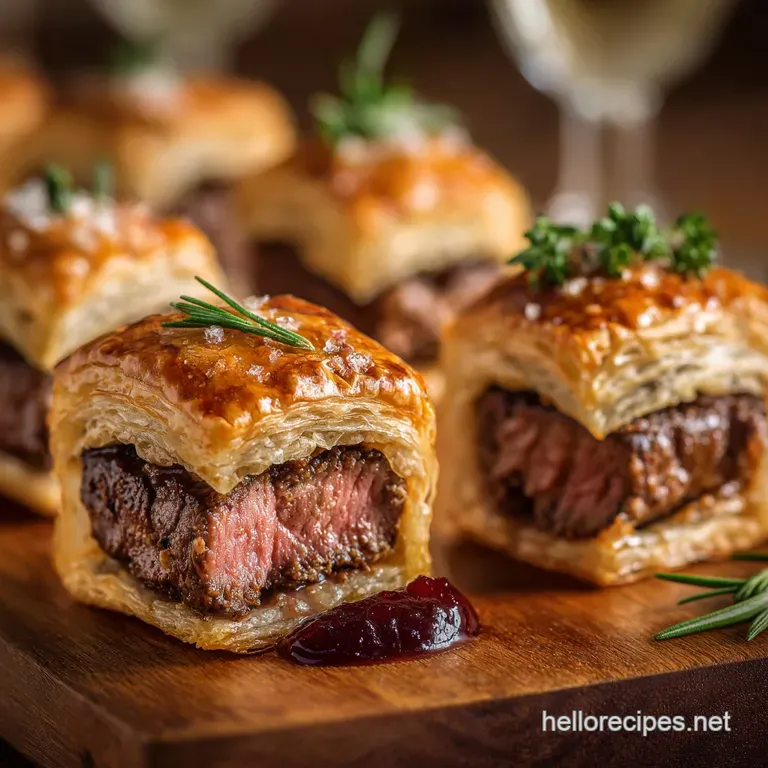
Let’s crack on with the fun part: wrapping. This is where the magic happens, but remember to keep things cold .
Phase 1: Sealing the Succulence (Searing and Chilling)
First, the sear. This needs to be done on high heat and fast. We are aiming for a beautiful deep brown crust on all sides, but the internal temperature should barely budge. Thirty seconds per side, max. You want the middle to still be truly raw.
Once seared, this is my big tip:
- Cool immediately: Get those beef cubes onto a wire rack to stop the residual cooking.
- Quick Freeze: Pop the rack into the freezer for 10 minutes.
- Chill: Move them to the fridge for another 20 minutes.
The beef must be icy cold before you wrap it. If it’s even slightly warm, it will start melting the prosciutto fat and the butter in the puff pastry before it hits the oven. Disaster averted!
Phase 2: The Prosciutto Mantle and Pastry Encasement
The prosciutto acts as our moisture buffer and seasoning layer.
- Roll out your cold puff pastry (all and butter is best) and cut out 24 discs.
- Lay one disc down and lightly brush the edges with your egg wash (yolk + water).
- Place half a strip of prosciutto on the disc.
- Top with a tiny dollop of the cooled duxelles about half a teaspoon is plenty.
- Place the chilled beef cube right on top of the duxelles.
- Cap it with the second pastry disc, pressing firmly around the edges.
- Use a fork to crimp all the way around, creating a decorative seal that locks in the filling. This prevents steam from bursting your seam.
Phase 3: Achieving the Golden Crust (Baking Temperatures and Time)
We bake these at a relatively high temperature (200°C / 400°F). Why? Because we need the pastry to puff and brown quickly before the heat can penetrate and overcook the tiny piece of beef.
Brush the tops generously with the egg wash. This is what gives us that incredible deep golden shine. Bake for 18 to 20 minutes. If you are aiming for medium and rare, pull them out when the internal temperature of the beef hits 55°C (130°F).
Related Recipes Worth Trying
- Mini Pumpkin Pies Easy Recipe for Perfectly Spiced Mini Desserts — Make perfect Mini Pumpkin Pies every time with this easy recipe These individual treats are baked right in a cupcake tin featuring a flaky crust and richly...
- Beef Bourguignon Deep Rich Classic French Stew Recipe — Beef Bourguignon is the ultimate French Beef Stew transformed by slow cooking into forktender perfection This Bourguignon Recipe is rich deep and worth the time
- RestaurantStyle Beef and Broccoli Stir Fry Tender Glossy — Achieve meltinyourmouth tender beef using the essential velveting technique This classic Beef and Broccoli Stir Fry recipe delivers a perfect glossy sauce...
Enhancing the Flavour Profile: Pairing Sauces
These Mini Beef Wellington Bites are rich. They need a sauce that is either deeply savoury or sharp and tangy to cut through the pastry fat.
A Quick Red Wine Reduction
This takes about ten minutes and makes you look like a pro.
- Sauté one minced shallot in butter until soft.
- Add 1 cup of dry red wine (like Merlot) and reduce it until it’s almost gone maybe a tablespoon left.
- Pour in 1 cup of good quality beef stock and simmer until it coats the back of a spoon. Season with salt and pepper. Done. It's brilliant.
Mustard Crème Fraîche Dipping Sauce
If you want something fast and tangy, this is the way to go. Mix equal parts crème fraîche (or full and fat sour cream) with grainy Dijon mustard. Add a tiny squeeze of lemon juice and a pinch of salt. Serve this cool, which contrasts beautifully with the warm, flaky pastry.
Preparation Strategies and Troubleshooting
Make and Ahead Marvels: Preparing the Bites in Advance
This is where Mini Wellingtons truly shine as elegant dinner party food. You can assemble them completely, right up to the point where they are egg and washed and crimped, and then freeze them!
- Chilling (Up to 24 hours): Place the assembled bites on the baking sheet and cover tightly with plastic wrap. Store in the fridge. Bake straight from the fridge (add 2– 3 minutes to the cook time).
- Freezing (Up to 1 month): Freeze the assembled, unbaked bites on the baking sheet until solid. Transfer them to a freezer bag. When ready to bake, place them back on a parchment and lined sheet, egg wash them, and bake from frozen. This method takes about 30– 35 minutes.
Expert Tips for Avoiding a Soggy Bottom
Sogginess is the nemesis of all Wellingtons. If you follow these three rules, you win:
- Dry Duxelles: Cook it until you think you’ve cooked it too much. Then cook it some more.
- The Prosciutto Barrier: This salty meat physically separates the moisture and rich beef/duxelles from the bottom pastry layer. Don't skip it.
- Cold Pastry: If the pastry is warm, the butter melts before it hits the oven, leaving you with a dense, grease and soaked base.
Handling Leftovers: Proper Storage and Reheating Guidelines
If, somehow, you have any of these classic Mini Beef Wellington Bites left over, store them in an airtight container in the fridge for up to three days.
Do not microwave them. They will become rubbery and sad. The only way to save the pastry is to reheat them quickly in the oven or an air fryer at 180°C (350°F) for about 8– 10 minutes, until the pastry is crisp again.
Customizing Your Mini Beef Wellington Bites
There’s always room to play, especially if you have guests who don't eat beef, or if you prefer a different kind of flavour punch.
Pâté vs. Duxelles: Taste Variations
Traditionally, a full Beef Wellington often includes a layer of foie gras or duck pâté spread between the duxelles and the beef.
| Filling Option | Flavour Profile | Texture Impact |
|---|---|---|
| Duxelles (Mushroom) | Earthy, Umami and rich, Savoury | Acts as a moisture sponge; dense and sticky. |
| Pâté (Duck/Chicken) | Rich, Fatty, Smooth, Gamey | Adds richness but potentially more moisture; skip the prosciutto if using a very thick, dry pâté. |
If you use pâté, use a very thin layer a little goes a long way!
Lighter Alternatives: Swapping the Beef Cut
If beef tenderloin is just too much of an investment right now, or if you want some lighter Beef Party Appetizers, you absolutely can swap the protein.
- Pork Fillet: Use cubes of pork tenderloin. It’s a great replacement, but ensure it's cooked to at least 63°C (145°F) internal temperature.
- Seared Duck Breast: Cut seared duck breast into small cubes. This is incredibly luxurious and pairs perfectly with sherry in the duxelles.
- Root Vegetables (Vegan Option): For a vegetarian or vegan version, use parboiled cubes of heavily seasoned sweet potato or firm roasted beetroot. Just make sure they are completely dry before wrapping. You can still call them Mini Wellington Bites, they just happen to be plant and based.

Recipe FAQs
My pastry always ends up with a soggy bottom; what's the secret to keeping these Mini Beef Wellington Bites cracking and flaky?
The key to avoiding a soggy bottom is eliminating moisture: you must cook the mushroom duxelles until it is bone dry and ensure the beef cubes are completely chilled before assembly. Also, make sure your assembled bites are ice-cold when they hit the hot oven, which ensures a fast, flaky rise.
Can I prep these ahead of time if I'm entertaining, or do they need to be fresh?
Absolutely; for easy entertaining, assemble the bites completely, brush them with egg wash, and store them uncooked and well covered in the fridge for up to 24 hours before baking.
You can also flash freeze the assembled bites before the egg wash, then bake them straight from the freezer, adding about 5 10 minutes to the cook time.
How do I ensure the beef is a perfect medium rare without the puff pastry burning?
The initial quick sear, followed by thorough chilling, creates a crucial temperature buffer; trust the recipe’s 18 20 minute bake time, as the high heat ensures a rapid pastry lift while the beef slowly warms to medium rare.
If you want to be precise, aim for an internal temperature of 55°C (130°F) using a thin probe thermometer.
What can I use instead of prosciutto if I need an alternative moisture barrier?
The prosciutto is essential for both flavour and providing a salt based moisture barrier, but you can swap it for Parma ham or a very thin crêpe (pancake) wrapped tightly around the duxelles and beef.
If opting for a vegetarian version, a thin layer of grilled aubergine (eggplant) or courgette (zucchini) works well.
What’s the best way to store and reheat leftover Mini Beef Wellington Bites if we haven't scoffed the lot?
Leftovers should be stored in an airtight container in the fridge for 2 3 days, though they are best eaten fresh; to revive the pastry, reheat them in a preheated oven at 180°C (350°F) for about 10 minutes until piping hot and the crust is crisp again never use a microwave, or you'll lose that
lovely flake.
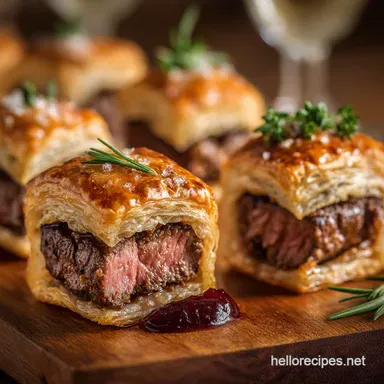
Mini Beef Wellington Bites Recipe
Ingredients:
Instructions:
Nutrition Facts:
| Calories | 511 kcal |
|---|---|
| Protein | 15.7 g |
| Fat | 28.1 g |
| Carbs | 38.1 g |
