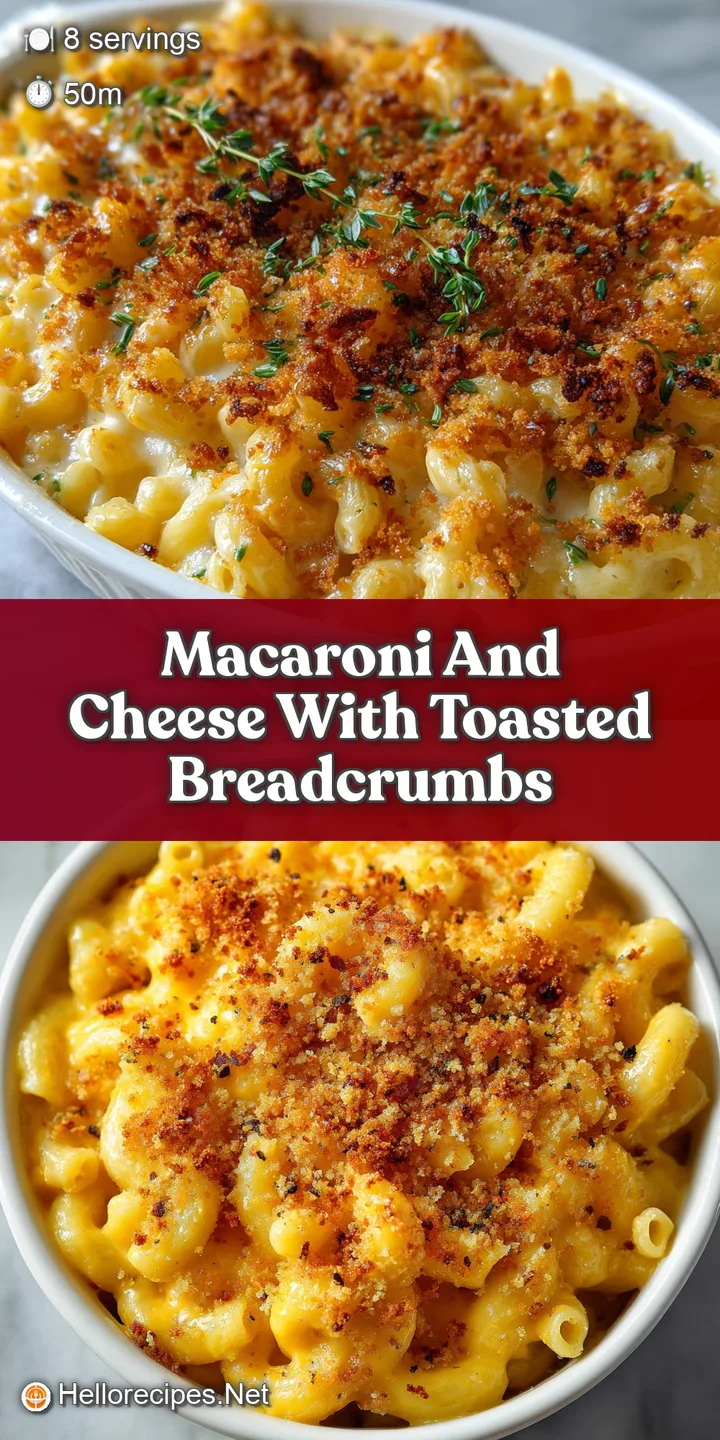
Macaroni and Cheese with Toasted Breadcrumbs
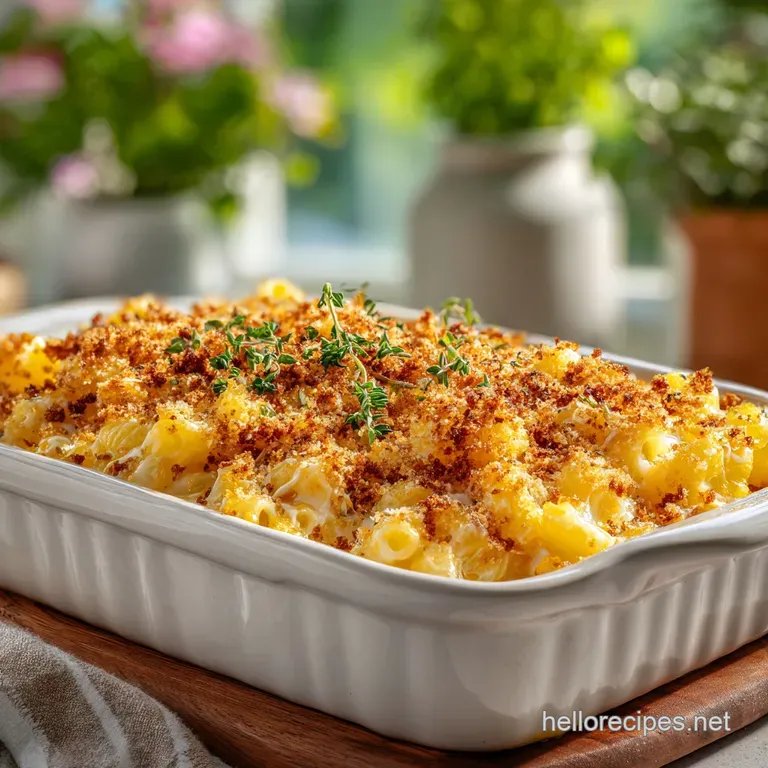
- Time: Active 20 minutes, Passive 30 minutes, Total 50 minutes
- Flavor/Texture Hook: Shattering panko crust meets a molten, nutty five cheese matrix
- Perfect for: High impact dinner parties or sustainable meal prepping
- Create an Irresistible Macaroni and Cheese with Toasted Breadcrumbs
- The Molecular Logic of a Stable Emulsion
- The Essential Elements for Your Five Cheese Masterpiece
- Sustainable Hardware for Consistent Thermal Distribution
- The Choreography of Starch and Molten Dairy
- Precision Calibration for a Flawless Texture
- Creative Modifications for the Modern Gastronomist
- Logic Behind Common Kitchen Myths
- Sustainable Preservation and Thermal Restoration Strategies
- Curation of Sides for a Balanced Plate
- High in Sodium
- Recipe FAQs
- 📝 Recipe Card
Imagine the sound of a heavy spoon breaking through a golden, butter lacquered crust that distinct shatter followed by the sight of steam rising from a velvety, pale gold sauce. Most versions of this dish end up either oily or dry, but we're focusing on a specific contrast of textures.
This Cheese Macaroni and Cheese with Toasted Breadcrumbs recipe will become your new go to comfort food. It isn't just a meal; it’s a lesson in gastronomy that bridges the gap between simple home cooking and professional sauce work.
We’ve all been there: you spend forty dollars on artisanal cheeses only to have the sauce turn grainy or the noodles turn to mush. I’ve made those mistakes so you don’t have to. We are moving away from the heavy, one dimensional blocks of orange cheddar.
Instead, we’re using an innovative blend of five different fats and proteins to create a sauce that is as stable as it is rich.
You can expect a dish where every bite offers a different sensation. There is the sharp bite of aged cheddar, the melt on-your tongue silkiness of Fontina, and the earthy, sophisticated hum of Gruyère. If you’re in a massive rush and need a simpler approach, you might prefer The Emergency Cheesy recipe, but for those who want to master the art of the roux based bake, let’s get into the mechanics of why this works.
Create an Irresistible Macaroni and Cheese with Toasted Breadcrumbs
The secret to this dish lies in the structural integrity of the cheese sauce. When we bake macaroni, we are essentially subjecting a delicate emulsion to high heat. Most recipes fail because the fat separates from the protein, leaving you with a greasy puddle.
We prevent this by creating a robust roux and choosing cheeses with varied melting points.
The Science of Why it WorksEmulsification Stability: The starch in the flour coats the fat globules in the cheese, preventing them from coalescing and breaking the sauce.
Starch Retrogradation: Par boiling the pasta ensures it finishes hydrating inside the sauce, absorbing flavor without losing its "al dente" structure.
Precision Checkpoints
- Pasta Texture: Boil the 1 lb elbow macaroni for exactly 2 minutes less than the package instructions.
- Sauce Thickness: The roux thickened milk should coat the back of a spoon and hold a clear line when a finger is swiped through it.
- Bake Temperature: Maintain a steady 375°F (190°C) to brown the panko without over cooking the dairy.
Chef’s Note: To maximize the impact of your spices, toast the nutmeg and smoked paprika in the dry pan for 30 seconds before adding the butter. This releases the essential oils and creates a much deeper aromatic profile.
The Molecular Logic of a Stable Emulsion
When we talk about Macaroni and Cheese with Toasted Breadcrumbs, we are talking about a contrast between hydration and dehydration. The pasta and sauce represent a high moisture environment, while the breadcrumbs are a dry, crisp heat shield. This contrast is what makes the dish addictive.
- Casein Binding: Sodium citrate (found naturally in some cheeses but reinforced by our roux) helps keep the proteins from clumping together.
- Maillard Reaction: The toasted breadcrumbs achieve their deep bronze color and nutty aroma through the reaction of amino acids and reducing sugars.
- Carryover Cooking: The pasta continues to soften for 5-10 minutes after leaving the oven; pulling it early is non negotiable for texture.
For those who enjoy a deeper custard style bake, check out My Extra Creamy recipe, which uses a slightly different ratio of liquids. However, the version we are making today focuses on a more fluid, silky "stovetop to oven" style.
| Feature | Hand Grated Fresh Cheese | Pre Shredded Shortcut |
|---|---|---|
| Melting Point | Lower and more uniform | Higher due to starch coating |
| Texture | Silky and cohesive | Often grainy or "stringy" |
| Flavor Impact | Pure and intense | Muted by anti caking agents |
The difference in quality is staggering. Pre shredded cheese is coated in potato starch or cellulose to prevent clumping in the bag, but that same coating prevents the cheese from fully integrating into your sauce. Trust me, the 5 minutes of grating time is the best investment you'll make today.
The Essential Elements for Your Five Cheese Masterpiece
Each ingredient in this list serves a specific functional purpose. We aren't just adding cheese for the sake of it; we are building a flavor map. The cheddar provides the sharp acidity, the Fontina and Mozzarella offer the stretch and creaminess, the Gruyère brings a sophisticated nuttiness, and the Parmigiano Reggiano adds a salty, umami punch.
- 1 lb elbow macaroni: Why this? The tubular shape traps the sauce inside every single bite. (Substitute: Cavatappi or Shells)
- 2 tsp kosher salt: For the pasta water.
- 4 tbsp unsalted butter: The base for our flavor building roux.
- 1/4 cup all purpose flour: The structural binder for our emulsion.
- 4 cups whole milk: Why this? Higher fat content ensures a richer, more stable cheese sauce.
- 2 cups sharp yellow cheddar: Hand grated for maximum melt.
- 1 cup Gruyère: Hand grated for a complex, earthy note.
- 1 cup Fontina: Hand grated for a buttery, silky texture.
- 1/2 cup low moisture mozzarella: Shredded for that classic cheese pull.
- 1/4 cup Parmigiano Reggiano: Finely grated for a salty crust.
- 1/2 tsp ground nutmeg: Why this? Nutmeg bridges the gap between the dairy and the pasta.
- 1/2 tsp smoked paprika: For a subtle, innovative hint of fire.
- 1.5 cups panko breadcrumbs: For a superior, shattering crunch.
- 3 tbsp unsalted butter (melted): To coat the breadcrumbs for browning.
- 1 tbsp fresh parsley: Finely chopped for a bright, herbal finish.
- 1/2 tsp garlic powder: To infuse the topping with savory depth.
- Salt and black pepper: To taste.
| Ingredient | Science Role | Pro Secret |
|---|---|---|
| Whole Milk | Liquid base for suspension | Heat it to lukewarm before adding to the roux to prevent lumps. |
| Gruyère | Flavor complexity | Use an aged Gruyère (Cave aged) for a more intense, crystalline texture. |
| All Purpose Flour | Starch thickener | Cook the flour/butter mixture for 2 mins to remove the "raw" grain taste. |
By understanding these components, you can troubleshoot any issues before they even happen. If your sauce feels too thick, a splash of the pasta cooking water can loosen it without thinning the flavor profile.
Sustainable Hardware for Consistent Thermal Distribution
To achieve the perfect Macaroni and Cheese with Toasted Breadcrumbs, your choice of equipment matters as much as your choice of cheese. We want a vessel that holds heat evenly, preventing the edges from burning while the center remains cold.
- Large Pot (6-8 quarts): To boil the pasta with plenty of room to move.
- Heavy Bottomed Saucepan or Dutch Oven: Essential for the roux; thin pans will scorch the milk.
- Whisk: To ensure a lump free, silky sauce.
- Box Grater: For processing the cheese (your arm workout for the day).
- 9x13 inch Baking Dish: A ceramic or glass dish provides even heat distribution.
- Small Skillet: For pre toasting the breadcrumbs.
Chef’s Tip: Freeze your blocks of cheese for 10-15 minutes before grating. It firms up the fats and prevents the cheese from clumping or melting against the heat of your hands.
The Choreography of Starch and Molten Dairy
This process is about timing. We want the sauce ready the moment the pasta finishes its par boil. This ensures the pasta is still hot and porous, ready to soak up that five cheese blend.
- Par boil the macaroni. Cook the 1 lb elbow macaroni in salted water for 2 minutes less than the box instructions until it has a firm bite. Note: It will finish cooking in the oven.
- Toast the breadcrumbs. In a small skillet, combine 1.5 cups panko with 3 tbsp melted butter, garlic powder, and parsley until they smell like toasted nuts.
- Prepare the roux. Melt 4 tbsp butter in your large saucepan over medium heat, then whisk in 1/4 cup flour until the mixture bubbles and turns a light sand color.
- Incorporate the milk. Gradually whisk in 4 cups whole milk, a half cup at a time, until the sauce is thickened and velvety.
- Season the base. Stir in the nutmeg, smoked paprika, salt, and pepper.
- Melt the matrix. Remove from heat and fold in the cheddar, Gruyère, Fontina, and mozzarella until the sauce is smooth and glossy.
- Combine. Toss the par boiled pasta into the cheese sauce, stirring gently to coat every tube.
- Assemble. Pour the mixture into your baking dish and top evenly with the Parmigiano Reggiano and the toasted panko mixture.
- Bake. Place in a 375°F oven for 25-30 minutes until the edges are bubbling and the top is a deep golden brown.
- Rest. Let it sit for 5 minutes before serving to allow the sauce to set.
Precision Calibration for a Flawless Texture
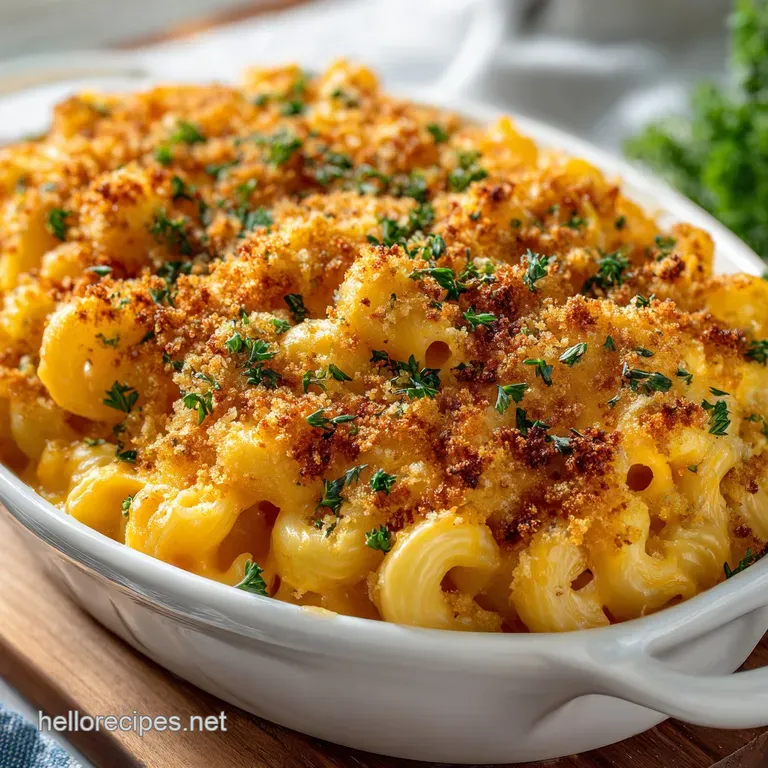
Even with the best instructions, the kitchen can be unpredictable. Managing the moisture levels and the heat is the difference between a good dish and a great one.
Avoiding Grainy Cheese Sauce
The most common issue with and Cheese with Toasted Breadcrumbs is a grainy texture. This happens when the cheese is added to a sauce that is boiling. The high heat causes the proteins in the cheese to tighten and squeeze out the fat. Always remove your white sauce from the heat before adding your cheese.
| Problem | Root Cause | Solution |
|---|---|---|
| Oily Sauce | Cheese overheated and broke | Whisk in a tablespoon of cold milk to re emulsify. |
| Mushy Pasta | Pasta was overcooked initially | Reduce boiling time by 3-4 minutes next time. |
| Soggy Topping | Breadcrumbs weren't pre toasted | Always brown the panko in butter before adding to the dish. |
Preventing Mushy Pasta
Pasta continues to absorb liquid as it bakes. If you cook it to "perfect" on the stove, it will be overcooked by the time the cheese is bubbly. Aim for a texture that is slightly too firm to eat think of it as "semi raw" in the very center.
This allows the pasta to drink in the cheese sauce rather than just sitting in it.
Creative Modifications for the Modern Gastronomist
Innovation is about taking a classic and Cheese with Toasted Breadcrumbs and finding ways to make it your own. Whether you're looking for a sustainable swap or a flavor upgrade, these variations maintain the integrity of the dish.
- The Smoky Kick: Add a tablespoon of chopped chipotle in adobo to the roux for a lingering, smoky heat that cuts through the rich dairy.
- Sophisticated Herbaceousness: Substitute the parsley for fresh sage and add a splash of white truffle oil just before serving.
- Sustainable Protein: Fold in roasted cauliflower florets or sautéed leeks to increase the fiber content and reduce the caloric density per serving.
If you want a specific outcome, try these:
- For a deeper crust: Switch the panko for crushed sourdough pretzels for a saltier, denser crunch.
- For a sharper profile: Swap the Fontina for an extra sharp white cheddar or even a touch of Gorgonzola for the bold.
- For a lighter feel: Use 2% milk and substitute half the butter with a high-quality olive oil.
Logic Behind Common Kitchen Myths
Myth: Searing your breadcrumbs is optional. Truth: If you put raw breadcrumbs on top of a moist sauce and bake them, they will absorb the steam from the sauce and become soggy. Pre toasting them in fat creates a waterproof barrier of toasted starch, ensuring they stay crisp.
Myth: You need to rinse the pasta. Truth: Rinsing pasta removes the surface starch. In this recipe, we actually want that starch because it helps the cheese sauce cling to the noodles. Drain the pasta and move it directly into the sauce.
Myth: High fat always means more flavor. Truth: While fat carries flavor, too much can mask the nuances of the aged cheeses. The 4 cup milk ratio is calculated to provide enough volume to hydrate the pasta without overwhelming the palate with grease.
Sustainable Preservation and Thermal Restoration Strategies
Cooking sustainably means respecting your leftovers. Because this dish is so rich, it actually holds up remarkably well if handled with care.
- Storage: Store in an airtight container in the fridge for up to 4 days.
- Freezing: You can freeze the baked dish for up to 3 months. To reheat, thaw in the fridge overnight and bake at 350°F with a splash of milk added to the corner of the dish to restore moisture.
- Zero Waste: Don't throw away those cheese rinds! If you have the hard rind of the Parmigiano Reggiano, drop it into the milk as it simmers for the sauce. It infuses the base with incredible depth. Also, use stale bread ends to make your own "panko" by pulsing them in a processor and drying them in a low oven.
Curation of Sides for a Balanced Plate
Since this Macaroni and Cheese with Toasted Breadcrumbs is an absolute powerhouse of richness, you want to pair it with something that offers high acidity and brightness. Think of it like a seesaw; the heavy dairy needs a sharp counterweight.
- Bright Green Salad: A simple arugula salad with a lemon shallot vinaigrette is the perfect companion.
- Roasted Vegetables: Charred broccolini with red pepper flakes adds a much needed bitter note.
- Crispy Proteins: If serving as a side, this pairs beautifully with a simple roasted chicken or a piece of pan seared salmon.
Whatever you choose, remember that the "Cheese with Toasted Breadcrumbs" is the star of the show. Keep the sides simple and focused on fresh, sustainable ingredients to let the five cheese matrix shine. Enjoy the process the smell of that bubbling cheese and toasted garlic is half the reward!
High in Sodium
840 mg mg of sodium per serving (37% of daily value)
The American Heart Association recommends limiting sodium intake to about 2,300mg per day for most adults. For those with high blood pressure, the recommendation is 1,500mg per day.
Tips to Reduce Sodium in Your Mac & Cheese
-
Reduce Cheese Quantity-15%
Cheeses, especially aged varieties like Parmigiano Reggiano, are a significant source of sodium. Try reducing the overall amount of cheese by approximately 25% or substituting some with a lower sodium option like fresh mozzarella or ricotta.
-
Omit Added Salt-25%
The recipe calls for kosher salt and 'salt and pepper to taste' at the end. Eliminating the added salt during cooking and relying on the cheese for flavor will significantly reduce the sodium content. Skip salting the pasta water entirely.
-
Use Low-Sodium Milk-10%
While whole milk itself doesn't contribute an enormous amount of sodium, opting for low-sodium or even unsalted dairy alternatives can contribute to an overall decrease, especially with the volume used in this recipe. Consider a blend of unsweetened almond milk (unsalted!) and regular milk.
-
Limit Garlic Powder-5%
Garlic powder, while flavorful, contributes to the overall sodium content. Reduce the quantity used or opt for fresh garlic minced finely for a similar flavor profile with less sodium.
-
Embrace Herbs & Spices
Experiment with a variety of fresh and dried herbs and spices to enhance the flavor of your mac & cheese without relying on salt. Try adding a pinch of red pepper flakes for some heat, or some dried thyme for an earthy flavour.
Recipe FAQs
Can I use pre-shredded cheese for the sauce?
No, hand grating is strongly recommended. Pre-shredded cheese contains anti caking agents like cellulose or potato starch, which prevent it from melting smoothly into a cohesive sauce, often resulting in a grainy texture.
Why is my cheese sauce grainy?
This typically happens from adding cheese to a sauce that is too hot. High temperatures cause the proteins in the cheese to seize and expel fat, leading to a separated and grainy texture. Remove the sauce from heat before incorporating the cheese.
How do I prevent the pasta from becoming mushy when baked?
Par-boil the pasta until it's slightly undercooked. Aim for a texture that is still firm to the bite, as it will continue to cook and absorb sauce in the oven. Reducing the boiling time by 3-4 minutes is a good rule of thumb.
What’s the best way to ensure a crispy topping?
Always pre-toast your breadcrumbs in melted butter. This step creates a waterproof barrier of toasted starch, preventing them from absorbing moisture from the sauce and becoming soggy during baking. If you enjoyed mastering texture control here, see how the same principle applies to creating a shatteringly crisp crust in our The Ultimate Crispy Chicken Parmesan Recipe Comfort Food Classic.
Can I make this dish ahead of time?
Yes, but keep the breadcrumbs separate. You can assemble the pasta and sauce up to 24 hours in advance and store it in the refrigerator. Add the toasted breadcrumb mixture just before baking to maintain its crispness.
My sauce seems too thick; how can I fix it?
Add a splash of hot liquid. You can loosen a thick cheese sauce by whisking in a little bit of hot milk or, even better, some of the starchy pasta cooking water. This helps to re-emulsify the sauce without diluting its flavor.
What side dishes pair well with rich macaroni and cheese?
Opt for bright, acidic sides to balance the richness. A simple green salad with a vinaigrette or some lightly seasoned roasted vegetables like broccolini work wonderfully. This dish also pairs nicely with a simple protein, similar to how a good side complements the flavors in our Hackbällchen in Cremiger Sauce mit Kartoffelpüree German Comfort Food.
Macaroni Cheese Breadcrumbs
Ingredients:
Instructions:
Nutrition Facts:
| Calories | 643 kcal |
|---|---|
| Protein | 28.3 g |
| Fat | 33.1 g |
| Carbs | 57.4 g |
| Fiber | 2.5 g |
| Sugar | 6.2 g |
| Sodium | 840 mg |
