Low Carb Cheesy Pesto Baked Chicken
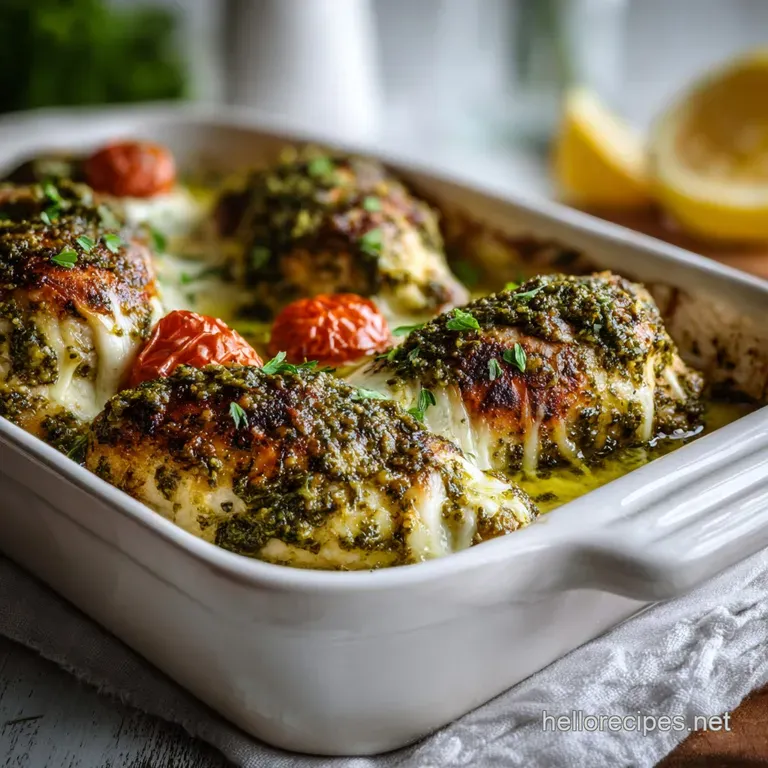
- Time: Active 10 minutes, Passive 20 minutes, Total 30 minutes
- Flavor/Texture Hook: Velvety, melted mozzarella with a nutty pesto finish
- Perfect for: High protein meal prep and efficient weeknight dining
- Creating low carb cheesy pesto baked chicken
- Science of Fat and Flavor
- Molecular Analysis of Ingredients
- Essential Culinary Technology Needed
- Precise Thermal Execution Steps
- Troubleshooting and Texture Correction
- Adaptation and Flavor Swaps
- Preserving Quality and Freshness
- Debunking Kitchen Myths
- Gastronomy and Presentation Strategy
- High in Sodium
- Recipe FAQs
- 📝 Recipe Card
Creating low carb cheesy pesto baked chicken
The kitchen currently smells like a high end Italian bistro thanks to the volatile oils in the basil hitting the heat. I remember the first time I attempted this, I just slapped some cold pesto on a dry breast and hoped for the best.
The result was a greasy, separated mess where the oil pooled at the bottom and the meat felt like sawdust. It was a failure of gastronomy, honestly.
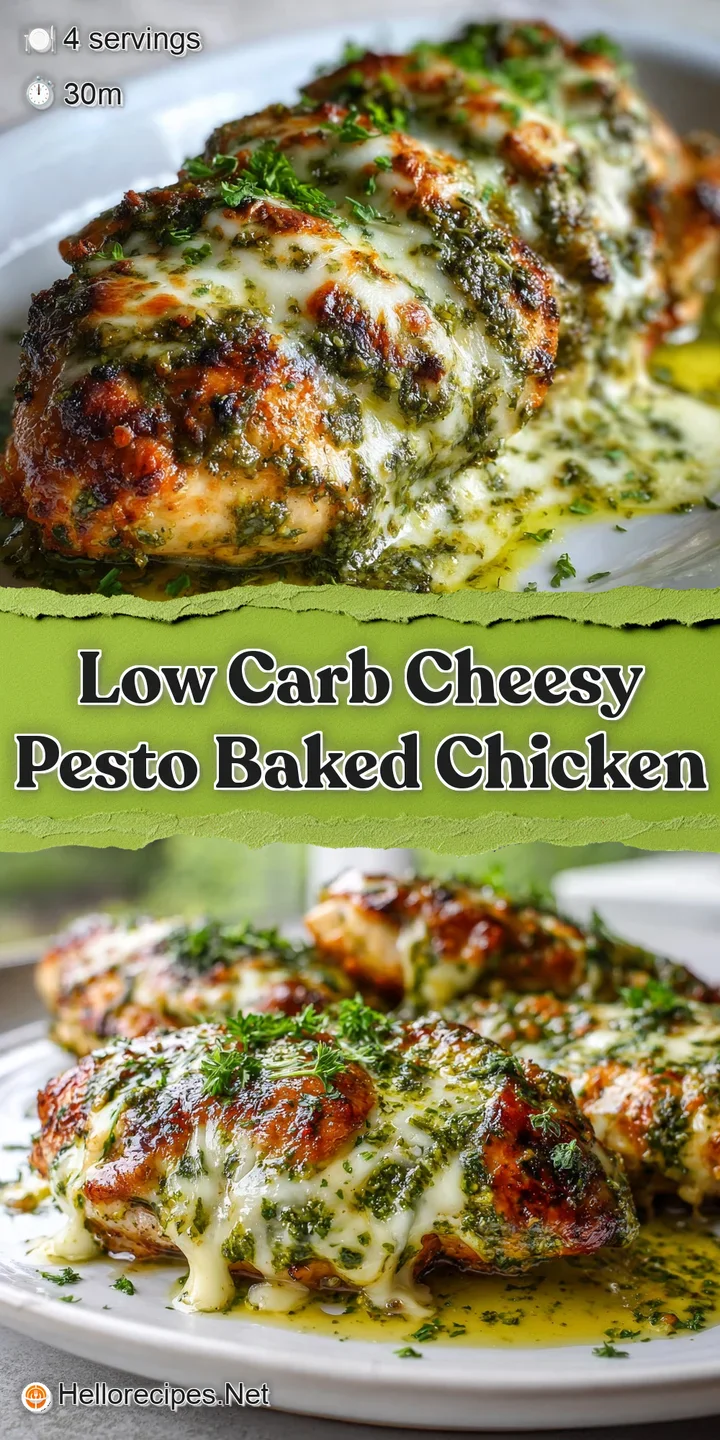
But we've evolved. By integrating a bit of softened cream cheese as a stabilizer, we’ve essentially created a flavor lock system that prevents the chicken from drying out. When you pull this out of the oven, the mozzarella shouldn't just be melted, it should be bubbling with golden brown spots that shatter slightly when your fork hits them.
We’re focusing on a sustainable approach to the weeknight dinner, using high-quality fats to provide satiety without the carb heavy lifting. This isn't just about mixing ingredients, it's about understanding how the moisture in the 1.5 lbs chicken breast interacts with the lipids in the 0.5 cup basil pesto.
Trust me, once you see that velvety cheese pull, you won't go back to plain baked poultry.
Science of Fat and Flavor
Lipid Barrier Protection: The oil in the pesto creates a hydrophobic coating on the protein fibers, which significantly slows down the evaporation of internal moisture during the baking process.
Emulsion Stability: Using room temperature 2 oz cream cheese provides a casein rich binder that prevents the pesto oil from separating, ensuring a cohesive sauce rather than a greasy puddle.
Thermodynamic Carryover: Removing the chicken at an internal temperature of 160°F allows the residual heat to finish the job, reaching the safe 165°F mark without tightening the protein into a rubbery texture.
| Thickness | Internal Temp | Rest Time | Visual Cue |
|---|---|---|---|
| 0.5 inch | 160°F | 3 minutes | Juices run clear when pierced |
| 1 inch | 160°F | 5 minutes | Surface cheese is deeply browned |
| 1.5 inches | 160°F | 7 minutes | Meat feels firm but yields to pressure |
This table helps you navigate the varying sizes of chicken breasts often found in modern grocery stores. Achieving the right internal temperature is the difference between a silky bite and one that requires a gallon of water to swallow. For those who want to innovate further with their protein prep, the technique of achieving a perfect crust is similar to what I use in my How to Make recipe.
Molecular Analysis of Ingredients
Understanding the components of your dish allows you to manipulate the final texture with precision. We aren't just cooking, we're applying edible technology to transform raw protein.
| Ingredient | Science Role | Pro Secret |
|---|---|---|
| Basil Pesto | Flavor Carrier | Use refrigerated pesto for a more vibrant, less oxidized green hue |
| Cream Cheese | Emulsifying Agent | Ensure it's fully softened to prevent white clumps in the green sauce |
| Mozzarella | Structural Elasticity | Grate your own from a block to avoid cellulose anti caking agents |
| Chicken Breast | Protein Base | Pat dry with paper towels to ensure the fat emulsion actually sticks |
Essential Culinary Technology Needed
You don't need a laboratory, but specific tools will ensure your 1.5 lbs chicken breast cooks evenly. A heavy bottomed glass or ceramic baking dish is vital here because it retains heat more steadily than thin metal, which can scorch the delicate 0.5 cup basil pesto.
I also recommend a digital meat thermometer. In the world of gastronomy, guessing is the enemy of quality. If you want that velvety finish, you need to know exactly when the center hits that 160°F mark.
Finally, a small whisk or silicone spatula is necessary to blend the 2 oz cream cheese into the pesto until it reaches a uniform, pale green consistency.
Precise Thermal Execution Steps
- Preheat the Environment. Set your oven to 400°F (200°C). Note: High heat is necessary to brown the cheese before the chicken overcooks.
- Prepare the Protein. Pat 1.5 lbs chicken breast dry and season with 0.5 tsp kosher salt and 0.25 tsp cracked black pepper. Note: Removing surface moisture allows the fat based pesto to adhere better.
- Stabilize the Base. In a small bowl, whisk 0.5 cup basil pesto with 2 oz room temperature cream cheese.
- Arrange the Components. Place chicken in a single layer in the baking dish. The sizzle shouldn't happen yet, as the dish is cold.
- Apply the Emulsion. Spread the pesto mixture evenly over each breast, covering the top completely.
- Layer the Texture. Sprinkle 1.5 cups shredded mozzarella and 0.25 cup freshly grated parmesan over the top.
- Bake for Success. Place in the center rack for 18-20 minutes. Bake until the cheese is bubbling and showing golden spots.
- Verify the Internal Metrics. Insert a thermometer into the thickest part; it should read 160°F.
- The Rest Phase. Remove from the oven and let sit for 5 minutes. Wait until the aroma of toasted cheese settles.
- Final Garnish. Add fresh basil leaves if you have them for a burst of fresh volatile oils.
Chef's Tip: If you want an even deeper flavor profile, try adding a teaspoon of lemon zest to the pesto mixture. It cuts through the heavy lipids and provides a bright, acidic contrast that wakes up the palate.
Troubleshooting and Texture Correction
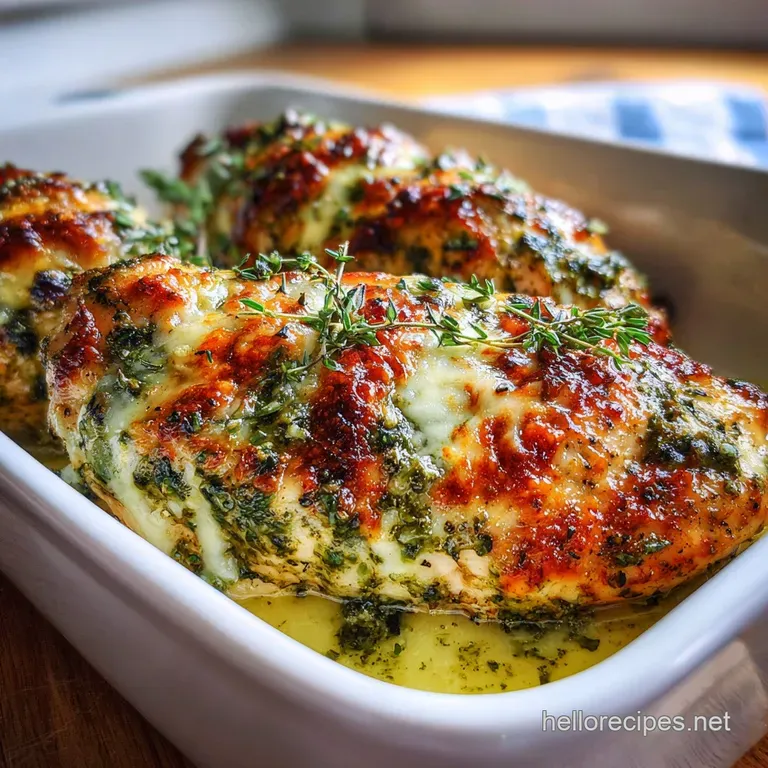
One of the biggest issues people face with this dish is the "watery dish" syndrome. Chicken releases moisture as it cooks, and if you don't prepare it correctly, your beautiful cheese topping will be floating in a lake of gray liquid.
The Watery Dish Syndrome
This usually happens because the chicken was injected with a saline solution (common in many commercial brands) or because it wasn't patted dry. To fix this, always check the packaging for "up to X% retained water" and try to buy air chilled poultry.
If it happens anyway, simply use a bulb baster to remove the liquid halfway through cooking.
| Problem | Root Cause | Solution |
|---|---|---|
| Separated Sauce | Cold cream cheese | Whisk the pesto and cheese until completely smooth before topping |
| Tough Chicken | Overcooking | Use a thermometer and pull the meat at 160°F for carryover cooking |
| Pale Cheese | Low oven rack | Move the dish to the top rack for the last 3 minutes of baking |
Common Mistakes Checklist
- ✓ Never use "pre shredded" mozzarella if you want a smooth, silky melt.
- ✓ Don't skip the resting period; it's essential for juice redistribution.
- ✓ Avoid "light" or "low-fat" cream cheese, as it contains more water and less stabilizer.
- ✓ Ensure the chicken breasts are of even thickness; use a meat mallet if necessary.
- ✓ Check that your pesto hasn't oxidized (turned brown) before using for best visual results.
Adaptation and Flavor Swaps
This recipe is highly modular. While we are focusing on the low carb cheesy pesto baked chicken, you can pivot based on what's in your pantry or your specific dietary goals. For instance, if you find yourself out of mozzarella, a mild provolone provides a similar melt with a slightly sharper finish.
| Original Ingredient | Substitute | Why It Works |
|---|---|---|
| Chicken Breast (1.5 lbs) | Chicken Thighs (1.5 lbs) | Higher fat content remains juicier. Note: Increase cook time by 5-8 mins. |
| Basil Pesto (0.5 cup) | Sun dried Tomato Pesto | Provides a sweeter, umami rich profile. Note: Slightly higher carb count. |
| Mozzarella (1.5 cups) | Pepper Jack Cheese | Adds a capsaicin kick. Note: Alters the traditional flavor profile significantly. |
If you enjoy the zesty profile of this dish, you might also find the flavor notes in my Lemon Chicken Romano recipe quite innovative for your rotation.
Preserving Quality and Freshness
To scale this up for a party, you can easily double the 1.5 lbs chicken breast to 3 lbs. However, don't just double the salt; 1.5x the spices (0.75 tsp salt) is usually sufficient to avoid over seasoning.
When cooking in larger batches, ensure there is at least an inch of space between each piece of poultry in the pan to allow for proper heat convection and to prevent steaming.
Storage and Zero Waste
Store any leftovers in an airtight glass container for up to 4 days. When reheating, avoid the microwave if possible, as it can turn the chicken rubbery. Instead, use a toaster oven at 350°F until the cheese is sizzling again.
For a zero waste approach, if you have leftover pesto cheese sauce in the pan, don't toss it. It's essentially a concentrated flavor base. Toss it with some zucchini noodles or use it as a spread for a low carb wrap the next day.
The leftover parmesan rinds can also be saved in your freezer to add depth to future vegetable broths.
| Method | Time | Texture | Best For |
|---|---|---|---|
| Oven (Standard) | 20 minutes | Balanced, juicy | Most home cooks |
| Air Fryer | 12 minutes | Crispy cheese edges | Maximum speed and efficiency |
| Stovetop (Lidded) | 15 minutes | Steamed, very soft | When oven is occupied |
Debunking Kitchen Myths
One common misconception is that you need to sear the chicken before baking to "seal in the juices." Science tells us that searing actually causes more moisture loss initially due to the high surface heat.
For this specific recipe, the pesto cheese blanket acts as the moisture barrier, making a pre sear unnecessary and often counterproductive as it can overcook the exterior before the center is ready.
Another myth is that pesto should never be heated because the basil turns bitter. While high, prolonged heat can dull the flavor, the 20 minute bake time at 400°F is the sweet spot where the flavors meld without losing their aromatic identity.
The addition of the 2 oz cream cheese also helps buffer the delicate basil oils from direct heat damage.
Gastronomy and Presentation Strategy
When serving this, think about the visual contrast. The deep greens and whites look striking against a dark plate. I suggest pairing this with something that has a structural crunch, like a fresh arugula salad or roasted radishes. If you're looking for a more traditional texture contrast, the breading technique in The Crispy Chicken recipe is a great reference for how to balance soft and crunch.
If you want...
- Extra Crunch: Mix 2 tablespoons of crushed pork rinds into the 0.25 cup freshly grated parmesan before topping.
- More Acid: Squeeze fresh lemon juice over the chicken immediately after it comes out of the oven.
- Spicy Innovation: Add 0.5 tsp of red pepper flakes into the 0.5 cup basil pesto mixture.
Enjoy the process of creating this. It’s a testament to how simple ingredients, when treated with the right culinary technology and a bit of scientific understanding, can result in something truly exceptional. The way the 1.5 cups shredded mozzarella stretches as you pull a piece away is pure gastronomic theater.
High in Sodium
845 mg mg of sodium per serving (37% % of daily value)
The American Heart Association recommends limiting sodium intake to about 2,300mg per day.
Tips to Reduce Sodium in This Recipe
-
Low-Sodium Cheese-15%
Opt for low-sodium or reduced sodium mozzarella and parmesan cheese. This simple swap can significantly cut down on the total sodium content. Look for mozzarella options specifically labeled 'low-sodium' or 'reduced sodium', aiming for less than 100mg of sodium per ounce.
-
Homemade Pesto-15%
Make your own pesto! store-bought pesto can be very high in sodium. Making it at home allows you to control the amount of salt added. Omit the salt in the pesto recipe and taste before adding any.
-
Reduce Added Salt-10%
Halve the amount of kosher salt called for in the recipe. Reduce the salt from 0.5 tsp to 0.25 tsp. You can always add more to taste after cooking, but it's easier to start with less.
-
Unsalted Cream Cheese-5%
Use unsalted cream cheese instead of regular cream cheese. While cream cheese isn't very high in sodium to begin with, every little bit helps, and this change won't affect the flavor.
-
Spice It Up!
Enhance the flavor with sodium free herbs and spices. Experiment with garlic powder, onion powder, paprika, or Italian seasoning to boost the taste without adding sodium.
Recipe FAQs
What makes this chicken low carb?
The recipe naturally excludes high carb ingredients. It focuses on protein from chicken, healthy fats from pesto and cheese, and avoids grains or sugary sauces, making it a perfect fit for a ketogenic or low-carbohydrate diet.
Can I substitute the basil pesto?
Yes, sun-dried tomato pesto is a great alternative. It offers a sweeter, umami rich profile and pairs well with chicken, though it may have a slightly higher carb count than traditional basil pesto.
Why is my chicken watery after baking?
This usually happens if the chicken wasn't patted dry or if it was pre-injected with saline. Ensure you use an air-chilled chicken breast and thoroughly pat it dry with paper towels before adding the pesto mixture to prevent excess moisture release during cooking.
How do I get the cheese topping to brown nicely?
Place the dish on the top rack of the oven for the last few minutes of baking. High heat and proximity to the broiler element will encourage that desirable golden brown caramelization on the mozzarella.
Can I use chicken thighs instead of breasts?
Absolutely, chicken thighs work well and remain juicier. You'll need to increase the baking time by about 5-8 minutes to ensure they are cooked through to a safe internal temperature.
Is it true that heating basil makes it bitter?
No, this is a common misconception that isn't always true. While prolonged, high heat can dull basil's flavor, the 20-minute bake time at 400°F allows the flavors to meld without turning bitter, especially with the stabilizing effect of cream cheese.
What sides pair well with this dish?
A fresh arugula salad or roasted radishes offer a great textural and flavor contrast. If you enjoy exploring crispy textures with chicken, the technique used in the Crispy Panko Chicken Parmesan recipe provides excellent inspiration.
Low Carb Cheesy Pesto Chicken
Ingredients:
Instructions:
Nutrition Facts:
| Calories | 594 kcal |
|---|---|
| Protein | 66.2 g |
| Fat | 34.1 g |
| Carbs | 3.8 g |
| Fiber | 0.6 g |
| Sugar | 1.2 g |
| Sodium | 845 mg |
