Homemade Whipped Cream: Silky and Cloud-Like
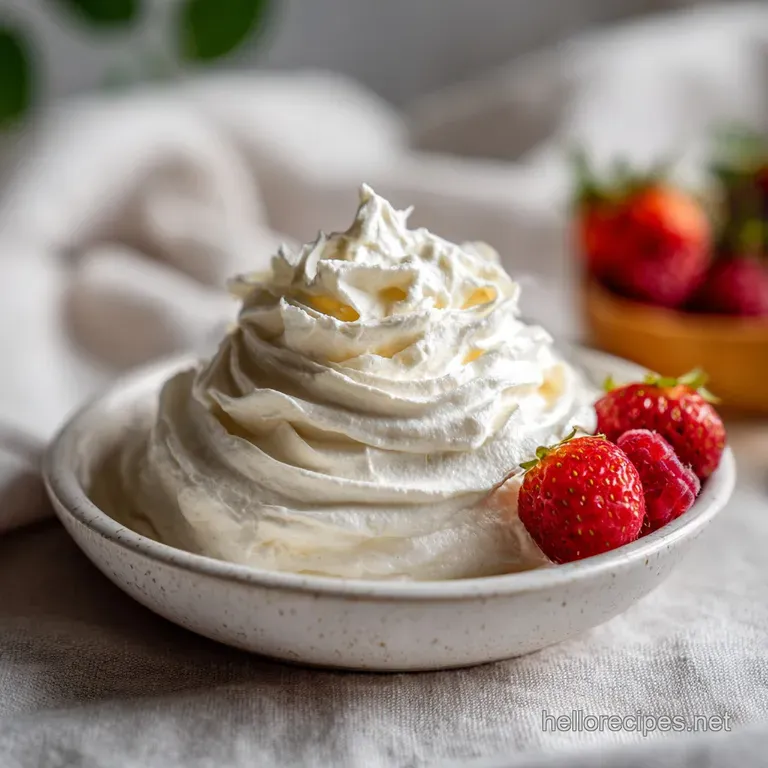
- Time: Active 5 minutes, Passive 0 minutes, Total 5 minutes
- Flavor/Texture Hook: Silky, cloud like peaks with a clean finish
- Perfect for: Gastronomy focused desserts, morning coffee, or stabilizing fruit tarts
- Master the Science of Fluffy Whipped Cream
- Why This Aerated Emulsion Works
- Recipe Specs and Critical Metrics
- Essential Ingredients and Functional Subs
- Tools for High Performance Gastronomy
- Executing the Five Minute Method
- Common Mistakes and Texture Fixes
- Adjusting for Quantity and Scale
- Sustainable and Inclusive Dietary Swaps
- Long Term Storage Solutions
- Strategic Flavor Pairing Concepts
- Debunking Modern Dairy Myths
- Recipe FAQs
- 📝 Recipe Card
Master the Science of Fluffy Whipped Cream
Forget everything you have been told about needing chemical stabilizers or special powders to keep your peaks from weeping. There is a persistent myth in the culinary world that homemade whipped cream is inherently fragile, destined to turn into a puddle the moment it hits a room temperature cake.
I used to believe this too, frantically whisking at the last possible second, only to watch my hard work dissolve into a sad, milky glaze. The truth is far more interesting: you do not need additives, you simply need to respect the physics of fat.
We are building a literal architecture of air. When you understand that heavy cream is essentially a suspension of fat globules in water, you realize that your whisk is a construction tool.
In my early days of exploring gastronomy, I once tried to whip cream in a sweltering July kitchen using a bowl fresh from the dishwasher. It was a disaster. No matter how fast I moved, the fat remained soft and slippery, refusing to bond.
That day taught me that temperature is the most powerful "ingredient" in your kitchen.
This recipe is about precision and timing. We are going to transform 1 cup heavy whipping cream into a voluminous, silky masterpiece that holds its shape. By the time we are finished, you will see how salt sharpens the sweetness and how the right fat percentage creates a structural lattice that can withstand the weight of a berry harvest.
This isn't just a topping, it is a study in innovative texture.
Why This Aerated Emulsion Works
Understanding the "why" behind the whisking helps you navigate the transition from liquid to solid. It is about managing the behavior of lipids under mechanical stress.
- Thermal Reinforcement: Keeping the cream at 4°C ensures the fat globules remain semi solid, allowing them to "shatter" and then re bond around air bubbles.
- Protein Alignment: The tiny amount of protein in the cream acts as a temporary surfactant, coating air bubbles until the fat takes over the structural heavy lifting.
- Crystal Locking: Powdered sugar contains a trace of cornstarch, which absorbs excess moisture and provides a secondary layer of stability against weeping.
- Volume Expansion: Mechanical aeration increases the surface area of the liquid by over 200 percent, creating the signature light as-air mouthfeel.
| Method | Time | Texture | Best For |
|---|---|---|---|
| Hand Whisk | 8 minutes | Ultra smooth | Small batches |
| Stand Mixer | 3 minutes | Firm, consistent | Large cakes |
| Food Processor | 1 minute | Dense, buttery | Quick dollops |
Selecting your method depends entirely on the desired final density. While a stand mixer provides the most consistent results for a whipped cream frosting recipe, the hand whisk offers unparalleled control over the "silky" stage.
Recipe Specs and Critical Metrics
Precision is the hallmark of modern gastronomy. When we look at the metrics for this dish, we see that success is measured in degrees and minutes. Most home cooks estimate, but those who bridge food science and cooking know that exactness prevents failure.
| Component | Science Role | Pro Secret |
|---|---|---|
| Heavy Cream | Fat Lattice | Use 36% fat minimum for stability. |
| Powdered Sugar | Moisture Binder | Sift it to prevent "bead" pockets in the foam. |
| Vanilla Extract | Aromatic Depth | Add after soft peaks to preserve volatiles. |
| Sea Salt | Flavor Contrast | A tiny pinch cuts through the cloying fat. |
The interaction between the salt and the sugar is particularly innovative. While sugar provides the structure, the salt acts as a bridge, making the vanilla notes feel more resonant and less sugary.
Essential Ingredients and Functional Subs
Every ingredient in this recipe serves a functional purpose beyond flavor. The 1 cup heavy whipping cream is the undisputed star, providing the 36% milkfat necessary for a stable foam. If you use a lower fat "light" cream, the air bubbles will simply pop, leaving you with a bubbly liquid instead of a velvety peak.
| Original Ingredient | Substitute | Why It Works |
|---|---|---|
| Heavy Cream (1 cup) | Coconut Cream (1 cup) | High fat content. Note: Requires chilling for 24 hours to separate fat. |
| Powdered Sugar (2 tbsp) | Maple Syrup (1.5 tbsp) | Adds floral notes. Note: Increases moisture; whip slightly longer. |
| Vanilla Extract (1 tsp) | Vanilla Bean Paste (1 tsp) | Visually stunning. Note: Adds beautiful black flecks to the cream. |
Why this? Heavy Cream is chosen for its specific triglyceride structure that traps air effectively.
When sourcing your cream, look for "sustainable" or grass fed options. The flavor profile of the fat is significantly more complex, offering hints of clover and hay that purely industrial creams lack. This is where you can truly practice innovative gastronomy by starting with the highest quality raw materials.
Tools for High Performance Gastronomy
You do not need an arsenal of high tech gadgets, but the tools you choose must be used strategically. A metal mixing bowl is superior to glass or plastic because it retains cold temperatures more efficiently.
If you are using a KitchenAid or similar stand mixer, the wire whisk attachment is your primary instrument for aeration.
Chef's Tip: If your kitchen is particularly warm, place your metal mixing bowl inside a larger bowl filled with ice and salt. This "brine bath" can drop the temperature of your cream significantly faster than air alone.
Using a hand mixer is also a valid choice, especially if you want to feel the resistance of the cream as it thickens. The feedback you get through the handle is a tactile way to judge doneness.
However, for the most sustainable approach, a large balloon whisk and a bit of "arm technology" will get you there while giving you the most control over the final texture.
Executing the Five Minute Method
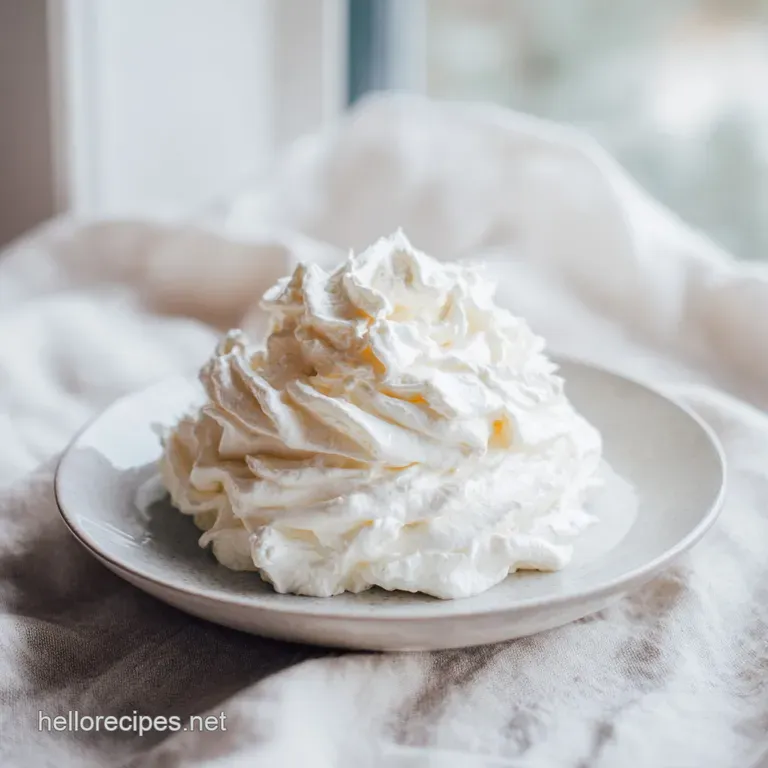
- Place your mixing bowl and whisk attachment in the freezer for at least 15 minutes. Note: Cold equipment prevents the fat from softening, which is essential for volume.
- Pour the 1 cup heavy whipping cream into the chilled bowl. Wait until it looks still.
- Add the 2 tablespoons powdered sugar, 1 teaspoon vanilla, and a pinch of salt.
- Start the mixer on low speed for 30 seconds. Watch for the bubbles to stabilize.
- Increase the speed to medium high. Listen for the sound to change from splashing to a duller thud.
- Monitor the cream as it thickens. Look for the whisk to leave distinct trails.
- Check for soft peaks. Stop when the cream flops over like a wave when the whisk is lifted.
- Continue for another 30 60 seconds. Stop when the peaks stand straight up.
- Remove the bowl immediately. Check for a velvety, matte sheen.
- Use a silicone spatula to gently fold the edges. Note: This ensures a uniform texture throughout the bowl.
Common Mistakes and Texture Fixes
The transition from "perfectly whipped" to "broken butter" happens in a matter of seconds. It is a classic example of mechanical over processing. If your cream starts to look grainy, you have begun to squeeze the water out of the fat globules, which is the first step in cheesemaking.
Why Your Cream Curdled
This usually happens because the mixer was left on high for too long. The fat globules have collided so aggressively that they have merged into solid clumps. You will see a yellow tint and a watery residue at the bottom of the bowl.
How to Rescue Runny Cream
If your cream simply won't thicken, it is likely too warm. The fat is in a liquid state and cannot support the air bubbles. You cannot "fix" warm cream by whisking harder; you must lower the temperature.
| Problem | Root Cause | Solution |
|---|---|---|
| Grainy Texture | Over whipping | Fold in 1 2 tbsp of liquid cream to smooth it out. |
| Weeping/Leaking | low-fat Content | Ensure you are using at least 36% milkfat cream. |
| Flat Volume | Warm Equipment | Chill bowl and whisk in freezer for 15 minutes. |
Common Mistakes Checklist:
- ✓ Using "Half and Half" instead of heavy cream (not enough fat for structure)
- ✓ Adding sugar too early (can inhibit initial aeration)
- ✓ Over whipping until the cream loses its silky sheen
- ✓ Using a bowl that is too small (limits air incorporation)
- ✓ Neglecting to chill the whisk (heat transfer kills the foam)
Adjusting for Quantity and Scale
If you are hosting a large gathering and need to double the recipe, you can easily scale up to 2 cups of cream. However, do not simply double the whisking time. Because there is more mass in the bowl, the friction generated by the whisk will create more heat.
You may need to stop and re chill the bowl halfway through if your kitchen is over 22°C.
When scaling down to a single serving, use a tall, narrow vessel like a glass jar. A wide bowl will spread a small amount of cream too thin, making it impossible for the whisk to grab enough liquid to create a vortex. For small batches, a handheld milk frother can be an innovative tool for quick results.
Sustainable and Inclusive Dietary Swaps
Innovation in the kitchen often means adapting to dietary needs without sacrificing the sensory experience. For those looking for a plant based alternative, the science remains the same: you need fat and cold temperatures.
For a dairy-free Alternative
Chilled full fat coconut milk is the best substitute. You must refrigerate the can for at least 24 hours so the "cream" solidifies at the top. Scoop this out and whip it exactly like heavy cream.
It won't have the same "shatter" as dairy fat, but it offers a beautiful tropical note that works well with fruit.
For a sugar-free Keto Treat
You can replace the powdered sugar with a powdered erythritol or monk fruit blend. Since these sweeteners don't have the same moisture binding properties as sugar, I recommend adding a tiny pinch of xanthan gum (about 1/8th of a teaspoon) to act as a stabilizer. This keeps the best homemade whipped cream from deflating over time.
Long Term Storage Solutions
Freshly whipped cream is a living structure, but it can be preserved. If you have leftovers, place them in an airtight glass container. It will stay stable in the fridge for up to 24 hours. After that, the air bubbles will start to merge and the cream will lose its height.
For zero waste cooking, never throw away "over whipped" cream. If you've gone too far and it has turned to butter, just keep going! Rinse the butter solids in ice water, add a little salt, and you have high-quality homemade butter. The leftover liquid (buttermilk) is fantastic for pancakes or biscuits.
If you have just a small amount of liquid cream left in the carton, freeze it in an ice cube tray to drop into your morning coffee later.
Strategic Flavor Pairing Concepts
Whipped cream is the ultimate canvas for gastronomy. While it is classic on a fruit tart, think about the contrast of temperatures. Placing a cold dollop of this cream on a warm piece of pie creates a sensory "sizzle" of hot and cold that is incredibly satisfying.
It pairs exceptionally well with my Liquid Gold Hot Fudge, where the cool cream cuts through the intense, dark chocolate. For a more innovative twist, try infusing the cream with herbs like basil or thyme before whipping. This savory sweet hybrid is a game changer for sophisticated desserts.
Debunking Modern Dairy Myths
One of the biggest misconceptions is that you need a specialized "stabilized whipped cream recipe" involving gelatin to make it last. In reality, if you whip your cream to a true stiff peak and keep it cold, it will hold its shape for hours. Gelatin often changes the mouthfeel, making it bouncy rather than velvety.
Another myth is that ultra pasteurized cream won't whip. While it takes slightly longer to aerate because the proteins have been heat stressed, it will still reach a stiff peak if you are patient and keep everything ice cold. The science of the fat lattice remains the same, regardless of the pasteurization method.
Just avoid "ultra high temperature" (UHT) creams if you want the best flavor, as they can sometimes have a slightly "cooked" aftertaste.
Whisking by hand is often viewed as a chore, but it is actually the most precise way to learn the stages of aeration. You can feel the cream transition from a thin liquid to a heavy ribbon, then to a soft cloud. That tactile connection is what turns a cook into a chef. Whether you are topping a simple bowl of berries or a complex homemade fruit tart, the goal is always the same: a clean, pure expression of dairy fat and air.
Recipe FAQs
How do you create whipped cream?
Place your mixing bowl and whisk attachment in the freezer for at least 10 15 minutes, then combine cold heavy cream, powdered sugar, vanilla, and salt. Start on low speed for 30 seconds, then increase to medium high until the whisk leaves trails and stiff peaks form.
Is heavy cream good for diabetics?
Generally, it is considered low-glycemic, but moderation is essential. Because it is high in fat and very low in carbohydrates, it has a minimal impact on blood sugar, though you should account for the caloric density in your overall diet.
Is heavy cream bad for cholesterol?
It is high in saturated fat, which can impact cholesterol levels. If you are monitoring your cardiovascular health, enjoy it in small portions as an occasional treat rather than a daily staple.
Is cool whip good for acid reflux?
No, it is often a trigger for reflux symptoms. Highly processed toppings often contain high amounts of sugar and artificial additives that can aggravate acid production, making fresh whipped cream a slightly more manageable alternative for sensitive stomachs.
How to fix grainy, over whipped cream?
Stop immediately if the mixture looks grainy, as you have accidentally begun making butter. If the texture has just started to turn, you can sometimes rescue it by gently folding in a tablespoon of cold, liquid heavy cream with a spatula to smooth it back out.
Is it true you can whip cream at room temperature?
False. Cold equipment and cream are non-negotiable for success. If you enjoyed mastering this emulsification technique, you will find the same temperature control logic is vital when preparing chilled desserts.
How to tell when the cream is perfectly whipped?
Watch for the moment the whisk leaves clear, distinct trails in the bowl. Once you see these, lift the whisk; if the cream stands straight up in a stiff peak without drooping, it is ready to serve immediately.
Homemade Whipped Cream Recipe
Ingredients:
Instructions:
Nutrition Facts:
| Calories | 56 kcal |
|---|---|
| Protein | 0.3 g |
| Fat | 5.5 g |
| Carbs | 1.4 g |
| Fiber | 0 g |
| Sugar | 1.3 g |
| Sodium | 12 mg |
