Greek Sheet Pan Chicken with Potatoes
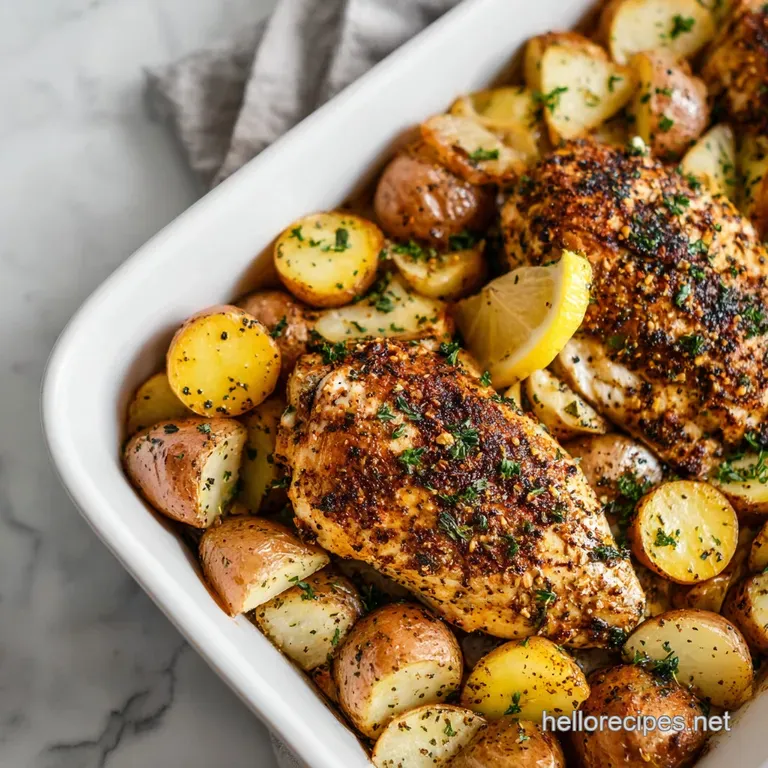
- Time: Active 20 minutes, Passive 45 minutes, Total 1 hours 5 mins
- Flavor/Texture Hook: Shatter crisp skin and lemon infused velvety potatoes
- Perfect for: High protein meal prep or a low stress dinner
- The Science of Layered Flavors
- Understanding Key Ingredient Roles
- Essential Recipe Components
- Tools for Culinary Precision
- Step-by-Step Cooking Process
- Solving Common Roasting Issues
- Creative Serving Variations
- Debunking Roasting Myths
- Storage and Sustainability Tips
- Final Plating Aesthetics
- High in Sodium
- Recipe FAQs
- 📝 Recipe Card
The Science of Layered Flavors
Building a successful sheet pan meal requires more than just high heat. We have to manage the "water activity" on the surface of our ingredients to ensure we get browning rather than steaming.
- Maillard Geometry: By halving the potatoes and placing the cut side down, we maximize surface contact with the hot metal, leading to intense browning through conduction.
- Acidic Denaturation: The lemon juice and Dijon mustard in the marinade work to break down tough protein fibers, allowing the chicken to stay succulent even at 200°C.
- Lipid Infusion: As the 2 lbs bone in, skin on chicken thighs render, the fat carries the fat soluble compounds of the oregano and garlic directly into the porous baby Yukon Gold potatoes.
- Thermal Buffering: Placing the thicker vegetable wedges (like the red onion) around the chicken creates a moisture buffer that prevents the garlic from scorching too early.
| Thickness | Internal Temp | Rest Time | Visual Cue |
|---|---|---|---|
| 1 inch (Thighs) | 74°C | 5 mins | Juices run clear when pierced |
| 1.5 inch (Breast) | 71°C | 8 mins | Opaque throughout, no pink |
| 0.5 inch (Tender) | 74°C | 3 mins | Golden exterior, firm touch |
Since we are focused on maximizing gastronomy through heat management, understanding your oven's behavior is vital. This technique is quite similar to the moisture control I use in my Awesome Sauce Chicken recipe, where the goal is a concentrated pan sauce. Here, the "sauce" is simply the emulsified oil and juices that coat the vegetables.
Understanding Key Ingredient Roles
Every component in this Greek Sheet Pan Chicken serves a structural or chemical purpose beyond just flavor. Selecting high-quality lipids and proteins ensures the innovative textures we're after.
| Component | Science Role | Pro Secret |
|---|---|---|
| Bone in Thighs | Fat source & insulation | Bones prevent the meat from drying out at high heat |
| Lemon Juice | Protein tenderizer | Use fresh juice; bottled has preservatives that mute the zing |
| Dijon Mustard | Emulsifier | Stabilizes the oil and juice into a thick, clingy coating |
| Yukon Gold Potatoes | Starch structure | Their waxy nature holds shape better than floury Russets |
Wait, before you start chopping, let's talk about the fat. I use 1/4 cup extra virgin olive oil because it has the right polyphenols to withstand the 200°C roast without breaking down into acrid smoke.
If you swap this for a lower quality oil, you lose that peppery finish that defines a Mediterranean profile.
Essential Recipe Components
You probably have most of this in your pantry, but the specific quantities from our schema data are what keep the ratios balanced. If you add too much zucchini, for example, the excess water will prevent the chicken skin from crisping.
- 2 lbs bone in, skin on chicken thighs: The skin is vital for texture. Why this? Provides natural basting fat and a crispy contrast point.
- 1/4 cup extra virgin olive oil: Our primary fat. (Substitute: Avocado oil for a more neutral profile).
- 3 tbsp fresh lemon juice: For acidity. (Substitute: White wine vinegar adds tang but less citrus aroma).
- 1 tbsp Dijon mustard: Acts as a binder. Why this? It bridges the gap between the oil and the lemon juice.
- 4 cloves garlic, minced: Essential aromatics. (Substitute: 1 tsp garlic powder if you're in a rush).
- 2 tsp dried oregano: The classic Greek herb. Why this? Dried oregano stands up better to high heat than fresh.
- 1 lb baby Yukon Gold potatoes, halved: Our starch base. (Substitute: Red bliss potatoes similar waxy texture).
- 1 large red onion, cut into thick wedges: For sweetness. (Substitute: Shallots for a more delicate flavor).
- 1 red bell pepper, chopped into 1 inch chunks: For color and crunch. (Substitute: Yellow or orange bell peppers).
- 1 cup zucchini, sliced into thick half moons: Added for freshness. Why this? Cooks quickly and absorbs the pan's savory drippings.
- 1/2 cup Kalamata olives, pitted and halved: Adds a salty, briny punch. (Substitute: Green olives slightly more bitter).
- 1/3 cup feta cheese, crumbled: The finishing creamy layer. (Substitute: Halloumi but pan fry it separately).
If you are looking for a lighter variation, you can adapt the marinade techniques from my Chicken Piccata Recipe which also leans heavily on the lemon mustard oil triad.
Tools for Culinary Precision
Having the right technology in your kitchen makes the difference between a mess and a masterpiece. You don't need a lot, but what you have should be high performance.
1. Heavy Duty Half Sheet Pan
Use a rimmed aluminum sheet pan. Thin pans warp at 200°C, causing your oil to pool in one corner and leaving the rest of your meal to burn. A heavy pan ensures even heat distribution across the entire surface.
2. Large Stainless Steel Mixing Bowl
You need enough room to toss the 2 lbs of chicken and all the vegetables vigorously. If the bowl is too small, you won't get an even coat of the Dijon oregano marinade, leading to "bald" spots on your potatoes.
step-by-step Cooking Process
This is where we build our layers. Don't rush the initial roast; that's where the chicken develops its "sizzle."
- Preheat the environment. Set your oven to 200°C. Note: A hot oven is crucial for immediate fat rendering.
- Whisk the marinade. Combine 1/4 cup olive oil, 3 tbsp lemon juice, 1 tbsp Dijon, 4 minced garlic cloves, 2 tsp oregano, 1 tsp salt, and 1/2 tsp pepper.
- Incorporate the protein. Toss the 2 lbs chicken thighs in half of the marinade until every crevice is coated.
- Prep the base veggies. Toss 1 lb halved potatoes and the red onion wedges in the remaining marinade.
- Arrange the tray. Place chicken skin side up and potatoes cut side down on the sheet pan.
- The Initial Roast. Bake for 20 minutes until the chicken skin looks translucent and tight.
- The Veggie Integration. Add the bell pepper, zucchini, and 1/2 cup olives to the pan, tossing them in the juices.
- Final Blast. Roast for another 25 minutes until chicken hits 74°C and potatoes are golden.
- The Finishing Flourish. Remove from heat and immediately sprinkle with 1/3 cup feta and 1 tbsp fresh parsley.
- Rest the meat. Let it sit for 5 minutes until the juices redistribute throughout the fibers.
Solving Common Roasting Issues
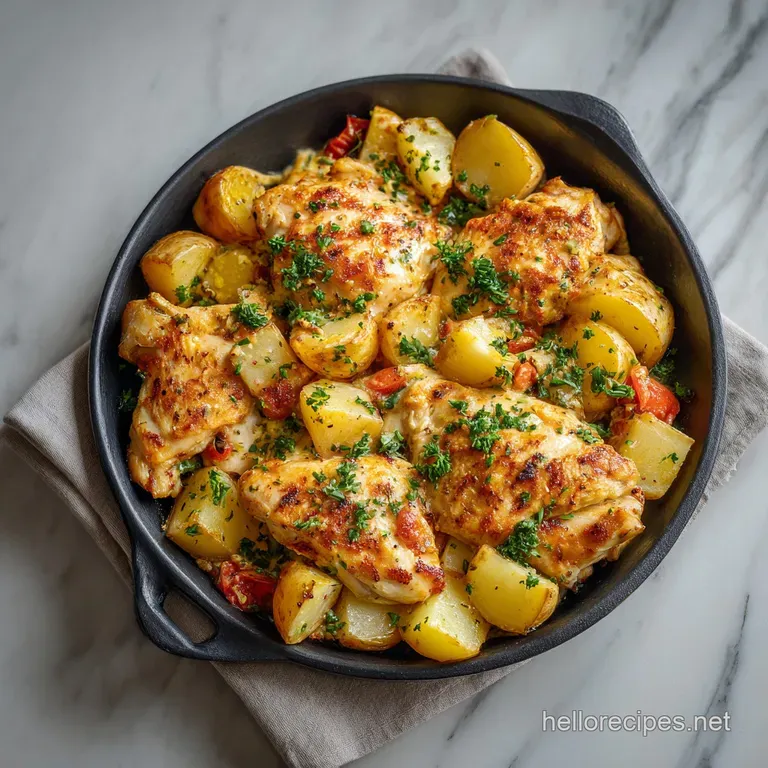
Even the best home cooks run into trouble when the oven temperature isn't calibrated or the vegetables are too crowded.
Why Your Veggies Are Soggy
If your vegetables look gray and limp rather than charred and vibrant, you likely overcrowded the pan. When ingredients are too close together, the moisture they release gets trapped, creating a steam tent. This prevents the Maillard reaction from occurring.
Why Your Garlic Is Bitter
Minced garlic burns very quickly at 200°C. If you find your garlic is turning black and bitter, try "hiding" it under the chicken thighs or mixing it more thoroughly into the mustard oil emulsion to protect it from direct radiant heat.
| Problem | Root Cause | Solution |
|---|---|---|
| Rubbery Skin | Low Oven Temp | Ensure preheat to 200°C; move tray to top rack |
| Dry Chicken | Overcooking | Use a digital probe to stop at 74°C |
| Raw Potatoes | Cut too large | Halve them or use smaller "C" size potatoes |
Common Mistakes Checklist
- ✓ Pat the chicken skin bone dry with paper towels before marinating.
- ✓ Don't skip the Dijon mustard; it’s the glue that holds the flavor layers together.
- ✓ Ensure potatoes are cut to a uniform size for even roasting.
- ✓ Avoid using a glass baking dish; it doesn't conduct heat as well as metal.
- ✓ Always let the chicken rest for 5 minutes before serving to ensure it stays velvety.
Creative Serving Variations
Scaling this recipe up or down is straightforward, but you need to adjust your math to keep the flavors balanced.
- Scaling DOWN (1-2 people): Use a smaller quarter sheet pan. Reduce the chicken to 1 lb and the potatoes to 1/2 lb. Cut the roasting time by about 5-8 minutes as the smaller thermal mass heats up faster.
- Scaling UP (8 people): Use two separate large sheet pans. Do NOT try to cram everything onto one tray. Rotate the pans between the top and middle racks halfway through. Increase spices to 1.5x only doubling salt and oregano can become overpowering.
- The Low Carb Mediterranean Swap: Replace the 1 lb of potatoes with 2 cups of cauliflower florets. Add them at the same time you'd add the zucchini, as cauliflower cooks much faster than potatoes.
Chef's Note: If you're doubling the recipe, beat one large egg and use half of it in the marinade to help the extra oil and lemon juice stay emulsified on the larger volume of ingredients.
Debunking Roasting Myths
One big myth is that you must marinate the chicken for 24 hours. Honestly, with this much lemon juice, a long soak can actually turn the texture of the chicken mushy as the acid "cooks" the exterior.
30 minutes to 2 hours is the sweet spot for maximum flavor without structural damage.
Another misconception is that you shouldn't use dried herbs. In over high heat roasting, dried oregano is actually superior because fresh leaves will simply shrivel and burn before the chicken is done. Save the fresh parsley for the very end to provide a bright, innovative contrast to the roasted depths.
Storage and Sustainability Tips
If you have leftovers, they make for an incredible lunch. Store the chicken and vegetables in an airtight container in the fridge for up to 3 days. To reheat, avoid the microwave it will make the skin rubbery.
Instead, pop everything back on a tray at 180°C for 10 minutes to bring back the "shatter" in the skin.
For a zero waste approach, don't throw away those lemon rinds! After squeezing the 3 tbsp of juice, toss the rinds right onto the sheet pan while roasting. They'll release their aromatic oils and can be discarded afterward.
Also, save the chicken bones in a freezer bag; they are the perfect foundation for a sustainable homemade stock.
Final Plating Aesthetics
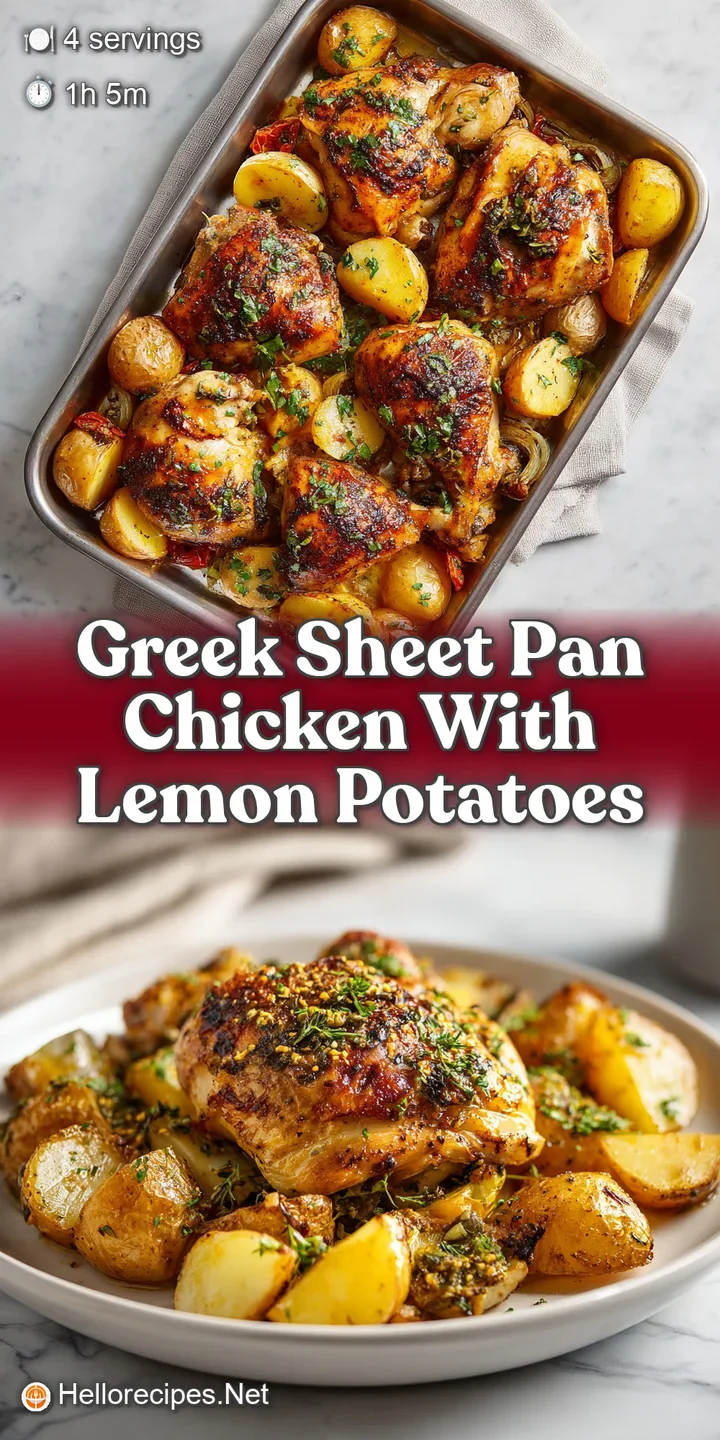
Presentation is the final layer of gastronomy. To get that "sheet to table" look, don't just dump everything into a bowl. Keep it on the tray and add your high contrast garnishes right before serving.
The white feta and bright green parsley pop beautifully against the charred reds of the onion and the deep gold of the potatoes. I like to drizzle a tiny bit more extra virgin olive oil over the top right at the end to give it a glossy, professional sheen.
It’s simple, innovative, and honestly, better than most restaurant versions I've had. Enjoy the sizzle!
High in Sodium
895 mg mg of sodium per serving (39% % of daily value)
The American Heart Association recommends limiting sodium intake to no more than 2,300mg per day for most adults.
Easy Tips to Reduce Sodium in Your Chicken and Potatoes
-
Reduce the Feta-15%
Feta cheese is a significant source of sodium. Reduce the amount of feta by half, using only 1/4 cup, or substitute with a lower sodium cheese like fresh mozzarella.
-
Rinse the Olives-10%
Kalamata olives are packed in brine, which is high in sodium. Rinsing them thoroughly before adding them to the dish can reduce the sodium content. Or use less olives.
-
Cut Back on Salt-25%
Reduce the added sea salt by half, using only 1/2 teaspoon. You can always add more at the end to taste, but it's best to start with less.
-
Increase Lemon & Herbs
Boost the flavor with more fresh lemon juice and dried oregano instead of relying on salt. Freshly ground black pepper is also a great alternative.
Recipe FAQs
Can I use chicken breasts instead of thighs?
Yes, but reduce the cooking time significantly. Breasts are leaner and will dry out quickly at the required high temperature; aim to pull them out when they hit 71°C internally and rest them well.
How long should the chicken marinate for maximum flavor penetration?
Marinate between 30 minutes and 2 hours. Soaking the chicken longer than two hours in the acidic lemon marinade can begin to break down the protein structure, resulting in a slightly mushy texture.
How do I ensure the chicken skin gets shatteringly crisp?
Ensure the skin is completely dry and use a hot oven. Pat the chicken skin vigorously with paper towels before seasoning; any surface moisture will turn to steam and prevent browning.
How do I prevent the vegetables from steaming instead of roasting?
How do I prevent the vegetables from steaming instead of roasting?
Do not overcrowd the sheet pan surface. If ingredients overlap, they release moisture that gets trapped, turning the environment steamy; use two trays if necessary to maintain airflow around all components.
What is the best way to serve this dish for extra authenticity?
Serve it with a cool, creamy counterpoint like Tzatziki. A side of cooling sauce cuts through the savory roasted herbs beautifully; I highly recommend preparing the Authentic Tzatziki Sauce recipe ahead of time.
Is it true I must use a heavy, rimmed metal sheet pan?
Yes, a heavy gauge metal pan is critical for heat transfer. Thin pans warp under the 200°C heat, creating cold spots and uneven cooking; the dense metal ensures consistent conduction to the potatoes.
If I have leftovers, what is the best method to reheat and restore crispness?
Reheat uncovered on a baking sheet in a moderate oven (180°C). Avoid the microwave entirely, as the residual heat will turn the crisp chicken skin rubbery; aim for about 10 minutes until warmed through.
Greek Sheet Pan Chicken
Ingredients:
Instructions:
Nutrition Facts:
| Calories | 782 kcal |
|---|---|
| Protein | 41.2 g |
| Fat | 44.1 g |
| Carbs | 27.4 g |
| Fiber | 4.6 g |
| Sugar | 4.8 g |
| Sodium | 895 mg |
