Grandmas Thanksgiving Stuffing: the Golden Sage and Butter Dressing
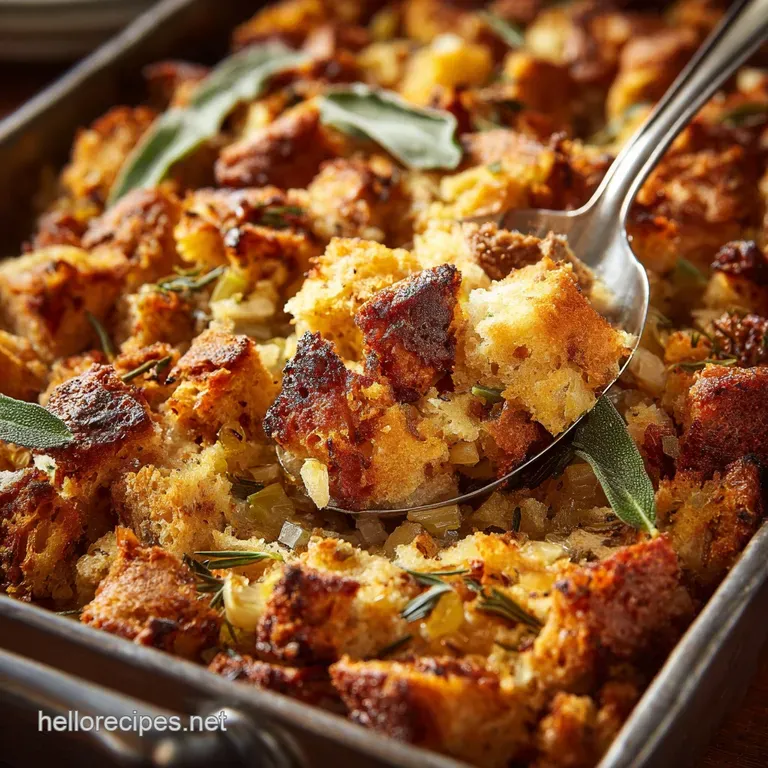
- The Heritage Loaf: Rediscovering Grandmas Thanksgiving Stuffing
- Gathering the Foundations: Ingredients for Traditional Sage and Butter Stuffing
- Grandmas Thanksgiving Stuffing: Step-by-Step Method for Baking
- The Anatomy of Perfection: Why This Stuffing Texture Triumphs
- Stuffing Success Secrets: Expert Tips and Troubleshooting
- Preserving the Feast: Storage and Reheating Grandmas Stuffing
- The Perfect Pairing: Serving This Quintessential Side
- Recipe FAQs
- 📝 Recipe Card
The Heritage Loaf: Rediscovering Grandmas Thanksgiving Stuffing
When I picture Thanksgiving dinner, the aroma that floods my brain isn't turkey or pumpkin pie; it’s the intense, buttery perfume of fresh sage and celery sautéing for the stuffing. That smell is pure holiday magic, promising a side dish that is somehow crusty and soft, rich and savoury, all at once.
If you’ve been chasing that perfect texture the golden, crispy corners giving way to a deeply moist interior this is the recipe that finally delivers.
This version of Grandmas Thanksgiving Stuffing is truly a lifesaver because it relies on simple, pantry friendly ingredients and bakes entirely outside the turkey.
It takes the guesswork out of temperature control and guarantees that amazing crisp top every single time, unlike the dense, steam logged stuff you pull from the bird. Trust me, baking it as a Thanksgiving Stuffing Casserole makes the entire holiday prep easier, cheaper, and infinitely less stressful.
So, let’s ditch the boxes, grab the good butter, and focus on technique. We're going to break down exactly how to achieve that quintessential holiday flavour using fresh herbs and strategic moisture control. Get ready to bake the best batch of dressing you’ve ever had.
Why We Call It 'Dressing': Setting the Record Straight
Is it stuffing? Is it dressing? Honestly, the names are used interchangeably now, but traditionally, the distinction is clear. Stuffing is cooked inside the turkey cavity, absorbing the drippings and steam, which often results in a very moist, slightly softer texture.
Dressing, conversely, is baked separately in a dish.
I am firmly on Team Dressing. Why? Because I need the textural contrast that only high heat on an exposed surface can provide. We’re aiming for a buttery, crisp edge that sings against the background of the soft, moist middle.
This version is definitely a dressing recipe, but since it uses my grandma's exact combination of herbs and bread, I still call it Grandma's Thanksgiving Dressing .
The Quest for Perfect Stuffing Texture: Setting Expectations
Texture is everything in this dish; a gummy stuffing is a holiday failure. The goal is to maximize flavor absorption while maintaining the structure of the bread cubes. If you use fresh bread or add too much liquid, you end up with a pasty, unappetizing sludge.
We need a stuffing that remains light and fluffy, packed with aromatics but never heavy.
A Note on the Bread Foundation: Why the Loaf Matters Most
You simply cannot skip the drying step, my friend. Fresh bread, no matter how delicious, holds too much water and will instantly collapse when mixed with stock and butter. We need sturdy, stale, dry cubes. I made this mistake one year, rushing the process, and ended up serving savory dough balls.
Never again. We toast the bread lightly to guarantee moisture evaporation, turning each cube into a perfect little flavour sponge.
Gathering the Foundations: Ingredients for Traditional Sage and Butter Stuffing
This recipe focuses on clean, powerful flavour from quality ingredients, minimizing complexity. If you're looking for something with a protein boost, you might prefer my recipe for Thanksgiving Stuffing: Spot On Homemade Sausage Stuffing Recipe but for classic flavour, stick to this.
Choosing the Right Loaf: Staling Your Bread Properly
We need a bread with excellent internal structure, something crusty. I love using sourdough or a classic Italian white loaf because they dry out beautifully without crumbling. Cut the bread into 1 inch cubes the day before and just leave them out on the counter, or use the quick oven method detailed in the recipe.
| Ingredient | Why It Works | Substitution Idea |
|---|---|---|
| Sturdy White Bread | Holds shape against liquid and fat. | French bread (day-old), rustic sourdough, or hearty gluten-free bread. |
| Unsalted Butter | Essential for richness and transferring fat-soluble flavors. | Ghee or high-quality vegan/plant based butter sticks. |
| Low-Sodium Stock | Provides moisture without over salting the dish. | Homemade turkey stock or vegetable stock. |
Mastering the Trio of Aromatics: Focusing on Fresh Sage and Thyme
This is where the magic lives! You must use fresh sage. Seriously, that earthy, potent, slightly piney flavor defines Grandmas Thanksgiving Stuffing . We combine it with fresh thyme, which adds a subtle floral balance, and a generous amount of finely diced celery and onion.
Crucial Tip: Use a sharp knife to mince the sage very finely. When it hits the hot butter, you want it to dissolve its flavour instantly into the fat. This infusion step is non-negotiable for superior taste.
If you absolutely must use dried herbs, remember the ratio: use one-third the amount of dried herbs compared to fresh.
Butter Quality Matters: Unsalted vs. Salted Guidance
We use unsalted butter because we are controlling the salt in the liquid base, not the fat. This allows us to ensure the aromatics are sautéed perfectly without getting too salty. Don't skimp on the butter, either; this is a Thanksgiving side, and we are aiming for Buttery Stuffing Recipes nirvana.
Liquid Base: Determining the Broth to Bread Ratio
The ratio of warm stock to dry bread is the single most important factor for preventing a soggy result. I call for four cups, but always start with three and a half. Different breads absorb liquid at dramatically different rates.
You want the bread cubes to feel weighted and moist, but you absolutely should not see liquid pooling in the bottom of the bowl. Warm stock absorbs faster and more evenly than cold stock, so don't forget that quick warm-up step.
Grandmas Thanksgiving Stuffing: step-by-step Method for Baking
Prepping the Aromatics and Infusing the Butter
Grab your biggest skillet and melt those two sticks of butter. Add the diced onion and celery. Cook this mixture slowly over medium low heat we aren't browning them; we are softening them until they turn sweet and translucent. This should take a good 10– 15 minutes.
Once the vegetables are silky, stir in the minced garlic, fresh sage, and thyme. Cook for only two minutes until you smell that incredible nutty aroma; this ensures the fresh herbs release their oils into the fat.
Combining the Loaf Base and Moisturizing Agents
Take the skillet off the heat and pour this amazing, buttery aromatic mix directly over the prepared dry bread cubes. Toss gently but thoroughly. The fat coats the bread cubes first, creating a barrier and infusing maximum flavour before the water based stock arrives.
Next, whisk the warm stock, eggs, and parsley together. Now pour the liquid over the coated bread.
The Proper Way to Fill and Cover the Baking Dish
Mix everything using your hands, gently lifting and folding, for about one minute. Stop immediately when the liquid is mostly absorbed. Transfer the stuffing mixture to your 9x13 pan. Do not press it down. This is the secret to a light texture!
Chef's Note: If you press the stuffing into the pan, you compress the air pockets needed for a fluffy rise. Scoop it in lightly and leave it mounded slightly.
Cover the dish tightly with foil. This traps the steam, ensuring the interior cooks through and stays incredibly moist.
Achieving the Final Golden Crust: Baking Temperatures and Time
Bake the covered Thanksgiving Stuffing Casserole at 375°F (190°C) for 30 minutes. The internal temperature needs to rise safely. Then, remove the foil and crank the heat slightly or just continue baking for another 15– 20 minutes.
Keep a close eye on it until the top layer is deep golden brown and crunchy. That crispy top is the whole reason we bake it outside the bird.
The Anatomy of Perfection: Why This Stuffing Texture Triumphs
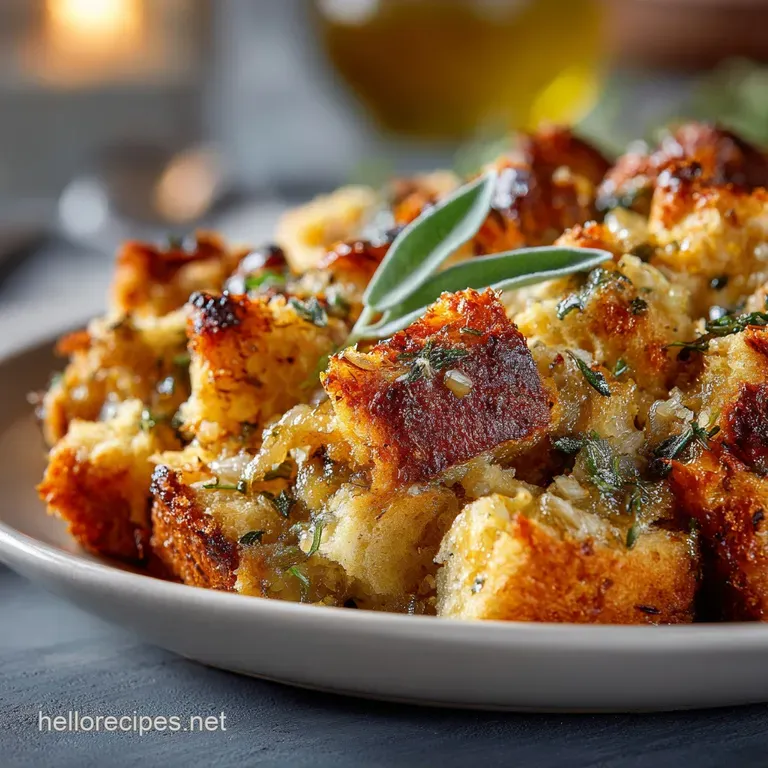
The Glorious Butter Soak: Infusing Maximum Herb Flavor
We sauté the herbs in a huge quantity of butter for a reason. Fat acts as a carrier for flavour. By coating the dried bread in herb infused butter before adding the stock, we guarantee that the essence of sage and thyme saturates every single crumb.
Achieving the Crisp Exterior vs. Moist Interior Contrast
This is a two-stage baking process. The covered phase is essentially a steam bath, keeping the lower layers soft and yielding. The uncovered phase, toward the end, is dedicated solely to forming that irresistible, golden, crunchy crust. It’s simple, effective science.
The Essential Role of Day-Old Bread Structure
If your bread is fresh, the starch granules are soft and release easily when wet, turning gooey. Day-old or toasted bread cubes have a much stronger structure, allowing them to absorb the liquid without collapsing. They remain defined cubes, which gives the final stuffing a wonderfully light, open texture.
Preventing a Soggy Bottom: The Moisture Balance Equation
Always err on the side of slightly too dry when mixing the liquid. You can always add a little more stock (or gravy!) later, but you can’t take it away. Remember the visual cue: moist cubes, but no pooling liquid in the bowl.
Why You Must Not Overmix the Bread Cubes
Mixing vigorously develops the gluten in the bread, which, combined with the stock, leads to that gummy texture we desperately want to avoid. Use a light hand, folding the ingredients together until just combined. Treat those bread cubes like delicate little treasures.
Adjusting Flavor: Seasoning After the Soak
Because dry bread absorbs so much flavor, you must taste the stuffing mixture right after the soak. Add a few extra pinches of salt and pepper before it goes into the oven if the mix tastes slightly flat. The raw egg in there is totally fine to taste in small quantities, just don't take big scoops!
Stuffing Success Secrets: Expert Tips and Troubleshooting
People usually run into two main snags when making Easy Stuffing Recipes For Thanksgiving —blandness and gumminess.
- The Stuffing Is Bland: This happens when you don't season the liquid aggressively enough. The bread absorbs the moisture but dilutes the salt concentration dramatically. Fix: Next time, season your broth/egg mixture until it tastes slightly salty before adding the bread. If your final baked product is bland, drizzle extra melted butter mixed with salt and pepper over the top before serving, or rely heavily on salty turkey gravy.
- The Stuffing Is Gummy/Dense: My biggest mistake early on was overmixing. I thought I needed to fully incorporate every strand of celery. Fix: Use day-old bread, don't pack it into the pan, and switch from a spoon to your clean hands for the final, gentle mixing step.
- For Maximum Crispiness: If you want more crunch than moist interior, use a larger, shallower pan (like a half sheet pan) instead of a deep casserole dish. More surface area means more crunchy golden bits!
Preserving the Feast: Storage and Reheating Grandmas Stuffing
Stuffing is an excellent make-ahead side, which is perfect for busy fall Thanksgiving recipes schedules.
- Storage (Fridge): Cool the stuffing completely, then cover and store in the refrigerator for 3 to 4 days.
- Freezing: Yes, it freezes! You can bake it completely, cool it, and freeze the whole dish wrapped tightly in foil and plastic wrap for up to 2 months. Alternatively, assemble the entire stuffing mixture, place it in the dish, wrap it, and freeze it unbaked . Thaw overnight in the fridge before baking as directed.
- Reheating: If reheating a baked casserole, cover the dish with foil and bake at 325°F (160°C) until warmed through (about 20 minutes). If it seems dry, sprinkle a couple of tablespoons of extra stock or gravy over the top before putting the foil on. Then, remove the foil for the last 5 minutes to crisp up the top again.
The Perfect Pairing: Serving This Quintessential Side
This sage and butter stuffing is a classic for a reason; it pairs beautifully with almost every other side dish. You absolutely need a good gravy with this, as it adds back essential richness and moisture when serving.
If you’re craving a slightly bolder dressing, this recipe serves as a brilliant baseline. You could easily add toasted pecans or dried cranberries for a touch of sweetness and crunch. For those who prioritize the crunch factor above all else, you should check out my recipe for Stuffing: The Ultimate Crispy Sourdough Dressing Recipe (Not Soggy!) which uses a slightly different technique for ultimate exterior crispness. And don't forget the perfect partner: serve alongside a simple green vegetable, like Thanksgiving Side Dishes: Crispy Brown Butter Green Beans , to cut through the richness of the butter and bread.
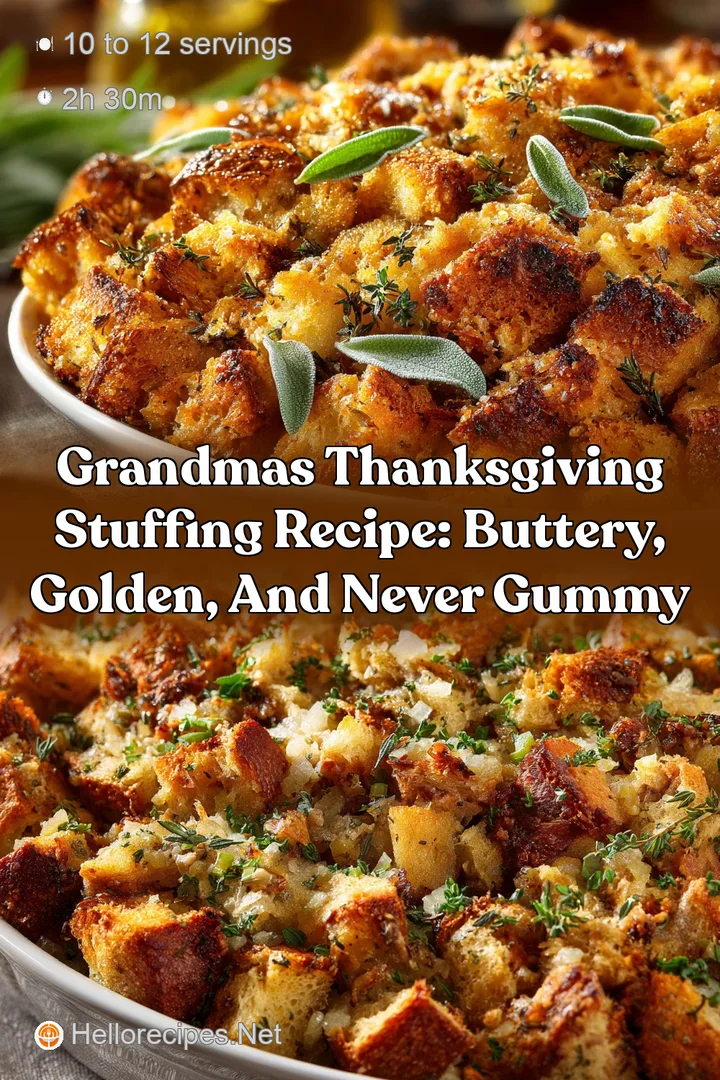
Recipe FAQs
What is the difference between "stuffing" and "dressing" in this recipe?
The primary difference is where the dish is cooked. "Stuffing" is cooked inside the cavity of the turkey, absorbing pan juices, while "dressing" is baked separately in a casserole dish.
Grandma's recipe works beautifully as both, but baking it separately guarantees a superior crispy top crust and better control over the final texture and safety.
My stuffing turned out dry. How can I fix or prevent this?
Dryness usually stems from insufficient liquid (broth/butter) or overbaking. If it is already dry, pour a few spoonfuls of warm turkey or chicken broth over the top, cover it loosely with foil, and let it steam for five minutes before serving.
To prevent it, ensure your bread cubes are thoroughly saturated but not soggy before baking, and check the internal temperature, aiming for 165°F (74°C).
Can I prepare Grandma's stuffing mixture ahead of time?
Yes, you can assemble the stuffing mixture (including sautéing the vegetables and herbs) up to 24 hours in advance and store it covered in the refrigerator. Wait until just before baking to combine it with the wet ingredients (broth/eggs), as the acid and moisture will break down the bread too quickly if mixed too early, resulting in a mushy texture.
I need a dairy-free alternative to butter. What works best?
high-quality plant based butter (like European style vegan butter blocks) is the best substitution, as it mimics the flavour and fat content closely in this buttery recipe. If avoiding processed fats, you can use a neutral tasting extra virgin olive oil for sautéing, but you may need to add extra moisture to compensate for the slightly less rich flavour profile.
Can I freeze leftover stuffing?
Yes, baked stuffing freezes quite well. Allow the dish to cool completely, then wrap tightly in plastic wrap and heavy duty foil, or transfer it to a freezer safe container for up to three months. Thaw it overnight in the refrigerator and reheat covered at 350°F (175°C) until piping hot throughout.
How can I adapt this recipe to be gluten-free?
Simply substitute the heritage loaf with a quality gluten-free artisan bread, ensuring it is dried out or toasted thoroughly before use. gluten-free breads tend to absorb liquids faster than traditional white bread, so monitor the amount of broth carefully to maintain the desired moist texture without allowing it to become waterlogged.
Can I use fresh bread instead of day-old or toasted bread?
Using only fresh bread is highly discouraged as it will absorb the liquid unevenly and turn mushy during mixing and baking. The drying process is essential as it creates structure and allows the bread to soak up the broth and butter without completely collapsing.
If you must use fresh bread, cube it and bake it at 300°F (150°C) for 15 minutes to dry it out first.
Grandmas Golden Thanksgiving Stuffing
Ingredients:
Instructions:
Nutrition Facts:
| Calories | 408 kcal |
|---|---|
| Protein | 14.2 g |
| Fat | 12.0 g |
| Carbs | 63.0 g |
