Spatchcock Chicken Recipe with Garlic Herb: the Crispiest
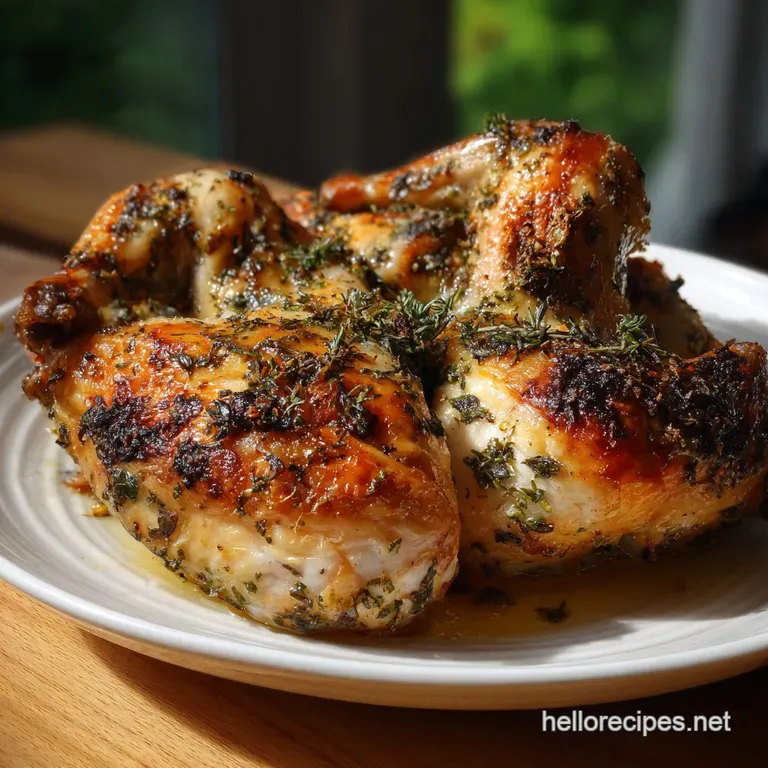
- Effort/Time: High-impact technique, 1 hour 5 mins total.
- Flavor Hook: Potent garlic-herb compound butter meets smoky paprika finish.
- Perfect for: Sunday dinner or impressive mid-week meal-prep.
- Masterclass: Spatchcock Chicken Recipe with Garlic Herb for Shatter-Crisp Skin
- The Science of Why it Works
- Essential Ingredients & Substitutes
- Step-by-Step Instructions
- Troubleshooting the Spatchcock Chicken Recipe with Garlic Herb
- Common Myths
- Storage and Reheating
- Variations of the Chicken Recipe with Garlic Herb Butter
- Recipe FAQs
- 📝 Recipe Card
Masterclass: Spatchcock Chicken Recipe with Garlic Herb for Shatter Crisp Skin
The Struggle for the Perfect Bird
Stop settling for unevenly cooked poultry. We’ve all pulled a bird from the oven where the breasts are sawdust dry while the leg joints are still weeping pink. I used to think the traditional "Norman Rockwell" whole roast was the gold standard until I realized physics was working against me.
The spherical shape of a whole chicken protects the thighs while the delicate breast meat bears the brunt of the heat. By removing the backbone the spatchcock method we solve this mechanical flaw.
This Spatchcock Chicken Recipe with Garlic Herb ensures every square inch of skin faces the heat directly, creating a uniform cooking plane that renders fat efficiently.
Expect a sensory overload. The sizzle of the skin in a Lodge Cast Iron Skillet is your first cue. Then comes the aroma of rosemary and garlic blooming in hot butter. You're not just roasting; you're engineering a better meal.
The Science of Why it Works
Spatchcocking utilizes conductive and convective heat more efficiently by increasing the chicken's surface area. This ensures protein denaturation happens at a synchronized rate across different muscle groups.
- Surface Area Maximization: Flattening the bird exposes the legs and thighs to the same heat intensity as the breasts, leading to a 30% faster cook time.
- Maillard Reaction Optimization: By keeping the skin on a single horizontal plane, moisture evaporates faster, allowing the Maillard reaction to create a complex, browned crust without overcooking the interior.
The Science Behind 4 lbs Whole Chicken
- What It Does
- Acts as the primary protein structure and moisture reservoir.
- The Chemistry
- Protein denaturation occurs as heat uncoils amino acid chains, which then coagulate to trap moisture within the myofibrils.
- Why This Matters
- Proper heat management ensures these chains don't tighten too much, which would squeeze out the juices and result in "stringy" meat.
The Science Behind Unsalted Butter
- What It Does
- Serves as the fat-based medium for flavor delivery and heat conduction.
- The Chemistry
- Butter is an emulsion of water, fat, and milk solids; the water evaporates during roasting, leaving fat to fry the skin.
- Why This Matters
- This "frying" effect is what creates that shatter crisp texture while the milk solids undergo Maillard browning for a nutty depth.
The Science Behind Garlic and Rosemary
- What They Do
- Provide volatile aromatic compounds and antioxidants.
- The Chemistry
- Heat triggers the release of allicin in garlic and rosmarinic acid in the herbs, which are fat-soluble and permeate the meat.
- Why This Matters
- Infusing these into the butter ensures the flavors are carried through the skin and into the muscle fibers, not just sitting on the surface.
Essential Ingredients & Substitutes
For this Spatchcock Chicken Recipe with Garlic Herb, quality matters. Use Diamond Crystal Kosher Salt for its hollow flake structure, which adheres better to the skin and dissolves more predictably than table salt.
| Original Ingredient | Substitute | Why It Works |
|---|---|---|
| 1/2 cup Unsalted Butter | Ghee (1/2 cup) | Higher smoke point; offers a more intense toasted flavor but lacks milk solids for browning. |
| 1 tbsp Fresh Rosemary | Dried Rosemary (1 tsp) | Concentrated oils provide similar earthy notes; use less as dried herbs are more potent. |
| 1 tbsp Fresh Thyme | Fresh Oregano | Offers a different Mediterranean profile; similar oil content for over high heat roasting. |
| 1/2 tsp Smoked Paprika | Liquid Smoke (2 drops) | Provides the "fire roasted" essence; very potent, so use sparingly to avoid an artificial taste. |
Chef's Tip: Freeze your butter for 10 minutes before mashing it with the herbs. This creates tiny "fat pockets" that melt slowly, baste the bird longer, and prevent the garlic from burning too early in the over high heat environment.
step-by-step Instructions
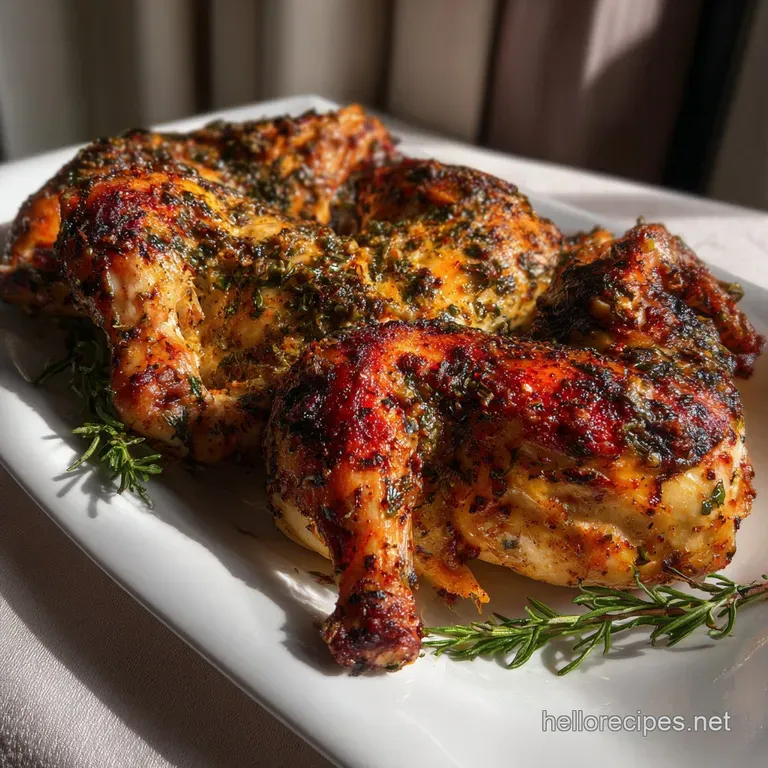
- Remove the backbone.Note: Use OXO Good Grips Poultry Shears to cut along both sides of the spine to increase surface area for heat exposure.
- Flatten the bird.Note: Press firmly on the breastbone until you hear a crack; this ensures the chicken lies flush against the pan.
- Pat the skin dry.Note: Removing surface moisture is critical for the Maillard reaction to begin immediately upon entering the oven.
- Mix the compound butter.Note: Combine 1/2 cup Unsalted Butter, 4 minced Garlic cloves, and 1 tbsp each of Rosemary, Thyme, and Parsley.
- Apply 2 tsp Kosher Salt and 1 tsp Black Pepper.Note: Salting early allows for osmosis, drawing moisture out of the skin and seasoning the meat deeply.
- Loosen the skin.Note: Gently slide your fingers between the breast meat and skin to create a pocket for the Recipe with Garlic Herb Butter.
- Stuff the butter mixture.Note: Distributing the fat directly onto the muscle prevents the meat from drying out during the 45 minutes cook time.
- Rub with 1 tbsp EVOO and 1/2 tsp Smoked Paprika.Note: The oil acts as a heat conductor while the paprika adds a deep velvety red hue and smokiness.
- Roast at 425°F (218°C). Note: High heat is essential for the sizzle and rendering of the subcutaneous fat layers.
- Rest for 15 minutes. Note: This allows for residual carry over cooking and lets the juices redistribute through the protein matrix.
This roast pairs perfectly with my Easy Cheesy Scalloped Potatoes: Velvety Sauce Recipe, as the creamy sauce complements the herb infused chicken.
Troubleshooting the Spatchcock Chicken Recipe with Garlic Herb
| Problem | Root Cause | The Fix | Pro Protocol |
|---|---|---|---|
| Rubbery Skin | Excess moisture or low temp | Pat skin with paper towels until bone dry. | Use a Thermapen to ensure the oven is truly at 425°F before roasting. |
| Burnt Garlic | Garlic on top of skin | Tuck garlic herb butter under the skin. | Microplane the garlic into a paste so it integrates fully with the butter. |
| Dry Breast Meat | Overcooking | Pull the bird when the breast hits 160°F. | Carry over heat will bring it to the safe 165°F during the 15 minutes rest. |
Common Myths
Myth: Washing the chicken makes it cleaner.Truth: This is a safety hazard. Washing poultry splashes bacteria like Salmonella across your sink and counters. The high heat of the 425°F oven is the only thing that kills pathogens.
Myth: You must baste every 15 minutes. Truth: Opening the oven door drops the temperature significantly, causing the skin to steam rather than crisp. The Recipe with Garlic Herb Butter tucked under the skin does all the internal basting for you.
Storage and Reheating
If you have leftovers from this Spatchcock Chicken Recipe with Garlic Herb, store them in an airtight glass container to preserve the moisture. If you prefer a faster method for individual pieces next time, check out my How to Make Air Fryer Chicken: Crispy Skin.
- Fridge: Store for up to 4 days.
- Freezer: Wrap tightly in foil and place in a freezer bag for up to 3 months.
- Reheating: Use a 350°F oven for 10 12 minutes. Avoid the microwave, as it turns the skin from shatter crisp to soggy and creates a "warmed over" flavor due to lipid oxidation.
Variations of the Chicken Recipe with Garlic Herb Butter
You can easily adapt this with Garlic Herb Butter profile to other methods. For a slower, more rustic approach, use the same herb ratios in a Best Chicken Cacciatore: Traditional Flavor, Easy Prep.
The Spatchcock Chicken Recipe with Garlic Herb is a foundational skill. Master the mechanics of the butterfly cut, the science of the dry skin, and the chemistry of the herb butter, and you will never serve a mediocre roast again.
Enjoy the sizzle and the inevitable requests for seconds.
Recipe FAQs
What is the single most important step for crisp skin?
Thoroughly drying the skin before seasoning. Moisture inhibits the Maillard reaction, preventing the skin from rendering fat and achieving true crispness. Patting it bone dry ensures maximum surface dehydration.
Must I use the compound butter under the skin?
No, it is optional but highly recommended. Butter melts and basters the meat from within, ensuring succulence while the paprika crust browns externally. Some prefer using rendered chicken fat instead for a cleaner flavor profile, similar to the drippings used in our Yorkshire Pudding Recipe: Classic High Rise Puddings.
Can I skip the spatchcocking process?
Myth: Flattening the bird is unnecessary oven theatre. Reality: Removing the backbone allows the thighs (which require higher heat) and breasts to cook simultaneously without one overcooking while waiting for the other.
What internal temperature indicates doneness?
165°F (74°C) in the thickest part of the thigh. Carryover cooking will raise the temperature slightly after resting, making the white meat perfectly safe and moist. Always use an instant read thermometer.
Is brining required before spatchcocking?
Brining is beneficial but not mandatory for this recipe. While brine improves water retention, the flattened technique plus the fat barrier from the compound butter compensates significantly. This recipe prioritizes speed and crispness over lengthy brining preparation.
What is the optimal resting time after cooking?
Rest for 10 to 15 minutes tented loosely. Resting allows muscle fibers, tightened by the heat, to reabsorb released juices; cutting early causes immediate moisture loss onto the board. This is crucial for overall texture, much like resting steak before slicing.
Does using dark meat affect cook time?
Yes, the thigh requires longer cooking than the breast. Spatchcocking mitigates this by exposing the joints to direct heat, yet the thicker thigh meat needs vigilance near the backbone joint. Ensure thigh temperature hits 175°F for best texture, compared to the breast's 160°F prior to rest, similar to how we monitor different cuts for Hoppin John Recipe: Traditional Smoky Black Eyed Peas.
Garlic Herb Spatchcock Chicken
Ingredients:
Instructions:
Nutrition Facts:
| Calories | 664 kcal |
|---|---|
| Protein | 46 g |
| Fat | 52 g |
| Carbs | 1.5 g |
| Fiber | 0.4 g |
| Sugar | 0.2 g |
| Sodium | 985 mg |
