Prime Rib with Garlic Herb Butter Roast
- Time: Active 30 mins, Passive 3 hours, Total 3 hours 30 mins
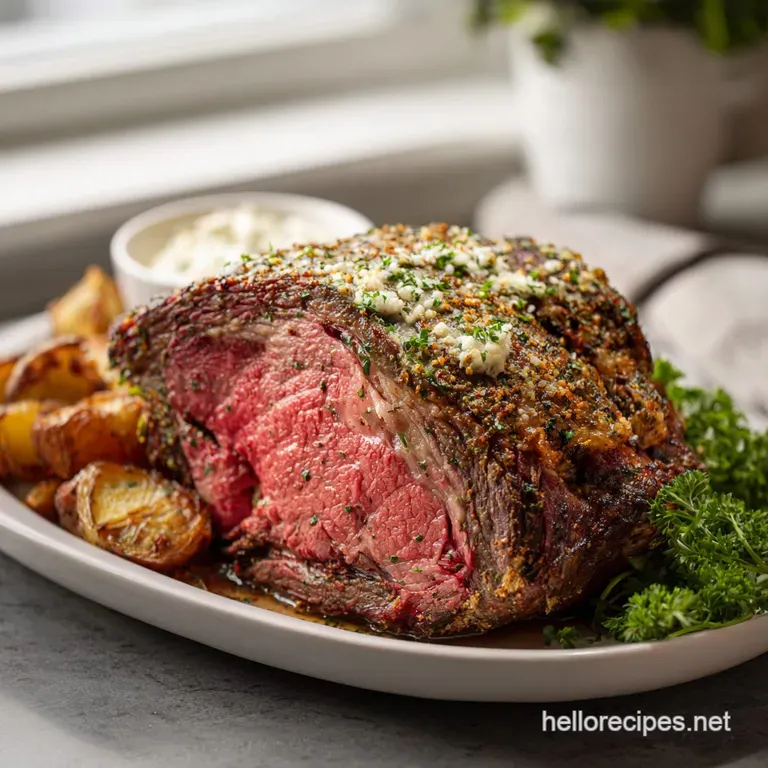
- Flavor/Texture Hook: Silky, ruby red center with a salty, garlic infused crust.
- Perfect for: Holiday gatherings, celebratory dinners, or a sophisticated weekend feast.
- Creating the Ultimate Prime Rib with Garlic Herb Butter for Your Table
- The Scientific Mechanism Behind a Perfect Ruby Red Center
- The Necessary Gastronomy Tools for Precision Cooking Results
- Gathering the Essential Components for a Successful Roast
- Executing the Layers of Flavor Through Step-by-Step Roasting
- Navigating Potential Pitfalls and Mastering the Texture
- Modifying the Recipe for Specific Nutritional and Dietary Needs
- Preserving the Quality and Repurposing Every Single Scrap
- Presenting the Finished Roast for a Stunning Meal Experience
- Very High in Sodium
- Recipe FAQs
- 📝 Recipe Card
Creating the Ultimate Prime Rib with Garlic Herb Butter for Your Table
The first time I attempted this, the sizzle of the fat hitting the pan was music to my ears, but the result was a gray, overcooked disaster. I had followed an old school method that blasted the meat with heat first, leaving the outside charred and the inside tough.
It was a heart breaking waste of a beautiful cut of beef, but it taught me the most valuable lesson in my kitchen: patience is a literal ingredient.
Now, when I pull a prime rib with garlic herb butter out of the oven, the aroma of toasted rosemary and caramelizing garlic fills the entire house, signaling that something special is about to happen.
The crust shouldn't just be brown; it should shatter slightly under the knife, revealing a center so tender it practically melts. We aren't just cooking meat here; we are using technology and heat management to transform a sturdy muscle into a masterpiece of gastronomy.
Trust me, once you see that perfectly uniform pink from edge to edge, you’ll never go back to over high heat roasting. This recipe is about building layers starting with a deep salt seasoning and finishing with a decadent slather of herb flecked fat.
It’s the kind of dish that makes everyone at the table go silent for a second after the first bite, and that’s the best compliment a cook can get.
The Scientific Mechanism Behind a Perfect Ruby Red Center
Enzymatic Tenderization: Holding the beef at low temperatures (around 200°F or 95°C) allows natural enzymes called cathepsins to break down tough connective tissues before they tighten up.
This results in a texture that is far more velvety than meat cooked at traditional high temperatures.
The Physics of the Crust: By using a reverse sear, we dry out the surface of the roast during the long, slow cook. This lack of surface moisture means that when we finally apply high heat, the energy goes directly into the Maillard reaction rather than evaporating water, creating a crust that is exceptionally crispy.
| Thickness | Internal Temp | Rest Time | Visual Cue |
|---|---|---|---|
| 3 Bone Roast | 120°F (Rare) | 30 mins | Warm, bright red center |
| 4 Bone Roast | 125°F (Med Rare) | 35 mins | Deep pink, silky texture |
| 5 Bone Roast | 130°F (Medium) | 45 mins | Light pink, firm structure |
Giving the meat ample time to rest is non negotiable for success. During this phase, the muscle fibers relax and reabsorb the juices that were pushed toward the center during cooking. If you slice too early, those savory liquids will end up on your cutting board instead of in your mouth.
The Necessary Gastronomy Tools for Precision Cooking Results
To achieve consistent results, you need a few specific pieces of equipment. A heavy duty roasting pan with a rack is essential; it allows hot air to circulate under the meat, preventing a soggy bottom. If you don't have a rack, you can prop the roast up on a bed of thick cut onions and carrots for a similar effect.
A digital leave in thermometer is your best friend for this prime rib with garlic herb butter. Guessing the internal temperature by feel is a gamble I'm not willing to take with such a premium cut.
You want a tool that alerts you the second the beef hits 120°F (49°C) so you can pull it out before it overcooks.
- Roasting Pan: Large enough to hold the 8 lb roast without touching the sides.
- Wire Rack: Elevates the meat for even heat distribution.
- Instant Read Thermometer: For double checking doneness in multiple spots.
- Kitchen Twine: To tie the roast if the butcher hasn't already done so.
- Small Mixing Bowl: For whipping the compound herb butter.
Using a precise thermometer is just as important here as it is when you How to Master recipe, where temperature control defines the line between juicy and dry.
Gathering the Essential Components for a Successful Roast
Selecting the right meat is the foundation of this dish. Look for a Bone in Prime Rib Roast that has significant marbling those little white flecks of intramuscular fat. That fat is where the flavor lives, and as it renders, it bastes the meat from the inside out.
I always opt for bone in because the bones act as an insulator, keeping the meat closest to them incredibly succulent.
| Ingredient | Science Role | Pro Secret |
|---|---|---|
| Kosher Salt | Protein Denaturation | Season 24 hours early to dry brine for a deeper flavor. |
| Unsalted Butter | Fat Delivery | Use high fat European butter for a silkier mouthfeel. |
| Garlic | Aromatic Layer | Mince by hand rather than pressing to avoid bitter oils. |
| Smoked Paprika | Color & Depth | Provides a subtle wood fired aroma without a smoker. |
For the aromatics, fresh is the only way to go. Dried herbs can become dusty and hay like during a long roast, whereas fresh rosemary and thyme release volatile oils that perfume the fat. If you're looking to save a few minutes, you can follow my How to Make recipe as a base and then just fold in the extra paprika and oregano.
- 1 (8 lb) Bone in Prime Rib Roast: The star of the show.
- 2 tbsp Kosher Salt: For dry brining and seasoning.
- 1 tbsp Coarse Black Pepper: For a pungent bite.
- 1 cup Unsalted Butter, softened: The vehicle for all the herbs.
- 6 cloves Garlic, finely minced: For that classic savory punch.
- 2 tbsp Fresh Rosemary, finely chopped: Adds an earthy, piney note.
- 2 tbsp Fresh Thyme, finely chopped: Brings a subtle floral sweetness.
- 1 tbsp Fresh Oregano, finely chopped: Adds a Mediterranean depth.
- 1 tsp Smoked Paprika: For a beautiful mahogany crust.
| Original Ingredient | Substitute | Why It Works |
|---|---|---|
| Kosher Salt | Sea Salt (Flaky) | Similar mineral profile; use 1.5x volume if using fine salt. |
| Unsalted Butter | Beef Tallow | Pure beef flavor; creates an even crunchier crust. |
| Fresh Rosemary | Fresh Sage | Different aromatic profile but handles long heat well. |
Executing the Layers of Flavor Through step-by-step Roasting

1. Preparing the Meat for Success
Remove your 8 lb roast from the fridge at least 2 hours before cooking. Note: Bringing the meat to room temperature ensures even heat penetration. Pat the entire surface with paper towels until it is completely dry to the touch.
Season aggressively with 2 tbsp Kosher Salt and 1 tbsp Coarse Black Pepper on all sides.
2. Whipping the Prime Rib Compound Butter Recipe
In a small bowl, combine 1 cup softened unsalted butter with 6 cloves minced garlic, 2 tbsp rosemary, 2 tbsp thyme, 1 tbsp oregano, and 1 tsp smoked paprika. Note: Soft butter allows the herbs to be suspended evenly rather than sinking to the bottom. Mix until it forms a colorful, fragrant paste.
3. Applying the Garlic Herb Butter
Slather about two thirds of the butter mixture over the top and sides of the roast. Note: The fat cap will melt and carry these flavors down into the meat. Save the remaining third of the butter for the final searing stage.
4. Roasting Low and Slow
Preheat your oven to 200°F (95°C). Place the roast on the rack in the roasting pan, bone side down. Slide it into the oven and cook for approximately 3 hours until a thermometer reads 120°F (49°C) in the thickest part.
5. Executing the Final Sear
Remove the roast from the oven and tent it loosely with foil. Increase the oven temperature to 500°F (260°C). Once the oven is piping hot, remove the foil, slather on the remaining herb butter, and return the roast to the oven for 6-10 minutes until the exterior is golden and crackling.
6. Resting for Residual Heat
Transfer the roast to a carving board. Let it rest for at least 30 minutes before cutting. Note: This allows the internal temperature to rise slightly and the juices to set. The wait is the hardest part, but it's what separates a good cook from a great one.
| Feature | Fresh Herbs | Dried Shortcut |
|---|---|---|
| Texture | Soft, integrated | Can feel gritty/sandy |
| Aroma | Bright, vibrant | Subdued, earthy |
| Color | Bright green flecks | Dark brown/muted |
Navigating Potential Pitfalls and Mastering the Texture
One of the biggest issues people face is the "gray ring" of overcooked meat just under the crust. This usually happens because the oven temperature was too high during the initial phase.
By sticking to the 200°F (95°C) setting, you ensure the heat moves slowly and gently, leaving that gray ring almost non existent.
Why Your Crust Is Pale
If your roast comes out looking gray rather than brown, it’s likely due to steam. If the meat wasn't patted dry, or if the oven didn't reach a high enough temperature during the final sear, the surface will boil instead of crisping.
Ensure your oven is fully preheated to 500°F (260°C) before the final blast.
Why the Meat Feels Tough
Toughness usually indicates that the roast didn't reach the target temperature or, more likely, didn't rest long enough. When you cut into hot meat, the liquid escapes, leaving the protein fibers dry and chewy. Give it the full 30 minutes; the meat won't get cold, I promise.
| Problem | Root Cause | Solution |
|---|---|---|
| Bitter Garlic | Burnt during sear | Use larger minces or apply more butter to buffer the heat. |
| Salty Exterior | Uneven seasoning | Sprinkle salt from a height for better coverage. |
| Soggy Bottom | Sitting in drippings | Always use a roasting rack to elevate the meat. |
Common Mistakes Checklist:
- ✓ Skipping the "room temperature" rest before the meat goes into the oven.
- ✓ Using "table salt" instead of Kosher salt (it's too fine and will over salt the meat).
- ✓ Opening the oven door constantly, which drops the low temperature significantly.
- ✓ Carving the meat against the grain for maximum tenderness.
- ✓ Forgetting to account for "carryover cooking" where the temp rises 5-7 degrees while resting.
Modifying the Recipe for Specific Nutritional and Dietary Needs
For those looking for a different aromatic profile, you can swap the herbs for a mixture of sage and lavender for a more floral, elegant finish. If you want to lean into the smoky notes, adding a tablespoon of finely ground coffee to the salt rub creates an incredible depth that mimics a long smoking process, much like the flavors in a Smoked Corned Beef recipe.
Slow Cooked Prime Rib Garlic Butter (dairy-free)
If you need to avoid dairy, substitute the butter with high-quality beef tallow or a neutral oil like avocado oil. Tallow is actually a more "traditional" choice and provides a very authentic beef flavor.
You can also use a plant based butter, but ensure it has a high smoke point so it doesn't burn during the 500°F sear.
Smoked Prime Rib with Herb Butter
If you have a pellet grill or smoker, follow the same temperature guidelines. Set the smoker to 225°F (110°C) and use oak or cherry wood. The smoke adds a layer of complexity that the oven simply cannot match.
You still want to perform the final sear in a hot oven or on a hot grill to get that "shatter" quality on the crust.
- For a spicier kick
- Add 1 tsp of crushed red pepper flakes to the butter.
- For an umami bomb
- Mix in 1 tsp of anchovy paste or Worcestershire sauce.
- For a brighter finish
- Grate the zest of one lemon into the herb butter before slathering.
Preserving the Quality and Repurposing Every Single Scrap
Leftover prime rib is a gift. To store it, wrap the meat tightly in plastic wrap and then foil to prevent it from drying out in the fridge. It will stay fresh for up to 4 days. If you want to freeze it, slice the meat first and freeze the individual portions in vacuum sealed bags; they will last for 3 months.
Reheating Without Overcooking
The biggest mistake is microwaving leftovers. Instead, place slices in a baking dish with a splash of beef broth, cover with foil, and warm in a 250°F (120°C) oven until just heated through. This preserves the medium rare center while getting the fat warm and velvety again.
Zero Waste Tips
Don't you dare throw away those bones! They are packed with collagen and flavor. Simmer them with some celery, carrots, and onions for 4-6 hours to create a rich beef stock.
Any leftover fat (drippings) from the roasting pan can be chilled and used as a flavor base for sautéing potatoes or making a traditional Yorkshire pudding. Even the scraps of herb butter can be melted over a steak or stirred into mashed potatoes the next day.
Presenting the Finished Roast for a Stunning Meal Experience
When it's time to serve, the presentation should match the effort you put into the cook. I like to carve the meat away from the bones first by sliding a sharp knife along the curve of the ribs. Once the meat "log" is free, slice it into thick, 1 inch portions.
This ensures every guest gets a piece of that magnificent garlic herb crust.
Arrange the slices on a warm platter and nestle the bones around them some people love to gnaw on the rib bones, and they shouldn't be deprived! Pour any accumulated juices from the carving board back over the meat.
This "board sauce" is liquid gold and contains all the salt, fat, and herb essence that makes this prime rib with garlic herb butter so legendary.
Serve it alongside some creamy horseradish sauce or a simple red wine jus. The contrast between the rich, fatty beef and the sharp, spicy horseradish is a classic for a reason. It cuts through the intensity and refreshes the palate for the next glorious bite. Enjoy every second of it; you've earned it!

Very High in Sodium
1240 mg mg of sodium per serving (54% % of daily value)
The American Heart Association recommends limiting sodium intake to about 2,300mg per day for overall cardiovascular health.
Sodium Reduction Tips for Prime Rib Roast
-
Reduce Salt-25%
Reducing the amount of kosher salt will greatly decrease the sodium content. Try using just 1 tbsp instead of 2, and taste as you go.
-
No Salt Added-30%
Eliminate the kosher salt entirely and rely solely on the other seasonings for flavor. The natural flavors of the prime rib, garlic, and herbs will still create a delicious roast.
-
Unsalted Butter-5%
Verify the unsalted butter truly contains no salt. Some brands may add a small amount; check the nutrition label to ensure it's sodium free.
-
Herb Power
Experiment with other fresh herbs like parsley, chives, or tarragon to add depth and complexity to the flavor profile without relying on sodium.
-
Spice it Up!-10%
Enhance the flavor of the roast with more black pepper and smoked paprika to reduce the need for salt.
Recipe FAQs
Should I rub butter on prime rib before cooking?
Yes, apply the butter before the low and slow cook. Slathering the garlic herb butter over the roast allows the fat to melt slowly, carrying the aromatics deep into the meat fibers during the initial phase.
What herbs do you mix with butter for prime rib?
Rosemary, thyme, and oregano are the essential fresh herbs. Mix these generously with minced garlic, smoked paprika, and softened butter for the best aromatic crust.
What is the 500 rule for prime rib roast?
The 500°F rule applies to the final sear phase, not the entire cook. After roasting low (200°F) until almost done, you blast the oven to 500°F for 6-10 minutes to rapidly form the crispy, browned crust.
What are the common mistakes in garlic butter application?
The most common mistake is applying all the butter at the beginning. Reserve one third of the compound butter to apply just before the final high heat sear to maximize the fresh garlic flavor and crust development.
How do I ensure my prime rib achieves an even edge-to-edge pink center?
Start the roast at a very low temperature, typically 200°F (95°C). This gentle heat allows the interior to cook uniformly without overheating the exterior before the crust is developed; mastering this slow heat control is similar to techniques used when perfecting our The Homemade Loaded recipe.
Can I substitute the butter in the garlic herb rub?
Yes, high-quality beef tallow makes an excellent substitute. Tallow melts beautifully and offers a pure beef flavor, creating an even crunchier crust than butter alone; you can see how flavor carriers differ in our Tuscan Shrimp Pasta recipe when swapping cream bases.
How long should I let the prime rib rest after taking it out of the oven?
Rest the prime rib for a minimum of 30 minutes, loosely tented with foil. This crucial time allows the contracted muscle fibers to relax and reabsorb the internal moisture, ensuring every slice is tender and juicy.
Garlic Herb Prime Rib Roast

Ingredients:
Instructions:
Nutrition Facts:
| Calories | 892 kcal |
|---|---|
| Protein | 58g |
| Fat | 72g |
| Carbs | 2.1g |
| Fiber | 0.4g |
| Sugar | 0.1g |
| Sodium | 1240mg |
