Festive Holiday Cookies: Champagne Glazed Delights
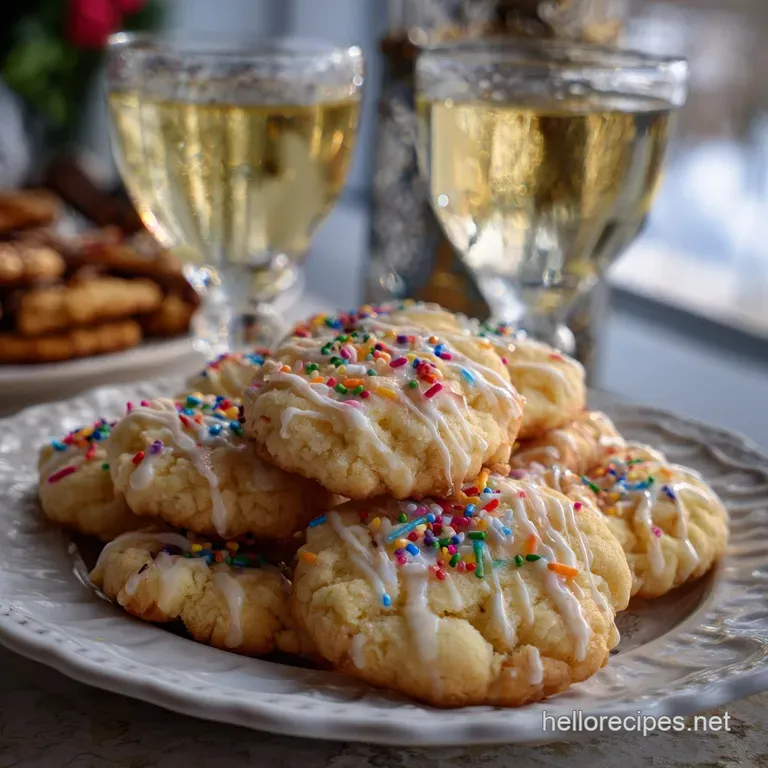
- Effort/Time: 30 minutes total (Active)
- Flavor Hook: Buttery-sweet base with a crisp, boozy-bright finish
- Perfect for: Gift-giving or champagne-toast pairings
- Master the Ultimate Festive Holiday Cookies
- The Science of Why These Festive Holiday Cookies Work
- Hydration Balance Protocol and Thermal Timing
- The Chemistry of Festive Holiday Cookies: Essential Elements
- Precision Tools for Consistent Baking Outcomes
- Strategic Execution: From Emulsification to Glaze
- Why Your Cookies Spread: Root Causes and Fixes
- Flavor Architecture: Creative Twists for Your Batch
- ⚗️ The Scaling Lab: The Physics of Quantity
- Common Myths About Holiday Baking
- Preserving Texture: Moisture Management and Freezing
- Aesthetic Presentation and Pairings for the New Year
- Recipe FAQs
- 📝 Recipe Card
Master the Ultimate Festive Holiday Cookies
There is nothing more demoralizing than spending $40 on premium European butter and vintage champagne only to pull a tray of greasy, flat puddles out of the oven. We’ve all been there the "holiday heartbreak" where the dough spreads into a single, unappealing sheet of carbonized sugar.
It’s a waste of high-quality ingredients and a blow to your hosting confidence when you're left with nothing but crumbs for the platter.
I’ll admit, I destroyed three full batches of these Festive Holiday Cookies before I stopped treating baking like a "vibe" and started treating it like physics. I used to think room temperature butter meant "microwave soft," which utterly collapsed the air pockets I worked so hard to create.
It took a dozen flat, sad discs for me to realize that the difference between a grocery store biscuit and a world class treat is the temperature of your fat and the precision of your aeration.
The secret to these Festive Holiday Cookies isn't just the champagne; it’s the mechanical aeration of the creaming stage combined with cornstarch induced starch gelatinization.
This process interrupts the gluten network, ensuring a "short" crumb that shatters upon impact before dissolving into a velvety, buttery finish. When you nail this hydration balance, you get a cookie that holds its sharp, defined edges while remaining incredibly tender at its core.
The Science of Why These Festive Holiday Cookies Work
- Starch Interference: Cornstarch coats flour proteins, physically preventing long gluten chains from forming for a tender, powdery bite.
- Emulsion Stability: Using a room temperature egg ensures the lecithin bonds perfectly with the butter fat, preventing the dough from "breaking" or weeping oil.
- Sucrose Caramalization: The 3/4 cup of granulated sugar provides the structural "skeleton" through crystallization, ensuring the Festive Holiday Cookies snap rather than bend.
- Alcohol Evaporation: The champagne in the glaze provides a volatile acid profile that cuts through the heavy fat of the butter, cleaning the palate between bites.
Hydration Balance Protocol and Thermal Timing
| Metric | Value | Technical Context |
|---|---|---|
| Prep Time | 20 minutes | Includes mechanical creaming and mise en place |
| Cook Time | 10 minutes | Target: 350°F (175°C) for Maillard onset |
| Total Time | 30 minutes | Does not include mandatory cooling for glaze stability |
| Yield | 24 cookies | Based on 1.5 inch spherical portions |
The Chemistry of Festive Holiday Cookies: Essential Elements
Success in baking is 10% intuition and 90% molecular management. For these Festive Holiday Cookies, every gram of matter serves a structural or chemical purpose.
| Ingredient | Chemical/Physical Role (Science) | The Pro Secret (Why This Matters) |
|---|---|---|
| Kerrygold Unsalted Butter | Lipid based aeration via air pocket entrapment | High butterfat content (82%+) creates a richer, more stable emulsion |
| King Arthur AP Flour | Protein structure via glutenin and gliadin | Mid-range protein (11.7%) provides strength without toughness |
| Cornstarch | Starch gelatinization and gluten disruption | Lowers the overall protein percentage for a "melt away" texture |
| Fine Sea Salt | Ionic bonding and flavor suppression of bitterness | Sharpens the perception of sweetness and strengthens the dough's protein |
The Essential Elements
- 1 cup (227g) Kerrygold Unsalted Butter, softenedWhy this? High fat lipids ensure a velvety mouthfeel and superior air retention.
- 3/4 cup (150g) Granulated white sugarWhy this? Provides the crystalline structure required for crisp edges.
- 1 large Egg, room temperatureWhy this? Acts as the primary emulsifier to bind water and fat.
- 1 tsp (5ml) Nielsen Massey Pure Vanilla Extract
- 2 1/4 cups (280g) King Arthur All-Purpose Flour, leveled
- 2 tbsp (16g) CornstarchWhy this? Inhibits gluten for a tender, short bread-like finish.
- 1/2 tsp (3g) Diamond Crystal Fine Sea Salt
- 1 1/2 cups (180g) Confectioners' sugar, sifted
- 3 tbsp (45ml) Champagne or dry sparkling wine
- 1/2 tsp Gold luster dust or gold sanding sugar
Precision Tools for Consistent Baking Outcomes
You cannot achieve professional results with approximate tools. For these Festive Holiday Cookies, heat distribution and mechanical force are your primary variables.
- KitchenAid Stand Mixer: Necessary for the high velocity aeration of the butter and sugar molecules.
- Silpat Silicone Baking Mats: Provides a non-stick surface that insulates the bottom of the Festive Holiday Cookies, preventing over browning.
- USA Pan Half Sheet Pans: Heavy gauge aluminized steel ensures even thermal distribution without warping.
- Fine Mesh Sieve: Essential for sifting confectioners' sugar to prevent "beading" in the glaze.
- Digital Kitchen Scale: Precision measurement of flour (280g) is non-negotiable for consistent hydration.
Strategic Execution: From Emulsification to Glaze
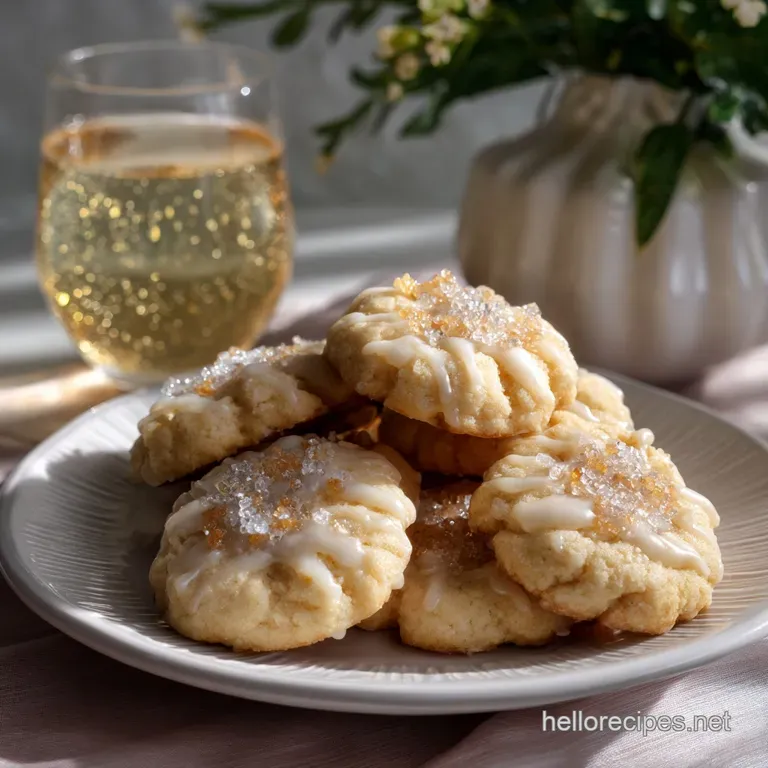
Follow these steps with surgical precision. If you've recently made my Classic Butter Sugar recipe, you'll recognize the base technique, but the hydration here is specifically tuned for the champagne addition.
- Preheat oven to 350°F (175°C) until the internal thermometer stabilizes for 10 minutes.
- Cream the 1 cup butter and 3/4 cup sugar in the KitchenAid for 4 minutes until the mixture is pale ivory and fluffy. Note: This creates the air pockets necessary for lift.
- Incorporate the room temperature egg and 1 tsp vanilla until the mixture looks glossy and fully emulsified. Note: A cold egg will cause the fat to seize and curdle.
- Whisk the 2 1/4 cups flour, 2 tbsp cornstarch, and 1/2 tsp salt in a separate bowl until no clumps of starch remain visible.
- Fold the dry ingredients into the wet until just combined and no streaks of white flour exist. Note: Over mixing here develops gluten and makes the cookies "bready."
- Scoop 1 tablespoon portions and roll into spheres until the surface is smooth and crack free.
- Place on the Silpat lined pan 2 inches apart until the tray is evenly filled with 12 cookies.
- Bake for 10 minutes until the edges are just set and the bottoms are a pale, sandy gold.
- Whisk 1 1/2 cups sifted confectioners' sugar with 3 tbsp champagne until a thick, ribbon like glaze forms.
- Dip cooled Festive Holiday Cookies into the glaze until the top is fully coated, then sprinkle with gold dust.
Chef's Tip: Freeze your butter for exactly 10 minutes before creaming. This small drop in temperature prevents the friction of the mixer blades from melting the fat, ensuring maximum aeration and "lift" in these New Years Eve Treats.
Why Your Cookies Spread: Root Causes and Fixes
Understanding the physics of a "spread" is the difference between a baker and a master. Most New Years Eve Treats fail because the fat loses its structural integrity before the starch has time to set.
Why Your Festive Holiday Cookies Lose Their Shape
When the butter in your Holiday Cookies: Easy New Years Eve Treats melts faster than the flour can absorb the moisture, the dough collapses. This is often caused by a "warm" kitchen or over creaming the butter until it reaches the friction melt point.
To prevent this, ensure your dough feels cool to the touch before it hits the oven.
| Problem | Root Cause | The Fix | Pro Protocol |
|---|---|---|---|
| Extreme Spread | Butter was too soft/warm | Chill dough for 20 mins | Use a digital probe to ensure butter is 65°F |
| Gritty Texture | Sugar didn't dissolve | Cream longer at Stage 2 | Rub dough between fingers; it should feel smooth |
| Tough/Chewy | Over developed gluten | Mix dry ingredients less | Stop the mixer when 10% of flour is still visible |
Flavor Architecture: Creative Twists for Your Batch
Once you master the base of these Festive Holiday Cookies, you can manipulate the chemistry to suit different themes. If you're looking for a fruit forward alternative, my Chewy Oatmeal Raisin recipe offers a great study in moisture control.
For the Champagne Cookie Dough
The base dough is designed to be a neutral, buttery canvas. However, you can enhance the "bready" notes by browning half the butter first. This creates a Maillard rich base that mimics the toasted brioche notes found in high end vintage champagne.
Diet Swap: gluten-free Option
- To convert these Holiday Cookies
- Easy New Years Eve Treats, swap the AP flour for a 1:1 blend containing Xanthan gum.
- Note
- Increase the resting time by 30 minutes.
- Science
- gluten-free starches require more time to fully hydrate, otherwise, the Cookies: Easy New Years Eve Treats will feel "gritty."
Flavor Twist: Lemon Sparkle
Replace the champagne in the glaze with 2 tbsp lemon juice and 1 tbsp vodka. The vodka provides the "sparkle" and quick dry evaporation of the champagne without the grape must flavor profile. It's a sharp, acidic twist on the classic Festive Holiday Cookies.
⚗️ The Scaling Lab: The Physics of Quantity
When you decide to double this batch of Festive Holiday Cookies, you are entering the realm of non-linear thermodynamics.
- Flavor Saturation: If doubling, use only 3/4 tsp salt. Flavor compounds accumulate non-linearly; doubling the salt often results in an aggressively briny cookie.
- The Square Cube Law: A double batch of dough has more internal mass and less relative surface area. It will hold heat longer. If you keep the dough in a large bowl, the center will stay warmer, causing the last 12 cookies to spread more than the first 12. Mandatory instruction: Split the dough into two smaller bowls.
- Pan Crowding: Never put two sheets in the oven at once unless you have a high end convection fan. The bottom sheet will block the radiant heat from reaching the top sheet, leading to uneven starch gelatinization.
- Carry Over Cooking: These New Years Eve Treats are small. They have high thermal mass relative to their size. Pull them when they look "just underdone" in the center; they will finish cooking on the hot pan for 5 minutes.
Common Myths About Holiday Baking
- Myth: "Room temperature" means the butter should be squishy.
- Truth: Professional room temp is 65°F (18°C). If you press it, it should indent but not lose its shape. If it's shiny, it's too warm.
- Myth: You can skip sifting the confectioners' sugar.
- Truth: Sifting removes small "seeds" of compacted sugar that won't dissolve in the champagne, leaving your glaze bumpy rather than mirror smooth.
Preserving Texture: Moisture Management and Freezing
These Cookies: Easy New Years Eve Treats are highly hygroscopic, meaning they will suck moisture out of the air.
- Storage: Store in an airtight glass container for up to 5 days at room temperature. Avoid plastic bags, which trap humidity and turn the crisp edges soft.
- Freezing: You can freeze the unglazed Festive Holiday Cookies for up to 3 months. Wrap them in foil, then place them in a vacuum sealed bag. Thaw at room temperature before glazing.
- Reheating: To restore the "snap," place unglazed cookies in a 300°F (150°C) oven for 4 minutes. Let cool completely before eating.
💡 ZERO WASTE PHILOSOPHY
Leftover Champagne? Don't pour it down the drain. Transform: Simmer it with an equal part sugar to create a champagne simple syrup. Science: The reduction concentrates the tartaric acid, making a perfect sweetener for New Year's Day brunch cocktails.
Aesthetic Presentation and Pairings for the New Year
The visual appeal of these Festive Holiday Cookies relies on the contrast between the matte cookie and the high gloss glaze. Arrange them on a dark slate board to make the gold luster dust pop.
For a complete holiday spread, these pair beautifully alongside a Pumpkin Pie recipe. The creamy, spiced custard of the pie provides a textural counterpoint to the shattering crispness of the cookies.
When serving these New Years Eve Treats, consider the "Midnight Toast Pairing." Place one cookie on top of a champagne flute. The effervescence of the wine hits the bottom of the cookie, releasing the vanilla aromatics just before the first sip.
This sensory experience is the hallmark of a master home cook.
Whether you are making these as Festive Holiday Cookies for a gift or as part of a larger dessert board, remember that precision is your best friend. Follow the ratios, watch your temperatures, and let the science do the heavy lifting.
Your friends will think you’re a genius; I’ll just know you finally respected the butter. Let's crack on!

Recipe FAQs
how to make holiday christmas cookies?
Cream butter and sugar thoroughly until pale and fluffy, incorporating air. This initial aeration phase builds the structure by suspending tiny air pockets within the fat matrix. Ensure all dry ingredients are accurately weighed before folding them gently into the wet mixture.
Can I use salted butter instead of unsalted?
Unsalted butter for precision control. Salted brands vary (80-200mg sodium per tbsp), making standardization impossible. Unsalted lets you adjust salt based on cheese/bacon content.
My cookies spread too thin and greasy; why?
Fat melted before starch set, causing collapse. The fat’s melting point was breached before the flour proteins could fully hydrate and set the structure. This often occurs when butter is too warm or the oven isn't preheated sufficiently.
- Chill dough for 30 minutes prior
- Ensure oven registers 350°F
- Avoid mixing past combined stage
Is chilling the dough mandatory?
Yes, chilling solidifies fat for shape retention. Cold fat resists heat longer, preventing premature melting and spread during the initial bake phase. It allows the starches time to gelatinize properly.
Should I use baking soda or baking powder?
Baking powder provides consistent, gentle lift. Baking soda requires an acid for full activation, which can prematurely tenderize the structure. For sharp edged cookies, use powder to control expansion.
Myth: Should I overmix the dough to ensure everything is combined?
Myth: Overmixing creates tough cookies. Reality: Overmixing rapidly develops gluten networks from the flour proteins, leading to a tough, bread like crumb instead of a tender snap.
How does cornstarch affect the final cookie texture?
Cornstarch creates a softer, "short" crumb. This inert starch dilutes the total protein content, inhibiting long gluten strands from forming, yielding a melt-in-your mouth feel. If you enjoyed mastering this starch control here, see how the same principle applies to stabilizing emulsions in our Cute New Year Desserts: Festive Champagne Cupcakes.
Easy Festive Holiday Cookies
Ingredients:
Instructions:
Nutrition Facts:
| Calories | 172 kcal |
|---|---|
| Protein | 1.6 g |
| Fat | 8.1 g |
| Carbs | 23.5 g |
| Fiber | 0.4 g |
| Sugar | 13.9 g |
| Sodium | 52 mg |
