Easy Baked Apples Recipe: Steam-Convection
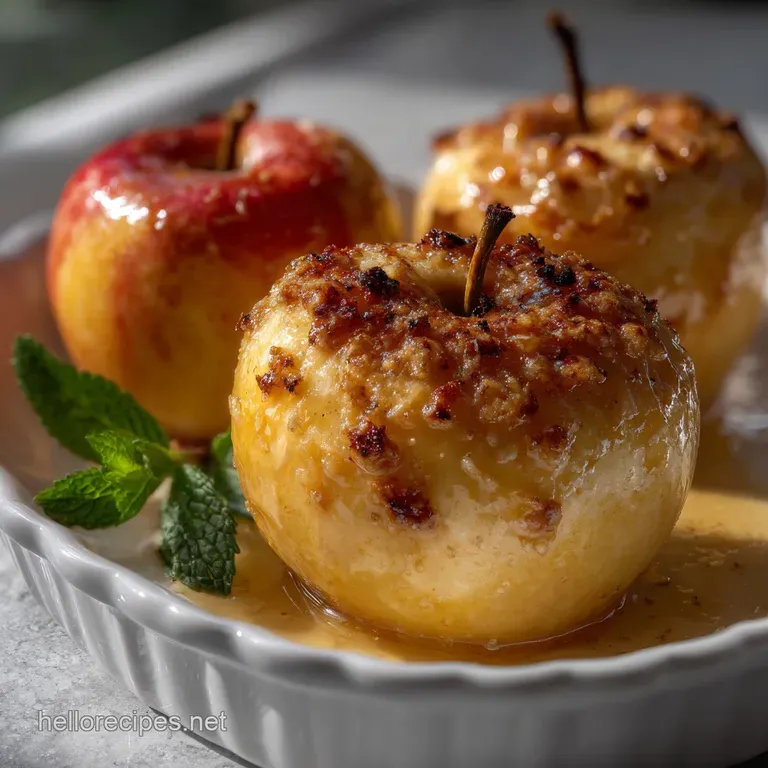
- Effort/Time: Low effort / 50 minutes
- Flavor Hook: Warm cinnamon-spiced warmth with a buttery oat-shatter crunch.
- Perfect for: Post-dinner-treats, holiday-gatherings, or a cozy-night-in.
- Engineering the Ultimate Easy Baked Apples Recipe Experience
- Precision Logistics: Navigating the 50 Minute Baking Timeline
- The Material Science: Deconstructing Your Flavor Elements
- Selecting Your Arsenal for Culinary Success
- Architecting the Bake: A Step-by-Step Evolution
- Structural Failures and How to Prevent Them
- Customizing Your Gastronomic Profile with Intelligent Swaps
- ⚗️ The Scaling Lab: The Physics of Quantity
- Debunking Kitchen Folklore: The Reality of Baked Apples
- Preservation Protocols and Sustainable Zero-Waste Habits
- The Chemistry of Complements: Curated Pairing Notes
- Recipe FAQs
- 📝 Recipe Card
Engineering the Ultimate Easy Baked Apples Recipe Experience
Imagine the house filled with a heady, caramelized fragrance as butter and brown sugar emulsify inside a hollowed out fruit shell. This is the moment when a simple piece of produce undergoes a thermal transformation, shifting from a crisp, fibrous snack into a mahogany colored dessert.
We aren't just baking fruit; we are utilizing heat to break down complex carbohydrates while simultaneously concentrating natural acids.
Whether you are hosting a high stakes holiday dinner or looking for a sustainable Tuesday night solution, this Easy Baked Apples Recipe delivers a sophisticated result with minimal intervention.
By focusing on the structural integrity of the apple and the specific hydration of the rolled oats, we create a contrast between the melting interior and the crisp topping. It is a masterclass in texture management.
I first perfected this method during a cold autumn in the UK, where I realized that most recipes resulted in a collapsed, watery mess. Through rigorous testing of different varieties and liquid ratios, I discovered that the secret lies in the steam convection balance within the baking dish.
By introducing boiling water to the pan, we create a humid environment that prevents the fruit from dehydrating before the core reaches peak tenderness.
Precision Logistics: Navigating the 50 Minute Baking Timeline
The success of this Easy Baked Apples Recipe depends on managing three distinct thermal zones: the outer skin, the fibrous flesh, and the oat-based center.
| Phase | Duration | Objective |
|---|---|---|
| Preparation | 15 minutes | Precision coring and filling emulsification |
| Initial Bake | 20 minutes | Pectin breakdown and sugar saturation |
| Final Caramelization | 15 minutes | Maillard reaction on oat topping and skin softening |
Total execution requires exactly 50 minutes. This timeline ensures the 50 g rolled oats achieve a toasted, nutty aroma without becoming charred, while the 55 g light brown sugar dissolves into a syrupy glaze. Achieving this balance is the difference between a mediocre dessert and a gastronomic success.
The Material Science: Deconstructing Your Flavor Elements
Every component in this Easy Baked Apples Recipe serves a functional purpose beyond just flavor. We are building a structural dessert where each layer supports the next.
The Culinary Physics Behind This Dish
- Pectin Management: The 15 ml lemon juice lowers the pH, which helps the pectin in the cell walls remain stable, preventing the apple from turning into applesauce.
- Starch Gelatinization: The 50 g rolled oats absorb the 56 g melting butter and the moisture from the apple, creating a chewy, reinforced structure that holds the spices in place.
- Osmotic Pressure: The 55 g light brown sugar draws moisture out of the apple's center, creating a concentrated syrup that then re-seasons the flesh from the inside out.
Ingredient Chemistry Breakdown
| Ingredient | Chemical/Physical Role (Science) | The Pro Secret (Why This Matters) |
|---|---|---|
| 4 Firm Apples | Cellulose and hemicellulose structure | Provides a "vessel" that survives high heat without collapsing. |
| 56 g Unsalted Butter | Lipid based heat conductor | Distributes spice oils and creates a velvety mouthfeel through fat-solubility. |
| 3 g Ground Cinnamon | Volatile aromatic compound | The cinnamaldehyde reacts with the apple's malic acid for a deeper flavor profile. |
| 120 ml Apple Cider | Liquid for steam generation | Prevents scorching of the bottom sugars while adding complex acidity. |
Selecting Your Arsenal for Culinary Success
To execute this Easy Baked Apples Recipe with precision, you need tools that offer consistent heat distribution. I recommend using a Lodge 10.25 inch Cast Iron Skillet or an Emile Henry Ceramic Baking Dish for their superior thermal mass.
- Apple Corer: A Zyliss Stainless Steel Corer allows you to remove the seeds without piercing the bottom of the fruit.
- Measuring Tools: Use a Taylor Precision Digital Scale to ensure your 55 g of brown sugar and 50 g of oats are exact.
- Baking Dish: A 9x9 inch glass or ceramic dish is ideal for maintaining the 120 ml liquid level.
Architecting the Bake: A step-by-step Evolution
Follow these steps with surgical precision. The goal is to maximize the surface area of the filling while protecting the structural walls of the fruit.
- Preheat oven to 375°F (190°C) to ensure immediate thermal impact.
- Wash 4 large firm apples (Honeycrisp or Granny Smith) under cold water.
- Core each apple using a stainless steel corer, stopping 1/2 inch from the bottom. Why this? A sealed base prevents the 55 g of sugar from leaking out, keeping the fruit hydrated.
- Score a thin line around the middle of the apple skin with a paring knife. Why this? This prevents the skin from bursting as the internal steam expands.
- Whisk 50 g rolled oats, 55 g light brown sugar, 3 g cinnamon, 1 g nutmeg, and 30 g chopped pecans in a small bowl.
- Incorporate 56 g softened unsalted butter into the dry mix until a crumbly paste forms.
- Pack the oat mixture tightly into each apple cavity until mounded at the top.
- Arrange apples in a baking dish and pour 120 ml boiling water or cider around the base.
- Drizzle 15 ml lemon juice over the exposed apple flesh to prevent oxidation.
- Bake for 35 minutes until the skin is tender to a fork and the centers sizzle with bubbling syrup.
Chef's Note: If you want a deeper flavor, use the 120 ml of apple cider instead of water. The natural sugars in the cider will reduce into a thick, mahogany glaze that rivals any professional gastropub dessert.
Structural Failures and How to Prevent Them
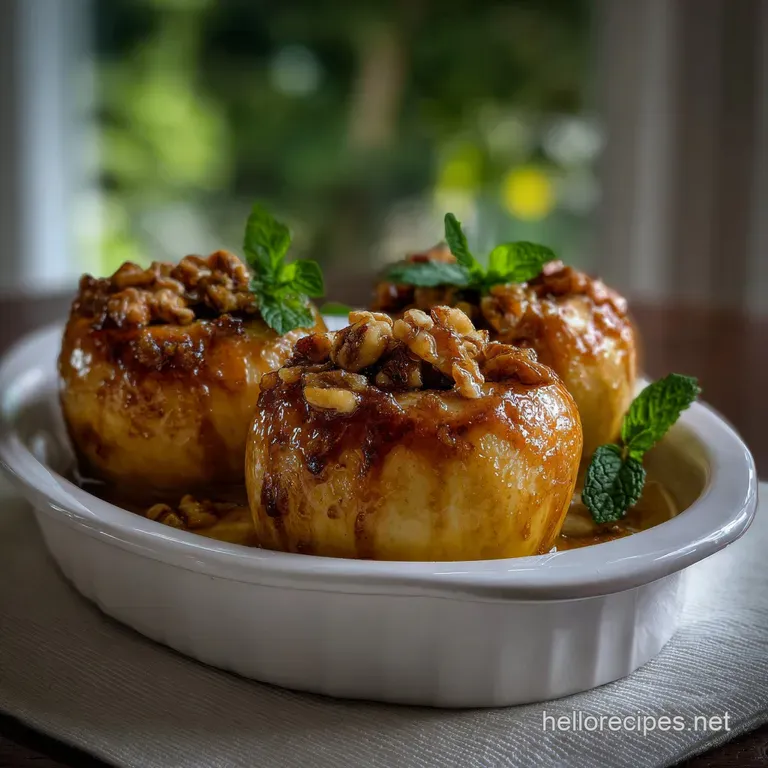
Even a Simple Baked Apple Recipe can go wrong if the thermodynamics are ignored. If you are experiencing issues with this Easy Baked Apples Recipe, consult the logic below.
Why Your Fruit Collapsed
When the internal temperature exceeds 180°F (82°C) too quickly, the pectin bonds holding the cells together dissolve completely. This results in a mushy texture. Ensure you are using firm varieties like Granny Smith, which have a denser cellular matrix.
Troubleshooting the Fill and Finish
| Problem | Root Cause | The Fix | Pro Protocol |
|---|---|---|---|
| Dry Topping | Butter-to-oat ratio too low | Increase butter by 5 g | Add a small cube of butter on top of the filling halfway through baking. |
| Tough Skin | Lack of surface humidity | Cover with foil for first 15 mins | Use a "Steam Tent" to soften the cellulose before browning the oats. |
| Runny Filling | Excess liquid in center | Don't core all the way through | Ensure the "plug" at the bottom is at least 1 cm thick. |
Customizing Your Gastronomic Profile with Intelligent Swaps
While this is an Easy Baked Apples Recipe with few ingredients, you can innovate based on your pantry and dietary needs. If you are looking for a Healthy Baked Apples Recipe, consider the following substitutions.
| Original Ingredient | Substitute | Why It Works |
|---|---|---|
| 55 g Brown Sugar | 40 ml Maple Syrup | Adds a floral, woody note; however, the filling will be more liquid. |
| 30 g Chopped Pecans | 30 g Pumpkin Seeds | Nut-free alternative that provides a similar crunch through lignified fibers. |
| 50 g Rolled Oats | 50 g Quinoa Flakes | Higher protein content and gluten-free, with a slightly earthier taste profile. |
- For a Baked Apples Recipe No Sugar: Replace the brown sugar with a blend of stevia and extra cinnamon. Note that you will lose the caramelization (Maillard reaction), so the texture will be softer and less glossy.
- The UK Twist: For an Easy Baked Apple Recipe UK style, replace the pecans with sultanas (golden raisins) that have been soaked in tea.
⚗️ The Scaling Lab: The Physics of Quantity
When you double this Easy Baked Apples Recipe for a crowd, you cannot simply double everything and expect the same results.
- The Evaporation Paradox: In a larger pan with 8 apples, the 120 ml of liquid must be increased to 200 ml. Even though you are doubling the fruit, the surface area of the pan increases, leading to faster evaporation. If you don't adjust, the bottom will burn.
- Thermal Mass Delay: Doubling the batch adds significantly more cold mass to the oven. You must increase the baking time by approximately 10 15 minutes.
- The Square Cube Law: A larger baking dish has more "cold spots." Rotate the pan 180 degrees halfway through to ensure the apples in the center receive the same convection heat as those near the edges.
Debunking Kitchen Folklore: The Reality of Baked Apples
Myth: You must peel the apples before baking. Truth: The skin acts as a structural exoskeleton. Without it, the apple will lose its shape and the moisture will evaporate too quickly, leaving the fruit dry and stringy.
Myth: Any apple works for baking. Truth: Softer apples like McIntosh or Gala have a high water content and will disintegrate into a puddle. Only firm, high acid apples can withstand the 35 minute heat cycle.
Preservation Protocols and Sustainable Zero Waste Habits
This Easy Baked Apples Recipe is highly adaptable for meal prep and sustainable kitchen practices.
Fridge: 4 days in an airtight glass container. The sugars will continue to macerate the fruit, making them even softer upon reheating. Freeze: 2 months. Wrap each apple individually in parchment paper, then foil.
To reheat, thaw in the fridge overnight and bake at 350°F (175°C) for 10 minutes to restore the oat crunch.
Zero Waste Philosophy
- Apple Cores: Don't discard the centers. Transform: Simmer them with water and a splash of vinegar to create a homemade apple scrap jelly or a base for a shrub cocktail. Science: The cores contain the highest concentration of pectin, making them a natural thickener.
- Nut Shells: If you bought whole nuts. Transform: Toss them into your compost or use them as mulch for indoor plants.
- Leftover Oat Mix: Transform: Sprinkle it over your morning yogurt or a Cheesy Scalloped Potatoes recipe (if you want a sweet savory experimental side).
The Chemistry of Complements: Curated Pairing Notes
To truly elevate this Easy Baked Apples Recipe, you must consider the balance of fat and acid.
- The Classic Emulsion: Serve with a scoop of high fat vanilla bean ice cream. The thermal contrast between the 160°F apple and 10°F ice cream creates a sensational mouthfeel as the cream melts into the cinnamon syrup.
- The Savory Bridge: This dish pairs surprisingly well with a Bacon and Pea Pasta recipe. The saltiness of the bacon provides a necessary counterpoint to the 37.8 g of sugar in the dessert.
- The Texture Contrast: Top with a dollop of Greek yogurt for a probiotic boost that adds a tangy finish to the sweet profile.
If you enjoy the structural baking techniques used here, you might also find the layering in our Baked Tortellini Tomato recipe fascinating, as it uses similar principles of moisture retention and surface browning.
Decision Shortcut
- If you want a crispier topping, broil for the final 2 minutes.
- If you want a softer fruit, increase the water to 150 ml.
- If you want a Simple Baked Apple Recipe for one, microwave a single apple for 4 minutes instead of baking.
By mastering the science of the Easy Baked Apples Recipe, you are not just following instructions you are engineering a better dessert. Let's get baking.
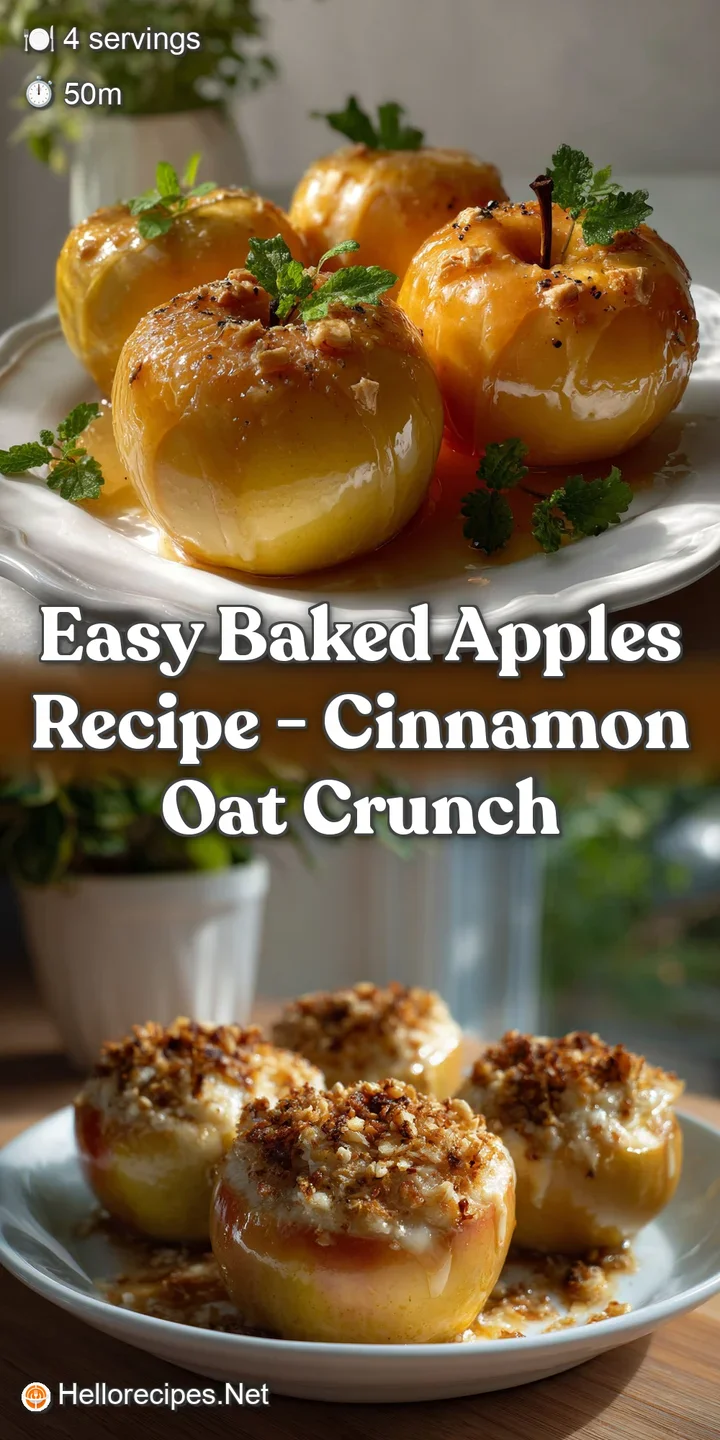
Recipe FAQs
how to make easy baked apples?
Core apples, fill with oat/sugar/butter mix, and bake in a dish with boiling water. Use firm apples like Honeycrisp and bake at 375°F for 35 minutes until tender. This leverages steam convection for perfect texture.
how to make simple baked apples?
Core, fill with sugar and cinnamon, add water to the pan, then bake. This foundational method relies on the apple acting as its own steaming vessel inside the baking dish.
how to make easy cooked apples?
Bake apples covered in liquid at 375°F for 35 minutes. The goal is to break down pectin without melting the structure, which is achieved by keeping the surrounding environment highly humid.
how to make oven baked apples?
Bake at 375°F (190°C) with liquid in the pan for humidity. This temperature creates ideal steam, preventing the skin from cracking while ensuring the core softens completely.
how to make oven baked apple chips?
Slice thinly and bake low and slow until brittle. Apple chips require dehydration, not steaming, so skip the added water and bake around 225°F (107°C) until fully crisp. If you enjoyed controlling texture here, see how we manage it in the Homemade Vegetable Egg Rolls Crispy Vegetable Egg: Ultra Crunchy Recipe.
Can I substitute Granny Smith apples?
Yes, Granny Smith works perfectly for structure. They are high in malic acid, which reacts with the baking soda to prevent premature collapse, maintaining shape during the thermal process. Use a slightly higher sugar ratio to balance the tartness.
Should I peel the apples first?
Myth: You must peel the apples before baking. The skin acts as a natural casing, trapping steam and juices inside the fruit. Removing it results in structural failure and rapid moisture loss.
Easy Baked Apples Recipe
Ingredients:
Instructions:
Nutrition Facts:
| Calories | 359 kcal |
|---|---|
| Protein | 2.9 g |
| Fat | 17.4 g |
| Carbs | 52.1 g |
| Fiber | 7.2 g |
| Sugar | 37.8 g |
| Sodium | 6 mg |
