Recipe
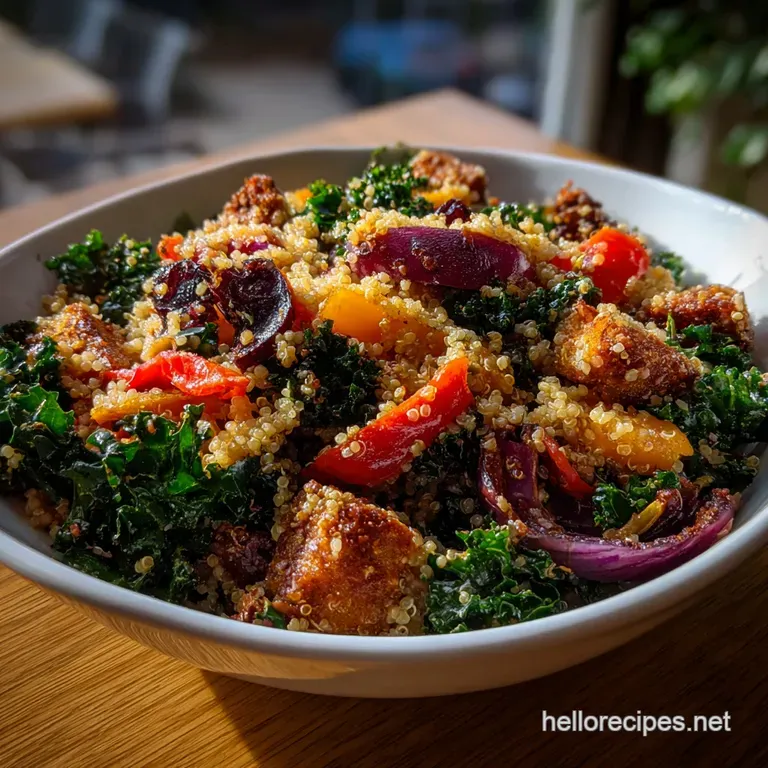
- Effort/Time: 45 minutes / Moderate technique
- Flavor Hook: Smoked-paprika roasted sweetness meets zesty, velvety tahini
- Perfect for: Nutrient-dense meal-prep or a show-stopping plant-based dinner
- The Synergy of Thermal Dehydration and Cellular Softening
- Precision Benchmarks for a Texture-First Vegetable Salad
- The Molecular Architecture of Your Raw Salad Components
- Culinary Technology for Maximizing Maillard Surface Area
- The Sequential Protocol for High-Contrast Texture Development
- Correcting Texture Failures and Emulsion Breakdown
- Innovative Adaptations for Diverse Gastronomy Profiles
- ⚗️ The Scaling Lab
- Preserving Crispness and Implementing Zero-Waste Systems
- Common Myths Debunked
- Recipe FAQs
- 📝 Recipe Card
There is nothing more discouraging than investing $30 in high-quality organic produce only to end up with a bowl of soggy, bitter greens and limp, water logged grains. Most home cooks treat greens as a passive vessel for dressing, but without addressing the rigid cellulose structure of the leaf, you’re left with a salad that is physically difficult to chew and emotionally draining to finish.
I’ve suffered through countless "sad desk salads" where the dressing pooled at the bottom and the quinoa felt like damp sand because I didn't respect the physics of moisture management.
I’ll be the first to admit I used to ruin this dish by dumping hot, freshly boiled quinoa directly onto raw kale. I destroyed three batches of what should have been a vibrant Crispy Quinoa and Roasted Vegetable Kale Salad before I realized that residual steam is the enemy of structural integrity.
I was rushing the cooling process, effectively steaming the kale into a slimy mess while the quinoa lost its ability to ever achieve that signature "pop" under high heat.
The breakthrough came when I applied the principle of thermal mass recovery to the roasting process. The secret to this Crispy Quinoa and Roasted Vegetable Kale Salad isn't just the ingredients; it’s the science of surface area and moisture evaporation.
By spreading the pre-cooked grains onto a pre-heated Lodge Cast Iron Baking Sheet, we trigger the Maillard reaction on the surface of each individual grain, creating a mahogany colored crust that shatters on impact.
The Synergy of Thermal Dehydration and Cellular Softening
- Maillard Reaction: over High heat roasting at 400°F (200°C) reduces surface moisture, allowing amino acids and reducing sugars to create complex, nutty flavor compounds.
- Cellular Maceration: Mechanical "massaging" with acid and lipids breaks down the tough cellulose walls of the kale, transforming a rigid leaf into a velvety, digestible base.
- Starch Retrogradation: Cooling the quinoa before roasting allows starches to realign, ensuring the interior remains fluffy while the exterior becomes crisp.
- Emulsion Stability: The high lecithin content in Soom Foods Tahini acts as a natural emulsifier, bridging the gap between the aqueous lemon juice and the lipids in the avocado oil.
Precision Benchmarks for a Texture First Vegetable Salad
When preparing a Crispy Quinoa and Roasted Vegetable Kale Salad, the difference between a soggy mess and a professional grade dish lies in the details. While a shortcut version might save time, it sacrifices the structural contrast that makes this recipe innovative.
| Metric | Fresh & Technical Protocol | Shortcut Method |
|---|---|---|
| Quinoa Texture | Shattering, nutty, individual grains | Soft, clumped, mushy |
| Kale Consistency | Velvety, tender, dark emerald | Rigid, fibrous, difficult to chew |
| Vegetable Finish | Caramelized edges, tender core | Steamed, pale, uniform texture |
| Dressing Integration | Fully emulsified, clings to leaves | Separated, pools at bottom |
Decision Shortcut: If you want maximum crunch, ensure quinoa is bone dry before roasting. If you want a sweeter profile, roast the sweet potatoes 5 minutes longer to maximize sugar caramelization.
If you're short on time, use a high powered Vitamix to emulsify the dressing in 10 seconds.
The Molecular Architecture of Your Raw Salad Components
The quality of your Crispy Quinoa and Roasted Vegetable Kale Salad depends on understanding how these ingredients interact under heat and acid. We choose Avocado Oil for roasting because its high smoke point prevents the formation of acrid compounds during the crisping process.
| Ingredient | Chemical/Physical Role (Science) | The Pro Secret (Why This Matters) |
|---|---|---|
| Cooked Quinoa (370g) | Complex carbohydrate matrix for dehydration | Must be cold to prevent internal steaming during the roast. |
| Sweet Potato (300g) | Polysaccharide breakdown into maltose | Small 1/2 inch cubes increase surface area for faster caramelization. |
| Tahini (60g) | Lipid rich protein suspension | Provides the "fatty" mouthfeel that balances the acidic vinegar. |
| Curly Kale (250g) | Fibrous cellulose structure | Removing the woody stem is mandatory for a consistent mouthfeel. |
Ingredient Substitutions and Trade offs:
| Original Ingredient | Substitute | Why It Works |
|---|---|---|
| Avocado Oil (30ml) | Grapeseed Oil | Similar high smoke point; neutral flavor profile. |
| Maple Syrup (15ml) | Agave Nectar | Same viscosity; adds sweetness without the "woody" maple notes. |
| Apple Cider Vinegar (30ml) | Rice Vinegar | Similar acidity (5 6%); slightly milder flavor profile. |
| Sweet Potato (300g) | Butternut Squash | Similar starch content; squash is slightly more fibrous. |
Why this?Avocado Oil is selected for its 520°F smoke point, ensuring your Crispy Quinoa and Roasted Vegetable Kale Salad doesn't develop a burnt, bitter aftertaste during over high heat roasting.
Culinary Technology for Maximizing Maillard Surface Area
To execute this Crispy Quinoa and Roasted Vegetable Kale Salad with precision, you need tools that manage heat distribution effectively.
- Lodge Cast Iron Baking Sheet: Essential for thermal mass; it doesn't drop in temperature when the cold vegetables hit the surface.
- Pyrex Glass Mixing Bowls: Non-reactive surface for massaging kale; won't leach metallic flavors when exposed to lemon juice.
- Microplane Grater: For the garlic clove; creates a fine paste that emulsifies seamlessly into the tahini.
- Whisk or Immersion Blender: For the dressing; essential to create a stable fat-in-water emulsion.
For another masterclass in texture, you might find similarities in how we manage surface moisture in our Vegetable Egg Rolls recipe, where dryness is the key to crunch.
The Sequential Protocol for High Contrast Texture Development
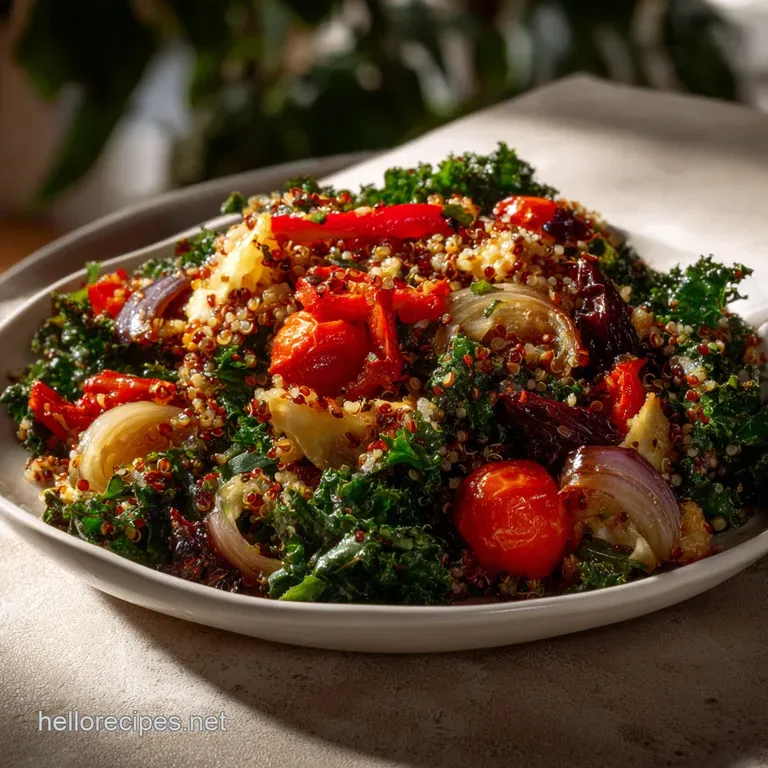
Follow these steps exactly to ensure your Crispy Quinoa and Roasted Vegetable Kale Salad achieves its full potential.
- Preheat your oven to 400°F (200°C) with the Lodge Baking Sheet inside. Note: This ensures immediate heat transfer (conduction) the moment ingredients touch the pan.
- Toss 300g cubed sweet potato and 150g broccoli with 30ml Avocado Oil, 1 tsp smoked paprika, and 1/2 tsp garlic powder. Note: The oil acts as a heat transfer medium for the spices.
- Spread the vegetables on one half of the hot tray. Roast for 15 minutes until sweet potatoes are easily pierced with a fork and broccoli edges begin to char.
- Spread 370g of cold, cooked quinoa on the other half of the tray. Roast for an additional 15 minutes until the quinoa makes a faint crackling sound and turns a deep golden brown.
- Strip 250g curly kale from the stems. Chop into bite sized pieces and place in a large Pyrex bowl.
- Drizzle 15ml California Olive Ranch EVOO and 15ml lemon juice over the kale.
- Massage the kale firmly for 3 minutes until the volume reduces by half and the color shifts to a translucent, dark emerald.
- Whisk 60g tahini, 30ml apple cider vinegar, 15ml maple syrup, and minced garlic. Note: Slowly add the 3 tbsp warm water to reach a pourable, velvety consistency.
- Combine the roasted vegetables and crispy quinoa with the massaged kale.
- Fold the dressing into the salad gently. Serve immediately until the contrast between the warm, shattering quinoa and cool, tender kale is most pronounced.
Correcting Texture Failures and Emulsion Breakdown
Even with a detailed protocol, the physics of a Crispy Quinoa and Roasted Vegetable Kale Salad can be finicky.
Why Your Quinoa Isn't Crisping
If your grains remain soft, it’s usually due to excess moisture or pan crowding. When grains are too close together, they release steam that gets trapped, effectively boiling the quinoa rather than roasting it.
| Problem | Root Cause | The Fix | Pro Protocol |
|---|---|---|---|
| Soggy Quinoa | Excess moisture/Crowding | Spread thinner; use 2 trays | Dry quinoa on paper towels before roasting |
| Bitter Kale | Under massaging | Increase mechanical force | Add a pinch of sea salt to act as an abrasive |
| Broken Dressing | Rapid liquid addition | Add water 1 tbsp at a time | Ensure tahini is at room temperature before mixing |
Much like the delicate balance of fats in our Bacon and Pea Pasta recipe, the tahini dressing relies on slow integration to stay creamy.
Innovative Adaptations for Diverse Gastronomy Profiles
This Crispy Quinoa and Roasted Vegetable Kale Salad is a foundational framework. By understanding the "why" behind the ingredients, you can swap components while maintaining the innovative structure.
| Original Ingredient | Substitute | Why It Works |
|---|---|---|
| Curly Kale | Lacinato (Dino) Kale | Thinner cell walls; requires 1 min less massaging. |
| Tahini | SunButter (Sunflower Seed) | Similar fat content; nut-free but adds a distinct earthy tone. |
| Smoked Paprika | Cumin + Chili Powder | Shifts the flavor map from smoky sweet to earthy spicy. |
| Sweet Potato | Golden Beets | High sugar content for caramelization; firmer texture than potato. |
- Sweet
- Maple syrup, roasted sweet potato
- Savory
- Smoked paprika, garlic powder
- Acidic
- Lemon juice, apple cider vinegar
- Fatty/Rich
- Tahini, avocado oil
- Bitter/Earthy
- Kale, toasted quinoa
⚗️ The Scaling Lab
When doubling this Crispy Quinoa and Roasted Vegetable Kale Salad, you must respect the laws of thermodynamics:
- Pan Crowding (Maillard Killer): If you double the 370g of quinoa on a single sheet, the temperature will drop below 300°F. Mandatory instruction: Use two separate baking sheets on different racks to maintain airflow.
- The Evaporation Paradox: When making a larger batch of dressing, do not double the water immediately. Surface area remains constant in small bowls, but volume increases. Start with 4 tbsp of water for a double batch and adjust.
- Flavor Saturation: Scale spices (paprika/garlic powder) to 1.5x, not 2x. Concentrated spices can become overwhelming in large volumes of fiber rich kale.
- Carry Over Heat: A double batch of roasted vegetables holds more thermal energy. Pull them from the oven 2 minutes early to prevent the broccoli from turning mushy during the cooling phase.
Preserving Crispness and Implementing Zero Waste Systems
The Crispy Quinoa and Roasted Vegetable Kale Salad is best enjoyed fresh, but you can maintain its integrity with proper storage technology.
- Storage: Store the massaged kale/vegetables and the crispy quinoa in separate containers. Quinoa will lose its crunch if exposed to the humidity of the vegetables in the fridge.
- Fridge Life: Kale base stays fresh for 4 days; Quinoa stays crisp for 48 hours in an airtight glass jar.
- Reheating: To revive the quinoa, flash fry it in a dry pan for 2 minutes. Do not microwave the salad, as it will collapse the cellular structure of the kale.
💡 ZERO WASTE PHILOSOPHY:Kale Stems: Don't discard the woody stems! Transform: Thinly slice them and pickle in the leftover apple cider vinegar and maple syrup.
Science: The acid softens the tough fibers, creating a crunchy, probiotic rich topping. Quinoa Scraps: If you have small amounts of quinoa left in the bag. Transform: Add to your morning smoothie.
Science: Provides complex carbohydrates and protein without altering the flavor profile significantly.
Common Myths Debunked
Myth: You have to cook quinoa fresh for this recipe.Truth: Actually, day-old, cold quinoa from the fridge is superior. The starch has undergone retrogradation, making it drier and more prone to achieving a shattering crispiness.
Myth: Massaging kale makes it mushy.Truth: Proper massaging breaks the cellulose but leaves the structure intact. Over massaging (more than 5 7 minutes) or using too much salt is what causes the "wilted" look.
Myth: Any oil works for roasting.Truth: Using Extra Virgin Olive Oil for the 400°F roast can lead to smoking and oxidized fats.
Avocado oil is chemically more stable at high temperatures, preserving the flavor of your Crispy Quinoa and Roasted Vegetable Kale Salad.
Mastering this Crispy Quinoa and Roasted Vegetable Kale Salad is about more than just following steps; it’s about controlling the environment of your ingredients.
By respecting the thermal needs of the quinoa and the mechanical needs of the kale, you’ve moved from simply "making a salad" to engineering a culinary experience. Let’s get to roasting!
Recipe FAQs
Why is my quinoa soggy after roasting?
Pan crowding prevents crucial moisture evaporation. Excess moisture trapped between grains steams the starch instead of allowing the Maillard reaction to occur.
- Ensure quinoa is fully cold
- Use a preheated sheet pan
- Spread ingredients in a single layer
Can I substitute sweet potatoes with carrots?
Yes, but adjust roasting time. Carrots have a higher sugar concentration, meaning they will caramelize faster than sweet potatoes. Monitor them closely to prevent burning during the initial roast cycle.
What is the best oil for achieving maximum crispness on the vegetables?
Avocado oil provides the highest smoke point for roasting. Oils with lower smoke points, like standard EVOO, begin to oxidize and break down at 400°F, leading to acrid flavors. If you are interested in learning more about fat stability, see how we apply similar principles in our The Sunday Best oven-roasted Beef Tenderloin with Rich Madeira Mushroom Sauce.
How long should I massage the kale?
Massage until volume visibly reduces by half. This mechanical action physically breaks the rigid cellulose walls of the kale, rendering the leaf tender and velvety. If you enjoyed mastering this texture technique here, see how the same principle of cellular breakdown is adapted for dough handling in Stuffing: The Ultimate Crispy Sourdough Dressing Recipe (Not Soggy!).
Is it necessary to preheat the baking sheet?
Yes, for immediate high heat conduction. Placing ingredients on a cold pan causes a temperature drop, favoring water evaporation over surface browning and crisping.
Myth: Massaging kale makes it mushy.
Myth: Massaging kale makes it mushy. Truth: Proper technique (3-5 minutes with acid/fat) only breaks down rigid cellulose, softening the leaf; over working or using too much salt is what causes true wilting.
Can I make this salad ahead of time?
Store components separately for best results. The dressing can be made days ahead, but do not combine the crispy quinoa, roasted vegetables, or massaged kale until immediately before serving.
Crispy Quinoa Roasted Salad
Ingredients:
Instructions:
Nutrition Facts:
| Calories | 413 kcal |
|---|---|
| Protein | 11 g |
| Fat | 21 g |
| Carbs | 47 g |
| Fiber | 8 g |
| Sugar | 7 g |
| Sodium | 580 mg |
