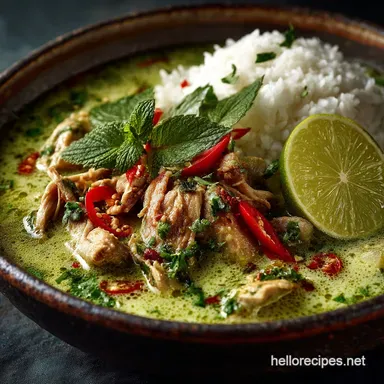
The Weeknight Warrior Quick Creamy Green Thai Chicken Curry

- Unlocking Authentic Thai Flavors: Why This Green Curry Wins
- Essential Pantry Treasures for Brilliant Thai Chicken Curry
- Assembling Your Curatorial Components
- The Method to the Madness: Step-by-Step Cooking Sequence
- Building Layers of Aromatic Depth
- Elevating Your Bowl: Serving Suggestions and Pairings
- Pro Secrets for Next-Level Thai Cuisine
- Recipe FAQs
- 📝 Recipe Card
Unlocking Authentic Thai Flavors: Why This Green Curry Wins
There’s a certain magic that happens when spices meet the creamy embrace of coconut milk; it’s the heart and soul of Southeast Asian cuisine. When we talk about capturing that magic at home, the Thai Chicken Curry stands tall as a benchmark of culinary alchemy.
It’s not just a dish; it’s an experience built on complexity achieved through deceptively simple techniques. Forget spending hours grinding pastes or sourcing ingredients from three different continents.
We are focusing on creating a stunning, vibrant, and deeply satisfying curry using smart shopping and focused cooking methods that highlight true authenticity.
Say Goodbye to Takeaway Tubs Forever
We’ve all been there, ordering that standard local favourite, only to find the sauce is either too sweet, too thin, or disappointingly one-dimensional. This Thai Chicken Curry Recipe is designed to shatter those mediocre memories.
We achieve layered depth not by adding dozens of obscure spices, but by honouring the core flavour principles that define the cuisine. By focusing on the quality of our paste and mastering the initial "blooming" stage, we elevate a quick stovetop meal into something truly restaurant-worthy.
Meet Your New Go-To Weeknight Meal
If you’re seeking an Easy Thai Chicken Curry , you’ve found your champion. With only 15 minutes of active prep time and 25 minutes on the heat, this entire flavour journey is complete in under 40 minutes.
It moves beyond being a weekend project and firmly establishes itself as a reliable staple. Whether you are looking for a rich stew or perhaps something closer to a Thai Chicken Curry Soup , this foundational method allows for easy modification later, but for now, we are aiming for that perfect, velvety texture.
Demystifying the Signature Thai Chicken Curry Profile
What separates a good curry from an exceptional one? It’s the precise balance of the four pillars: salty, sweet, sour, and spicy. Our Red Curry Chicken Recipe variation (using green paste here, but the principle applies!) relies on fish sauce for profound salinity and umami, sugar to temper the heat, and a final splash of fresh lime juice to provide necessary brightness and acidity.
Getting these elements right is the key to that addictive quality you crave.
Essential Pantry Treasures for Brilliant Thai Chicken Curry
To create a truly memorable meal, you must stock your kitchen thoughtfully. While this is intended to be an Easy Thai Chicken Curry , certain ingredients are non-negotiable if you want the true aromatic lift that defines this cuisine.
Think of these as your flavour foundation builders, ready for action whenever the craving strikes.
Assembling Your Curatorial Components
A successful curry is about harmony among its parts. We are using chicken for ease and speed, but the liquids and aromatics are where the real heavy lifting occurs. When compiling your shopping list, pay close attention to the source and quality, as these items are spotlighted in the final dish.
The Powerhouse of Flavor: Selecting Your Curry Paste
Since this recipe skips the arduous process of creating an Authentic Thai Chicken Curry paste from scratch (which requires a mortar and pestle the size of a small satellite dish!), the store-bought paste carries significant responsibility.
Seek out recognized brands, often found in the refrigerated section of Asian markets, as they generally contain fresher ingredients than shelf-stable alternatives. Whether you opt for green, red, or yellow, understand that the paste is the primary flavour driver.
Use 3 tablespoons as a starting point; if you prefer a milder experience, dial it back, but remember, this is where the complexity comes from.
Crucial Non-Negotiable Produce and Protein Picks
We are using boneless, skinless chicken, thighs lend a richer flavour, but breasts cook slightly faster. Dice it uniformly so it cooks evenly. For vegetables, the combination of crisp bell pepper, tender bamboo shoots, and snappy green beans provides necessary textural variance against the soft sauce.
Don't omit the Kaffir lime leaves; their citrusy, floral scent is unique and irreplaceable for achieving that authentic aroma.
Mastering the Creaminess: Coconut Milk Selection Guide
If you are attempting to create a Thai Chicken Curry Coconut Milk masterpiece, you must use full-fat canned coconut milk. Do not substitute with cartons designed for coffee or drinking; they lack the necessary fat content.
When you open the can, you will notice a thick layer of cream on top, this is gold. We use this thick cream initially to "fry" the curry paste, creating a richer base before adding the thinner liquid part of the can.
Tools of the Trade: Essential Kitchen Gear
For this one-pan wonder, a large, deep skillet or a heavy-bottomed Dutch oven is ideal. The weight helps distribute heat evenly, preventing the curry from scorching when you’re coaxing the oils out of the paste.
A good sharp knife is all you need for prep, though if you were planning on making a Slow Cooker Thai Chicken Curry adaptation, a good liner for your Crock Pot Thai Chicken Curry setup would be advisable.
Related Recipes Worth Trying
- The Ultimate Crispy Chicken Parmesan Recipe Comfort Food Classic — Achieve shatteringly crisp Chicken Parmesan with this foolproof guide featuring homemade sauce and Panko breading Your new favourite Italian American...
- Easy Orange Chicken Recipe Crispy Sticky Takeout Style — Tired of soggy takeaway Learn how to make truly crispy Homemade Orange Chicken with a perfectly balanced vibrant sauce in under 40 minutes
- The Ultimate Sticky Honey Garlic Chicken Thighs Recipe — Make unbelievably juicy sticky Honey Garlic Chicken Thighs faster than takeout This oven recipe delivers the perfect sweet and savoury glaze Get the full...
The Method to the Madness: step-by-step Cooking Sequence

The structure of cooking this curry is critical. We build intensity first, then mellow it out with liquids, and finish by layering in the fresh elements for brightness. This choreographed approach ensures every ingredient contributes its best flavour profile to the final dish.
Building Layers of Aromatic Depth
This section details the precise sequence required to move from raw components to a simmering dream. Follow these steps closely, paying special attention to the timing of incorporating the fats and liquids.
First Infusion: Blooming the Curry Paste
Heat 1 tablespoon of coconut oil in your skillet over medium heat. Add your 3 tablespoons of green curry paste. This step, known as "blooming," involves cooking the paste gently for about 1 to 2 minutes, stirring constantly.
You will notice the oil change colour and a powerful, sweet spice aroma will flood your kitchen. This crucial action releases the essential oils held within the dried herbs and spices of the paste, ensuring your curry doesn't taste raw or flat.
Sizzling the Chicken to Perfection
Introduce 1.5 lbs of diced chicken breast or thigh to the fragrant paste. Stir well, ensuring every piece gets thoroughly coated. Cook the chicken just until the outside is sealed and opaque, it doesn't need to be cooked through yet.
This slight searing helps the chicken retain moisture during the subsequent simmer.
The Gentle Simmer: Integrating Vegetables and Broth
Here is where the sauce comes together. Scoop out about a quarter cup of the thick coconut cream from the top of your can and stir this vigorously into the chicken and paste mixture until it emulsifies and looks glossy.
Then, slowly pour in the remaining Thai Chicken Curry Coconut Milk and 1 cup of low-sodium chicken stock. Add 4 slightly bruised kaffir lime leaves, 2 tablespoons of fish sauce (our salty backbone), and 1 teaspoon of brown sugar to begin balancing the flavour.
Bring the mixture up to a gentle simmer, avoid a rolling boil, as this can cause the coconut milk to separate unattractively. Let this cook for about 10 minutes.
The Final Touches: Seasoning for Peak Flavour
After the chicken is cooked through, toss in your sliced red bell pepper, 1 cup of drained bamboo shoots, and 1 cup of trimmed green beans. These vegetables are added now so they retain some pleasing bite (tender-crisp). Simmer for another 5 to 7 minutes.
Finally, remove the skillet from the heat. Stir in 1 tablespoon of fresh lime juice. Taste. This is your moment to adjust: add a final small drizzle of fish sauce for saltiness or a pinch more sugar if the spice overwhelms the other notes.
Elevating Your Bowl: Serving Suggestions and Pairings
A beautiful curry demands the perfect accompaniment to soak up every last drop of that incredible sauce. Serving is just as important as the cooking process itself.
Pro Secrets for Next-Level Thai Cuisine
Even in an Easy Thai Chicken Curry , a few insider tips can push your results into legendary territory. Small adjustments made at the right time transform a good meal into an exceptional one.
Perfect Companions: What to Serve Alongside
The obvious partner is fluffy, fragrant Jasmine rice. This acts as the perfect neutral foundation for the assertive flavours of the curry. For those looking to minimize carbs, consider serving this as a hearty Thai Chicken Curry Soup over steamed cauliflower rice, which absorbs the liquid beautifully without adding much volume.
Storing Leftovers of Your Delicious Curry
This curry holds up beautifully overnight! Store leftovers in an airtight container in the refrigerator for up to four days. When reheating, do so gently on the stovetop over low heat, perhaps adding a splash of water or stock if it has thickened too much upon cooling.
Quick Fixes: Adapting for Different Dietary Needs
For vegetarians, this formula works brilliantly as a Simple Thai Chicken Curry using firm tofu or chickpeas instead of chicken. Ensure you substitute the fish sauce with a soy-based alternative or vegetarian seasoning sauce to maintain the salinity.
Troubleshooting Common Curry Conundrums
If your sauce seems too thin, simmer it uncovered for a few extra minutes to allow some evaporation. If it tastes dull, it almost always needs more salt (fish sauce) or more sourness (lime juice).
If the curry has split or looks oily on top, it usually means it was boiled too vigorously; correct this by removing it from the heat, letting it cool slightly, and whisking vigorously until the fats re-emulsify into the liquid base.
Recipe FAQs
I'm a bit nervous about the spice level; how can I make this Thai Chicken Curry milder for my family?
That's a common concern! If you find your green curry paste a bit too fiery, the easiest fix is to use less of it, start with two tablespoons instead of three and taste before adding more. You can also buffer the heat by adding a splash more full-fat coconut milk, which naturally tempers the spice.
Remember, you can always make it spicier later, but you can't un-spice it!
Can I make this Thai Chicken Curry ahead of time, or is it best eaten fresh?
This curry actually tastes even better the next day, much like a good beef stew! The flavours have time to marry overnight in the fridge. You can store leftovers in an airtight container for up to three days.
When reheating, do it gently on the hob; if it thickens too much, just stir in a tiny splash of water or stock to bring it back to the right consistency.
What’s the secret to getting that authentic, thick, non-watery sauce texture?
The secret lies in that initial step: "blooming" the curry paste in the oil and then stirring in just the thick coconut cream from the top of the can before adding the liquids. This process releases the fats in the milk, which emulsify with the paste, giving you that rich, velvety coating rather than a thin soup, it’s proper cheffy magic, right there!
I can't find Kaffir lime leaves anywhere; can I just skip them in the Thai Chicken Curry recipe?
While Kaffir lime leaves are iconic for that bright citrus note, if you absolutely cannot source them, you can make a decent substitute. Try adding the zest of half a lime right at the very end of cooking, along with the fresh lime juice.
It won't be identical, but it will certainly bring a welcome lift to the flavour profile.
How should I store the leftover curry, and can I freeze it?
Store any leftovers promptly in the fridge; ideally, eat within three days. Yes, this freezes brilliantly, just cool it down completely before sealing it into freezer-safe containers.
When you're ready to enjoy it again, thaw it slowly in the fridge overnight and reheat gently on the stovetop, adding a little water if it seems too thick after thawing.
Quick Creamy Green Thai Chicken Curry Recipe 40 Mins