10 Delicious Black Eyed Peas Recipes: Molecular Transformation
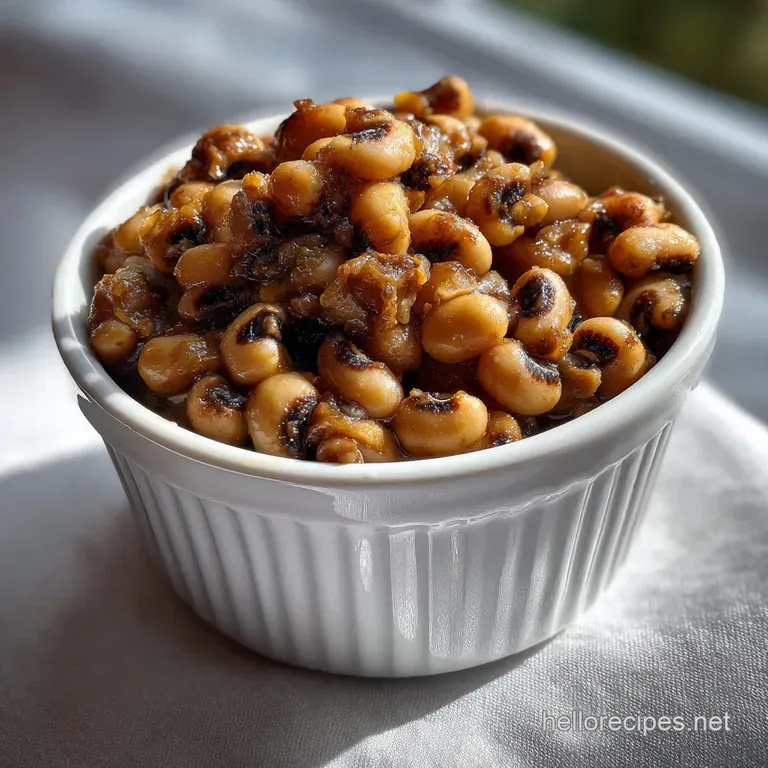
- Effort/Time: Moderate / 2 hours
- Flavor Hook: Deep hickory smoke meets sharp acetic brightness
- Perfect for: Make-ahead Sunday dinners or traditional New Year gatherings
- Master the Ultimate 10 Delicious Black Eyed Peas Recipes
- Essential Kitchen Metrics for Southern-Inspired Peas Recipes
- The Alchemy of Umami: Selecting Elements for this Recipe
- Precision Tools for Executing 10 Delicious Black Eyed Peas Recipes
- Thermal Processing and Phase Transitions in Peas Recipes
- Why Your Peas Fail and How to Fix Them
- Creative Flavor Architecture for Easy Southern-Inspired Meals
- ⚗️ The Scaling Lab: The Physics of Quantity
- Preserving Structural Integrity and Zero Waste Strategies
- Final Assemblage for 10 Delicious Black Eyed Peas Recipes
- Recipe FAQs
- 📝 Recipe Card
There is nothing more discouraging than spending two hours over a stove only to bite into a "pebble" a legume that refused to hydrate, remaining chalky and stubborn despite the heat.
I’ve witnessed $40 worth of organic ingredients turn into a bland, watery soup because the ratio of aromatic base to liquid was skewed. When the texture is inconsistent and the flavor is flat, it’s not just a meal failure; it’s a waste of your time and culinary effort.
I’ll admit, I used to be the cook who thought "a bean is a bean." I once rushed a batch of 10 Delicious Black Eyed Peas Recipes by skipping the sauté phase and dumping everything into cold water. The result was a pale, uninspired mess where the vegetables turned to mush before the peas even softened.
It took three soggy batches to realize that the order of operations specifically the timing of salt and acid dictates the final structural integrity of the dish.
The secret to a world class pot of peas lies in the science of hydration kinetics and collagen hydrolysis. By controlling the osmotic pressure with Diamond Crystal Kosher Salt and slowly breaking down the connective tissue in a smoked ham hock, we create a rich, lip-smacking broth that coats every bean.
The following 10 Delicious Black Eyed Peas Recipes for Easy Southern Inspired Meals rely on this foundation: a perfectly timed hit of apple cider vinegar at the end to "un-flat" the flavors without toughening the legume skins during the simmer.
Master the Ultimate 10 Delicious Black Eyed Peas Recipes
To understand why 10 Delicious Black Eyed Peas Recipes for Easy Southern Inspired Meals succeed, we have to look at the chemistry of the legume skin. Black eyed peas contain complex carbohydrates and proteins that require steady, moist heat to gelatinize.
- Collagen Conversion: The 1 lb smoked ham hock isn't just for flavor; as it simmers in the 6 cups of chicken bone broth, the collagen transforms into gelatin, providing a velvety mouthfeel.
- Aromatic Infusion: Sautéing the "Holy Trinity" (onion, celery, bell pepper) in 1 tbsp bacon drippings initiates the Maillard reaction, creating sulfurous compounds that deepen the savory profile.
- Delayed Acid Integration: Adding 1 tbsp apple cider vinegar only at the end is crucial; acid added too early prevents the pectin in the pea cell walls from breaking down, leaving them forever tough.
- Osmotic Balance: Starting with a precise 1 tbsp of kosher salt allows the seasoning to penetrate the center of the pea during the long simmer rather than just coating the outside.
Essential Kitchen Metrics for Southern Inspired Peas Recipes
Efficiency in these Black Eyed Peas Recipes for Easy Southern Inspired Meals depends on hitting your thermal targets. When you are looking for 10 Delicious Black Eyed Peas Recipes that actually work, precision in timing prevents the "blowout" where peas lose their skins.
| Metric | Value | Technical Significance |
|---|---|---|
| Prep Time | 15 minutes | Active mise en place for enzymatic browning |
| Cook Time | 1 hour 45 mins | Required duration for hemicellulose breakdown |
| Total Time | 2 hours | Sum of thermal energy application |
| Yield | 8 servings | Optimized for a 6 quart Lodge Cast Iron Dutch Oven |
The Alchemy of Umami: Selecting Elements for this Recipe
Selecting the right components is the difference between a side dish and a centerpiece in these 10 Delicious Black Eyed Peas Recipes. Using high-quality fats and properly cured proteins ensures the "liquor" (the broth) is as good as the peas themselves.
| Ingredient | Chemical/Physical Role (Science) | The Pro Secret (Why This Matters) |
|---|---|---|
| Dried Black Eyed Peas | Starch gelatinization and protein structure | Dried peas hold shape better than canned via slow hydration |
| Smoked Ham Hock | Fat rendering and collagen-to-gelatin hydrolysis | Bone-in hocks provide the mineral depth essential for "pot liquor" |
| Chicken Bone Broth | Liquid medium with high protein/mineral content | Bone broth offers superior viscosity compared to standard stock |
| Bacon Drippings | Saturated fat medium for aromatic extraction | The high smoke point allows for a hard sear on the aromatics |
- 1 lb dried black eyed peas: Why this? Dried legumes allow for controlled hydration and superior texture over pre-cooked versions.
- 6 cups chicken bone broth (Pacific Foods): Why this? Higher gelatin content creates a luxurious, lip-clinging broth.
- 1 lb smoked ham hock: Why this? Provides the essential phenolic smoke compounds and connective tissue for thickness.
- 1 tbsp bacon drippings: Why this? Animal fats carry flavor molecules across the palate more effectively than vegetable oils.
- 1 tbsp apple cider vinegar (Bragg): Why this? Brightens the heavy fats and balances the pH of the finished dish.
- Diamond Crystal Kosher Salt: Use for better control over salinity; it’s less dense than table salt.
- Lodge Cast Iron Dutch Oven: Use a heavy bottomed pot to ensure even heat distribution and prevent scorching.
Precision Tools for Executing 10 Delicious Black Eyed Peas Recipes
You can’t achieve the consistent simmer required for 10 Delicious Black Eyed Peas Recipes without the right thermal mass. A thin pot will create "hot spots," leading to unevenly cooked peas some mushy, some hard.
- Lodge 6 Quart Cast Iron Dutch Oven: The heavy lid and thick walls maintain a stable 200°F (93°C) simmer.
- Victorinox Fibrox Chef’s Knife: Necessary for the fine dicing of the yellow onion and celery to ensure they melt into the sauce.
- Wooden Flat Edge Spatula: Best for scraping the fond (caramelized bits) off the bottom of the pot after sautéing.
- Large Fine Mesh Strainer: Essential for the initial rinse and picking over the dried peas to remove debris.
Similar to the precision needed in our Seasoning Mix Blends recipe, these tools ensure that every aromatic compound is perfectly extracted and integrated.
Thermal Processing and Phase Transitions in Peas Recipes
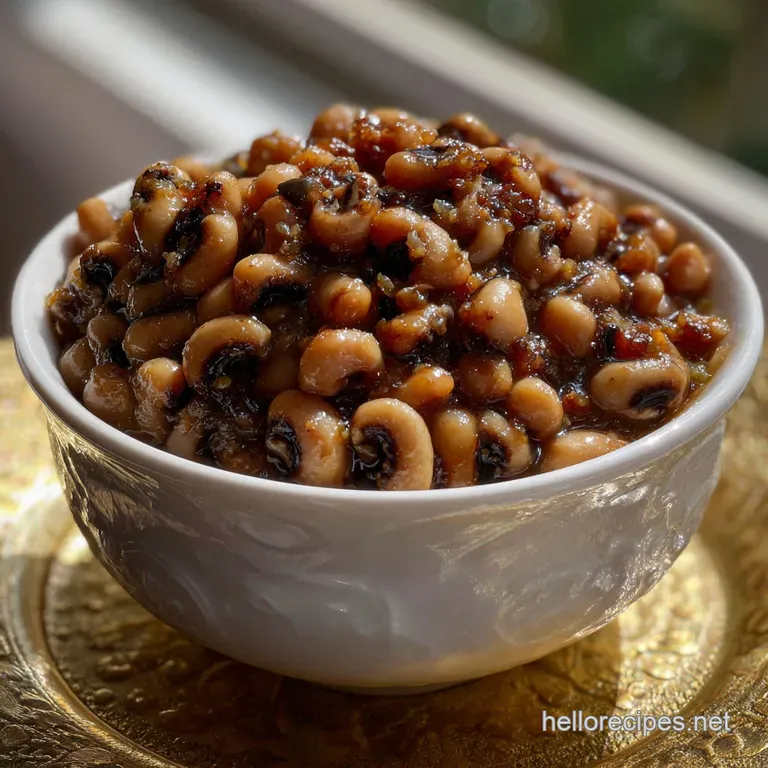
Follow these steps with surgical precision to ensure the structural integrity of the 10 Delicious Black Eyed Peas Recipes. Each movement is designed to maximize flavor extraction while respecting the delicate nature of the legume.
- Rinse 1 lb dried black eyed peas in a strainer until water runs clear and debris is removed.Note: Surface dust can mute flavors.
- Heat 1 tbsp bacon drippings in a Lodge Dutch Oven over medium high until the fat shimmers and wisps of smoke appear.
- Sauté the finely diced yellow onion, green bell pepper, and celery for 6 minutes until the onion edges turn translucent and the "Holy Trinity" fragrance is pungent.
- Add 4 cloves minced garlic for 1 minute until the aroma shifts from raw to nutty but before it turns brown.
- Stir in the rinsed peas and 1 lb smoked ham hock until the peas are lightly coated in the rendered fat.Note: This coating helps prevent the skins from splitting immediately.
- Pour 6 cups chicken bone broth over the mixture until the hock is submerged and the liquid begins to bubble.
- Incorporate 1 tbsp kosher salt, 2 dried bay leaves, 1 tsp dried thyme, and 1/2 tsp cayenne pepper until the spices are evenly distributed throughout the liquid.
- Simmer on low heat for 1 hour 30 mins until the peas are tender but not bursting and the liquid has thickened to a syrupy consistency.
- Remove the ham hock, shred the meat from the bone, and return it to the pot until the meat is evenly dispersed.
- Stir in 1 tbsp apple cider vinegar and black pepper until the aroma is bright and the flavor profile is balanced.
If you are looking for a variation, this technique is very similar to what we use in our Black Eyed Peas Recipe.
Why Your Peas Fail and How to Fix Them
Creating 10 Delicious Black Eyed Peas Recipes for Easy Southern Inspired Meals often involves navigating the "hard water" trap. Minerals in your tap water can actually bind to the pea skins, making them impenetrable.
Why Your Peas Stay Crunchy
If your peas remain hard after 2 hours, it is likely due to alkaline water or the presence of calcium. These minerals reinforce the cell walls of the legumes. Plus,, if the peas are "old crop" (stored for over 2 years), they lose their ability to absorb moisture.
| Problem | Root Cause | The Fix | Pro Protocol |
|---|---|---|---|
| Hard/Crunchy Peas | High mineral water or old beans | Add a pinch of baking soda | Use bottled spring water for consistent hydration |
| Mushy/Burst Skins | Violent boiling | Maintain a gentle "smile" simmer | Keep temp at 190°F-200°F max |
| Bland/Flat Flavor | Missing acidity or salt | Add vinegar and more salt at the end | Always salt the soaking/cooking water early |
The Dish is Too Salty
Smoked ham hocks vary wildly in sodium content. If your 10 Delicious Black Eyed Peas Recipes taste like a salt lick, it’s because the broth evaporated too much, concentrating the salt.
The Fix: Don't just add water. Drop in a peeled, halved potato for the last 20 minutes. The potato starch will absorb some of the excess sodium ions. Remove the potato before serving.
Creative Flavor Architecture for Easy Southern Inspired Meals
While the base recipe is a classic, the beauty of Recipes for Easy Southern Inspired Meals lies in their adaptability. You can shift the flavor profile by changing the primary fat or protein.
| Original Ingredient | Substitute | Why It Works |
|---|---|---|
| Bacon Drippings | Duck Fat | Provides a richer, more gamy depth to the 10 Delicious Black Eyed Peas Recipes |
| Smoked Ham Hock | Smoked Turkey Wing | Lower fat content but provides similar phenolic smoke notes |
| Chicken Bone Broth | Vegetable Stock + Kombu | Kombu adds glutamates (umami) without animal protein |
Vegetarian/Vegan Adaptation
To make this one of your favorite 10 Delicious Black Eyed Peas Recipes for vegans, swap the bacon fat for extra virgin olive oil and the ham hock for 2 teaspoons of smoked paprika and a dash of liquid smoke. This mimics the Maillard and smoke components of the original.
Creole Style Twist
Add 1 tablespoon of Worcestershire sauce and a dash of hot sauce during the final 10 minutes. This adds a fermented complexity that characterizes many Black Eyed Peas Recipes for Easy Southern Inspired Meals found in New Orleans.
⚗️ The Scaling Lab: The Physics of Quantity
When you decide to double these 10 Delicious Black Eyed Peas Recipes for a large crowd, you cannot simply double everything. Physics intervenes.
- The Evaporation Paradox: If you use the same wide pot for 2 lbs of peas as you did for 1 lb, your surface area stays the same. The volume of liquid increases, but the rate of evaporation does not. Reduce total liquid by 10% to avoid a watery result.
- Flavor Saturation: Spices like cayenne and thyme accumulate non-linearly. When doubling, scale spices to 1.5x initially, then taste at the 1 hour mark. You can always add more, but you can't remove heat.
- Thermal Mass: A double batch (2 lbs peas) will take 20 30% longer to reach a simmer. Do not crank the heat to high; you risk scorching the bottom layer before the top even gets warm.
- Carry over Heat: A large Dutch oven full of 10 Delicious Black Eyed Peas Recipes holds massive thermal energy. Pull the pot off the stove when the peas are just shy of perfect; they will continue to soften for another 15 minutes as they sit.
Preserving Structural Integrity and Zero Waste Strategies
One of the best things about these 10 Delicious Black Eyed Peas Recipes for Easy Southern Inspired Meals is that they taste better on day two. The starches continue to leach into the broth, creating a thicker, creamier sauce.
- Storage: Keep in an airtight container for up to 5 days in the fridge. The flavors will deepen as the aromatic compounds undergo further esterification.
- Freezing: These peas freeze beautifully for up to 6 months. Leave 1 inch of headspace in the container to allow for liquid expansion.
- Reheating: Reheat on the stovetop over low heat. You may need to add 1/4 cup of water or broth, as the starch will have "tightened" the mixture during cooling.
💡 ZERO WASTE PHILOSOPHY: Don't discard the ham bone! Transform: Simmer the bone a second time with vegetable scraps for a "second stock" (remouillage).
Science: Even after the first cook, the bone marrow and deep connective tissues contain residual collagen and calcium that enrich a basic broth.
Final Assemblage for 10 Delicious Black Eyed Peas Recipes
To truly experience 10 Delicious Black Eyed Peas Recipes, serving them correctly is non-negotiable. You need a texture contrast to the creamy peas.
- The Grain Base: Serve over long grain white rice. This is the traditional "Hoppin' John" style which provides a clean starch to soak up the "pot liquor." For a different smoky take, try our Hoppin John Recipe.
- The Crunch Factor: A side of hot, buttered cornbread is mandatory. The grittiness of the cornmeal balances the velvety texture of the peas.
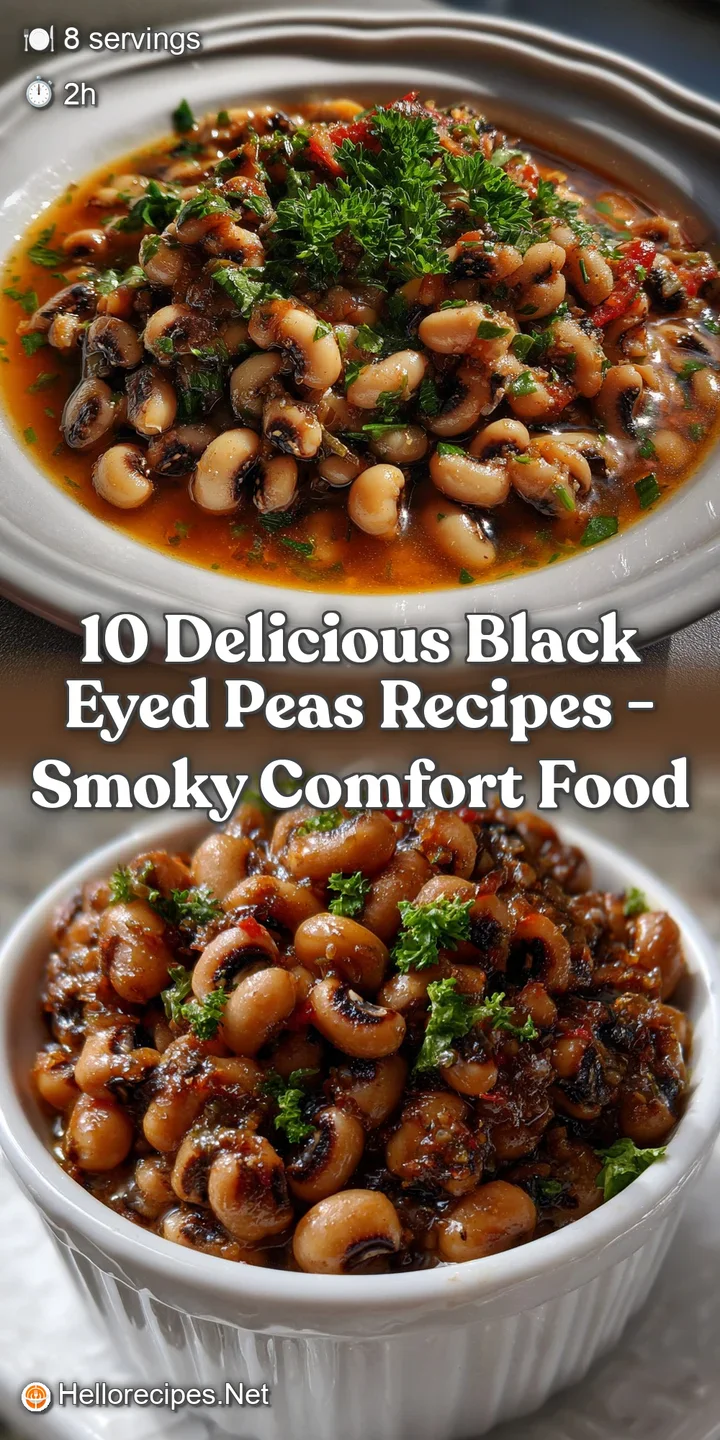
- The Fresh Finish: Garnish with sliced green onions or a sprinkle of fresh parsley. This provides a hit of chlorophyll and "green" notes that cut through the heavy smoke of the ham hock.
Myth: You must soak black eyed peas overnight. Truth: Unlike kidney beans, black eyed peas are small and relatively thin skinned. A "quick soak" (boil for 2 minutes, sit for 1 hour) or even no soak at all is perfectly fine.
In fact, no-soak methods often result in a more flavorful pea because fewer nutrients and pigments are leached into the soaking water and tossed away.
These 10 Delicious Black Eyed Peas Recipes for Easy Southern Inspired Meals are a testament to the fact that slow, deliberate cooking always beats a shortcut. By understanding the science of the simmer and the role of each aromatic, you turn a simple pantry staple into a masterclass of Southern flavor.
These Recipes for Easy Southern Inspired Meals are exactly what you need for a comforting, soul satisfying meal.
Recipe FAQs
Should I soak black eyed peas before cooking?
Myth: You must soak black eyed peas overnight. Truth: Unlike kidney beans, black eyed peas are small and relatively thin skinned. A "quick soak" (boil for 2 minutes, sit for 1 hour) or even no soak at all is perfectly fine.
In fact, no-soak methods often result in a more flavorful pea because fewer nutrients and pigments are leached into the soaking water and tossed away.
What is the ideal temperature for simmering black eyed peas?
190°F to 200°F is ideal for the simmer. Maintaining a gentle simmer prevents the outer skins from rupturing prematurely, allowing the interior starches to fully gelatinize without structural loss. Excessive agitation disrupts the osmotic balance necessary for even hydration.
Why are my peas still hard after two hours of cooking?
Hard peas result from mineral interference or age. High concentrations of calcium in hard tap water reinforce the pectin in the cell walls, creating a barrier to moisture absorption.
- Use bottled spring water
- Ensure peas were harvested recently
- Add a tiny pinch of baking soda
Should I add acid (vinegar) at the beginning or end of cooking?
Add acid only at the very end. Introducing acid too early inhibits the breakdown of pectin in the pea's cell walls, resulting in permanently tough legumes. If you are interested in balancing strong savory flavors with bright acidity, see the similar technique utilized in our Caesar Salad Dressing Homemade Seriously Delicious From Scratch.
What is the role of the smoked ham hock in this recipe?
The ham hock provides collagen and smoky compounds. As the hock simmers, its collagen breaks down into gelatin, which thickens the broth and provides a velvety mouthfeel. If you master this collagen conversion technique, you can apply the same principle when cooking tough cuts for recipes like our Delicious Chicken Thighs in Creamy Mushroom Garlic Sauce.
Is it better to use bacon fat or olive oil for sautéing aromatics?
Bacon fat imparts deeper savory flavor. Animal fats like bacon drippings carry hydrophobic flavor compounds (like those from the onion and celery) across the palate more effectively than neutral oils.
Olive oil, while suitable for lower heat work, will not achieve the same depth of Maillard reaction fond in the Dutch oven bottom.
How do I fix a batch of peas that tastes too salty?
Drop in a peeled, halved potato to absorb excess sodium. The starch in the potato acts as an ion sponge, drawing out some of the concentrated salt from the liquid during the final simmer. Remove the potato before serving to prevent textural confusion.
Black Eyed Peas Masterclass
Ingredients:
Instructions:
Nutrition Facts:
| Calories | 331 kcal |
|---|---|
| Protein | 26.3 g |
| Fat | 7.3 g |
| Carbs | 39.6 g |
| Fiber | 6.2 g |
| Sugar | 4.1 g |
| Sodium | 945 mg |
