Peanut Butter Cookie with Sea Salt: Soft and Chewy
- Time: Active 10 minutes, Passive 10 minutes, Total 20 minutes
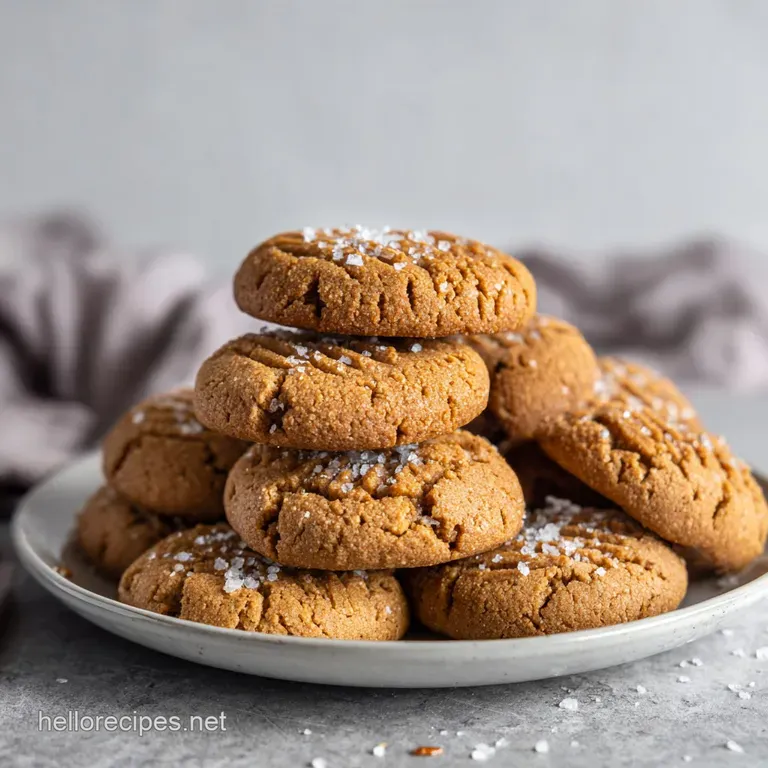
- Flavor/Texture Hook: Velvety, melt on-the tongue interior with a mahogany, brittle like crust.
- Perfect for: Last minute guests, gluten-free households, or satisfying a late night sweet and salty craving.
- Achieving Success with the Peanut Butter Cookie with Sea Salt
- Vital Recipe Specs for the Efficient Home Kitchen
- The Simple Building Blocks of This Classic Recipe
- Essential Minimal Tools for Faster Kitchen Prep
- Bringing the Dough Together for the Perfect Bake
- Troubleshooting Tips for Your Salted Peanut Butter Treats
- Customizing Your Batch with Creative Flavor Variations
- Smart Storage Solutions and Zero Waste Kitchen Hacks
- The Best Pairings for These Salty Sweet Cookies
- Recipe FAQs
- 📝 Recipe Card
Achieving Success with the Peanut Butter Cookie with Sea Salt
Have you ever wondered why a recipe with absolutely zero flour doesn't just melt into a puddle of shimmering oil the moment it hits the heat? It feels like a kitchen magic trick, honestly.
The first time I tried making these, I was convinced I’d forgotten an ingredient, staring at the bowl of just three things and thinking there was no way it would work. But then, as you beat the mixture, something shifts the grainy, loose paste suddenly snaps together into a glossy, heavy dough that feels substantial and reliable.
Discover our single, show stopping "3 Ingredient Peanut Butter Cookie with Sea Salt" recipe. It is the ultimate testament to the fact that when you have high-quality fats and the right technique, you don't need a pantry full of additives to create something that tastes like it came from a high end bakery.
The smell that fills your kitchen isn't just "sweet"; it’s the deep, toasted aroma of roasted legumes and caramelized sugar, a scent that lingers in the air and makes the 10 minutes of waiting feel like an eternity.
I remember one rainy Tuesday when I had exactly one egg left and a nearly empty jar of peanut butter. I was skeptical, but the moment I pressed that fork into the dough and saw the perfect cross hatch pattern hold its shape, I knew I was onto something.
When you sprinkle those flakes of salt onto the warm, mahogany colored tops, they don't just sit there; they embed themselves into the softening sugars, creating a flavor profile that is mature, balanced, and deeply addictive.
Vital Recipe Specs for the Efficient Home Kitchen
When we talk about efficiency in the kitchen, we’re looking for high impact results with minimal drag. This recipe is the Ferrari of the cookie world it goes from zero to "finished" in exactly 20 minutes.
But don't let the speed fool you; the precision of your measurements and the temperature of your oven are what separate a greasy mess from a structured, velvety cookie.
Mechanism: Protein Coagulation. The egg protein acts as the primary structural scaffold, setting firmly during the 10 minutes of baking to trap the fats and sugars in a stable matrix.
Mechanism: Mechanical Emulsification. Beating the dough for a full 2 minutes forces the oils in the peanut butter to bond with the moisture in the egg, preventing the cookies from weeping oil on the tray.
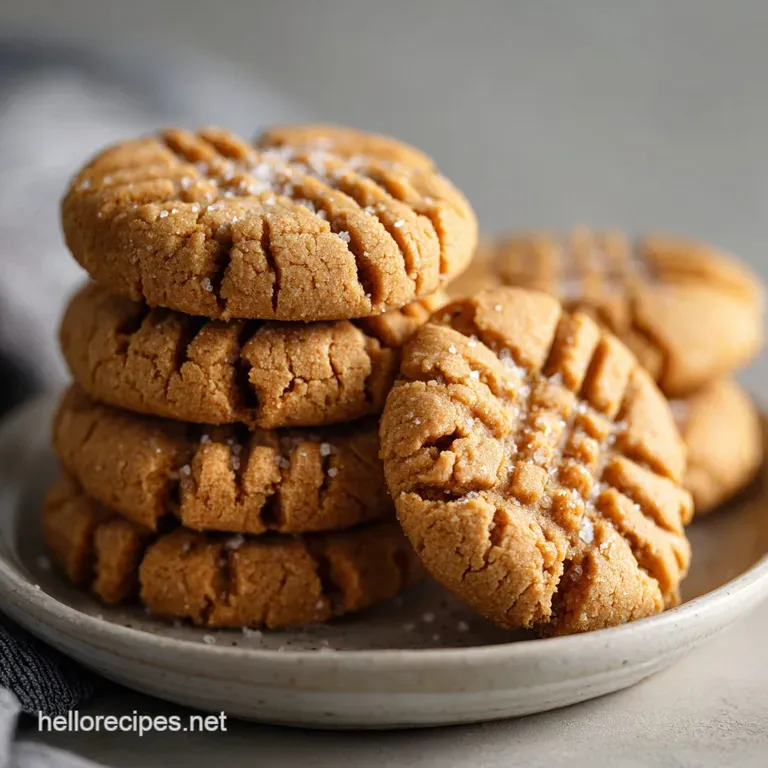
Mechanism: Surface Area Optimization. The fork pressed cross hatch isn't just for looks; it increases the surface area exposed to the dry heat, ensuring the edges reach that mahogany crisp stage while the center remains soft.
Mechanism: Crystalline Contrast. Applying flaky salt to the warm surface allows the heat to slightly "tack" the crystals to the cookie without dissolving them, preserving that essential crunch.
| Servings | Peanut Butter | Granulated Sugar | Egg Count | Pan Size |
|---|---|---|---|---|
| 9 Cookies | 125g (1/2 cup) | 100g (1/2 cup) | 1/2 Egg (Whisked) | 1/4 Sheet Pan |
| 18 Cookies | 250g (1 cup) | 200g (1 cup) | 1 Large Egg | Standard Cookie Sheet |
| 36 Cookies | 500g (2 cups) | 400g (2 cups) | 2 Large Eggs | Two Large Sheets |
If you're scaling this recipe up for a party, remember that the "2 minute" beating rule still applies to each batch. You want to see that dough physically pull away from the sides of the bowl before you even think about grabbing your scoop.
It’s that physical transformation that guarantees the cookies won't spread into one giant, flat pancake.
The Simple Building Blocks of This Classic Recipe
The beauty of this Ingredient Peanut Butter Cookie with Sea Salt lies in the quality of your staples. Since there are so few components, each one has to work double duty. You aren't just looking for sweetness; you're looking for the structural integrity that sugar provides.
You aren't just looking for fat; you're looking for the emulsifiers naturally present in the peanut butter.
| Component | Science Role | Pro Secret |
|---|---|---|
| Creamy Peanut Butter | Provides fat and protein structure | Use "no stir" varieties for the most consistent, predictable spread. |
| Granulated White Sugar | Aerates the dough and aids caramelization | Avoid substituting with liquid sweeteners, as it will destroy the dough's tension. |
| Large Egg | Acts as the binding emulsifier | Ensure it's at room temperature to bond more quickly with the peanut butter fats. |
- 1 cup (250g) Creamy Peanut Butter: Why this? High oil stability ensures the cookies remain moist without becoming greasy or crumbly.
- 1 cup (200g) Granulated White Sugar: Why this? The crystals provide the necessary grit to create air pockets during the initial beating phase.
- 1 Large Egg: Why this? This is your only "glue"; the lecithin in the yolk is vital for a smooth dough.
- 1.5 tsp Flaky Sea Salt: Why this? The flat crystals provide a concentrated burst of salinity that cuts through the dense fat.
For the peanut butter, I almost always stick to a standard creamy variety like Jif or Skippy for this specific bake. Why? Because the stabilizers in those brands help the cookies hold their "mahogany" edges much better than the "oil on-top" natural versions. If you’re used to working with a classic cookie dough base, you'll notice this dough is much stickier, but that's exactly what we want for that fudgy interior.
Essential Minimal Tools for Faster Kitchen Prep
One of the reasons I gravitate toward this recipe when I’m short on time is the lack of equipment. You don't need a heavy stand mixer or a sink full of attachments. In fact, a simple, sturdy spatula often gives you better "feel" for the dough than a machine would.
We are looking for that specific moment of cohesion, and your hand is the best sensor for that.
Chef's Tip: Freeze your baking sheet for 5 minutes before lining it with parchment. This small temperature drop prevents the bottom of the cookies from spreading too fast the moment they enter the oven.
A large mixing bowl preferably glass or stainless steel is your best friend here. Avoid plastic if you can, as it can sometimes retain a film of oil that interferes with the egg's ability to emulsify. You’ll also need a standard fork and a reliable baking sheet.
If you don't have parchment paper, don't worry; the high fat content in the peanut butter makes these naturally non stick, though cleanup is much faster with a liner.
Bringing the Dough Together for the Perfect Bake
Now, let's talk about the process. This isn't just about mixing; it’s about transformation. We are taking three separate entities and forcing them into a singular, stable state. Follow these steps closely to ensure your Cookie with Sea Salt comes out with that iconic texture.
- Preheat the oven to 180°C (350°F). Note: A fully calibrated oven is crucial for that 10 minute snap finish.
- Combine the 250g peanut butter, 200g sugar, and the large egg in your bowl.
- Beat the mixture vigorously with a spatula for exactly 2 minutes until the dough turns smooth and pulls away from the bowl.
- Scoop rounded tablespoons of the dough, rolling them between your palms into 1 inch spheres.
- Place the spheres onto your parchment lined sheet, leaving 2 inches of space between each.
- Press the fork into each ball, first vertically then horizontally, until the classic cross hatch pattern is deeply imprinted.
- Bake for 10 minutes until the edges are mahogany and the surface looks matte and set.
- Sprinkle the 1.5 tsp of flaky sea salt immediately over the hot cookies.
- Cool on the baking sheet for 5 minutes until the structure firms up enough to move.
- Transfer to a wire rack to finish cooling for a crispier bottom.
Chef's Tip: If you want a more professional look, use a damp fork to press the cross hatches. The moisture prevents the fork from sticking to the sugar and tearing the dough.
The 2 minute beating phase is where most people fail. They stop when it looks "mixed," but you need to keep going until it looks "doughy." It will literally change color slightly, becoming a bit paler and significantly more matte.
That is the sign that the sugar has started to partially dissolve into the egg, creating the internal structure needed for a Cookie with Sea Salt to hold its height.
Troubleshooting Tips for Your Salted Peanut Butter Treats
Even with three ingredients, things can go sideways if the environment isn't right. The most common issue is the oil separation, which usually happens if the peanut butter was too warm or if the egg was cold. If you see a pool of oil around your cookies as they bake, don't panic, but do take note for next time.
Why Your Ingredient Peanut Butter Cookie with Sea Salt Spread Too Much
If your cookies turned into thin, lacy wafers instead of thick, chewy discs, it’s almost always a temperature issue. If your kitchen is very warm, the peanut butter fats are already near their melting point before they even hit the oven.
| Problem | Root Cause | Solution |
|---|---|---|
| Oily Residue | Under emulsified dough | Beat for the full 2 minutes until the dough is matte and cohesive. |
| Crumbly Texture | Over baking | Remove at exactly 10 minutes; they should still feel soft to the touch. |
| No Cross hatch | Dough too sticky | Chill the rolled balls for 10 minutes before pressing with the fork. |
Another factor is the sugar. If you used a "sugar alternative" or a very fine powdered sugar, the cookies will lack the structural "grit" that holds them up. This is a recipe where the standard, granulated white sugar is doing a lot of the heavy lifting.
Common Mistakes Checklist:
- ✓ Ensure the egg is at room temperature before starting to ensure a stable emulsion.
- ✓ Don't skip the 2 minute beat; this is the only "cooking" that happens before the oven.
- ✓ Use a standard "no stir" peanut butter for the most predictable results.
- ✓ Let the cookies rest on the hot pan for 5 minutes they are too fragile to move immediately.
- ✓ Apply the salt while the cookies are "sweating" right out of the oven so it sticks.
Customizing Your Batch with Creative Flavor Variations
Once you’ve mastered the base Peanut Butter Cookie with Sea Salt, you can start playing with the textures. This recipe is a fantastic canvas because the peanut flavor is so dominant it can stand up to heavy hitters like dark chocolate or warm spices.
If you're looking for a different experience, you might want to try making a safe brown butter cookie dough for a more caramelized, toffee like flavor, but for a quick fix, these variations below are my favorites.
The "Midnight Snack" Twist
Add 1/2 cup of dark chocolate chips to the dough after the 2 minute beating phase. The bitterness of the chocolate against the salty peanut base is legendary. Just be sure to press the fork gently so you don't crush the chips.
The Crunch Factor Variation
Substitute half of the creamy peanut butter for extra crunchy peanut butter. This adds a "shatter" to the velvety interior that is very satisfying. Note that the dough might feel a bit more "short" or crumbly, so you may need an extra 30 seconds of beating to get it to hold together.
| Feature | Freshly Baked | store-bought Shortcut |
|---|---|---|
| Aroma | Intense roasted peanut | Artificial vanilla/sugar |
| Texture | Velvety and soft | Crunchy and dry |
| Ingredients | 3 Clean Items | Preservatives and Palm Oil |
Decision Shortcut: If you want a fudgier cookie, use an extra large egg and reduce bake time by 1 minute. If you want a crispier cookie, use 1/4 cup less peanut butter and bake for 12 minutes.
If you want a deeper flavor, use dark brown sugar instead of white granulated sugar.
Smart Storage Solutions and Zero Waste Kitchen Hacks
Storage is rarely an issue because these disappear so fast, but if you do have leftovers, you want to preserve that specific "snap" of the sea salt. If stored in a humid environment, the salt crystals will draw moisture from the air and dissolve into the cookie, leaving you with a soggy top.
Storage: Store in an airtight container at room temperature for up to 5 days. To keep them crisp, place a single piece of parchment paper between layers. For long term storage, these freeze beautifully for up to 3 months.
Just thaw them at room temperature for 20 minutes before serving.
Zero Waste: If you end up with a few broken cookies or "crumbs" at the bottom of the jar, don't throw them away! These salty, nutty crumbs make an incredible topping for vanilla bean ice cream. You can also pulse them in a food blender and use them as a "crust" for a no bake cheesecake.
The high fat and sugar content makes them stay perfectly crunchy even when mixed with butter for a secondary bake.
The Best Pairings for These Salty Sweet Cookies
These cookies are intense. They aren't the kind of thing you eat ten of in one sitting (though I’ve tried). They are rich, dense, and lean heavily into that umami sweet territory. Because of that, they pair best with drinks and sides that offer a bit of "lift" or acidity.
A cold glass of whole milk is the traditional choice, but for a more "grown up" pairing, try a double shot of espresso. The bitterness of the coffee cuts right through the fatty peanut butter, while the sea salt highlights the fruity notes in the beans.
If you’re serving these as part of a dessert platter, they look stunning next to some fresh tart raspberries or a sharp green apple slice.
Whatever you do, make sure you don't skimp on the salt. It’s the "sea salt" in the Cookie with Sea Salt that takes this from a "kid's snack" to a "gourmet treat." That final sprinkle is what transforms the palate, making every bite feel fresh and exciting.
Now, go grab that jar of peanut butter and get beating you’re only 20 minutes away from the best cookie of your week!
Recipe FAQs
What does sea salt do for cookies?
Sea salt provides a sharp contrast to the intense sweetness of the sugar and the richness of the peanut butter. By sprinkling it on while the cookies are still warm, you create a balanced flavor profile where the salinity highlights the nutty depth of the peanut butter.
What are the 3 ingredients in peanut butter cookies?
The essential components are one cup of creamy peanut butter, one cup of granulated white sugar, and one large egg. These simple staples combine to create a chewy, gluten-free dough that requires no flour or leavening agents.
Is it true Snoop Dogg uses a special flour based recipe for his peanut butter cookies?
No, this is a common misconception regarding this specific style of cookie. This particular recipe relies exclusively on the emulsion of peanut butter, sugar, and egg to create its structure, rather than flour based doughs often found in a simple cookie dough.
Can you put sea salt on peanut butter cookies?
Yes, applying sea salt is a mandatory finishing step for this recipe. You must sprinkle the flakes immediately after removing the tray from the 350°F oven so the crystals adhere properly to the cooling surface.
How to ensure the cookies hold their shape during baking?
Beat the mixture vigorously for two full minutes during the emulsifying phase until it forms a smooth, cohesive ball. Proper agitation of the peanut butter and egg proteins is critical; if the dough remains a grainy paste, the oils will separate prematurely in the heat.
How to achieve the perfect crackled texture on top?
Press a firm cross hatch pattern into the dough balls using a fork before placing them in the oven. This technique increases the surface area of the cookie, allowing the edges to reach a deep mahogany color while the center sets perfectly within the 10-minute bake time.
How to cool the cookies without breaking them?
Leave the cookies undisturbed on the parchment lined baking sheet for exactly 5 minutes after pulling them from the oven. Because this recipe lacks flour, the cookies are extremely fragile while hot and require this brief resting period to firm up before you transfer them to a wire rack.
3 Ingredient Peanut Butter Cookies
Ingredients:
Instructions:
Nutrition Facts:
| Calories | 129 calories |
|---|---|
| Protein | 3.8g |
| Fat | 7.2g |
| Carbs | 13.9g |
| Fiber | 0.8g |
| Sugar | 12.4g |
| Sodium | 250mg |
