Smoked Corned Beef: Proper Homemade Pastrami
- The Ultimate Smoked Corned Beef: Proper Homemade Pastrami
- The Smoked Transformation: Turning Corned Beef into Proper Pastrami
- Essentials for Your Homemade Smoked Corned Beef Spice Rub
- Step-by-Step: Smoking Corned Beef Brisket to Perfection
- Achieving Deli-Quality Texture and Flavor
- Troubleshooting the Smoke: Expert Tips for Success
- Maximizing Shelf Life: Storing Your Homemade Pastrami
- What to Serve Alongside Smoked Pastrami
- Recipe FAQs
- 📝 Recipe Card
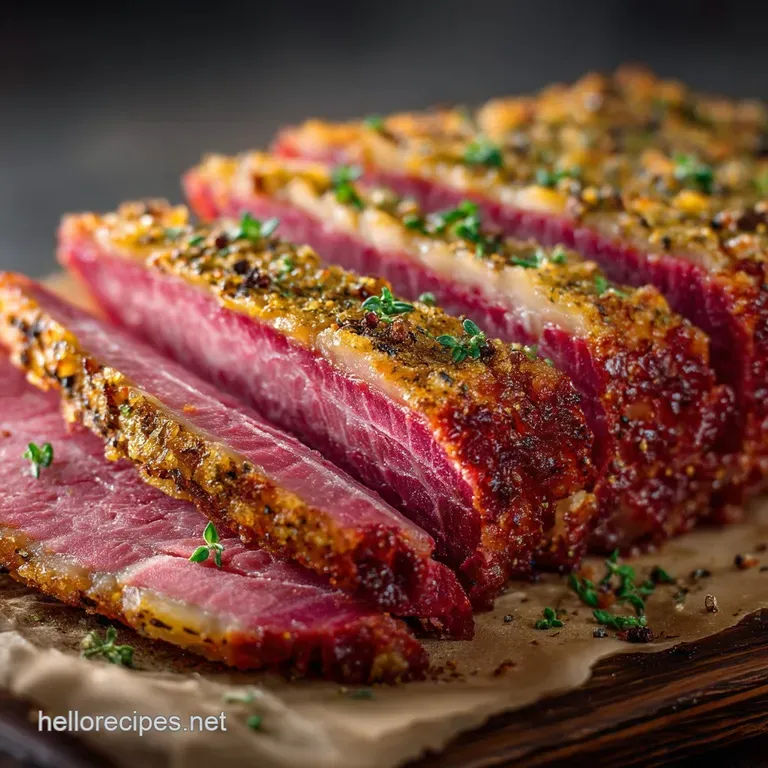
The Ultimate Smoked Corned Beef: Proper Homemade Pastrami
That rich, deep mahogany crust. The overwhelming aroma of coriander, black pepper, and proper hardwood smoke hitting you the second you open the smoker door that is the smell of truly great smoked corned beef . Forget the bland, boiled stuff you only tolerate once a year.
We are transforming that humble salt cured brisket into homemade pastrami, a culinary masterpiece worthy of the world’s best delis.
Why bother with this seemingly complex process? Because taking pre-cured corned beef is the massive shortcut that makes this recipe simple enough for any home cook, and the results are mind blowing.
It’s cheaper, way faster than curing your own brisket from scratch (which takes weeks!), and the deep, smoky flavor profile of this smoked corned beef cannot be beaten.
Ready to ditch the boiling pot and embrace the smoker? Grab your thermometer and your spice grinder, because we are about to make an entire meal disappear before it even hits the slicing board. This is how you make truly incredible smoked corned beef brisket at home.
The Smoked Transformation: Turning Corned Beef into Proper Pastrami
This recipe works because we are leveraging the heavy lifting already done by the butcher the curing and applying high impact BBQ techniques. Most home cooks skip the mandatory rinsing, which leaves the final product unbearably salty, even after a full smoke.
By thoroughly desalting and then applying a thick, black crust pastrami rub, we utilize the salt content remaining inside the meat to perfectly season the entire interior while building a stunning bark on the exterior.
The secret to this fantastic smoked corned beef is the two-stage cook. First, we infuse it with smoke flavor low and slow, building that incredible, peppery crust. Second, we steam or braise it in a wrapped packet.
That final steam bath melts the collagen and guarantees that fork tender texture we all crave. You will never go back to just smoking it naked all the way through; trust me on this.
Why Corned Beef is the Perfect Canvas for Smoking
Corned beef brisket, usually the flat or point cut, is already halfway to pastrami. It has been pumped with a saltwater brine (sometimes including sodium nitrite, known as pink curing salt) which gives it that signature rosy color and salty flavor.
Since it’s already preserved, it holds up beautifully to the long smoking process without drying out immediately. This pre-cure means you skip the week long brine bath and jump straight to the fun part: fire and smoke.
Making smoked corned beef should be effortless once you understand the basic process.
Decoding the Difference: Pastrami vs. Corned Beef Brisket
Technically, the main difference between corned beef and pastrami is the final cooking method and the application of spices. Corned beef is cured brisket that is generally steamed or boiled.
Pastrami is cured brisket (often using the fattier point cut) that is heavily coated in a specific black pepper and coriander rub and then smoked. When you take the corned beef, rinse it, rub it, and smoke it, you are effectively creating authentic, homemade pastrami.
When folks ask for a great smoked corned beef recipe, they usually mean they want homemade pastrami.
Setting Expectations: The Time Commitment for True Deli Flavor
This is not a weeknight dinner. While the active prep time is short maybe 20 minutes if you’re quick the recipe demands patience and time.
You need a 12 hour resting period overnight for the rub to set, and the low and slow cook will take 7 to 9 hours total. The good news is most of that time is completely hands off once the smoker is humming along.
If you want the deepest, darkest, most flavorful smoked corned beef , you cannot rush the process. Think of this as a weekend project that pays off handsomely.
Essentials for Your Homemade Smoked Corned Beef Spice Rub
The rub is everything. This is what separates palatable meat from a genuine deli experience. We need bold spices that can stand up to the heavy smoke and the saltiness of the smoked corned beef brisket . Don’t skimp on quality or quantity here; you want a thick, black crust, a proper bark.
Choosing the Right Cut (Point vs. Flat)
Most corned beef you buy pre-packaged is the Flat Cut, which is lean and slices beautifully but requires careful cooking to prevent dryness. The Point Cut is fattier, yields a slightly more irregular slice, and tends to be significantly more tender and forgiving during the long cook.
For the richest, juiciest smoked corned beef , I always recommend going with the Point Cut if you can find it. If you have the whole packer cut, you get the best of both worlds!
The Must Have Spices for a Bold Pastrami Crust
The signature flavor profile hinges on black pepper and coriander. You absolutely must use whole spices and grind them fresh; it makes a seismic difference in the final product.
| Ingredient | Purpose | Substitution Tip |
|---|---|---|
| Black Peppercorns | Heat, crust, main flavor | Use coarse ground pepper if necessary, but fresh is better. |
| Coriander Seeds | Citrusy, savory base | If necessary, substitute with a 2:1 ratio of fennel seed to ground cumin. |
| Brown Sugar | Aids bark formation, balances salt | Use granulated white sugar or honey powder. |
| Mustard | Binder, subtle tangy note | Can use Worcestershire sauce or hot sauce mixed with water. |
Important Note: Do not add extra salt. The smoked corned beef already contains enough salt for the entire rub.
Best Wood Selections for Deep Smoke Flavor
Since corned beef is so dense and rich, it needs a robust smoke flavor to cut through the fat and cure. I find that milder woods often disappear entirely.
- Oak: The classic choice. A clean, strong smoke that pairs perfectly with the salty cure.
- Pecan: My personal favorite. Slightly milder than oak but adds a sweet, nutty element that complements the brown sugar in the rub.
- Cherry: Great for colour. It imparts a beautiful, deep red hue to the bark, making your final smoked corned beef look even more appetizing.
Managing the Salt Level: Mandatory Rinsing and Soaking Notes
This is the non-negotiable step. I once skipped the soak, thinking, "How salty can it be?" The resulting meat was inedible, so salty it made my lips tingle. You must rinse the corned beef. Rinse it under cool water for a good five minutes, rubbing the surface to remove excess salt and cure.
Even better, place it in a bowl of fresh water and soak it in the fridge for 2– 4 hours, changing the water once halfway through. This desalinization process is what allows the pastrami rub to shine and ensures the final smoked corned beef sandwich doesn't require a gallon of water to wash down.
step-by-step: Smoking Corned Beef Brisket to Perfection
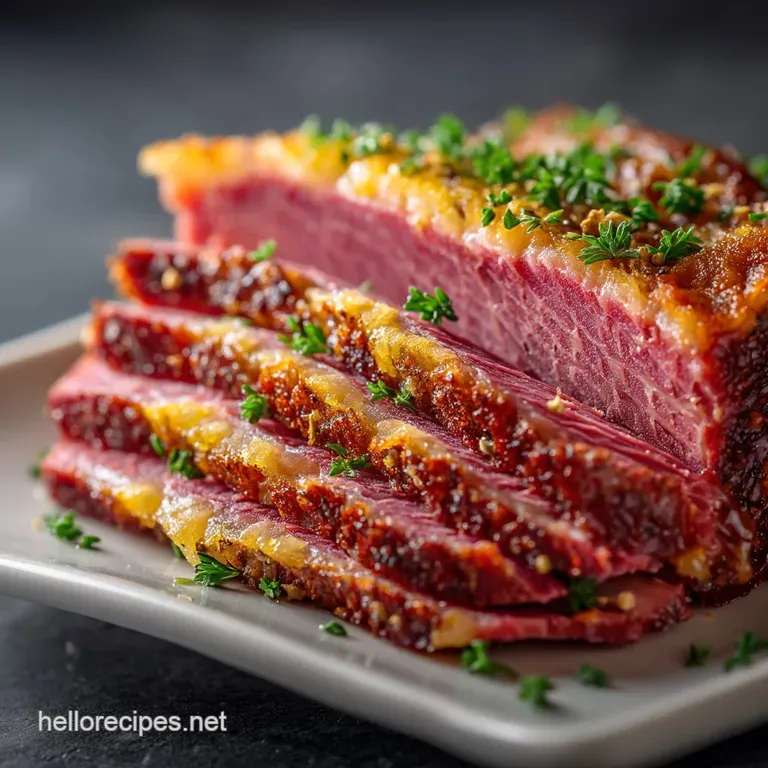
Getting this process right involves dedication to temperature and timing, particularly during the two distinct cooking phases. Follow these steps precisely for incredibly tender results.
Stage 1: Prepping and Desalting the Brisket
Rinse the brisket thoroughly, as described above, and pat it completely dry. That dry surface is critical for the binder to stick. Once dry, smear a thin layer of mustard over all surfaces. The mustard acts purely as an adhesive; you won’t taste it in the final smoked corned beef .
Stage 2: Applying the High Impact Pastrami Rub
In a dry skillet, gently toast your whole coriander seeds for a minute or two until you smell that warm, nutty aroma. This releases the essential oils. Grind the toasted coriander and the black peppercorns coarsely; we want texture, not a powder. Mix this with the brown sugar, paprika, and garlic powder.
Press the rub aggressively into the mustard coated brisket until every square inch is covered in a thick black crust. Then, let it rest, uncovered, in the fridge for 12 hours. This rest allows the rub to slightly hydrate and form a proper tacky bond with the meat.
Stage 3: The Initial Smoke Cycle (Cooking through the Stall)
Preheat your smoker to a consistent 225°F (107°C). Place the rubbed brisket directly on the grate. The initial smoke phase is where the magic happens and that magnificent bark forms. Keep the smoke flowing and the temperature steady. Monitor the internal temperature closely.
Around 150°F (65°C), the meat will hit the "stall," where the internal temperature plateaus due to evaporative cooling. This is normal. We push through it, occasionally spritzing with water or stock if the bark looks too dry, until the internal temperature reaches 160°F (71°C).
This usually takes 5- 7 hours for perfectly smoked corned beef.
Stage 4: The Braise and Finish (Achieving Fork Tenderness)
Once 160°F (71°C) is reached, it’s time to wrap it up literally. Take the meat off the smoker. Lay down a double layer of heavy duty foil or pink butcher paper. Add a cup of beef stock or water to the foil, placing the brisket on top, and wrap it tightly, creating a sealed packet.
This creates a steam bath, drastically speeding up the cooking time and, more importantly, ensuring juicy, succulent smoked corned beef . Return the wrapped packet to the smoker or oven (set to 250°F / 121°C) until the internal temperature hits 200°F 205°F (93°C 96°C).
The meat should feel completely pliable when probed like sticking a knife into softened butter.
Chef's Note: The difference between 195°F and 205°F is the difference between tough chewing and melt-in-your mouth pastrami. Trust the probe tender test more than the exact temperature, but aim high.
Achieving Deli Quality Texture and Flavor
Low and Slow Smoking Science for Brisket Transformation
Cooking the corned beef low and slow gives the collagen in the tough brisket cut time to render and turn into gelatin. When the temperature is consistently low, the meat doesn't seize up, allowing the connective tissues to slowly melt into luscious moisture. This is why smoking at 225°F is superior to trying to rush the process at a higher heat, especially for something as dense as smoked corned beef . If you want to know more about this crucial technique, check out my recipe for Smoked Ribs: The Perfect Low Slow BBQ Recipe .
The Crucial Steaming/Braise Finish for Moisture Retention
Wrapping the meat and adding liquid (the braise) accomplishes two things: it pushes the brisket through the dreaded stall faster, and it traps all the moisture inside the packet. This prevents the bark from becoming tough and leathery, ensuring the final smoked corned beef brisket is impossibly juicy.
Without this wrap and steam, you are fighting a losing battle against dryness.
Monitoring Internal Temperature Safely
A high-quality instant read digital thermometer is your single most important tool in BBQ. Do not rely on analog thermometers built into the smoker lid, as they often read 50 degrees off.
Place the probe into the thickest part of the meat, avoiding any large fat pockets, and monitor constantly, especially during the crucial transition into the wrap.
Troubleshooting the Smoke: Expert Tips for Success
Making homemade smoked corned beef is a process of refinement. We all make mistakes, but here are the big ones I learned the hard way.
Why Is My Pastrami Dry? (Preventing Moisture Loss)
The number one reason for dry smoked corned beef is either skipping the final steam wrap or not resting the meat long enough. If you pull the brisket off the heat at 190°F, it hasn't had time for the collagen to render, leaving you with tough, dry strands.
If you pull it and slice immediately, all the precious internal juices rush out. You must hit 200°F 205° F AND rest it for at least an hour. I always wrap mine in a towel and stick it in a dry cooler (no ice!) for 90 minutes.
The Best Technique for Slicing Against the Grain
Brisket is notorious for its tough fibers. For delicate, fall apart smoked corned beef , you must slice against the grain. Look closely at the raw meat before you put on the rub; the fibers will run clearly in one direction. Slice perpendicular to those lines.
Slicing with the grain leaves you with chewy, long strands, and nobody wants that. Use a long, sharp slicing knife or, ideally, an electric slicer for true deli thinness.
Maximizing Shelf Life: Storing Your Homemade Pastrami
This smoked corned beef is so good, you might eat the whole thing the day it’s finished, but if you have leftovers, they store beautifully.
Refrigeration Guidelines for Smoked Meats
Once cooled, wrap the sliced or whole smoked corned beef tightly in foil and then place it in an airtight container or a zip-top bag. It will last safely in the refrigerator for 5 7 days.
For best results, don't slice the entire brisket at once; only slice what you plan to eat immediately, leaving the rest wrapped tightly to retain moisture.
Freezing Instructions and Reheating Tips
But does it freeze well? Absolutely. Let the whole, unsliced piece cool completely, then vacuum seal it if possible. If not, wrap it tightly in plastic wrap, then foil, and freeze. It will stay good for 3 4 months. When ready to eat, thaw it overnight in the fridge.
To reheat, wrap the desired portion in foil with a tablespoon or two of water, and steam it in the oven at 300°F (150°C) until warm (about 20 minutes). Never microwave it!
What to Serve Alongside Smoked Pastrami
This incredibly rich smoked corned beef demands sharp, tangy sides to cut through the fat and pepper.
- Classic Coleslaw: A crunchy, creamy, vinegar based slaw is the perfect foil.
- Pickles and Kraut: Seriously, load up on the sour dill pickles and good quality sauerkraut. They provide the acidity needed for balance.
- Hearty Sides: If you are serving this as a main platter rather than a sandwich, consider pairing it with something robust, like my recipe for Recipes featuring Beans and Lentils: Hearty Smoked Sausage Ragout — minus the sausage, of course or just simple roasted new potatoes.
We’ve taken a boring, pre-cured piece of meat, desalinated it, covered it in a perfect bark, and smoked it into submission. This homemade smoked corned beef (or pastrami, if we are being technical) is the absolute best way to use that readily available brisket. Stop boiling, start smoking!
You won't regret taking the time to make this rich, flavour packed deli favorite.
Recipe FAQs
Why is rinsing the corned beef crucial before smoking?
Rinsing is mandatory because commercial corned beef is heavily cured and preserved in a high salinity brine, which, if left on, would result in an inedibly salty final product. You must soak the brisket in fresh water for several hours, changing the water every hour, to draw out and equalize the excess sodium before applying your spice rub.
My smoked corned beef turned out tough and dry. What went wrong?
Toughness usually results from insufficient cooking time; you likely pulled the meat before the connective collagen fully broke down, which happens around 200°F to 205°F (93°C to 96°C).
If it is dry, you may have smoked it at too high a temperature or failed to wrap it tightly (the "Texas Crutch") once the internal temperature hit the stall phase (around 150°F to 160°F) to retain moisture.
What type of wood delivers the best pastrami flavor?
Hardwoods like oak, hickory, and pecan are classic choices that offer a strong, robust, and savory smoke profile complementary to beef brisket. For a complex flavor unique to pastrami, consider mixing one of those woods with a touch of fruit wood like cherry or apple to introduce a subtle sweetness.
How do I know when the pastrami is truly done and tender?
While the meat is technically safe to eat at 165°F (74°C), it is not done until it achieves melt-in-your mouth tenderness. For proper pastrami, you must cook until the internal temperature reaches 200°F to 205°F (93°C to 96°C) and the probe slides into the thickest part of the meat with almost no resistance.
Can I use a flat cut instead of a point cut for this recipe?
You can certainly use a flat cut, but the point cut is generally preferred for pastrami because of its higher fat content and dense marbling. The abundant fat renders slowly throughout the smoke, ensuring the meat remains incredibly moist and results in a superior, unctuous texture compared to the leaner flat.
Do I need to steam the pastrami after smoking?
Yes, steaming is a critical final step for achieving the signature juicy texture of deli pastrami. After the brisket rests, steaming the sliced meat for 20 to 30 minutes in a steamer basket helps redistribute moisture and tenderize the meat fibers before serving.
This is especially important if you plan on serving the pastrami hot.
What is the best way to store or freeze leftover smoked corned beef?
Smoked corned beef freezes exceptionally well; ensure the leftovers are fully cooled before storage. Slice or cube the cooked meat, then place it in vacuum sealed bags or sturdy, airtight containers to protect against freezer burn. When stored properly, the pastrami will maintain its quality for up to three months.
Ultimate Smoked Corned Beef Pastrami
Ingredients:
Instructions:
Nutrition Facts:
| Calories | 402 kcal |
|---|---|
| Protein | 26.4 g |
| Fat | 24.9 g |
| Carbs | 17.7 g |
