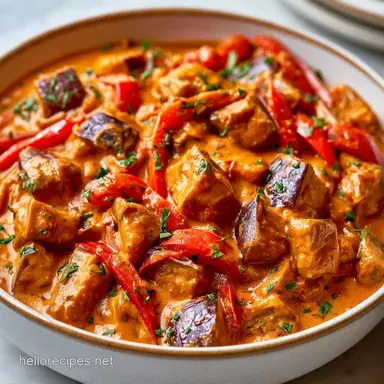
Thai Red Curry Eggplant with Coconut Milk
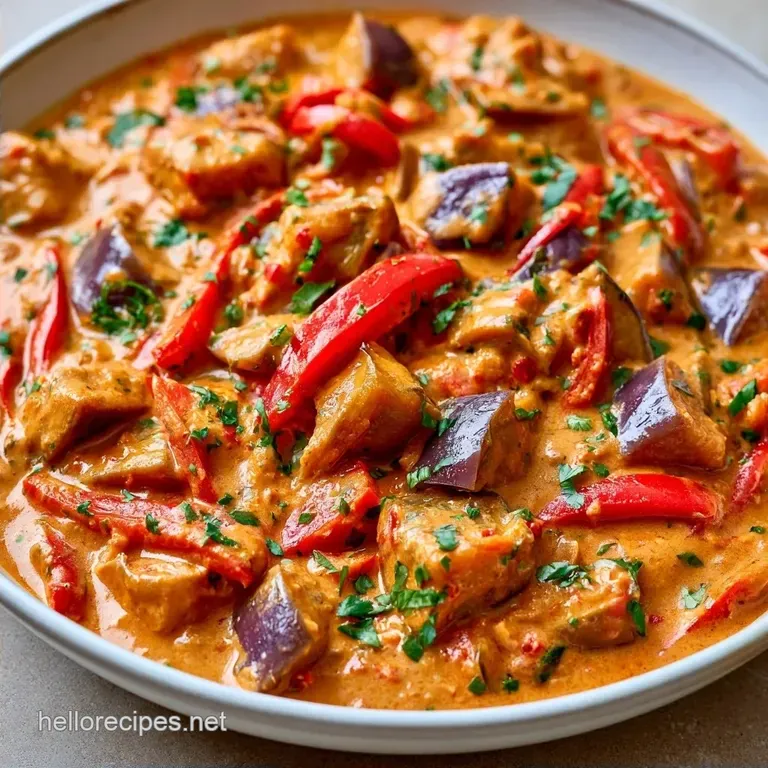
- Time: 15 min active + 15 min cook
- Flavor/Texture Hook: Creamy coconut with a spicy, fragrant kick
- Perfect for: A fast weeknight dinner that feels fancy
You'll immediately notice that sharp, spicy aroma the second the curry paste hits the hot oil. It's a scent that instantly makes your kitchen feel like a Bangkok street market. When I first attempted this, I simply dumped all the ingredients into a pot and simmered them. The result?
A grey, mushy aubergine porridge that tasted flat.
I realized I was missing the "bloom." By frying the paste on its own, the flavors sharpen and the sauce gains a depth that you simply can't achieve through boiling. It's a small adjustment, but it's the difference between a bland stew and a vibrant meal.
This dish relies on a careful balance. You have the heat from the chilies, the richness of the coconut milk, and a splash of lime to prevent it from feeling too heavy. It's a quick victory for anyone wanting something bold without spending their whole night cooking.
The Big Flavor Win
- The Paste Bloom: Sautéing the red curry paste in oil first draws out the essential oils from the galangal and lemongrass. This eliminates any raw flavor and produces a rich, crimson hue.
- Aubergine Timing: Since eggplant acts like a sponge, introducing it toward the end allows it to soak up the sauce without breaking down entirely into the mixture.
- The Acid Hit: Stirring in lime juice right before serving balances the richness of the coconut milk. This adds a vibrant lift to the dish and accentuates the aromatic spices.
Recipe Specs
This one-pot dish prioritizes bold flavors and a quick turnaround. By using full fat coconut milk, the sauce thickens on its own, removing the need for flour or cornstarch. Avoid the "light" version of coconut milk if you want to maintain that luscious, rich consistency.
As for the basics, this recipe serves four and takes exactly 30 minutes from the first chop to the final plate.
Gathering Your Essentials
A huge pantry isn't necessary here, but picking a quality curry paste is key. I recommend brands like Maesri or Mae Ploy for a truly traditional taste.
- 2 tbsp neutral vegetable oil Why this? Stable at high temperatures for searing paste
- 3 tbsp Thai red curry paste Why this? Provides the core heat and aroma
- 1 can (13.5 oz) full fat coconut milk Why this? Creates the rich, creamy base
- 1/2 cup vegetable broth Why this? Adjusts the sauce consistency
- 1 lb Thai eggplant, quartered Why this? Holds shape better than globe eggplant
- 1 red bell pepper, sliced into strips Why this? Adds sweetness and color
- 1 small onion, diced Why this? Provides a savory foundation
- 3 cloves garlic, minced Why this? Introduces a sharp, pungent layer
- 1 tbsp fish sauce Why this? The essential salty, umami punch
- 1 tbsp brown sugar Why this? Balances the spice and salt
- 1 tbsp fresh lime juice Why this? Adds brightness and acidity
- 1/2 cup fresh Thai basil leaves, torn Why this? Adds a peppery, anise like finish
Substitution Guide
| Original Ingredient | Substitute | Why It Works |
|---|---|---|
| Fish Sauce (1 tbsp) | Soy Sauce or Tamari (1 tbsp) | Similar saltiness. Note: Lacks the pungent fermented depth of fish sauce |
| Thai Eggplant (1 lb) | Japanese Aubergine (1 lb) | Similar texture. Note: Cut into larger 1 inch chunks to avoid mushiness |
| Coconut Milk (1 can) | Cashew Cream (1 can) | High fat content. Note: Lacks the distinct coconut flavor |
| Thai Basil (1/2 cup) | Sweet Basil or Spinach (1/2 cup) | Similar look. Note: Lacks the spicy, clove like aroma of Thai basil |
Basic Kitchen Tools
Keep it simple here. You don't need fancy gear, just a few reliable basics.
- A large wok or a deep skillet (this gives you plenty of room to stir without splashing).
- A sharp chef's knife (for those uniform eggplant cuts).
- A sturdy spatula or wooden spoon.
- Measuring cups and spoons.
Step-by-step Cooking
Let's get started. Work efficiently once the pan is hot, as the curry paste can scorch if left unattended.
1. Prepping the Produce
Dice your eggplant into consistent pieces. If you're using Japanese aubergine, keep the chunks around 1 inch so they don't break down. Set your lime juice and torn basil aside for the final step.
2. Blooming the Aromatics
Warm the vegetable oil over medium heat. Add the red curry paste and [stir fry for 2 minutes] until it turns a deep red and the oil separates. You'll notice a sharp, aromatic scent now. Stir in the minced garlic and diced onion, cooking until they have softened.
3. Building the Creamy Sauce
Open the coconut milk can without shaking it. Stir in the thick coconut cream from the top first until combined. Gradually blend in the remaining coconut milk and vegetable broth, then bring the mixture to a gentle simmer.
4. The Simmer and Finish
Fold in the sliced bell peppers and eggplant. [Simmer for 5–7 minutes] until the eggplant is translucent and tender but still maintains its structure. They should be soft, but not mushy.
5. Final Seasoning
Stir in the brown sugar, fish sauce, and lime juice. Remove from heat immediately. Fold in the Thai basil leaves [until just wilted] to prevent the leaves from browning and to keep their fresh scent.
Solving Common Issues
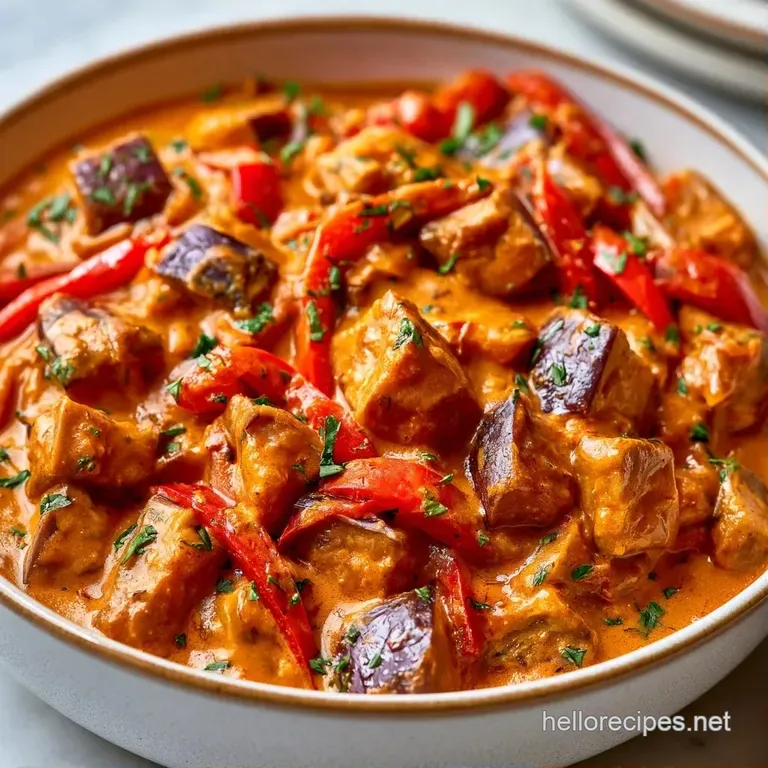
Eggplants can sometimes be unpredictable, and the spice level might not be exactly what you wanted. Most of these issues are easy to resolve with a quick taste and a few minor adjustments.
Bitter Aubergine Taste
Larger eggplants can occasionally taste bitter. To prevent this, toss the cut pieces with salt and let them rest for 10 minutes, then rinse them and remove excess moisture before sautéing.
Sauce Too Thin
This usually happens if the coconut milk is too thin or you used too much broth. Let the sauce simmer without a lid for an additional 3 minutes to reduce it.
Heat Too High
If the curry is too spicy, resist the urge to add water. Instead, stir in a bit more brown sugar or an extra splash of coconut milk to tone down the chilies.
Problem Solver
| Problem | Fix |
|---|---|
| Eggplant is too mushy | Cut pieces into larger chunks and reduce simmer time by 2 minutes |
| Sauce tastes flat | Add another squeeze of lime juice or a small splash more fish sauce |
| Basil turned black | Stir in the basil only after the heat is completely off |
Switching Things Up
This Thai Red Curry Eggplant is a great base, but you can definitely tweak it to fit what's in your fridge. If you're craving something different, you might like my Chinese Eggplant recipe, which uses a garlic heavy sauce instead of coconut.
Adding More Protein
For a heartier meal, add 1 lb of sliced chicken breast or firm tofu cubes. Sear the protein in the oil before you add the curry paste, then remove it from the pan and stir it back in during the final simmer.
Swapping the Veg
If you can't find Thai eggplant, zucchini or cauliflower work well. Just be mindful that zucchini cooks faster, so add it 2 minutes later than you would the eggplant.
Making It Vegan
Swap the fish sauce for a mix of soy sauce and a pinch of salt. Use a vegan certified red curry paste (some contain shrimp paste) to keep the dish plant based.
Keeping Leftovers Fresh
This dish actually tastes better the next day because the eggplant has more time to soak up the spices.
Storage Guidelines Store the curry in a glass container in the fridge for up to 3 days. If you're freezing it, I recommend doing so without the basil leaves, as they don't freeze well. It stays good in the freezer for about 2 months.
Reheating Tips Warm it up in a pan over medium heat. Add a tablespoon of water or coconut milk to loosen the sauce, as the eggplant will likely have absorbed most of the liquid while sitting.
Zero Waste Tips Don't toss the bell pepper stems or onion skins. Throw them in a freezer bag with other veggie scraps to make a homemade vegetable stock for your next batch of curry.
Serving the Meal
The best way to enjoy this is in a wide bowl, poured over a mountain of steamed jasmine rice. If you want the best results, check out my guide on how to make stovetop rice so it stays fluffy.
For a bit of extra crunch, top the dish with some toasted peanuts or fresh sliced red chilies if you're feeling brave. A wedge of fresh lime on the side is a must, allowing everyone to add their own final hit of acidity.
Common Kitchen Myths
There are a few things people say about eggplant that just aren't true.
One big one is that you need to "sear" eggplant to seal in the juices. Eggplants don't have "juices" in the way meat does; they have a porous structure that acts like a sponge. Searing adds flavor, but it doesn't stop the vegetable from absorbing sauce.
Another myth is that you should always peel your eggplant. For Thai and Japanese varieties, the skin is thin and nutrient dense. Keeping it on helps the pieces maintain their structure in the curry.
Adjusting the Portion
Scaling this Thai Red Curry Eggplant is pretty straightforward, but you can't just double everything blindly.
Scaling Down (Half Batch) Use a smaller skillet to prevent the coconut milk from evaporating too quickly. Use 1.5 tbsp of curry paste and cut the cooking time for the eggplant down by about 20%.
Scaling Up (Double Batch) When doubling, don't double the salt or fish sauce immediately. Start with 1.5x the amount, taste it, and add more if needed. You'll also need to work in batches when searing the paste to ensure it actually fries instead of steaming.
Baking Adjustment If you decide to finish the curry in the oven (though I don't recommend it for this specific recipe), lower the temperature to 325°F and extend the time by 15 minutes.
Right then, that's it! This Thai Red Curry Eggplant is a total winner for those nights when you want something vibrant and comforting without spending all evening at the stove. Enjoy!
Recipe FAQs
How to prep eggplant for Thai curry?
Cut the eggplant into uniform pieces to ensure even cooking.
Tip: if using Japanese aubergine, keep chunks around 1 inch so they don't dissolve.
Is it true that eggplant makes Thai curry too mushy?
Surprisingly, no. Simmering for 5 7 minutes keeps the eggplant translucent and tender while maintaining its shape.
Tip: avoid overcooking past the 7-minute mark to preserve texture.
Why stir fry the red curry paste?
Frying the paste for 2 minutes releases aromatic oils and deepens the red color.
Tip: wait until the oil separates from the paste before adding your onions and garlic.
Should you cook eggplant before adding to curry?
Adding raw eggplant directly to the simmering coconut milk is sufficient.
Tip: folding it in with the bell peppers ensures both vegetables finish cooking at the same time.
What serves as the best side?
A side of stir fried rice noodles balances the rich sauce.
Tip: lime wedges on the side allow you to adjust the acidity to your taste.
Which vegetables work best here?
Red bell pepper and onion complement the eggplant and curry paste perfectly.
Tip: ensure the pepper is sliced into strips for consistent bite sized pieces.
Thai Red Curry Eggplant