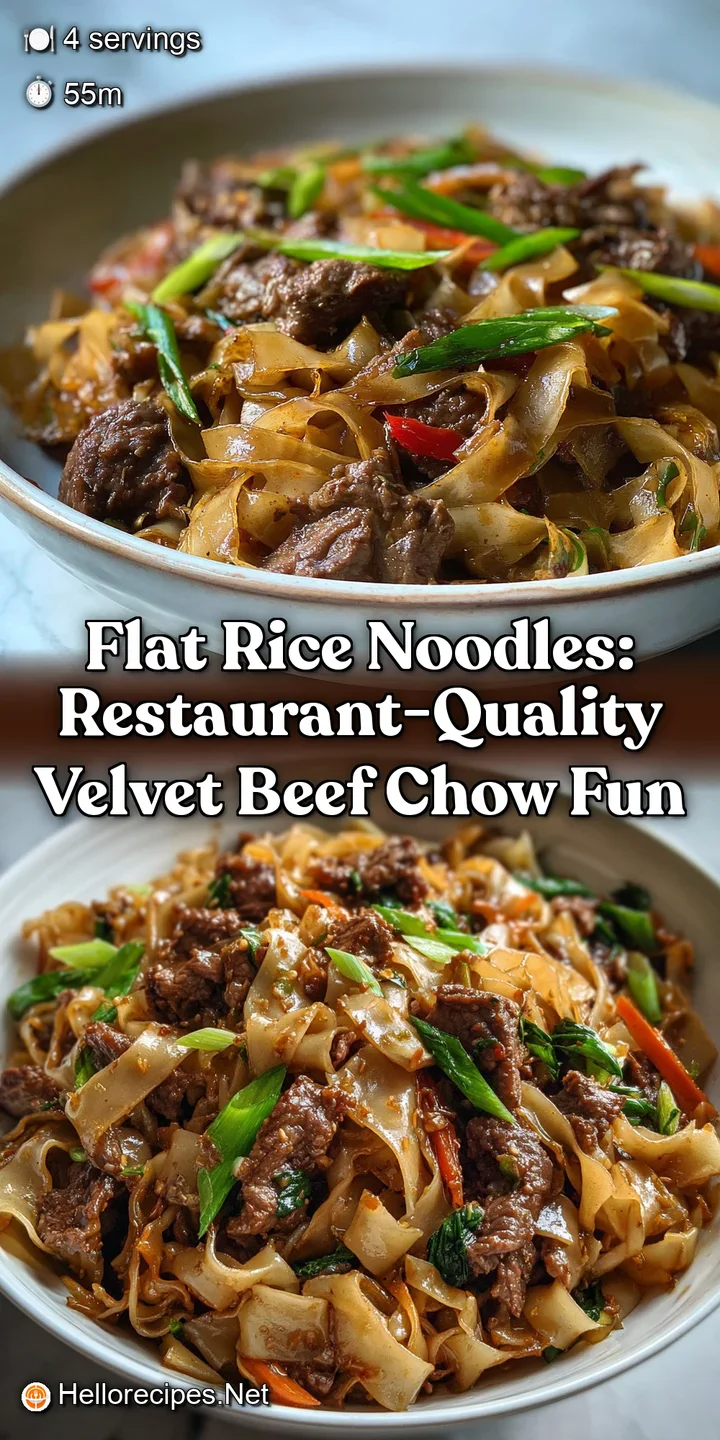
Flat Rice Noodles: Velvet Beef Chow Fun
- Achieving Wok Hei: The Art of Stir-Fried Ho Fun
- The Science of Texture: Why This Chow Fun Excels
- Essential Components for the Ultimate Wok Stir-Fry
- Master the Heat: Step-by-Step Wok-Fired Technique
- Troubleshooting Chow Fun: Tips for Medium Difficulty Recipes
- Leftovers and Reheating: Maintaining Texture and Flavor
- Complementary Sides and Garnishes
- Recipe FAQs
- 📝 Recipe Card
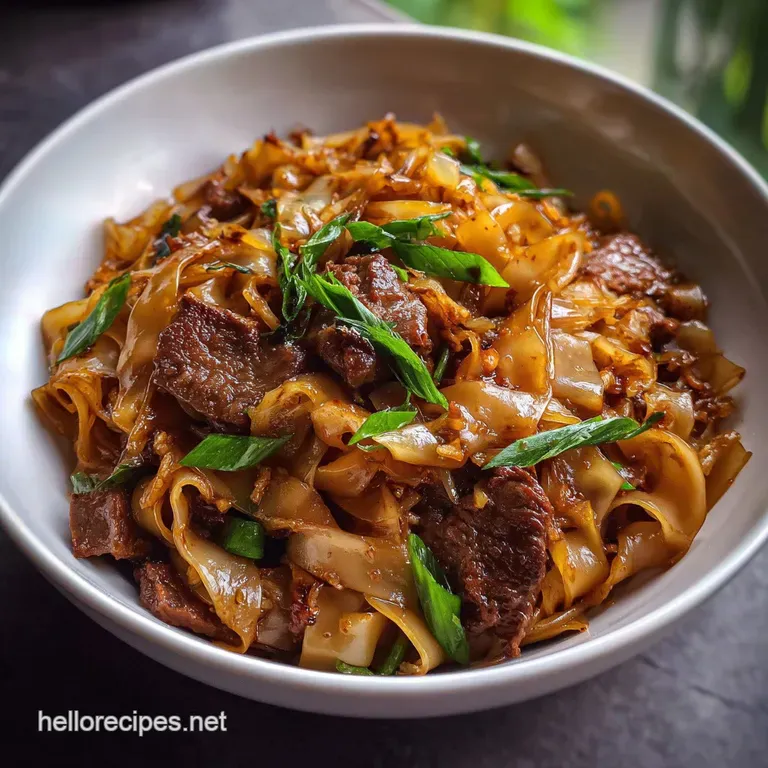
When that smoky, caramelised smell hits your nose that elusive wok hei —you know you've done it right. This isn't just another dinner; this is the iconic Cantonese Beef Chow Fun, built around the glorious texture of wide Flat Rice Noodles .
They are chewy, they are silky, and when charred just right, they are absolute magic.
I know what you're thinking: isn't this impossible to make at home? Trust me, it’s not. Once you nail the prep and understand the power of high heat, this dish becomes a weekend lifesaver that tastes infinitely better (and cheaper) than your usual takeout. It’s fast, furious, and highly satisfying.
We’re going to stop serving up sad, clumpy stir fries forever. We’re focusing on the two major hurdles: how to make the steak melt in your mouth (the velveting trick), and how to get those beautiful Flat Rice Noodles coated in flavour without tearing them to shreds.
Ready to crack on?
Achieving Wok Hei: The Art of Stir Fried Ho Fun
Achieving wok hei (the breath of the wok) is what separates a good Chinese stir fry from a stellar one. It's that smoky, slightly bitter, deeply savory flavour profile created when ingredients hit blazing hot oil and instantly caramelise.
This Wok-Fired Chow Fun Recipe demands intense heat, but the result is a rich depth you simply cannot get in a slow sauté pan.
The Science of Texture: Why This Chow Fun Excels
Our goal is textural contrast: impossibly tender beef, crisp vegetables, and Silky Flat Rice Noodles that hold their shape. Every ingredient step is designed to maximize flavour absorption and minimise moisture because moisture is the enemy of a good stir fry.
We focus on separation, high heat, and speed.
Decoding Cantonese Chow Fun: History and Variations
Chow Fun, or gān chǎo niú hé (dry-fried rice noodles with beef), is a staple in Cantonese cuisine. It’s revered specifically because it’s so simple yet so hard to perfect it relies entirely on the technique of the cook and the power of the heat.
While we are making the classic Beef Chow Fun, the fundamental principles of cooking these wide Flat Rice Noodles apply across every variation.
Why We 'Velvet' the Beef for Ultimate Tenderness
If you skip the velveting process, your steak will be tough and chewy. We use bicarbonate of soda (baking soda) and cornflour in the marinade, which changes the pH of the meat, relaxing the proteins. The result is the famous 'velvet' texture silky, smooth, and ridiculously tender.
This 30 minute marinade time is non-negotiable for superior texture.
Commercial vs. Fresh: Selecting Your Perfect Rice Noodles
When making authentic Chow Fun, you absolutely need fresh, wide Flat Rice Noodles (often labelled Ho Fun or Shahe Fen ). The dried kind just don't have that signature chewy, bouncy texture.
Commercial fresh noodles usually come pre-oiled in vacuum packs, but they are often stuck together in a gelatinous brick. You must gently separate them before they ever hit the wok, or they will turn into an awful sticky mess later.
The Maillard Reaction on Wide Rice Noodles
That beautiful char you see on the noodles in the restaurant? That’s the Maillard reaction doing its delicious work. By adding the Flat Rice Noodles to the screaming hot wok and letting them sit, undisturbed, for about 30 seconds before tossing, you encourage these spots of smoky, nutty flavour to develop.
Don't worry about slightly crispy edges; that's part of the charm!
Balancing Umami and Sweetness in the Sauce Base
Our sauce is deceptively simple but perfectly balanced. Oyster sauce delivers deep umami, dark soy sauce provides richness and that gorgeous mahogany colour (not the salty flavour, that’s light soy’s job!), and a tiny bit of sugar rounds it out.
This sauce needs to be thick enough to coat the noodles but thin enough not to be gloopy. Always mix it entirely before you start cooking.
Controlling Moisture to Prevent Sticky Noodle Clumps
My first few attempts at making Flat Rice Noodles were total failures because I overloaded the wok. When you cook too much at once, the temperature drops instantly, and the ingredients steam instead of fry.
This releases moisture, which activates the starches in the rice noodles, creating the dreaded sticky clump. Cook in batches if your hob isn't industrial strength.
Chef’s Note: The single biggest mistake home cooks make with stir fry is insufficient heat. If your oil isn’t lightly smoking before you add the ingredients, wait longer. Seriously.
Essential Components for the Ultimate Wok Stir Fry
Success in over high heat cooking lives and dies by your prep work. Get everything ready before the flame goes on.
Preparing the Silky Flat Ho Fun: Pre-Cooking Techniques
Handle your fresh Flat Rice Noodles like fragile silk. Carefully unroll and separate them individually. If you're using refrigerated noodles, let them come to room temperature first; this makes separating them much easier and less likely to break. You do not need to boil or soak fresh noodles.
Marinade Mastery: Ensuring the Beef's Velvet Texture
The marinade not only tenderizes but also protects the meat from drying out during the intense sear. The cornflour forms a thin layer that acts as a moisture sealant. Don't wipe the marinade off the beef before frying; it needs that coating!
Key Aromatics and Their Role in Building Flavor Depth
Ginger and garlic are your foundational aromatics. I like using sliced ginger rather than minced for this dish because it adds beautiful streaks and its flavour is slightly milder and cleaner when quickly fried. The spring onions are used right at the end for fresh, sharp contrast.
Ingredient Swaps for Dietary Needs
I believe everyone should be able to enjoy fantastic noodles! Here are a few swaps for this Flat Rice Noodles Recipe :
| Ingredient | Viable Substitute | Notes |
|---|---|---|
| Flank Steak | Pork Loin or firm pressed Tofu (must be pressed!) | Slice thinly and use the same velveting technique. |
| Oyster Sauce | Vegetarian Mushroom Sauce or thick Hoisin Sauce | If using Hoisin, taste and reduce added sugar slightly. |
| Shaoxing Wine | Dry Sherry or Japanese Sake | Do not use red cooking wine it imparts a metallic taste. |
| Cornflour | Tapioca Starch or Arrowroot Powder | Used for thickening and velveting the beef. |
Master the Heat: step-by-step Wok-Fired Technique
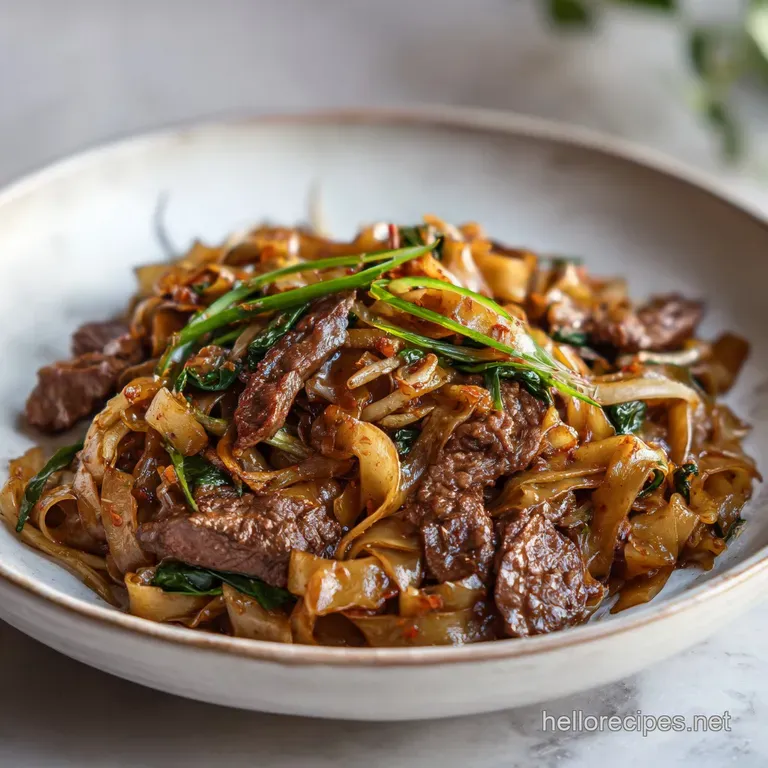
Remember, we are aiming for maximum speed here. The timing is critical to keep those Flat Rice Noodles beautifully textured.
Stage 1: Velveting the Beef and Setting Aside
Get the wok screaming hot until the oil shimmers and lightly smokes. Add the beef in small batches. Sear hard for 60 90 seconds until the edges are brown. You want color, not full doneness. Scoop it out and drain it immediately, setting it aside.
Don't let it sit in the hot wok; it will overcook from residual heat.
Stage 2: Rapid Stir Frying the Noodles for Smoky Edges
With the wok still blistering hot, add the second dose of oil if necessary. Throw in your aromatics, then the hard vegetables (Gai Lan stems). Once those have softened slightly (about two minutes), clear a space and add the separated Wide Flat Rice Noodles Recipe ingredients.
Let them sit on the metal for a moment to char before aggressively but carefully tossing.
Stage 3: Combining Components and Final Sauce Toss
As soon as the noodles start to feel pliable, pour the premixed sauce over everything. Toss constantly and quickly until the noodles are uniformly coated in a glossy, dark sheen. Immediately return the seared beef and any juices back into the wok.
Toss for just enough time to heat the meat through no more than 30 seconds. Turn off the heat and serve instantly.
Troubleshooting Chow Fun: Tips for Medium Difficulty Recipes
Preventing Noodle Breakage and Sticking
The secret weapon here is separation (done beforehand!) and gentle tossing. Use wide scoops or spatulas rather than tongs. Lift and fold the noodles rather than stirring and scraping them. This preserves their structure, allowing you to enjoy long, chewy strands of the Flat Rice Noodles .
The Importance of Mise en Place in over High heat Cooking
If you have to stop and hunt for the soy sauce, the wok cools down, and you lose wok hei . Have every bowl, every sauce, and every chopped vegetable lined up in the order you need it. This recipe moves too quickly to allow for improvisation mid-cook.
Leftovers and Reheating: Maintaining Texture and Flavor
Optimal Short Term Storage of Cooked Noodles
This Chow Fun is truly best enjoyed immediately. If you must save some, store the cooled leftovers in an airtight container in the fridge for up to three days.
Reheating Flat Rice Noodles Without Drying Out
Reheating stir fries can be tricky because the high starch content often results in tough, dry food. The best way to reheat these Flat Rice Noodles is on the stovetop: heat a tablespoon of oil in a wok or large pan, add the noodles, and toss quickly over medium high heat.
If they look dry, add a tiny splash of water or stock to create steam. Skip the microwave; it makes the noodles tough.
Notes on Freezing Cooked Noodle Dishes
Don't do it! The texture of these thick rice noodles changes dramatically upon thawing. They become brittle and mealy. If you want to prep components ahead, only freeze the velveted beef (pre-cooked, then cooled) and make fresh noodles and sauce later.
Complementary Sides and Garnishes
A light contrast is ideal for this rich dish. I love serving this Chow Fun with something sharp and vinegary. A simple, quickly pickled cabbage or a shredded carrot and daikon salad works beautifully. If you want another great wok recipe, check out my tips on making perfect Pork Fried Rice: Restaurant Quality, Non-Greasy, over High heat Recipe .
Garnish with a generous scattering of white pepper and sliced spring onions right before serving. Enjoy every silky, smoky strand of these amazing Flat Rice Noodles !
Recipe FAQs
Why do my wide flat rice noodles keep breaking or turning mushy during stir frying?
This common issue is usually caused by oversoaking the noodles or overcrowding the wok, which traps steam. Ensure you soak the noodles just until they are pliable (often 30 minutes in cold water) and pat them very dry before adding them to the high heat.
To prevent breakage, minimize stirring; gently lift and turn the noodles using tongs or a spatula instead of aggressively tossing.
What is "wok hei," and how can I achieve it at home without a commercial burner?
Wok hei, or the "breath of the wok," is the elusive smoky, complex caramelized flavor resulting from cooking food in a very hot wok. To achieve this on a home stove, use the highest heat setting possible and ensure your wok is smoking hot before adding any oil.
Crucially, cook the ingredients in small batches to maintain high heat and allow moisture to vaporize instantly.
The recipe mentions "velveting" the beef. What is the science behind this tenderizing technique?
Velveting utilizes baking soda, cornstarch, and sometimes egg white to tenderize and protect the meat. The baking soda slightly raises the pH level, chemically breaking down tough muscle fibers for maximum tenderness.
The cornstarch coating then acts as a protective barrier, shielding the beef from the harsh heat of the wok and locking in internal moisture.
My Chow Fun often turns out too dry or lacks enough glossy sauce coating. What am I doing wrong?
Dryness typically occurs when the sauce is introduced too early or when the cook time is extended, causing the noodles to absorb too much moisture. Make sure all your ingredients are prepped, as the finished sauce should only be tossed in the final 30 seconds of cooking.
If the dish seems too dry, a tablespoon or two of beef stock or water can be added with the sauce to create a glossy coating.
I cannot find fresh flat rice noodles. What is the best acceptable substitute?
Fresh, wide flat rice noodles are irreplaceable for achieving the classic chewy texture of Chow Fun, so search dedicated Asian markets first. If you must substitute, use the dried version of the wide rice noodles, ensuring you follow the package directions for soaking to prevent breakage or mushiness.
Alternatively, wider varieties of dried Thai rice noodles used for Pad See Ew can provide a similar, if slightly firmer, chew.
Can I easily convert this Velvet Beef Chow Fun into a vegan version?
Yes, this recipe adapts beautifully to a vegan diet with simple swaps. Substitute the beef with firm, pressed tofu or large sliced oyster mushrooms, coating them in a similar cornstarch slurry before frying.
Ensure you replace traditional oyster sauce with vegetarian mushroom sauce and use vegetable stock in place of beef stock in the sauce mixture.
How should I store leftover Chow Fun, and can I freeze the dish?
Store any leftovers in an airtight container in the refrigerator for up to 3 days. Freezing is strongly discouraged, as the high water content of the flat rice noodles will cause them to become brittle and unpleasantly rubbery upon thawing.
To reheat, toss the noodles lightly in a hot wok with a small amount of oil or water to restore moisture.
Silky Flat Rice Noodles Recipe
Ingredients:
Instructions:
Nutrition Facts:
| Calories | 1007 kcal |
|---|---|
| Protein | 35.1 g |
| Fat | 22.9 g |
| Carbs | 162.9 g |
