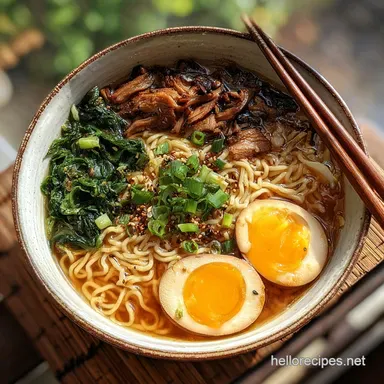
Authentic Shoyu Ramen with Chicken Broth

- Total6 Hrs 30 Mins
- Servings2
- Calories1041 kcal
- Time: 30 min active + 4 hrs cooking + 2 hrs marinating
- Taste: Salty, savory, and deeply umami
- Best for: A cozy, slow-paced weekend dinner
- Make ahead: The broth and tare keep for several days in the fridge
Shoyu Ramen
Think of that clear, amber broth that looks like tea but tastes like a savory bomb. Most people think you need a 24 hour boil to get that kind of depth, but a focused 4 hour simmer combined with a concentrated seasoning base does all the heavy lifting.
The magic happens in the contrast. You get the bright, salty punch of the soy-based tare meeting a mellow chicken broth, topped with chicken belly that is crisp on the outside and tender inside.
This version of shoyu ramen is all about layering. Instead of just tossing ingredients in a pot, we build the flavor in stages, which keeps the broth transparent and the toppings distinct.
Key Numbers
Getting the timing right prevents the noodles from turning into mush and the eggs from overcooking.
- Egg Timer: Exactly 6 minutes and 30 seconds for a jammy center.
- Broth Temp: A gentle simmer, never a rolling boil, for 4 hours.
- Chicken Belly: Simmer for 45 to 60 minutes until fork-tender.
Ingredients and Swaps
For the Broth and Tare
- 2 lbs chicken carcasses Why this? Provides the clean, collagen-rich body of the soup
- 1 medium onion
- 3 cloves garlic
- 2-inch piece of ginger
- 10 cups water
- 1/2 cup reduced-sodium soy sauce
- 2 tbsp water
- 1 tbsp brown sugar
- 1 tsp dashi powder Why this? Adds essential oceanic umami
- 1 clove garlic, minced
For the Toppings and Noodles
- 1 lb chicken belly Why this? Adds rich, fatty contrast to the light broth
- 1/4 cup reduced-sodium soy sauce
- 2 tbsp water
- 1 tbsp brown sugar
- 1 slice ginger
- 2 large eggs
- 1/4 cup reduced-sodium soy sauce (for marinade)
- 1/4 cup water (for marinade)
- 1 tbsp brown sugar (for marinade)
- 8 oz fresh ramen noodles
- 2 sheets nori
- 2 stalks green onion
- 1/2 cup menma (bamboo shoots)
| Original Ingredient | Substitute | Why It Works |
|---|---|---|
| Dashi Powder | Dried Shiitake Powder | Similar umami profile. Note: Adds a more earthy, mushroom note |
| Fresh Ramen Noodles | Dried Ramen Noodles | More convenient. Note: Texture is slightly softer and less chewy |
| Chicken Belly | Chicken Thighs (skin-on) | Same protein. Note: Less fat, so the bowl feels lighter |
| Ingredient | Role | If You Don't Have It |
|---|---|---|
| Soy Sauce | Salt and Umami | Tamari (for gluten-free) |
| Brown Sugar | Balance | Honey or maple syrup |
| Ginger | Brightness | A pinch of ground ginger (approximation) |
Kitchen Tools
A stockpot is the main player here, but a fine-mesh sieve is what ensures the broth stays clear. You will also need a skillet for the chicken belly and a small saucepan for the tare.
From Prep to Plate
Phase 1: The Clear Broth
- Place chicken carcasses and 10 cups water in a stockpot. Bring to a boil over high heat.
- Skim gray foam and impurities from the surface with a spoon until the top is clear. Note: This prevents the broth from looking cloudy.
- Add the halved onion, 3 cloves smashed garlic, and sliced ginger. Reduce heat to low.
- Simmer the broth gently for 3 to 4 hours. Keep it at a bare bubble to avoid clouding the liquid.
- Strain the liquid through a fine-mesh sieve into a clean pot. Discard the solids and keep the broth warm.

Phase 2: The Tare and Braised Chicken
- In a small saucepan, combine 1/2 cup reduced-sodium soy sauce, 2 tbsp water, 1 tbsp brown sugar, 1 tsp dashi powder, and 1 clove minced garlic.
- Simmer over medium heat for 5 minutes until the liquid thickens slightly.
- Pat chicken belly dry. Sear skin-side in a skillet over medium-high heat until golden brown and crisp.

- Add 1/4 cup reduced-sodium soy sauce, 2 tbsp water, 1 tbsp brown sugar, and 1 slice ginger to the skillet.
- Cover and simmer on low for 45 to 60 minutes until the meat is fork-tender. Let it cool slightly before slicing.
Phase 3: The Jammy Eggs
- Bring a pot of water to a boil. Gently lower in the eggs and boil for exactly 6 minutes and 30 seconds.
- Transfer eggs immediately to an ice bath for 5 minutes. Note: This stops the cooking and keeps the yolk silky.
- Peel the eggs. Soak them in a mixture of 1/4 cup reduced-sodium soy sauce, 1/4 cup water, and 1 tbsp brown sugar in the refrigerator for at least 2 hours. Use pasteurized eggs if you are concerned about uncooked yolks.

Phase 4: Assembly
- Boil fresh ramen noodles according to package instructions.
- Drain noodles thoroughly. Shake them vigorously in the colander to remove all excess water. Note: Extra water dilutes the flavor of the soup.
- Pour 2 to 3 tbsp of Shoyu Tare into the bottom of two bowls.
- Pour 2 cups of hot broth over the tare and stir gently.
- Add noodles to each bowl, folding them into a neat nest with chopsticks.

- Top with sliced braised chicken belly, a halved marinated egg, thinly sliced green onions, 1/4 cup menma, and a square of nori.
The Technique Behind It
- The Two-Part System: Using a separate tare (seasoning) and broth (body) means the soup doesn't get over-reduced or too salty while simmering.
- Temperature Control: Keeping the broth at a low simmer prevents fats from emulsifying, which is why the liquid stays transparent instead of milky.
| Noodle Type | Texture | Prep Time | Best For |
|---|---|---|---|
| Fresh Ramen | Chewy, springy | 2-3 mins | Authentic bowls |
| Dried Ramen | Softer, smoother | 4-5 mins | Quick weeknight meals |
Troubleshooting Guide
Broth Looks Cloudy
Cloudiness happens when the broth boils too hard. This forces fat and protein to mix into the water. If this happens, you can't fully reverse it, but straining through a coffee filter can help a bit.
Noodles Dilute the Soup
If the broth tastes thin, it's usually because the noodles carried too much water into the bowl. Always give the noodles a hard shake in the colander before adding them.
Chicken Belly is Tough
Tough meat means the braise was too short or the heat was too high. The meat needs a low, slow simmer to break down the connective tissue.
| Problem | Root Cause | Solution |
|---|---|---|
| Cloudy Broth | Rolling boil | Keep heat on lowest simmer |
| Watery Soup | Poorly drained noodles | Shake noodles vigorously |
| Tough Meat | Under-braised | Simmer until fork-tender |
Storage & Reheating
Keep the broth in an airtight container in the refrigerator for 3 days or in the freezer for 3 months. Warm it slowly on the stovetop to reheat.
The tare is a concentrate and will last in the refrigerator for 4 days. Store the braised chicken belly in its cooking liquid for 3 days in the fridge, reheating it gently in a pan.
When reheating cooked leftovers, check with a food thermometer that the center reaches 165°F (74°C); the appliance temperature and time alone do not confirm this.
Eat the marinated eggs within 24 to 48 hours, as they may become too salty if kept longer. When warming up broth or meat leftovers, heat them to 165°F per USDA food safety guidelines.
Flavor Variations to Try
If you want a bit of heat, stir a teaspoon of chili oil or sriracha into the tare before adding the broth. For a more pungent bowl, double the minced garlic in the tare and add a teaspoon of toasted sesame oil at the end.
Since this is a shoyu ramen recipe, it's all about the soy base. If you prefer something different, you can adapt these techniques for a beef ramen stir fry or a speedy beef mince ramen when you don't have 4 hours to simmer.
Gluten-free Option
Swap the soy sauce for tamari (labelled gluten-free) and ensure your dashi powder is gluten-free. The rest of the ingredients are naturally gluten-free, but you'll need to find gluten-free ramen noodles (often made from brown rice).
Serving Suggestions

Serve this in deep bowls to keep the broth hot. For a more vibrant look, slice the green onions on a sharp diagonal. If you have extra nori, you can cut it into thin strips and scatter them on top.
Adding a handful of blanched baby spinach or bok choy adds a nice color contrast and some freshness to the rich, savory profile of the soup.
Critical in Sodium
10350 mg of sodium per serving (450% of daily value)
American Heart Association recommendation: no more than 2,300 mg of sodium per day
Tips to Reduce Sodium
-
Swap Soy Sauce
Replace the reduced-sodium soy sauce with coconut aminos or significantly reduce the quantity used in the broth and marinades.
-
Homemade Dashi
Substitute the dashi powder with a homemade stock made from kombu and bonito flakes to avoid the high salt content of processed powders.
-
Rinse Menma
Thoroughly rinse the menma (bamboo shoots) under cold running water to wash away excess brine before adding them to the bowl.
-
Dilute Marinades
Mix the egg and chicken belly marinades with additional water or rice vinegar to maintain the liquid volume while using less soy sauce.
-
Enhance Aromatics
Increase the amount of fresh ginger, garlic, and white pepper to provide a bold flavor profile that reduces the need for salt.
Frequently Asked Questions
What defines shoyu ramen?
It is a clear, brown-colored ramen characterized by a soy sauce-based seasoning. The flavor is a balance of salty and savory notes from the soy sauce and dashi.
How do you make shoyu ramen?
Simmer chicken carcasses with aromatics for several hours to create a clear broth. Combine this with a soy-based tare and top with braised chicken belly, marinated eggs, and noodles.
Is shoyu ramen veg?
No, this version is not vegetarian because it uses chicken carcasses for the broth and chicken belly as a topping. A vegetarian version needs a vegetable broth in place of the chicken carcasses and a dashi powder made without bonito.
Can the shoyu broth be made with seafood stock or shrimp shells for a shrimp-style ramen?
Yes, you can use seafood stock or shrimp shells instead of chicken carcasses. This changes the flavor profile from poultry-based to a briny, oceanic taste.
Why does homemade ramen broth sometimes taste thin, and how do you get it richer?
Broth often tastes thin when it hasn't simmered long enough to extract collagen and fats. Simmer the chicken carcasses gently for the full 3 to 4 hours to ensure a deeper body.
Shoyu Ramen with Chicken Broth