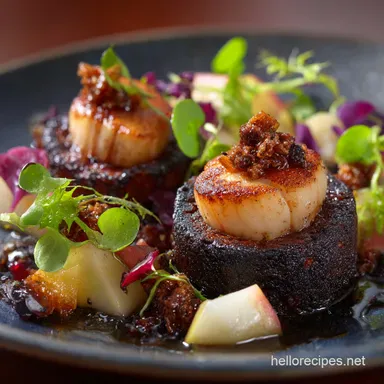
Black Pudding: Seared Scallops Apple Starter

- Elevating the Full English: A Gourmet Black Pudding Starter
- The Science of Surf 'n' Turf: Mastering Contrast and Balance
- Essential Components for the Highland Plate
- Achieving Restaurant Standard: Step-by-Step Method
- Achieving Perfection: Pro Tips and Troubleshooting
- Prepping Ahead and Managing Leftovers
- Elevating the Experience: Pairings and Presentation
- Recipe FAQs
- 📝 Recipe Card
Elevating the Full English: A Gourmet Black Pudding Starter
Oh, hello! If you can smell that right now, you’re sensing the deep, earthy spice mixing with the slightly metallic, sweet aroma of the sea. That’s pure culinary magic, and it all starts with the humble Black Pudding .
This isn't your average post night-out fry-up fare; we are taking one of the most flavour packed ingredients in the British pantry and giving it the sophisticated, spotlight treatment it deserves.
We home cooks know the secret to a knockout dinner isn’t spending eight hours in the kitchen, but finding quick ingredients that pack a massive flavour punch. Black Pudding is absolutely that lifesaver; it’s rich, already perfectly seasoned, and takes maybe three minutes to cook to crispy perfection.
It’s also incredibly affordable, proving that "gourmet" doesn't have to mean "expensive."
Today, we're building the ultimate Highland Surf 'n' Turf, pairing crisped Black Pudding slices with sweet, seared king scallops, balanced by tart apple and a luxurious celeriac purée.
Trust me, once you master this recipe, you’ll never look at a standard slice of Black Pudding the same way again. Let’s crack on.
The Science of Surf 'n' Turf: Mastering Contrast and Balance
If you’ve ever wondered why rich, fatty foods taste so incredible when paired with something acidic or salty, that’s contrast at work. The high fat and spice content of good Black Pudding needs something clean and bright to cut through it.
That’s where the scallops and the aggressive acidity of the sherry vinegar come in.
From Grumpy Breakfast to Elegant Plate
The traditional fry-up often drowns out the subtle, savory notes of the blood sausage, turning it into just another oily element on the plate. We’re liberating the flavors here.
By slicing the Black Pudding into thick rounds and searing it hard, we achieve a texture that is crisp on the outside and wonderfully moist and crumbly within, making it a perfect foil for the soft scallop muscle.
What Makes a Proper Black Pudding?
It’s all about the oats! Proper British and Irish Black Pudding relies heavily on pinhead oatmeal or barley to bind the mixture and create that wonderful, substantial texture.
This oatmeal doesn't just bind; it absorbs the rendered fats and spices, resulting in a depth of flavor that a standard American blood sausage might lack. You want a sausage that holds its shape beautifully when sliced for searing.
The History of Blood Sausage: A Global Necessity
Blood sausages are found everywhere from France (Boudin Noir) to Portugal (Morcela). Historically, they represent the ultimate nose-to-tail philosophy, ensuring absolutely nothing was wasted after a harvest slaughter.
The history of Black Pudding is one of necessity, which is why it often contains cheap, filling ingredients like cereal grains and why it’s so fiercely loved.
Pairing Earthiness (Pudding) with Brine (Scallops)
This combination works because of the flavour triangle. The rich, earthy, iron forward flavour of the Black Pudding needs sharp sweetness. The scallops provide the sweetness and delicate brine, while the apple and sherry vinegar provide the crucial acidity. It's truly a beautiful balance.
If you love deep, complex flavours, you might also appreciate the richness in my definitive [New Orleans Gumbo: The Definitive Black Gold Standard Recipe].
Achieving the Perfect Sear: Texture is Key
The secret to restaurant quality searing? High heat and bone dry ingredients. You must remove as much moisture as possible from the scallops before they hit the pan. For the Black Pudding , you need a medium high heat that crisps the exterior quickly without causing the whole slice to dissolve into hot crumbs.
A perfect sear means you get textural complexity in every bite.
The Role of Acid and Sweetness: Apple and Purée Dynamics
The Granny Smith apple is not optional here. Its raw, sharp dice cut the fat from the butter basted scallops and the rich Black Pudding . Meanwhile, the celeriac purée offers a mild, slightly nutty sweetness, creating a grounding, creamy base that prevents the high contrast elements from feeling disjointed.
Essential Components for the Highland Plate
Defining the Delicacy: Irish vs. Scottish Blood Sausage
While both Irish and Scottish versions of Black Pudding are fantastic, they do differ slightly. Irish varieties often have a smoother, less textured interior, sometimes relying on barley instead of oats.
Scottish Black Pudding , particularly Stornoway, is famous for its high proportion of pinhead oatmeal, giving it a more robust, slightly rougher texture that holds up better to heavy searing.
Selecting Your Black Pudding (Quality Notes)
Do not skimp here. The quality of your Black Pudding determines the success of the dish. Look for a traditional butcher’s brand or a protected status version (like Stornoway). They hold their shape better and their spicing is far more complex than mass produced supermarket varieties.
| Component | Substitute | Notes on Flavor Change |
|---|---|---|
| Black Pudding | high-quality Haggis slices | Spicier, more pepper, less distinct 'iron' flavour. |
| King Scallops | Large, dry-packed Prawns (Shrimp) | Faster cook time; less sweetness, more delicate brine. |
| Celeriac Root | Parsnip or Cauliflower | Parsnip is sweeter; Cauliflower is milder/earthier. |
| Sherry Vinegar | Cider Vinegar or Red Wine Vinegar | Less nutty depth; must be a high-quality, aged vinegar. |
| Granny Smith Apple | Firm, slightly tart Pear (e.g., Anjou) | Sweeter, softer crunch, but retains necessary acidity. |
Sourcing and Cleaning King Scallops
Buy "dry-packed" scallops if possible. Wet-packed ones have been treated with phosphates and release too much water, making searing impossible. When cleaning, ensure you remove the tough, crescent shaped side muscle (the "foot"). That little piece gets chewy, and we don't want chewy!
Preparing the Celeriac Root
Celeriac (celery root) looks terrifying, but it's simple. You just need a robust peeler or a sharp knife to hack off the gnarly exterior. Cut deep enough to remove all the dark, textured skin. Once peeled, chunk it uniformly so it cooks evenly for your purée.
Ingredient Swaps for Dietary Needs
If you need a dairy-free purée, try swapping the whole milk for oat milk and the butter for refined coconut oil. The goal is richness and silkiness, which non-dairy alternatives can achieve with a high speed blender.
Just ensure your chosen Black Pudding doesn't contain hidden milk solids if you’re catering to strict dairy allergies.
The Key Difference: Pinhead Oatmeal Content
The pinhead oatmeal in the best Black Pudding is what sets it apart. It gives the slice the body it needs to develop that superb crust when pan-fried. If you use a very smooth, soft variety, it will likely crumble the moment you try to flip it.
Regional Spice Variations in the Recipe
While the core recipe focuses on the natural spice of the Black Pudding , you can adjust the vinaigrette. For a more Irish feel, add a tiny pinch of mace or allspice to the brown butter. For a more intense Scottish influence, a touch of white pepper in the purée works beautifully.
Achieving Restaurant Standard: step-by-step Method

This recipe requires timing, but don’t worry, the total cook time is less than 20 minutes once the celeriac is boiled. Read through the steps twice!
Phase 1: Preparing the Buttery Celeriac Purée
- Boil and Soften: Peel the celeriac and chop it into even 1 inch cubes. Place them in a saucepan and cover with the milk and an equal amount of water. Add a generous pinch of salt. Bring it to a rolling boil, then reduce the heat immediately to a simmer. Cook until the celeriac offers zero resistance when pierced about 18– 20 minutes.
- Drain and Blend: Drain the celeriac well, reserving about 1/4 cup of the cooking liquid. Transfer the hot celeriac and 3 Tbsp (45g) of butter to a high speed blender. Add a splash of the reserved cooking liquid. Blend on high until the mixture is absolutely silky smooth. Seriously, blend for longer than you think you need to. Season with pepper and keep warm and covered. If you usually enjoy creamy sides, this texture is as good as any [Grandmas Corn Pudding: Ultra Creamy Old Fashioned Recipe].
Phase 2: Searing the Apple and Black Pudding Rounds
- Crisp the Pudding: Heat 1 Tbsp of olive oil in your skillet over medium high heat. Place the Black Pudding rounds carefully into the pan. Do not overcrowd the pan. Sear for 2– 3 minutes until a dark, crisp crust forms on the bottom. Flip gently and sear for another 2 minutes. Remove the Black Pudding and keep it warm.
- Dice Apple: While the pudding rests, quickly dice your Granny Smith apple into small, precise cubes (brunoise). We want it raw and crisp for texture.
Phase 3: The Rapid Cook of King Scallops
- Pat Dry: This is the most critical step. Pat those scallops bone dry with paper towels, then season them generously with salt and pepper right before they enter the pan.
- High Heat Sear: Wipe your searing pan clean and return it to high heat with 1 Tbsp of fresh olive oil. The oil should shimmer, almost smoking. Add the scallops, spacing them widely so they don't touch. Sear for exactly 90 seconds without moving them.
- Baste and Finish: Flip the scallops. Immediately drop 2 Tbsp (30g) of unsalted butter into the pan. As the butter foams, tilt the pan towards you and continuously baste the scallops with the foaming butter for another 60 90 seconds. They should be deeply golden and opaque on the sides, but still slightly translucent in the very center. Remove immediately to a clean plate.
Phase 4: Expert Assembly and Plating
- The Vinaigrette: While the scallops rest, make the brown butter vinaigrette. Melt 3 Tbsp (45g) of butter until it foams, then settles and turns a deep, nutty brown. This happens fast! Add the minced shallots and cook until soft. Deglaze the pan with sherry vinegar, stirring aggressively to scrape up those tasty browned bits. Add the stock, salt, and pepper. Keep warm, whisking frequently.
- Assemble: Spoon a generous base of the warm celeriac purée onto the centre of four plates. Place a round of crisp Black Pudding atop the purée. Lean two seared scallops gently against the pudding.
- Finish: Spoon the warm brown butter vinaigrette generously over the scallops and Black Pudding . Scatter the fresh apple brunoise and chopped chives over the top for that final crunch and colour pop. Serve at once.
Achieving Perfection: Pro Tips and Troubleshooting
Preventing the Purée from Becoming Watery
The number one rule for velvety purée is: Drain the cooked celeriac aggressively. You want almost no water or milk left. If your purée is too thin after blending, you can quickly warm it back up in the pan over low heat, stirring constantly, to cook off excess moisture.
The Secret to a Deep, Crisp Crust on the Blood Sausage
Use a non-stick or well seasoned cast iron pan, and ensure the heat is high enough to generate quick caramelization. Don't press down on the Black Pudding slices; just let them sear in peace. Resist the urge to flip them more than once. Flipping too early will tear the crust.
How to Tell if Your Scallops are Overcooked
Overcooked scallops resemble rubber erasers. They shrink dramatically and become entirely opaque. Perfectly cooked scallops should have a dark, crusted exterior, feel firm when pressed lightly, but retain a slight springiness and a tiny hint of translucency in the very middle.
Chef’s Note: Never salt the scallops until the last possible second before they hit the pan. Salt draws out moisture, and wet scallops will ruin your sear instantly.
Prepping Ahead and Managing Leftovers
This is a dish best assembled immediately, but you can definitely do some advance work.
Storing Prepared Celeriac Purée
The purée can be made entirely up to 2 days in advance. Store it in an airtight container in the fridge. To reheat, place it in a saucepan over very low heat, adding a splash of fresh milk and a knob of butter, whisking vigorously until smooth and hot.
Reheating Seared Black Pudding Segments
You can sear the Black Pudding rounds a few hours before service and let them cool completely. To reheat, place them on a baking tray in a 350°F (175°C) oven for about 5 minutes until hot and the crust is revitalized.
Microwaving will make the crust soggy never do that!
Safety Notes on Storing Cooked Scallops
Cooked seafood is best eaten immediately. While you technically can refrigerate cooked scallops for up to one day, they will likely dry out and toughen when reheated. If you have leftovers, they are often better cold, tossed into a light salad the next day.
Elevating the Experience: Pairings and Presentation
For a dish this rich and comforting, you need something that cuts the fat and refreshes the palate. I love serving this starter alongside a small, simple side salad of bitter leaves like frisée or endive, dressed lightly with lemon juice and olive oil.
The richness of the Black Pudding and the brown butter vinaigrette pairs beautifully with a crisp, dry white wine like Muscadet or Sancerre. If you prefer a beer, seek out a dry, traditional cider the sharpness is just perfect.
This truly is the highest level treatment for our beloved Black Pudding . Enjoy every bite!

Recipe FAQs
How do I achieve a perfect, crispy crust on the black pudding without drying it out?
Use medium high heat with a small amount of cooking fat (like butter or duck fat). Sear the slices quickly, aiming for about 2-3 minutes per side, focusing on achieving a deep, mahogany color.
Since most commercial black pudding is pre-cooked, you are primarily reheating the center and developing the desired exterior crust.
Should I remove the casing from the black pudding slices before cooking?
The natural casing is edible and helps the pudding hold its shape beautifully during the searing process, so it is recommended to leave it on. If you prefer a completely smooth texture, you can score the casing lightly before cooking, or easily peel it off after it has cooled slightly.
What can I substitute for celeriac in the purée if I cannot source it?
Excellent substitutes include parsnip, which offers a similar earthy sweetness, or a mix of potato blended with a small amount of turnip (swede) for depth. Regardless of the choice, ensure the substitute is blended with plenty of butter and cream for the required smooth, rich consistency to pair with the scallops.
Why did my scallops not brown properly when searing?
The most common issue is residual moisture on the scallops; they must be thoroughly patted dry with paper towels immediately before seasoning. Ensure your pan is smoking hot and use a high smoke point oil, adding the scallops in a single layer so they don't overcrowd the pan and steam themselves.
Can I prepare the celeriac purée ahead of time, and how should I store it?
Yes, the purée can be made up to two days in advance and stored, covered, in the refrigerator. Reheat it gently over low heat, stirring frequently, and adding a splash of milk or cream if it has become too stiff or needs loosening back to serving consistency.
How long does leftover cooked black pudding last, and can I freeze it?
Leftovers should be cooled quickly, stored in an airtight container, and consumed within 3 days. While fresh black pudding freezes well for up to three months, previously cooked slices may suffer a textural breakdown upon thawing, making it advisable to only cook what you plan to eat immediately.
Seared Black Pudding Starter
Ingredients:
Instructions:
Nutrition Facts:
| Calories | 415 kcal |
|---|---|
| Fat | 31.5 g |
| Fiber | 2.5 g |
