Speedy Shogun Beef Udon Restaurantquality Noodles at Home
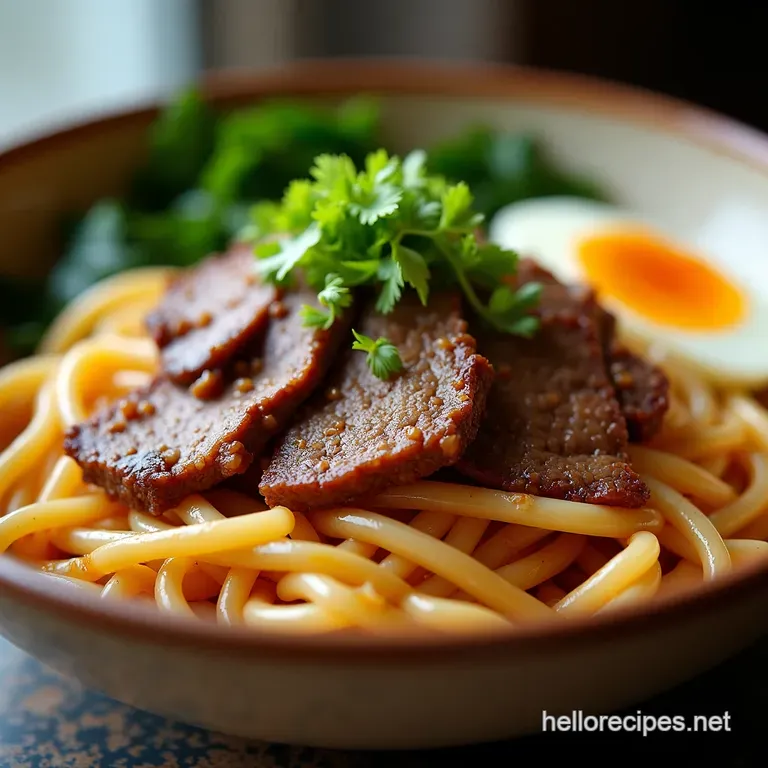
- Why This Beef Udon Noodles Recipe Becomes Your New Weeknight Hero
- The Allure of Silky Noodles: Comfort Redefined
- Assembling the Flavor Arsenal: Components for Superior Beef Udon Noodles
- Sourcing the Stars: Selecting the Best Udon and Beef Cuts
- The Wok Strategy: Building Layers of Heat and Flavor
- Bringing It Together: The Final Slurp-Worthy Assembly
- Troubleshooting and Advanced Customizations for Your Bowl
- Storing Leftovers of This Delightful Beef Udon Stir-Fry
- Frequently Asked Questions
- 📝 Recipe Card
Why This Beef Udon Noodles Recipe Becomes Your New Weeknight Hero
There’s a magic that happens when perfectly chewy noodles meet rich, savoury beef coated in a glossy sauce: instant gratification. If you’ve ever craved that deeply satisfying, umami forward experience you typically only find in bustling Asian eateries, then you’ve come to the right place.
This Beef Udon Noodles Recipe is engineered for maximum flavour impact with minimal effort, transforming a standard weeknight into a delightful culinary event.
We are skipping the long simmering times often associated with hearty meals and jumping straight to the vibrant, high heat cooking that defines excellent Beef Udon Stir Fry .
This isn't just dinner; it’s an achievable, soul warming experience that settles deep in your bones, making it a staple for any busy cook seeking Comfort Food Beef Udon .
The Allure of Silky Noodles: Comfort Redefined
The foundation of any superb noodle dish lies in the texture, and with udon, we are aiming for a satisfying, almost bouncy chew. This specific Udon Noodles Recipe focuses on creating a dish that borders between a hearty noodle soup and a saucy stir fry, resulting in a glorious coating that clings to every strand.
This balance ensures that the dish remains slurpable the hallmark of quality while delivering a robust flavour profile suitable for a substantial Beef Udon Dinner .
Unpacking the Umami Depth: Beyond Simple Soy Sauce
The secret to elevating this dish beyond basic stir fry status lies in layering the savoury elements. While standard soy sauce provides salt and depth, we are incorporating dark soy sauce solely for its rich, mahogany colour, ensuring the final product looks as impressive as it tastes.
The addition of Mirin, a sweet Japanese rice wine, balances the saltiness, preventing the sauce from becoming harsh. This nuanced approach guarantees a truly Flavorful Beef Udon experience where every component plays its part in creating that addictive umami base.
A Blueprint for Flawless, Tender Sliced Beef
Nothing ruins a great noodle bowl faster than tough, chewy strips of meat. Our method for preparing the beef is crucial for achieving that desirable melt-in-your mouth quality. We employ a technique often referred to as ‘velveting,’ where the thin slices of flank steak are briefly marinated with a touch of cornstarch and oil.
This coating protects the meat from the high heat of the wok, locking in moisture and resulting in slices that remain incredibly tender, even when cooked quickly.
Setting Expectations: Authentic Flavor Without the Wait Time
While many associate authentic Asian cooking with hours spent over stock pots, this Easy Beef Udon Recipe proves otherwise. Utilizing high-quality, pre-cooked or frozen udon dramatically cuts down on preparation time.
We focus our 30-minute window on rapid flavour development intense searing of the beef, quick caramelisation of aromatics like garlic and ginger, and a swift reduction of the sauce to create a thick, glossy coat.
This efficiency makes this the perfect Hearty Beef Udon Soup alternative for busy evenings.
Assembling the Flavor Arsenal: Components for Superior Beef Udon Noodles
To master this dish, we must organize our components into three distinct groups: the protein preparation, the vegetable foundation, and the liquid flavour base. Success in a stir fry relies heavily on having everything chopped, measured, and ready to go (mise en place) before the heat ever touches the wok.
For this Speedy Shogun Beef Udon iteration, the main ingredients include flank steak, a vibrant mix of onions, carrots, mushrooms, and leafy greens like bok choy.
Sourcing the Stars: Selecting the Best Udon and Beef Cuts
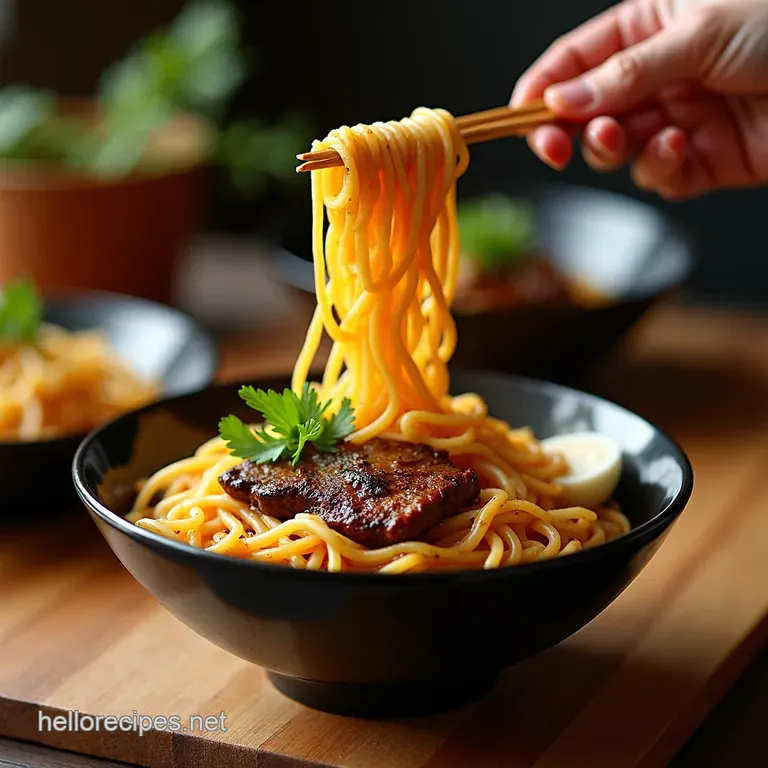
Choosing the right building blocks dictates the final success of your Beef Yaki Udon . Invest a little care here, and the payoff will be enormous when you take that first triumphant slurp.
The Essential Trio: Sauce Base, Broth Depth, and Aromatics
The sauce is where the complexity shines. We combine low-sodium soy sauce for foundational salinity, full sodium soy sauce for deeper notes, Mirin for sweetness and shine, and a touch of brown sugar to round out the profile.
The liquid element comes from low-sodium beef broth, which provides body without overpowering the delicate umami of the soy. Aromatics are kept classic but potent: fresh ginger and garlic, sautéed until just fragrant, form the aromatic launchpad for the entire dish.
Choosing Your Udon: Fresh vs. Frozen Considerations
While fresh udon is wonderful, for speed and consistency in a stir fry application, frozen or vacuum packed udon noodles are often superior. They require minimal cooking often just a brief boil and possess the necessary structural integrity to stand up to vigorous tossing in the wok without breaking apart.
Remember, the goal is chewiness, not mushiness.
Marinade Secrets for Melt-in-Your Mouth Slices
For our pound of thinly sliced flank steak, the 15-minute marinade is essential. The 1 tablespoon of soy sauce infuses flavour, but the teaspoon of cornstarch is the true magic ingredient.
It creates a protective layer when seared, mimicking the 'velveting' technique used in professional kitchens, guaranteeing that your beef slices are succulent.
Related Recipes Worth Trying
- Authentic Yaki Udon Recipe Chewy Noodles in 30 Minutes — Ditch the takeaway This simple Yaki Udon recipe delivers incredibly flavourful chewy noodles and crisp veg in just over 30 minutes Get the easy sauce recipe...
- Easy Taco Salad with Catalina Dressing Quick Beef Recipe — Ditch the bland midweek meal This Easy Taco Salad with Catalina Dressing uses seasoned ground beef and a zesty homemade dressing for a nostalgic flavour...
- Authentic Cuban Beef Picadillo Recipe Rich Savoury — Make this Classic Cuban Beef Picadillo in one pan Rich flavourful ground beef with olives and capers Your new goto Cuban dish
The Wok Strategy: Building Layers of Heat and Flavor
The cooking process must be executed in distinct, rapid stages to ensure ingredients are cooked properly without overcrowding the pan. High heat is your ally here. We start by searing the marinated beef in batches this prevents the pan temperature from dropping, which would steam the meat instead of searing it.
Once browned and removed, we establish the flavour foundation with the aromatics before moving on to the slightly heartier vegetables, like carrots and onions, giving them a head start before softer items like mushrooms and bok choy join the party.
Bringing It Together: The Final Slurp Worthy Assembly
This final phase is where all your careful preparation converges into the finished Beef Udon Noodles . Speed and agility are paramount as the sauce thickens quickly.
Prepping the Beef: Quick Searing for Maximum Juiciness
After removing the seared beef, make sure to keep it warm. That initial high heat sear, lasting perhaps only a minute or two per side depending on thickness, is enough to cook it through while retaining maximum internal moisture the flavour is trapped inside.
Developing the Signature Sauce Coating (Not Soupiness)
Once the vegetables are softened to your liking, the prepared sauce mixture is poured in. Crucially, we prepare a cornstarch slurry (cornstarch mixed with cold water) separately. This is whisked in slowly once the sauce simmers, thickening it from a thin liquid into a glossy, clingy glaze.
This coating is what differentiates a truly great Beef Udon Stir Fry from a watery noodle dish.
Noodle Hydration: Achieving the Ideal Chewy Texture
The pre-boiled udon noodles, drained and quickly rinsed with warm water to remove excess surface starch without shocking them, are added back into the wok along with the beef. Toss everything rapidly for no more than two minutes.
This short time allows the noodles to absorb the sauce without overcooking or losing their desirable bounce.
Garnish Placement: The Final Touch for Presentation
A finishing drizzle of toasted sesame oil off the heat adds aromatic depth that high heat would destroy. The presentation is then completed with a generous scattering of freshly sliced scallions for a sharp, fresh contrast, and toasted sesame seeds for texture.
This attention to detail elevates the entire Beef Udon Dinner presentation.
Troubleshooting and Advanced Customizations for Your Bowl
Even the best cooks run into minor hitches. If your sauce seems too thin, simply add more of your cornstarch slurry a teaspoon at a time while stirring until the desired glossy consistency is achieved.
Conversely, if you accidentally reduce the sauce too much and it becomes gloppy, add a splash of reserved beef broth or water to loosen it up slightly.
Vegetable Swaps: Adding Color and Crunch
This recipe is incredibly flexible. For added crunch, incorporate sliced water chestnuts or thinly sliced bell peppers along with the carrots. If you prefer softer greens, adding pre-blanched broccoli florets alongside the mushrooms works beautifully, absorbing the Flavorful Beef Udon sauce perfectly.
Boosting the Spice Profile: Next Level Heat Options
To take this from mild to fiery, incorporate gochugaru (Korean chili flakes) into the sauce mixture, or introduce a tablespoon of chili garlic sauce during the aromatic stage. For a slower burn, a few drops of high-quality chili crisp oil added at the very end introduces complexity alongside the heat.
The Secret to Preventing Udon from Sticking After Cooling
If you anticipate having leftovers of this Beef Yaki Udon , it’s vital to prevent the noodles from clumping into a solid mass. Before serving, after you've finished tossing everything, ensure you drizzle that final touch of toasted sesame oil evenly over the noodles.
The light fat barrier prevents the starch molecules from bonding tightly as they cool, making reheating much easier.
Storing Leftovers of This Delightful Beef Udon Stir Fry
Allow any leftovers to cool completely before transferring them to an airtight container. Stored correctly in the refrigerator, this Beef Udon Dinner holds up well for three to four days.
When reheating, a small splash of water or broth added to the pan or microwave helps reactivate the sauce and steam the noodles slightly, restoring much of that wonderful original texture.
Frequently Asked Questions
How can I stop the beef from turning out tough in my Beef Udon Noodles?
That’s the million dollar question! The secret lies in two steps: slicing thinly against the grain, perhaps after giving the steak 20 minutes in the freezer to firm up, and ensuring you use the cornstarch in the marinade (this is called 'velveting').
Always sear the beef quickly over high heat in small batches so it browns rather than steams.
My sauce is too thin; how do I get that glossy, restaurant style coating on the noodles?
You need a cornstarch slurry! Mix 1 tablespoon of cornstarch with 2 tablespoons of cold water until smooth, then slowly whisk it into your simmering sauce right at the end of cooking. It thickens almost instantly, giving you that lovely, sticky glaze that clings beautifully to the udon.
Can I make this Beef Udon Noodles recipe ahead of time, or does it need to be eaten immediately?
While it's best served piping hot straight from the wok, you can certainly prep components ahead of time, like chopping the vegetables and mixing the sauce. If you have leftovers, store them in the fridge; when reheating, add a splash of water or broth to loosen the sauce, as it tends to congeal when cold.
I can’t find flank steak; what is the best substitute for the beef?
No worries, a proper cook knows how to improvise! Sirloin or skirt steak are brilliant, equally quick cooking alternatives, provided you slice them very thinly across the muscle fibres. If you're looking for a complete substitution, firm tofu or thick cut shiitake mushrooms work wonders with this same sauce base.
Do I need to rinse the udon noodles after boiling them?
This is a point of mild debate, but for this stir fry style, a quick rinse with warm water is highly recommended. It removes excess surface starch which prevents the noodles from turning into one giant, sticky clump in your colander. However, don't soak them, as we want them absorbent for that glorious sauce!
Is this dish very salty, and how can I adjust the sodium content if I’m watching my salt intake?
Given the reliance on soy sauce, it is moderately salty, so definitely use low-sodium soy sauce for the main body of the sauce. To compensate, use low-sodium beef broth, and if the final flavour seems too salty, use mirin or a tiny splash of rice vinegar to balance the taste rather than adding more water.
Savory Beef Udon Stirfry
Ingredients:
Instructions:
Nutrition Facts:
| Calories | 2861 kcal |
|---|---|
| Protein | 31.3 g |
| Fat | 106.3 g |
| Carbs | 126.4 g |
| Fiber | 16.0 g |
| Sodium | 2438 mg |
