A Proper Loaf Chefs Rustic Irish Soda Bread
- The Rapid Chemistry of No-Knead Baking
- A Simple History of Authentic Irish Soda Bread
- Essential Baking Gear for a Flawless Loaf
- Sourcing the Best Ingredients for Traditional Flavor
- The Gentle Art of Combining Wet and Dry
- Achieving the Signature Deep Cross Score
- Troubleshooting Common Irish Soda Bread Problems
- Savory and Sweet Variations to Elevate the Classic Recipe
- Recipe FAQs
- 📝 Recipe Card
The Rapid Chemistry of No-Knead Baking
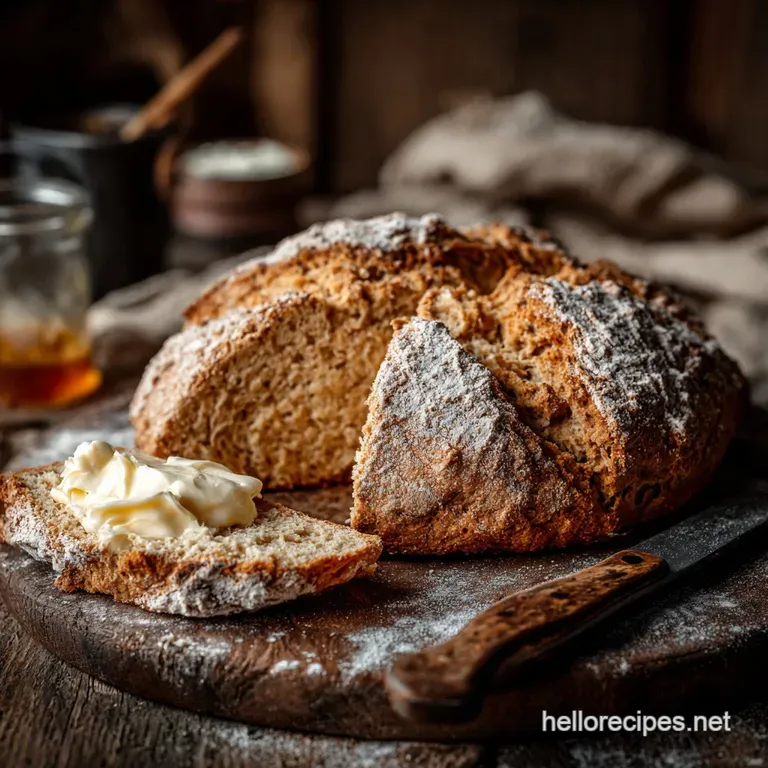
Forget the intimidating yeast activation and tiresome kneading required by traditional European loaves. The beauty of genuine Irish Soda Bread lies in its radical simplicity a marvel of kitchen chemistry that classifies it as a "quick bread." This recipe requires a mere 10 minutes of active preparation before it hits the oven, delivering a substantial loaf in under an hour.
The secret to this efficiency is the powerful reaction between an acid and a base. In this classic Irish Soda Bread Recipe , bicarbonate of soda (baking soda) serves as the base, and the tangy acidity of buttermilk provides the necessary trigger.
When combined, these two key Irish Soda Bread ingredients release carbon dioxide gas instantly, providing a rapid, dramatic lift without any need for resting or proving.
This means the window from mixing to baking is incredibly short, making it an ideal choice for the beginner baker or anyone short on time.
A Simple History of Authentic Irish Soda Bread
The concept of soda bread predates its association with Ireland, originating in fact with Native American cooking techniques using pearl ash. However, the Traditional Irish Soda Bread we recognize today became an enduring staple in 19th-century Ireland, primarily due to the availability and affordability of two specific components: soft wheat flour and soured milk (buttermilk), a natural byproduct of butter making.
This resourceful combination meant that even those with basic equipment and low-protein native flour could produce a daily loaf. Its importance in Irish Cooking cannot be overstated; it was the everyday bread, perfectly suited for dunking into hearty stews or spreading thickly with homemade jam.
The Crucial Role of Buttermilk Acidity
Buttermilk is not merely a liquid addition; it is the engine that drives the rise of this bread. Full fat buttermilk, ideally used at room temperature, contains lactic acid which reacts vigorously with the 5 grams (1 teaspoon) of baking soda in the recipe.
If you were to substitute the buttermilk with plain milk, the chemical reaction simply wouldn't occur, resulting in a dense, flat, and likely inedible brick. For those seeking a workaround for Irish Soda Bread without buttermilk , a quick DIY substitute can be made by mixing 1 ¾ cups (420 ml) of whole milk with 1 tablespoon of vinegar or lemon juice and allowing it to curdle slightly for five minutes before use.
Choosing the Right Flour for Texture
Unlike yeast breads that thrive on high protein bread flour to develop strong gluten structures, soda bread demands a softer touch. We utilize 500 grams (4 cups) of standard All-Purpose flour for this recipe.
All-Purpose flour has a lower protein content, which is essential because we are actively trying to minimize gluten development. The small amount of gluten that does form results in the characteristic dense yet tender crumb it should feel slightly coarse, not chewy or airy.
Defining the Perfect Rustic Crust
A defining characteristic of a proper, authentic loaf is its crust. We bake this round at 400° F ( 200° C) for 40 to 45 minutes, creating a deep golden brown exterior that is robustly crunchy.
This high heat quickly sets the outer shell, trapping the steam and carbon dioxide inside to maximize the oven spring. While a standard baking sheet is perfectly adequate, baking this loaf in an Irish Soda Bread Dutch Oven can dramatically enhance the crunch and moisture retention, yielding an even more superb crust development due to the contained heat.
Dispelling Myths: What Real Soda Bread Isn't
True soda bread is simple and humble. A common misconception is that it must be heavily sweetened, enriched with eggs, or require extensive fat. Our recipe uses a modest 60 grams (4 tablespoons) of cold, cubed butter, primarily for flavour and tenderizing, not for structure.
Critically, it contains no yeast, no proving time, and should never be kneaded. Any recipe asking you to develop the dough extensively is veering away from the speed and texture of true Traditional Irish Soda Bread .
Essential Baking Gear for a Flawless Loaf
While this is a minimalist recipe, having the right tools ensures success. A heavy gauge baking sheet lined with parchment paper provides the best base for even heat distribution. I highly recommend using a kitchen scale to accurately measure the 500g of flour and 5g of baking soda consistency is everything when relying on chemical leavening.
A large mixing bowl is required for combining the dry and wet ingredients, and a pastry blender or two cold knives are necessary for efficiently cutting the chilled butter into the flour until it resembles coarse crumbs.
Finally, a sharp chef’s knife or serrated knife is vital for executing the deep cross score before baking.
Sourcing the Best Ingredients for Traditional Flavor
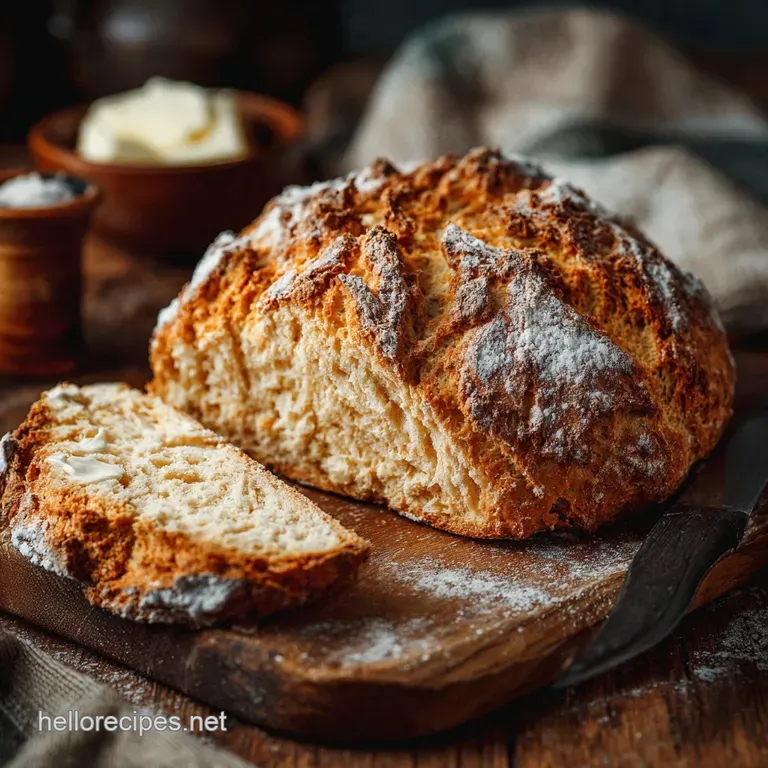
Success in making a truly excellent loaf begins before the mixing even starts. Gathering high-quality Irish Soda Bread ingredients ensures the resulting bread has the perfect balance of tang, salt, and texture.
The Ideal Buttermilk Temperature
To maximize the reaction speed, the 420 ml (1 ¾ cups) of buttermilk should ideally be at room temperature, rather than straight from the fridge. Warmer buttermilk reacts faster with the baking soda, giving the dough immediate lift as soon as it hits the hot oven.
This quick start is crucial for achieving a well risen dome shape.
Preparing Your Baking Surface
Prior to mixing, preheating the oven to 400° F ( 200° C) and lining your baking sheet are essential preparatory steps. The immediate transition from mixing bowl to hot oven minimizes the amount of time the leavening agents sit idle, ensuring maximum effectiveness.
Measuring Techniques for Dry Ingredients
Accurate measurement prevents both a flat loaf (too little baking soda) and an overly soapy taste (too much). Use a scale for the flour, salt, baking soda, and optional granulated sugar (30g / 2 tablespoons).
When measuring the leavener, level off the teaspoon precisely; the entire structure of the loaf depends on this 5-gram measurement.
What Type of Flour Should You Avoid?
While we noted that All-Purpose flour is ideal, specifically avoid high protein bread flour. Its increased protein content encourages the development of long, strong gluten strands, which are exactly what we are trying to prevent.
If you substitute the all-purpose flour for a portion of coarse wholemeal flour (up to 250g, or half the volume), expect a denser, nuttier result a perfectly traditional variation, but one requiring careful hydration.
Related Recipes Worth Trying
- The Queens Own Banana Bread Perfectly Moist Spiced and Easy to Make — Stop hunting for the perfect loaf This is the Moist Banana Bread Recipe youve been waiting for Loaded with brown sugar and spice for a fudgy crumb Foolproof...
- The Ultimate Sticky Caramel Monkey Bread Recipe Easy Canned Biscuits — This classic Sticky Caramel Monkey Bread recipe is bloody marvellous Use canned biscuits for the easiest pullapart breakfast finger foods Gooey sweet and...
- The Ultimate Pumpkin Bar Dessert Shortbread Crust Zesty Frosting — These are the perfect Pumpkin Bar Dessert squares Featuring a buttery shortbread base and deeply spiced filling they are ideal for your Sunday roast pudding...
The Gentle Art of Combining Wet and Dry
The process of combining ingredients is incredibly fast, demanding a light and careful touch. After whisking together the dry ingredients (flour, salt, baking soda, and optional sugar), the next step is incorporating the chilled, cubed butter until the mixture resembles coarse, dry oatmeal.
This prevents the butter from melting and keeps the mixture aerated. Once the fat is incorporated, pour the buttermilk into the well you create in the centre. Using a fork or a wooden spoon, stir only just enough to bring the wet and dry elements together into a shaggy, very wet dough.
The moment you no longer see streaks of dry flour, you must stop. This is the single most important rule for the entire Quick And Easy Irish Soda Bread process.
Achieving the Signature Deep Cross Score
Once the dough is combined, transfer it immediately to a lightly floured surface. You should handle it as little as possible. The goal is simply to form it into a tidy, round disc, roughly 7 to 8 inches in diameter and about 2 inches high.
Resist the urge to knead, which would undo all your careful work of minimizing gluten formation.
Mixing Speed: Avoiding Toughness in Irish Soda Bread
The key to a tender interior lies in restraint. Overmixing develops the gluten in the flour, turning a light, tender loaf into a heavy, tough "doorstop." The active mixing phase from adding the buttermilk to the point of stopping should take no more than 30 seconds.
This ensures the dough remains shaggy and minimally developed, preserving the light crumb structure created by the rapid chemical reaction.
Shaping the Loaf for Maximum Dome Height
Do not press the dough flat. Gently pat it into the specified round shape. The height (about 2 inches) is important for achieving a good dome and ensuring the centre cooks evenly. A flatter loaf will cook faster but risks a drier interior. Transfer the formed loaf directly onto the prepared baking sheet.
Troubleshooting the Dough Consistency
If your dough feels excessively sticky after the 30-second mix, you may use a very minimal dusting of flour on your hands and work surface to make it manageable enough to shape. However, if the dough feels dry and crumbly, the buttermilk may have been insufficient or the flour measured incorrectly; slightly denser dough can be rescued by patting and scoring firmly.
Testing Doneness and Initial Cooling Strategy
Bake for the prescribed 40 to 45 minutes until the exterior is a deep golden brown. The definitive test for this bread is sound: carefully remove the loaf and tap the bottom with your knuckle. If it sounds truly hollow, like knocking on a solid door, it is completely cooked through.
If the sound is dull, return it to the oven for another five minutes. Upon removal, immediately transfer the Irish Soda Bread to a wire cooling rack. Cooling on a rack prevents trapped moisture from softening the bottom crust.
Troubleshooting Common Irish Soda Bread Problems
One of the most frequent disappointments with this type of Irish Cooking is a loaf that spreads flat or fails to rise. This is almost always attributable to using old or inactive baking soda.
Since the bread relies entirely on this single leavener, ensure your bicarbonate of soda is fresh (ideally less than six months old). Another common issue is toughness, which, as we’ve stressed, is a direct result of overmixing.
If your loaf has a dense, uncooked centre, it often means the deep 'X' score was not sufficient. The cross must be cut nearly to the edges and halfway down the depth of the dough; this scoring is essential to allow the heat to penetrate the thick centre and release steam.
Savory and Sweet Variations to Elevate the Classic Recipe
While the simple, plain loaf is unbeatable for dunking into stew, the beauty of this dough lies in its versatility. You can transform the base recipe by simply adjusting the 30g of optional sugar and adding complementary ingredients.
For a sweet treat known as "Spotted Dog," include 1 cup (150g) of Irish Soda Bread with raisins and perhaps a touch of orange zest along with the dry ingredients. Alternatively, omit the sugar entirely and fold in 1/2 cup of shredded strong cheddar cheese and 2 tablespoons of chives for a wonderful savoury accompaniment to soup.
How Long Does Fresh Soda Bread Stay Edible?
Due to its lack of yeast and high moisture content from the buttermilk, Irish Soda Bread is truly at its best the day it is made. It should be consumed warm, ideally within the first 12 hours.
After that, it tends to dry out quickly and loses its structural tenderness, though it remains perfect for toasting for two to three days.
Freezing Instructions for Long Term Storage
If you wish to preserve the bread, it freezes beautifully. Allow the loaf to cool completely on the wire rack, then slice it into individual portions. Wrap each slice tightly in plastic wrap or foil, place them in a freezer bag, and freeze for up to three months.
When ready to eat, simply toast the slices directly from frozen.
Preventing a Crumbly or Dry Interior
A dry, crumbly interior suggests either over baking or an uneven distribution of the fat. Ensure the cold butter is properly incorporated into "coarse crumbs" to coat the flour particles and keep them separate.
Most importantly, follow the hollow sound test; if the loaf is removed when it is truly golden brown and hollow sounding, it will be perfectly moist inside.
Adjusting the Recipe for Raisins or Caraway Seeds
When adding extras like dried fruits (150g raisins) or caraway seeds, make sure they are thoroughly mixed into the dry ingredients before the buttermilk is added. This ensures the additions are evenly distributed throughout the dough without requiring excessive mixing once the liquid is introduced.
This technique maintains the light touch required for a flawless, tender crumb.

Recipe FAQs
Why is my Irish Soda Bread as hard as a brick or tough as old boots?
The single biggest mistake when making this bread is overmixing the dough it’s the cardinal sin of soda bread making! Kneading or stirring too much develops the gluten, resulting in a dense, tough loaf rather than the light, rustic crumb you want.
You must only mix until the dry ingredients are just barely moistened, stopping the moment the flour disappears.
Help! I’ve run out of buttermilk. Is there a simple swap that works?
Absolutely! Buttermilk is crucial because its acidity reacts with the baking soda to create the necessary lift. If you're caught short, you can make a quick substitute using regular milk.
Stir 1 tablespoon of white vinegar or lemon juice into 1 ¾ cups of whole milk and let it stand for five minutes until it slightly thickens and curdles. This mock buttermilk will react perfectly.
Can I add cheese or raisins to this recipe for a different flavour?
You certainly can, chucking in extras is highly encouraged! For a classic "Spotted Dog" tea bread, mix in a cup of raisins or currants along with the dry ingredients. If you prefer savoury, omit the sugar and fold in strong cheddar cheese, chives, or caraway seeds these are wonderful served with soup.
Why do I have to cut a cross into the top of the dough? Is it really necessary?
It’s a lovely bit of tradition, said to let the fairies out, but it’s also highly practical! Because this loaf is quite thick and dense, the 'X' allows the heat to penetrate the centre, ensuring it cooks thoroughly and evenly all the way through.
If you skip this crucial step, the middle might end up disappointingly raw.
How should I store the leftover soda bread, and how long does it keep fresh?
Soda bread is famous for being best eaten on the day it’s baked, ideally still slightly warm and slathered with good butter. Since it doesn’t contain yeast or much fat, it stales quickly.
For leftovers, store the loaf tightly wrapped at room temperature for up to two days, or slice it up and pop it into the freezer immediately to toast later a true lifesaver for busy weeknights.
Rustic Buttermilk Irish Soda Bread Loaf
Ingredients:
Instructions:
Nutrition Facts:
| Calories | 94 kcal |
|---|---|
| Protein | 1.4 g |
| Fat | 10.4 g |
| Carbs | 22.1 g |
| Fiber | 0.0 g |
| Sodium | 8427 mg |
