Beef Bourguignon Deep Rich and Unapologetically Classic Stew
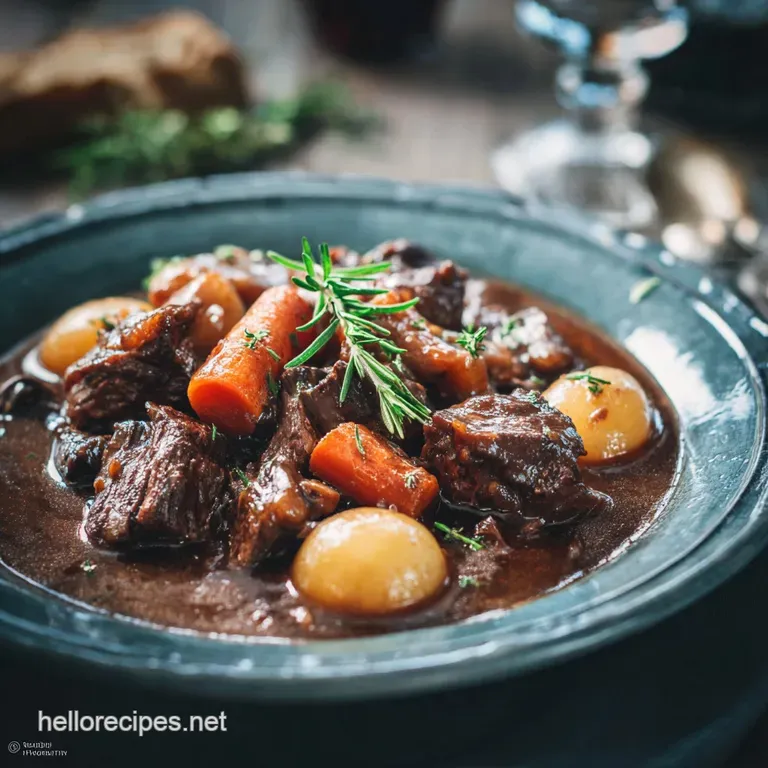
- Unlocking the Depth of Classic French Comfort
- Beyond the Stew: What Makes True Beef Bourguignon Different
- Securing the Essential Cast for the Best Beef Bourguignon
- Building Layers of Flavour: The Bourguignon Cooking Process
- Maximizing Flavour and Serving Suggestions for Classic Beef Bourguignon
- Recipe FAQs
- 📝 Recipe Card
Unlocking the Depth of Classic French Comfort
Okay, listen up. If you are going to commit four hours of your life to one single dish, it absolutely needs to be Beef Bourguignon. This isn’t a quick Sunday dinner. This is a commitment, a labour of love, and frankly, a masterclass in how slow cooking elevates humble ingredients.
I remember the first time I made this after watching every single version from Julia Child to Ina Garten. I thought, "It's just beef stew with wine. How hard can it be?" Reader, I was wrong.
The difference between a sad, watery beef stew and a truly luxurious Bœuf Bourguignon is all about patience and the intentional layering of flavour. We aren't just dumping ingredients in a slow cooker and walking away (though, yes, you technically can use a slow cooker, but we're going for classic perfection here).
We are building something deep, dark, and soul satisfying.
The goal isn’t tender beef (that’s easy). The goal is a sauce so rich and glossy that it tastes like every good decision you’ve ever made. Let’s crack on and get this done properly.
Beyond the Stew: What Makes True Beef Bourguignon Different
The Essential Difference Between Stew and Bourguignon
The fundamental difference lies in the method and the wine. A typical beef stew uses broth and maybe a splash of wine for flavour, focusing on speed or volume. Bourguignon, by definition, requires a generous amount of red wine (specifically Burgundy, though we can cheat a little) which is used as the primary braising liquid.
The French method dictates specific additions too: crispy bacon fat ( lardons ), which introduces a foundational smokiness, and the late addition of glazed pearl onions and mushrooms. Why? Because if you add those mushrooms at hour one, they turn into sad, grey sponges.
We want texture, contrast, and colour.
Why Browning the Beef is the Most Critical Step
This is where 80% of new cooks mess up, myself included, way back when. You get impatient. You’ve got two pounds of beef cubes, and you think, "I'll just throw them all in." Stop right there.
Browning is not about cooking the meat; it’s about caramelising the sugars and proteins on the surface that’s the Maillard reaction, and it creates complex, deep, nutty flavours that plain boiled beef could never dream of achieving.
If you overcrowd the pot, the temperature drops instantly, the meat steams, and you get grey, flavourless chunks. You must sear in small batches, pulling them out as soon as they develop that dark, almost chocolate brown crust.
It takes extra time, maybe 20 minutes just for searing, but it's non-negotiable.
Is It Bœuf Bourguignon or Just a Beef Stew?
It’s Bœuf Bourguignon. That little French designation means precision. It means the beef is chuck, the liquid is mostly wine, and the final texture is creamy and luscious (thanks to the flour and the naturally broken down collagen).
A generic beef stew is flexible you can throw in potatoes, celery, or whatever you have on hand. Bourguignon follows rules, and those rules lead to a vastly superior flavour profile.
CRUCIAL WARNING: If your braising liquid is thin and pale after three hours, you either skipped the searing step or you didn't scrape up the fond when you deglazed. The depth of the sauce comes from that concentrated, cooked-on goodness.
Related Recipes Worth Trying
- RestaurantStyle Beef and Broccoli Stir Fry Tender Glossy — Achieve meltinyourmouth tender beef using the essential velveting technique This classic Beef and Broccoli Stir Fry recipe delivers a perfect glossy sauce...
- Traditional Ukrainian Classic Borscht Soup Hearty Beef Beet — The perfect rubyred Classic Borscht Soup Recipe This traditional beef and beet soup is deeply savoury bright with acidity and utterly comforting A real...
- The Sunday Best oven-roasted Beef Tenderloin with Rich Madeira Mushroom Sauce — Achieve perfect juicy oven-roasted Beef Tenderloin with Mushroom Sauce every time This impressive Roast Beef For Christmas Dinner features a silky Madeira...
Securing the Essential Cast for the Best Beef Bourguignon
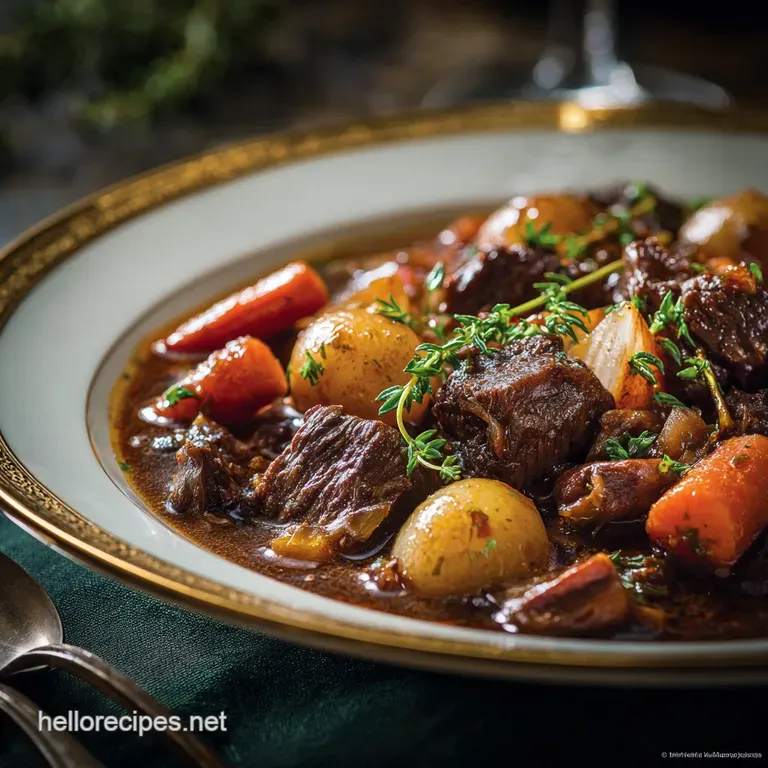
Choosing Your Wine: The Burgundy Rule of Thumb
The rule is simple: if you wouldn't drink it, don't cook with it. I know it seems tempting to use that dusty bottle of "cooking wine" that costs $4, but please don't. The alcohol cooks off, but the flavour concentrates. If the wine tastes sour or oxidized to start with, your entire stew will taste like it.
My quick guide:
| Role in Bourguignon | Wine Choice |
|---|---|
| Traditional & Best | Pinot Noir (from Burgundy, if possible) |
| Budget Friendly Sturdy | Dry Merlot or a Cabernet Sauvignon |
| Avoid | Sweet wines (Zinfandel) or cheap "cooking wines" |
We need three cups, which is almost a full standard bottle (750 mL). Make sure it’s dry.
Selecting the Ideal Cut: Chuck vs. Short Rib
For classic Bourguignon, beef chuck steak is the champion. It has enough fat and connective tissue (collagen) that, after three hours of low and slow braising, completely breaks down and thickens the sauce beautifully. That tissue melts, creating tenderness and richness.
Beef short ribs are a fantastic, decadent alternative if you want a ridiculously rich meal, but they usually require slightly longer cooking and are much fattier. Stick to chuck for the true Bourguignon experience. Cut it into uniform 1.5 inch cubes so it cooks evenly.
The Mirepoix: Preparing the Aromatic Foundation
A mirepoix is the classic French base of chopped onion, carrot, and celery (sometimes just onion and carrot here). Chop the carrots thickly. Remember, these vegetables are going to be braising for three hours, so if you mince them, they will completely dissolve into nothingness.
We want them to hold their structure enough to add texture alongside the beef. Don’t rush sautéing these either; caramelise them lightly in that wonderful bacon fat.
Recommended Dutch Oven and Necessary Tools
You absolutely need a heavy bottomed pot. My trusty 7-quart cast iron Dutch oven is perfect. Cast iron holds heat incredibly well, ensuring that when you transfer the pot from the stovetop to the oven, the temperature remains consistent and even. This even heat is what coaxes the collagen out of the beef gently.
You also need good kitchen twine for tying up your bouquet garni (that little bundle of herbs).
Lardon vs. Bacon: Which Pork Adds the Most Flavour?
Lardons are essentially thick cut slab bacon that’s been cured but not heavily smoked. If you can find actual lardons, use them. They offer a cleaner, fattier texture perfect for rendering the initial cooking oil.
If you can only find standard sliced bacon, that’s fine. Just make sure it’s quality, thick cut, and smoked. Dice it thickly you want noticeable chunks of crispy pork distributed throughout the dish, not just crumbled bits.
They render their fat, flavour the pot, and then go back in to be rewarded by the braising liquid.
Building Layers of Flavour: The Bourguignon Cooking Process
The Initial Sear: Locking in the Umami
I cannot stress this enough: Pat the beef dry. Use three paper towels if you have to. If there is moisture, there is no sear. Season the beef just before you are ready to put it in the hot fat (if you season too early, the salt will draw moisture out).
Working in small batches (maybe 6 8 cubes at a time), sear until they have that beautiful, dark crust. Put them aside. If there's still fat left in the pot after the searing, drain off all but about 2 tablespoons. Too much fat can make the final sauce greasy.
Deglazing the Pot and Activating the Fond
Once you’ve softened your onions and carrots and stirred in your flour and tomato paste (which adds an incredible depth of flavour cook that paste for one minute to sweeten it!), it’s time for the wine.
Pour the wine in quickly. It should hiss and bubble dramatically. Now, scrape. Use a wooden spoon to vigorously scrape up every single dark, sticky bit stuck to the bottom of the pot.
That sticky residue is called the fond , and it holds all the concentrated, beautiful flavour from the bacon and the beef sear. When the fond dissolves into the wine, the wine turns a glorious dark mahogany, which will be the colour of your finished sauce.
Achieving Ultimate Tenderness: Monitoring the Oven Time
We are aiming for low and slow. 325°F (160°C) is ideal. If it's too hot, the meat seizes up and gets tough. If it’s too cold, it takes forever. We need that perfect temperature where the liquid is just gently burbling.
Braise it covered, without peeking, for 2. 5 hours. At that point, peek. Is the meat starting to give when poked? Check the liquid level (it should mostly cover the meat). After that first check, give it another 30– 60 minutes.
The total time is typically 3 hours, but go by texture, not the clock. When the beef easily shreds with a fork, it's ready.
Final Thickening and Resting the Beef
Once the bourguignon comes out of the oven, fish out the herb bundle (we call this discarding the bouquet garni ) and let it rest for 15 minutes. This allows the beef to reabsorb some of the liquid.
While it rests, this is your chance to finish your garnishes.
- Mushroom Mastery: Sauté those mushrooms separately in a little butter until they are browned, their moisture is released, and then reabsorbed. They taste exponentially better this way.
- Consistency Check: If the sauce is too thin, lift the lid, put the pot on the stovetop, and simmer gently for 10– 15 minutes until it reduces to your desired thickness. The flour we added at the beginning should provide a wonderful, natural thickness.
Maximizing Flavour and Serving Suggestions for Classic Beef Bourguignon
The Best Sides: What to Serve with this Rich French Dish
A stew this rich needs a velvety counterpart to soak up all that incredible sauce. Forget rice.
- Pommes Purée (Mashed Potatoes): Non-negotiable, in my opinion. Make them creamy with plenty of butter and a splash of cream. The sauce coats them perfectly.
- Egg Noodles: Simple, wide buttered egg noodles ( pâtes ) are traditional and quick. They offer a neutral, comforting contrast.
- Simple Green Salad: Something sharp and acidic, maybe with a mustard vinaigrette, to cut through the richness. It provides the necessary brightness.
make-ahead Strategy: Why Day-Two Bourguignon is Superior
This is the real secret. Cook the entire batch the day before you plan to serve it. Seriously. Let it cool completely, then refrigerate it overnight.
The magic happens when it chills: the flavours have time to settle down and truly marry. Even better, all the fat rises to the surface and solidifies overnight, making it ridiculously easy to skim off. Skimming the fat results in a much cleaner, more refined, and less greasy sauce when you reheat it.
Day-two Bourguignon is 100% better than day-one.
Essential Fixes: Troubleshooting Common Consistency Issues
It happens. Here’s what to do when things go slightly sideways:
- Too Thin: If, after simmering uncovered for 15 minutes, it’s still thin, whisk together 1 tablespoon of cornstarch with 1 tablespoon of cold water (a slurry). Pour it into the simmering liquid and stir constantly for 30 seconds. It should thicken right up.
- Too Salty: Did you use salty beef stock and salty bacon? Add a splash of acidity (a teaspoon of red wine vinegar) or a peeled, raw potato. Simmer for 15 minutes; the potato absorbs some excess salt. Remove the potato before serving.
- Meat is Dry: You likely cooked it too hot or rushed the initial sear. If the meat is cooked but dry, the only fix is to shred it and let it steep in the sauce overnight. The meat will absorb moisture as it cools.
Wine Pairing Guidance for Guests and Leftovers
The safest, easiest, and most complementary pairing is to serve the same wine you cooked with. Since the stew is rich, flavourful, and high in tannins and acid (from the wine reduction), you need a wine that can stand up to it. A medium bodied, dry Pinot Noir is perfection.
If you used a heartier Merlot, serving the Merlot works just as well. Keep the wine dry and allow the deep, earthy Bourguignon flavours to dominate the meal.
Recipe FAQs
It takes ages! Can I speed up this Beef Bourguignon, or is patience truly a virtue here?
No shortcuts here, old bean! The 3-hour slow braise is utterly essential to break down the tough collagen in the chuck steak, resulting in that meltingly tender, fork pull-apart texture that defines proper Beef Bourguignon.
Do I really need to use expensive Pinot Noir, or will any old plonk do for the braising liquid?
Always use a red wine you would actually drink, as the flavour concentrates beautifully during the long cooking time; while Pinot Noir is traditional, a good quality Merlot or Cabernet Sauvignon will also yield glorious results.
My sauce is looking a bit watery after the braise have I ruined it?
Not a chance! If the sauce seems too thin (perhaps your lid wasn't totally tight), simply remove the lid and simmer the pot gently on the hob for 10 15 minutes until it reduces to a glorious, rich consistency.
Is it true that this classic French stew is better the next day?
Absolutely; Beef Bourguignon is famously a make-ahead triumph, as resting overnight allows the deep, savoury flavours to marry fully, and it gives you a chance to skim any excess surface fat before reheating.
I can't find pearl onions, and I hate fussing with mushrooms. Can I skip the garnishes entirely?
While the sautéed mushrooms and pearl onions (or shallots) add crucial textural contrast to the richness of the stew, you can certainly omit them if necessary, but do try adding a scattering of fresh parsley for brightness.
Proper Beef Bourguignon Classic Recipe
Ingredients:
Instructions:
Nutrition Facts:
| Calories | 1376 kcal |
|---|---|
| Protein | 127.5 g |
| Fat | 81.0 g |
| Carbs | 12.1 g |
| Fiber | 0.6 g |
| Sodium | 325 mg |
