Herb Seasoned Prime Rib Roast Oven
- Time: Active 20 minutes, Passive 27 hours, Total 27 hours 50 mins
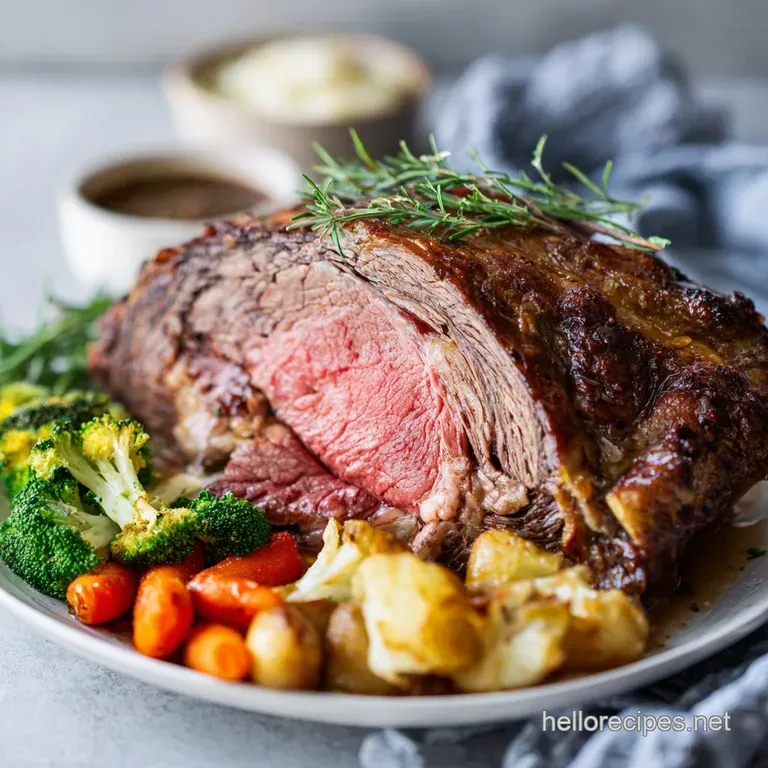
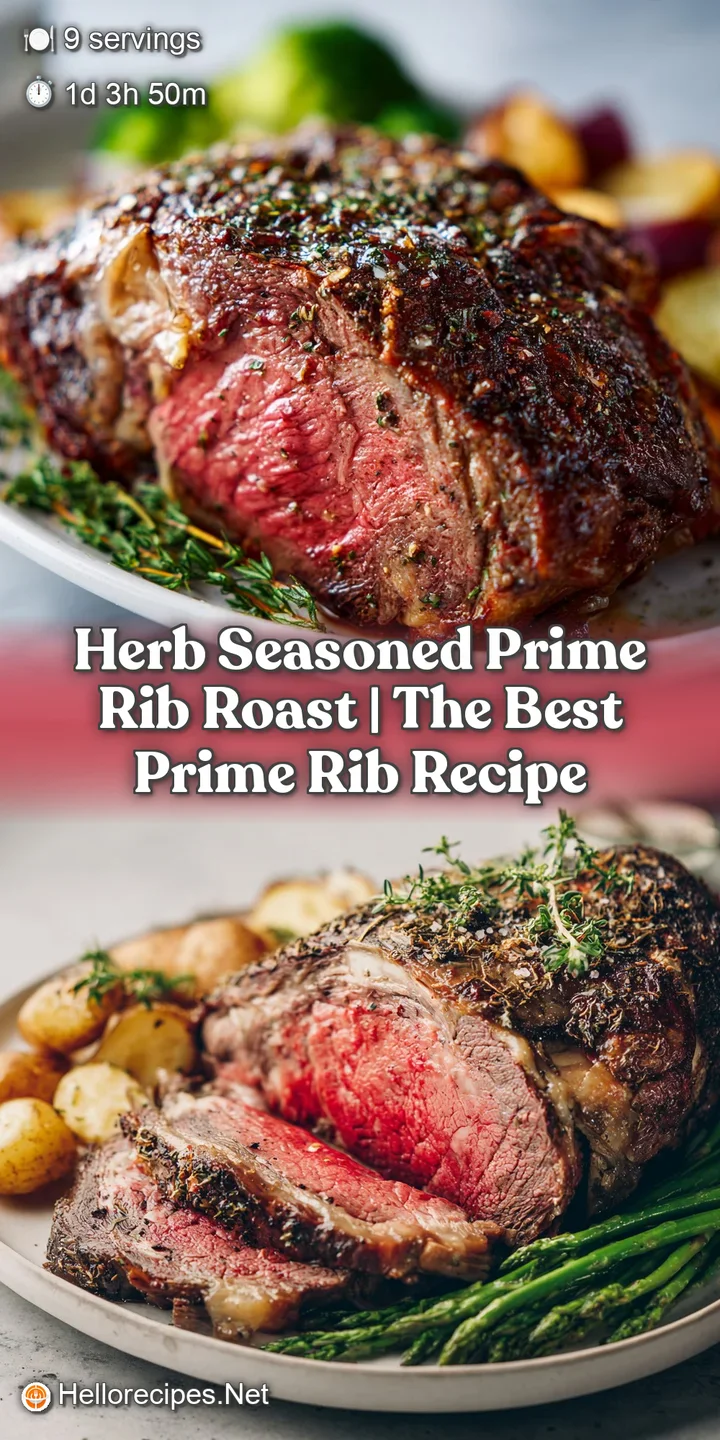
- Flavor/Texture Hook: A velvety, medium rare center protected by a salt shattered herb crust.
- Perfect for: High stakes holiday gatherings or a focused Sunday dinner for beef enthusiasts.
- Perfectly Roasted Medium Rare Prime Rib
- A Gastronomic Masterpiece Defined
- Why This Roasting Logic Wins
- Component Analysis Deep Dive
- Essential Cooking Measurements
- Sustainable Ingredient Selection Guide
- Precision Tools for Success
- Step-by-Step Cooking Mechanics
- Preventing Common Kitchen Failures
- Innovative Herb and Spice Twists
- Maximizing Leftover Potential
- Final Plating and Presentation
- Very High in Sodium
- Prime Rib FAQs
- 📝 Recipe Card
Perfectly Roasted Medium Rare Prime Rib
I will never forget the first time I attempted a holiday roast and ended up with a grey, leathery ring of meat that looked more like a tire than a centerpiece. It was devastating. The house smelled like scorched fat and disappointment because I followed a vague "high heat" instruction without understanding how heat actually moves through a 9 lb standing rib roast.
I spent the next few years obsessed with the physics of the oven, learning that the secret isn't just the heat, it is the preparation of the surface before the heat even touches it.
Now, when I pull this roast out of the oven, the aroma is thick with the scent of toasted rosemary and the deep, nutty perfume of rendering beef tallow. It is a scent that pulls people into the kitchen from the other side of the house.
We are moving past the basic methods and looking at this through the lens of flavor engineering. This recipe ensures that every slice, from the fat capped edge to the very center of the eye, is seasoned and tender.
We are going to treat this 9 lb standing rib roast (4 bones) with the respect it deserves. Forget everything you have heard about "searing in the juices," which we know is a myth. Instead, we are focusing on surface dehydration and enzyme breakdown.
You will get a result that feels like it came from a high end steakhouse, but with the soul of a home cooked meal. Trust me on this, the 24 hour wait is the most important ingredient in your pantry.
A Gastronomic Masterpiece Defined
This specific cut of beef is the pinnacle of roasting. When we talk about this dish, we are referring to the subprimal rib section, specifically the ribs six through twelve. It is naturally marbled with intramuscular fat that melts during the slow cooking process, essentially basting the meat from the inside out.
By using a 4 bone roast, we ensure enough mass to withstand a long cook without drying out, which is the primary challenge for smaller cuts.
The addition of a Dijon mustard and herb compound butter creates a chemical reaction on the surface. The mustard acts as an emulsifier, helping the fat soluble aromas of the rosemary and garlic cling to the meat.
As it roasts, these flavors don't just sit on top, they fuse with the rendering fat to create a crust that shatters when sliced. This is not just a meal, it is a study in texture and aromatic intensity.
Why This Roasting Logic Wins
The Physics of the Crust
Surface Dehydration: The 24 hour dry brine removes excess moisture from the skin, allowing the Maillard reaction to occur faster and more intensely. This creates a mahogany colored exterior without overcooking the delicate interior.
- Enzymatic Tenderization: Allowing the meat to rest with salt breaks down tough proteins, making the beef feel velvety.
- Aromatic Infusion: The fats in the unsalted butter carry the garlic and herb scents deep into the surface fissures.
- Thermal Stability: Tempering the meat at room temperature ensures the heat doesn't "shock" the outer layers while the center remains cold.
- Carryover Control: Pulling the meat early accounts for the internal energy that continues to cook the roast while it rests.
| Roast Thickness | Internal Pull Temp | Rest Time | Visual Finish Cue |
|---|---|---|---|
| 3-4 Inches | 115°F (Rare) | 20 minutes | Bright red center |
| 5-6 Inches | 120°F (Med Rare) | 30 minutes | Warm pink center |
| 7+ Inches | 125°F (Medium) | 40 minutes | Light pink throughout |
The thickness of your roast dictates the "thermal bridge" the heat must cross. For our 9 lb roast, which usually sits around 5 to 6 inches thick, the 120°F pull temperature is the sweet spot. As it rests, the temperature will climb to a perfect 130-135°F, giving you that uniform pinkness that guests go wild for. If you are looking for a Prime Rib recipe that utilizes the reverse sear method specifically, that is a great alternative for even more control.
Component Analysis Deep Dive
| Ingredient | Science Role | Pro Secret |
|---|---|---|
| Kosher Salt | Denatures proteins | Apply 24 hours early to season the meat all the way to the bone. |
| Unsalted Butter | Fat based heat conductor | Use European style butter for higher fat content and better browning. |
| Dijon Mustard | Emulsification bridge | The vinegar cuts through the heavy fat, brightening the overall flavor profile. |
Chef's Tip: Freeze your butter for 10 minutes before mixing the herb rub. This keeps the butter from melting too quickly when you apply it to the meat, allowing for a thicker, more even coating that stays put in the oven.
Essential Cooking Measurements
Precision is non negotiable when dealing with a cut this expensive. We are using standard imperial measurements here to ensure the ratios of salt to protein are exact. If you vary the weight of the roast, you must adjust the salt accordingly to avoid a bland interior or an overly salty crust.
- Main Protein: 9 lb standing rib roast (4 bones)
- Brining Agent: 2 tablespoons Kosher salt
- Fat Base: 1 cup unsalted butter, softened
- Aromatics: 6 cloves fresh garlic, minced
- Fresh Herbs: 3 tablespoons rosemary and thyme, finely chopped
- Spice: 1 tablespoon black pepper, freshly cracked
- Acid/Binder: 1 tablespoon Dijon mustard
If you need to scale this down for a smaller group, it is entirely possible. However, the cooking time does not scale linearly. For a 2 bone roast, you'll still need about 15-20 minutes per pound, but you'll need to watch the internal temperature much more closely as it can spike quickly.
Sustainable Ingredient Selection Guide
- Standing Rib Roast: Look for "Choice" or "Prime" grade. If you can, source a grass fed, grain finished roast. It offers the sustainable benefits of pasture raised beef with the marbling required for a tender roast.
- Kosher Salt: Use a coarse grain like Diamond Crystal. It covers more surface area without over salting. Substitute: Sea salt (use 25% less by volume).
- Unsalted Butter: High fat butter provides a more luxurious mouthfeel. Substitute: Ghee (higher smoke point, nuttier flavor). Why this? Ghee prevents the rub from burning during the initial over high heat blast.
- Fresh Garlic: Avoid the pre minced jars; they lack the volatile oils needed for that sharp aroma. Substitute: 1 teaspoon garlic powder (more subtle, less pungent).
- Rosemary/Thyme: Fresh is mandatory for the woodsy scent. Substitute: Dried herbs (use only 1 tablespoon total). Why this? Dried herbs are concentrated and can become bitter if overused.
- Black Pepper: Freshly cracked provides a floral heat that pre ground pepper loses. Substitute: White pepper (milder, more earthy).
- Dijon Mustard: Adds a tangy complexity. Substitute: Stone ground mustard (adds more texture to the crust).
Precision Tools for Success
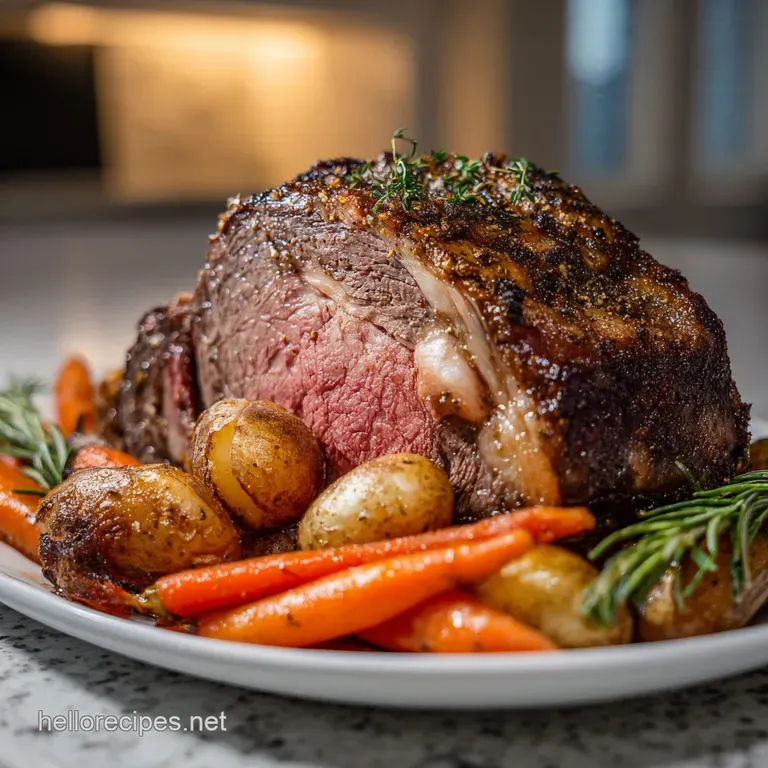
You don't need a kitchen full of gadgets, but you do need a few pieces of high performance technology to ensure success. The most critical tool is a digital leave in meat thermometer. Guessing the doneness of a $100 piece of meat by "touch" is a recipe for a very expensive mistake.
You will also want a heavy duty roasting pan with a rack. The rack is essential because it allows the air to circulate under the beef, preventing the bottom from stewing in its own juices.
A sharp carving knife, preferably a long slicing knife with a Granton edge (those little dimples on the side), will help you get those clean, professional slices without tearing the muscle fibers.
step-by-step Cooking Mechanics
- Dry Brine. Rub the 2 tablespoons Kosher salt all over the 9 lb standing rib roast. Note: This draws out moisture and سپس allows the salt to be reabsorbed deep into the tissues.
- Refrigerate. Place the meat on a rack over a tray, uncovered, in the fridge for 24 hours. Wait until the surface looks dark and dry.
- Tempering. Remove the roast from the fridge 2 hours before cooking. Note: This brings the internal temperature up so the center doesn't stay cold while the outside overcooks.
- Prepare Rub. Mix the 1 cup softened butter, 6 minced garlic cloves, 3 tablespoons herbs, 1 tablespoon pepper, and 1 tablespoon Dijon mustard.
- Apply Crust. Pat the roast dry one last time, then slather the butter mixture over the entire top and sides. Smell the punch of garlic and fresh herbs.
- Initial Blast. Preheat your oven to 450°F (230°C). Roast for 20 minutes until the butter is sizzling and starting to brown.
- The Slow Roast. Lower the oven temperature to 325°F (160°C). Continue roasting for about 2 to 3 hours.
- Temperature Check. Use a digital thermometer to pull the roast at 120°F for medium rare. The aroma will be deeply savory and heavy.
- The Rest. Move the roast to a cutting board and tent loosely with foil. Let it rest for 30 minutes. Wait until the juices have redistributed.
- Carve. Slice against the grain into thick portions. The center should be a uniform, velvety pink.
| Method | Total Time | Crust Quality | Effort Level |
|---|---|---|---|
| Oven Only | 3 hours 30 mins | Good, consistent | Low |
| Stovetop Sear + Oven | 3 hours 45 mins | Exceptional, dark | High |
| Reverse Sear | 4 hours 30 mins | Very thin, crispy | Medium |
For most home cooks, the "Oven Only" method with a over high heat start provides the best balance of effort and flavor. It mimics the professional roasting techniques used in traditional European gastronomy while keeping your kitchen manageable.
Preventing Common Kitchen Failures
Why Your Prime Rib is Grey
If you see a thick grey band around the edges of your slices, the oven was likely too hot for too long. This happens when the exterior cooks significantly faster than the interior.
To fix this, ensure you are truly lowering the temperature to 325°F after the initial blast and never skip the room temperature tempering step.
How to Fix an Underdone Roast
If you carve into it and it's too rare for your guests, don't put the whole roast back in. This will dry out the exterior. Instead, slice the meat and briefly sear the individual slices in a hot pan with a little bit of the collected pan drippings.
This provides a "custom" cook for each person without ruining the rest of the meat.
| Problem | Root Cause | Solution |
|---|---|---|
| Tough Meat | Skipping the rest | Let it sit for 30 minutes; the fibers need to relax. |
| Bland Center | No dry brine | Use the 24 hour salt method to penetrate the thick muscle. |
| Soggy Crust | Crowded pan | Use a rack to keep the meat out of the rendered fat. |
- ✓ Pat the roast bone dry before applying the butter rub to ensure it sticks.
- ✓ Use a leave in thermometer; opening the oven door constantly drops the temp by 25 degrees.
- ✓ Don't tent the foil too tightly during the rest, or the steam will soften your crust.
- ✓ Save the bones! They make the most incredible beef stock you've ever tasted.
Innovative Herb and Spice Twists
If you want to move away from the traditional flavor profile, you can easily pivot. For a smoky umami profile, try adding a tablespoon of smoked paprika and a teaspoon of anchovy paste to your butter rub. The anchovy disappears into the background but provides a massive boost to the beef's natural savoriness.
For those who love a bit of heat, a "Spicy Horseradish Kick" is easy to achieve. Fold 2 tablespoons of prepared horseradish and a teaspoon of dry mustard powder into the compound butter. This mimics the classic pairing of beef and horseradish but roasts the flavor directly into the crust. If you have leftovers, this version is incredible in a Leftover Prime Rib recipe the next morning.
Maximizing Leftover Potential
Storage: Wrap your leftovers tightly in plastic wrap and then foil. It will stay fresh in the fridge for up to 4 days. For longer storage, you can freeze it for up to 2 months, though the texture of the crust will soften.
Zero Waste: Never, ever throw away the bones or the fat cap. The bones are packed with marrow and collagen. Roast them again at high heat for 15 minutes, then simmer with onions, carrots, and celery for a "Liquid Gold" beef stock.
The rendered fat (tallow) can be strained and kept in a jar in the fridge. Use it to roast potatoes next week it is a total flavor revelation.
Final Plating and Presentation
When you are ready to serve, don't just hack away at the meat. Remove the bones first by slicing along the curve of the ribs. This leaves you with a solid "log" of meat that is much easier to slice into uniform pieces.
Arrange the slices on a warm platter not a cold one to keep the fat from congealing too quickly.
Pair this with a simple jus made from the pan drippings. Deglaze the roasting pan with a splash of red wine, scrape up the browned bits (the fond), and whisk in a little beef stock. It is simple, elegant, and lets the quality of the beef shine.
This dish is a testament to the idea that when you understand the science of the ingredients, the cooking itself becomes a joy rather than a chore. Enjoy that first, perfect bite you have earned it!
Very High in Sodium
1250 mg mg of sodium per serving (54% % of daily value)
The American Heart Association recommends limiting sodium intake to about 2,300mg per day for most adults.
Tips to Reduce Sodium in Your Standing Rib Roast
-
Reduce Salt-25%
Kosher salt is the biggest contributor. Reduce the amount of Kosher salt from 2 tablespoons to 1 tablespoon. You can always add more at the table if needed.
-
Unsalted Butter-10%
Ensure you are using unsalted butter as specified in the recipe. Even a small amount of salt in butter can add up.
-
Spice it Up!-5%
Enhance flavor with more black pepper, garlic, rosemary, and thyme. This will make up for the flavor lost by reducing salt.
-
Mustard Moderation-5%
Use Dijon mustard sparingly or opt for a low-sodium mustard variety if available. Even a small amount of Dijon can contain a significant amount of sodium.
-
Herb Power
Experiment with other fresh or dried herbs and spices like paprika, onion powder (not onion salt!), or oregano to boost flavor without adding sodium. There are many sodium free seasoning blends available.
Prime Rib FAQs
What is the secret to a good prime rib?
A 24-hour dry brine with coarse salt. This removes surface moisture for a better crust (Maillard reaction) while the salt penetrates to tenderize the proteins deeply. Applying this technique ensures edge-to-edge perfection, similar to the flavor control in our Full: "Rib Roast Recipe: Perfect Reverse Sear Bone-In Oven Method".
What is the 500 rule for prime rib roast?
The 500°F reference relates to the initial high heat blast. Many recipes use 500°F for 15-20 minutes to rapidly start the crust formation before dropping the heat significantly for slow roasting. This provides a deep sear without overcooking the interior.
What is the best prime rib to buy?
Look for USDA Prime or high end Choice grade. Prime grade has superior marbling, which is intramuscular fat that melts during cooking, keeping the roast succulent. A 3 or 4 bone roast is ideal for balancing cooking time and portion size.
Is Costco prime rib good quality?
Generally, yes, Costco sells reliable quality Choice grade roasts. They are often a fantastic value for their size and the marbling is usually sufficient for a great result. However, you must still follow precise temperature cues to avoid overcooking it.
How do I ensure my prime rib is medium rare edge to edge?
Use the reverse sear method and pull the roast at 115°F to 120°F. Cooking low and slow first stabilizes the internal temperature, minimizing the grey band that occurs when the outside overheats waiting for the center to catch up. You can see this technique detailed in our Ribeye Roast Garlic recipe guide.
What should I serve with the roast drippings?
Serve a simple pan jus made from the fond. Deglaze the roasting pan with beef stock or wine, scrape up all the browned bits, and reduce slightly. This captures all the flavor essence without heavy flour additions.
Why do people sear the prime rib first instead of roasting low?
Searing first relies on the outdated belief that it "seals in the juices." High heat initially creates a quick crust, but it often results in a very thick, overcooked grey band beneath that crust, as the internal temperature climbs unevenly.
Prime Rib Roast Dry Brine Method
Ingredients:
Instructions:
Nutrition Facts:
| Calories | 945 kcal |
|---|---|
| Protein | 58 g |
| Fat | 74 g |
| Carbs | 2 g |
| Fiber | 0.4 g |
| Sugar | 0.2 g |
| Sodium | 1250 mg |
